
Flooring Durability Finder
Answer these questions to find the most durable flooring option for your specific needs.
Fill out the profile on the left to get a personalized recommendation.
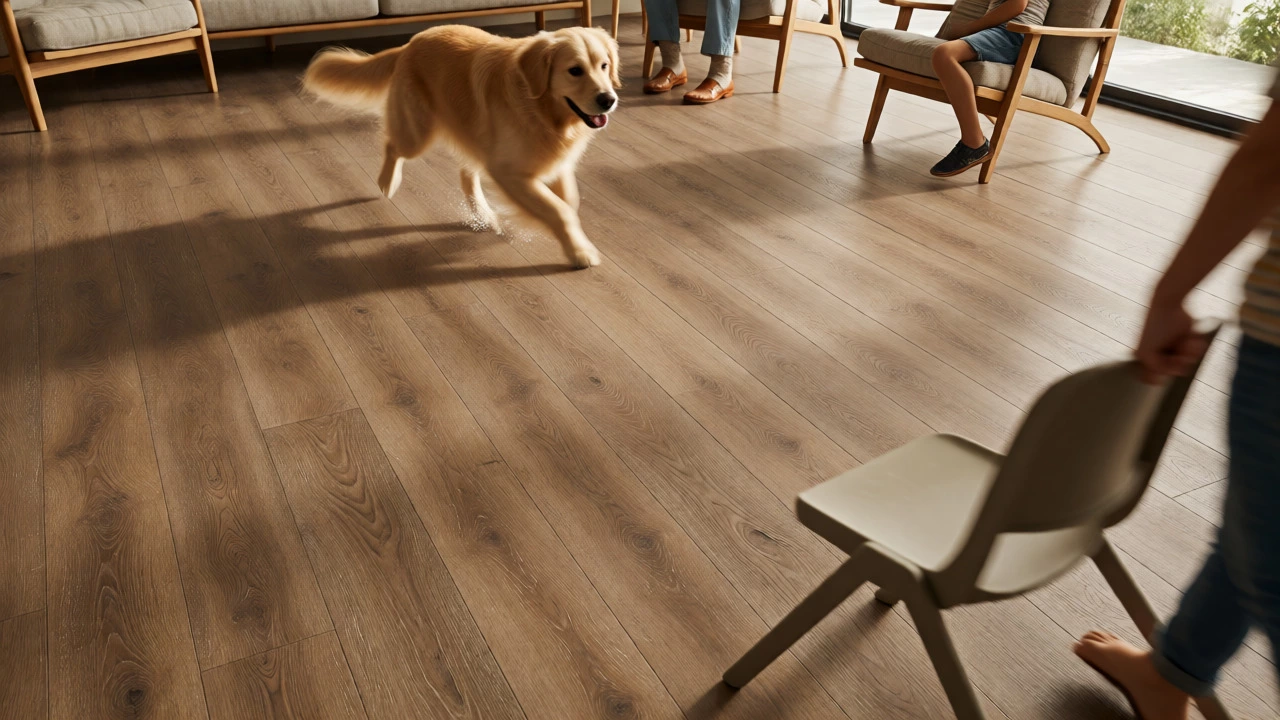
You drop a set of keys. Your dog sprints across the hallway with untrimmed nails. The kids drag their plastic chairs without lifting them. If you have ever watched your pristine floor get marred in seconds, you know the pain. You aren't just buying aesthetics; you are buying peace of mind. The search for the best scratch resistant flooring isn't about finding something indestructible-nothing is-but about finding materials that laugh at daily abuse while still looking good in photos.
Most people think solid hardwood is the gold standard. It’s not, not if you want zero scratches. Real wood is soft enough to dent and mark easily. So, what actually holds up? We need to look at materials engineered specifically to resist abrasion, impact, and moisture. This guide breaks down the top contenders, how they perform under pressure, and which one fits your specific lifestyle.
The Reality Check: What Actually Causes Scratches?
Before we pick a winner, let's identify the enemy. Scratches come from three main sources: grit, weight, and friction. Grit is sand or dirt trapped under shoe soles acting like sandpaper. Weight is furniture legs digging in. Friction is moving objects across the surface. Traditional finishes fail because they are thin layers on top of softer substrates. Modern flooring solutions tackle this by either hardening the wear layer or using materials that are inherently tough throughout their thickness.
In Melbourne, where humidity fluctuates and indoor-outdoor living is common, durability also means stability. A floor that scratches easily might also warp when it gets wet. So, our criteria here are strict: high Janka hardness ratings (for woods), thick wear layers (for laminates/vinyls), and proven resistance to household accidents.
Luxury Vinyl Plank (LVP): The Undisputed Champion
If you want a floor that truly doesn't scratch, start here. Luxury Vinyl Plank is a multi-layer synthetic flooring product designed to mimic real wood or stone while offering superior durability and water resistance. Unlike traditional sheet vinyl, LVP consists of rigid core planks, often made from Stone Plastic Composite (SPC) or Wood Plastic Composite (WPC).
Why does it win? The magic lies in the wear layer. High-quality LVP features a transparent urethane coating on top, ranging from 12 mils to 20+ mils. For context, 20 mils is roughly the thickness of a credit card. This layer absorbs impacts that would gouge wood. I’ve seen LVP survive dropped cast-iron pans and sliding office chairs without leaving a mark. Plus, since the material is waterproof, you don’t have to worry about spills causing swelling that leads to further damage.
- Scratch Resistance: Excellent. The urethane topcoat is extremely tough.
- Water Resistance: 100%. Safe for bathrooms and kitchens.
- Comfort: Softer underfoot than tile or stone, thanks to the WPC/SPC core.
- Cost: Mid-range. Often cheaper than solid hardwood installation.
Engineered Hardwood: The Compromise for Warmth
Do you hate the "plastic" feel of vinyl? Then engineered hardwood is your next best bet. It’s not solid wood. Instead, it uses a cross-ply plywood base with a real wood veneer on top. The key here is the finish. You must choose products with aluminum oxide finishes. These industrial-strength coatings are baked onto the wood during manufacturing, making them significantly harder than site-applied polyurethane.
Look for brands that specify "commercial grade" or "heavy traffic" ratings. While the wood underneath can still dent if you drop a hammer, the surface resists scuffs from shoes and pets surprisingly well. However, remember that the veneer is finite. If you scratch deep enough to penetrate the finish, you can’t always refinish it multiple times like solid wood. Choose darker stains or hand-scraped textures to hide minor imperfections over time.
Porcelain Tile: The Indestructible Option
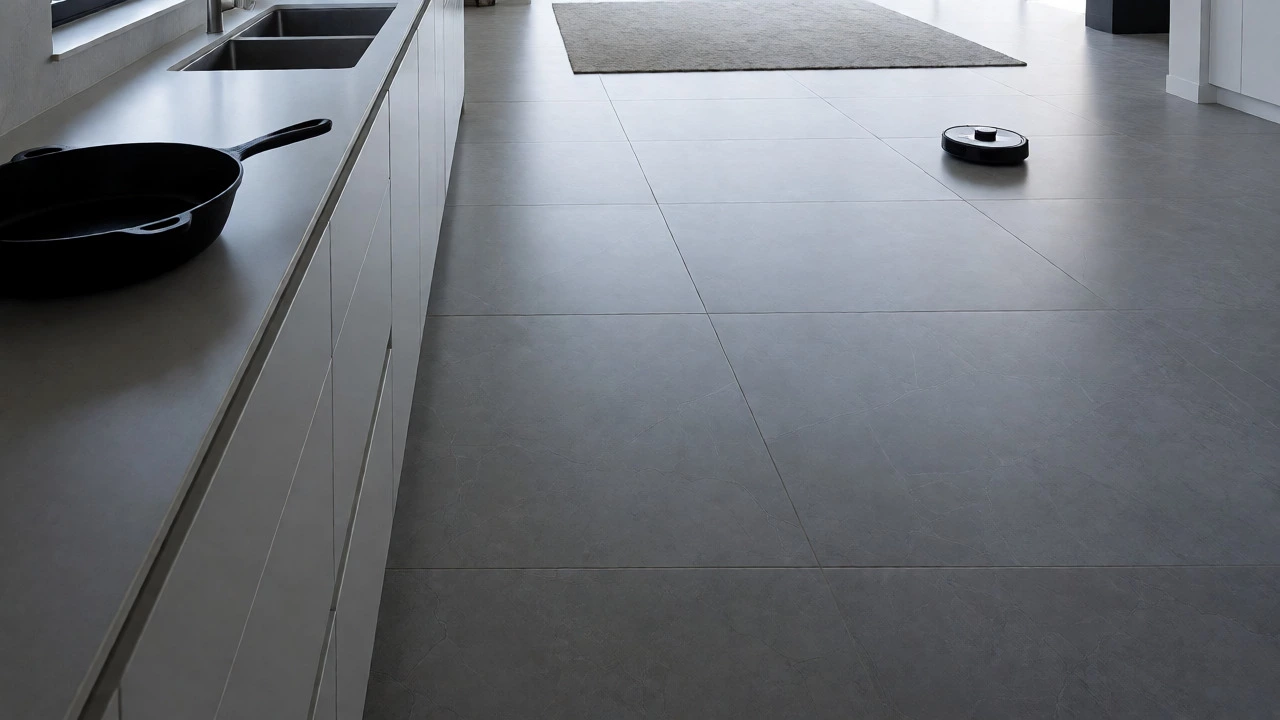
If scratches are your primary concern, nothing beats Porcelain Tile, a ceramic building material fired at higher temperatures than standard ceramic, resulting in a denser, less porous, and more durable surface. Its hardness rating is off the charts compared to any wood product. You could drag a metal chair across porcelain all day and leave no trace. It is impervious to claws, wheels, and grit.
But there’s a catch. Porcelain is cold and hard. Standing on it for hours hurts your knees. To mitigate this, use area rugs in high-traffic zones or install radiant heating. Also, grout lines are the weak point. They can stain or crack, though the tile itself remains pristine. In Australian homes, especially in coastal areas, porcelain’s resistance to salt air and moisture makes it a long-term investment that literally lasts decades.
Comparison Table: Durability vs. Comfort
| Flooring Type | Scratch Resistance | Water Resistance | Underfoot Comfort | Maintenance Level |
|---|---|---|---|---|
| Luxury Vinyl Plank (LVP) | Very High | Excellent | Good | Low |
| Engineered Hardwood | Medium-High | Poor-Medium | High | Medium |
| Porcelain Tile | Extreme | Excellent | Low | Low |
| Laminate | Medium | Poor | Medium | Low |
| Bamboo | Medium-High | Medium | High | Medium |
Bamboo: The Eco-Friendly Contender
Strand-woven bamboo is surprisingly tough. Because it is compressed under extreme heat and pressure, its density rivals many exotic hardwoods. It scores highly on the Janka hardness scale, often outperforming red oak. This makes it resistant to dents and scratches from everyday life.
However, quality varies wildly. Cheap bamboo uses weak adhesives and thin finishes. Stick to reputable manufacturers who use formaldehyde-free binders and UV-cured finishes. Bamboo looks modern and feels warm, bridging the gap between the warmth of wood and the toughness of composite materials. Just keep an eye on humidity levels; like wood, it expands and contracts, which can sometimes lead to gaps if not acclimated properly before installation.
Laminate: Budget-Friendly but Watch Out
Modern laminate has improved drastically. It uses a photographic layer topped with a melamine wear layer. Good laminate resists scratches well, but it has a fatal flaw: water. If water seeps into the seams, the fiberboard core swells and ruins the floor. Once scratched deeply, you cannot repair laminate; you have to replace the plank.
Choose laminate only for dry areas like bedrooms or living rooms away from entryways. Avoid it for full bathrooms or laundry rooms unless it is specifically rated as "waterproof laminate." Even then, LVP is usually a safer bet for similar money.
Pro Tips to Protect Any Floor
Even the toughest floor needs help. Here is how to extend the life of your choice:
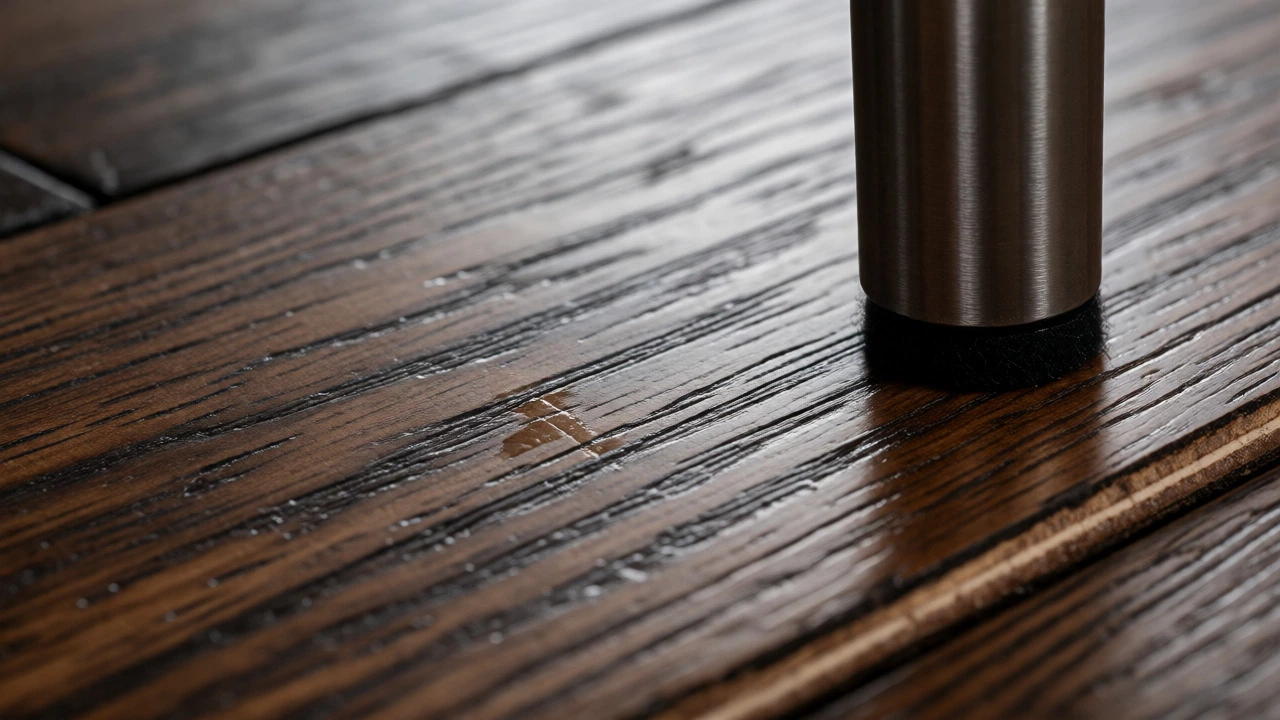
- Felt Pads Are Non-Negotiable: Put felt pads under every piece of furniture leg. Replace them twice a year. They collect dirt, so clean them regularly.
- The Doormat Defense: Place high-quality mats inside and outside every entrance. Most scratches start with grit tracked in from the street.
- Pet Nail Care: Trim your pets' nails monthly. Blunt nails cause fewer scratches than sharp ones.
- No Rolling Chairs on Hard Floors: Use chair mats or switch to caster cups. Rolling chairs concentrate weight on tiny points, crushing finishes.
- Clean Smart: Sweep or vacuum daily. Mop with damp (not wet) cloths. Excess water is the enemy of most non-tile floors.
Which One Should You Buy?
Here is the decision tree based on your lifestyle:
- Have dogs/cats and kids? Go with Luxury Vinyl Plank (LVP). It handles accidents, claws, and toys best.
- Want natural wood warmth but fear scratches? Choose Engineered Hardwood with an aluminum oxide finish. Pick a textured or distressed style to hide marks.
- Need maximum durability and low maintenance? Porcelain Tile is unbeatable. Add rugs for comfort.
- On a tight budget? High-quality Laminate works, provided you keep water away from it.
Remember, no floor is truly scratch-proof. But by choosing the right material and maintaining it correctly, you can go years without seeing significant wear. In Melbourne’s climate, balancing moisture resistance with hardness is key. LVP offers the best balance for most households today, combining aesthetic appeal with near-industrial durability.
Is vinyl flooring really better than hardwood for scratches?
Yes, generally speaking. High-quality Luxury Vinyl Plank (LVP) has a thick urethane wear layer that is much harder than the finishes applied to most residential hardwoods. While hardwood can be refinished after scratching, vinyl simply resists the scratch in the first place, making it lower maintenance for high-traffic areas.
Does laminate flooring scratch easily?
Modern laminate is quite resistant to surface scratches due to its melamine wear layer. However, it is susceptible to chipping if heavy objects are dropped, and once the decorative layer is compromised, the particleboard core can swell if exposed to moisture. It is less forgiving than vinyl or tile.
Can I put rugs on vinyl flooring?
Yes, but use caution. Some rubber-backed rugs can react chemically with vinyl, causing discoloration. Look for rugs labeled "safe for vinyl" or use natural fiber rugs with PVC-free backings. Always lift rugs periodically to clean the floor underneath to prevent grit buildup.
What is the hardest flooring material available?
In terms of residential options, porcelain tile and certain types of quartz composite flooring are among the hardest. They are nearly impossible to scratch with normal household items. However, they are cold and hard, which may not be comfortable for standing areas like kitchens.
How thick should the wear layer be on vinyl flooring?
For residential use, aim for a wear layer of at least 12 mils. For homes with large dogs or heavy foot traffic, choose 20 mils or thicker. The thicker the wear layer, the longer the floor will resist scratches and stains before needing replacement.