
Kitchen Appliance Heat & Cost Calculator
Configuration Settings
Analysis Results
Based on standard 378 kWh/year refrigerator usage.
Enter your kitchen details to see the impact on energy bills and safety.
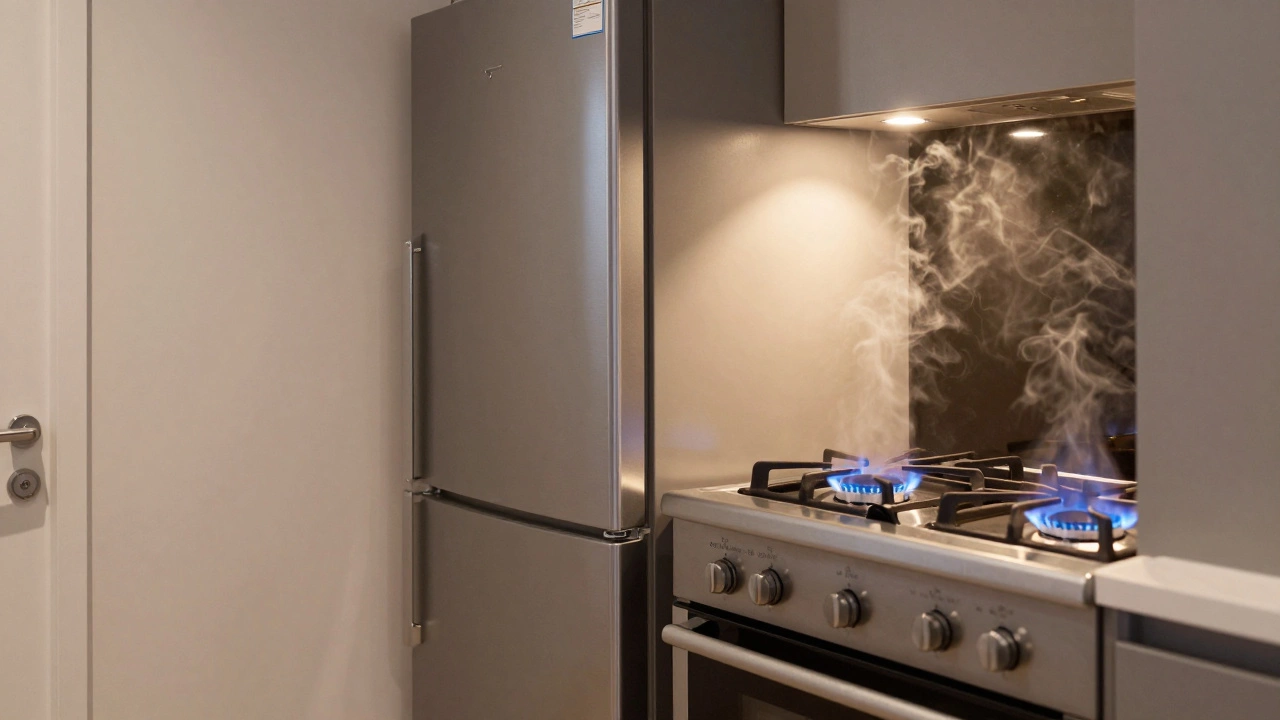
Picture this: you’re cooking dinner. The oven is roasting a chicken at 400°F (200°C). You turn around to grab an ingredient from the fridge, which sits directly against the hot range. Your hand brushes the refrigerator door, and it’s warm. Not just 'room temperature' warm, but noticeably heated. Is that normal? Is it safe? And more importantly, are you burning through electricity like crazy?
This is the classic dilemma for anyone designing a compact kitchen or renovating a small apartment. Space is premium real estate. Pushing major appliances together seems like the logical move to maximize counter space. But thermodynamics doesn't care about your floor plan. Heat rises, insulation has limits, and refrigerators hate working in a sauna.
The short answer? Yes, you can put them side by side, but only if you respect specific clearance rules and understand the physics involved. Doing it wrong leads to higher bills, premature appliance failure, and potential fire hazards. Let’s break down exactly how to do this right without sacrificing safety or efficiency.
The Heat Problem: Why Refrigerators Hate Ovens
To understand why placing these two giants next to each other is tricky, we need to look at what they actually do. A stove (or range) is designed to generate intense heat. Whether it’s gas flames licking up the sides of pots or electric coils glowing red, the ambient temperature around a running stove can easily exceed 150°F (65°C).
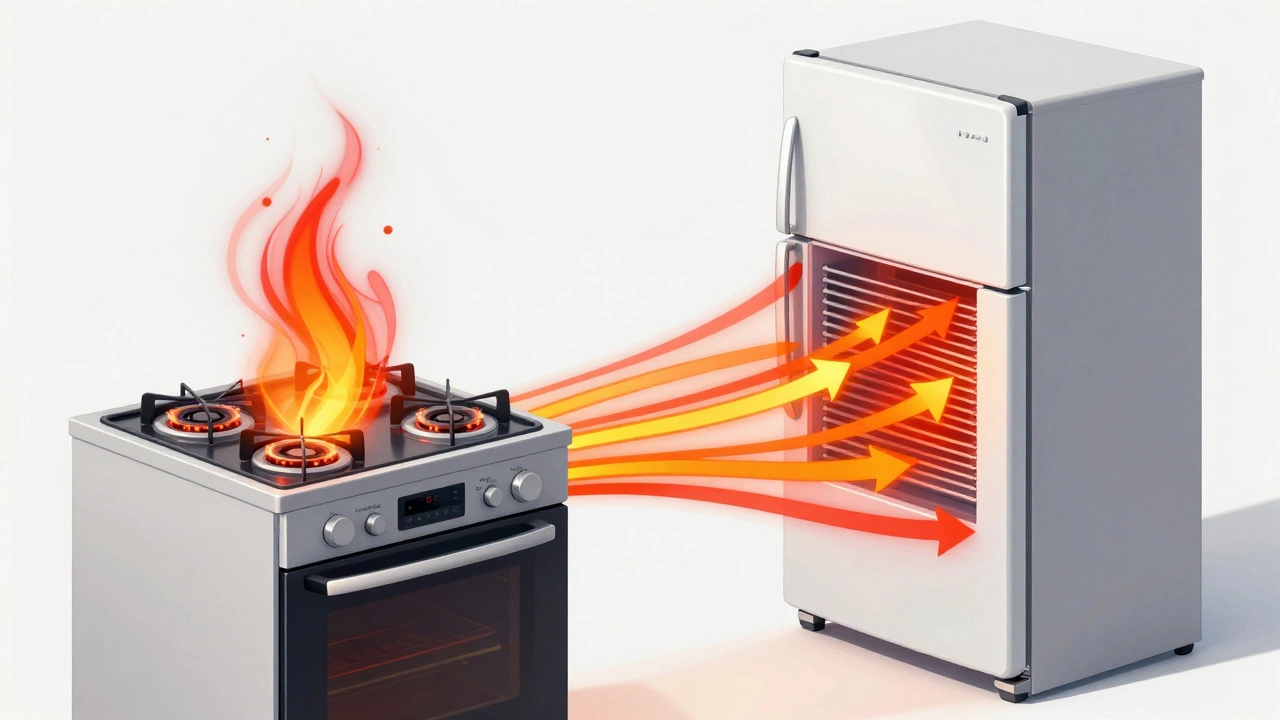
A refrigerator, on the other hand, is essentially a heat pump. Its job is to remove heat from the inside and dump it outside. Most modern fridges vent this waste heat through coils located on the back or the sides of the unit. If those sides are pressed against a heat source, the fridge can’t dissipate its own waste heat effectively.
Here is the cycle of doom:
- The stove heats the air around the fridge.
- The fridge’s compressor works harder to keep the interior cold because the external environment is hotter.
- The compressor generates more waste heat.
- The fridge vents that extra heat into the already hot air near the stove.
- The cycle repeats, increasing energy consumption by up to 20-30% and wearing out the compressor prematurely.
It’s not just about comfort; it’s about mechanical stress. Manufacturers design compressors with expected ambient temperatures in mind-usually between 55°F and 110°F (13°C to 43°C). Pushing that boundary consistently shortens the lifespan of the appliance significantly.
Safety Clearances: The Non-Negotiable Rules
You might be thinking, "I’ll just leave a tiny gap." That’s where things get dangerous. Building codes and manufacturer guidelines exist for a reason. Ignoring them isn’t just bad practice; it can void warranties and create fire risks.
| Appliance Type | Minimum Side Clearance | Reason for Clearance |
|---|---|---|
| Gas Range | 0 inches (to non-combustible surfaces) | Heat radiation is contained within the burners |
| Electric Range | 0 inches (to non-combustible surfaces) | Coils are recessed, but sides can get hot |
| Refrigerator (Side Venting) | 1-2 inches (ideal), minimum per manual | Airflow needed to cool condenser coils |
| Refrigerator (Back Venting) | 0 inches (if back vents are clear) | Sides don’t need airflow, but heat exposure matters |
Note the distinction between clearance for installation and clearance for operation. Many manufacturers state that a fridge can be installed flush against a wall (0 inches) if the wall is non-combustible. However, a stove is not a static wall; it’s an active heat source. Even if the code allows zero inches between a fridge and a cabinet, placing it next to a stove requires a buffer zone.
For gas ranges, the risk is open flame and high radiant heat. For electric ranges, the risk is sustained high surface temperatures. In both cases, you should aim for at least 6 to 12 inches of separation if possible. If space is tight, use a heat-resistant barrier. Never place a fridge directly adjacent to a stove without checking the specific model’s installation guide. Some high-end European-style ovens run hotter than standard American models, requiring even more space.
Ventilation Strategies: Cooling the Gap
If you’re stuck with a layout where the fridge and stove must be neighbors, ventilation is your best friend. Passive airflow isn’t always enough when you’re baking a turkey every Sunday.
Consider installing a small exhaust fan in the cabinet above the gap between the two appliances. This actively pulls hot air away from the refrigerator’s side panels and pushes it out of the kitchen. It’s a simple modification that can drop the ambient temperature around the fridge by 10-15 degrees during peak cooking hours.
Another trick is to ensure the refrigerator has adequate rear clearance. If your fridge vents heat from the back, make sure there’s at least 1 inch of space behind it. If you’ve pushed it all the way to the wall to save side space, you’re trapping heat in a pocket. The fridge needs a chimney effect to work efficiently.
Also, check your range hood. A powerful hood (at least 300 CFM for electric, 400+ CFM for gas) will capture most of the rising heat before it reaches the sides of adjacent cabinets or appliances. If your hood is weak, the heat spreads laterally, hitting the fridge hard.
Energy Efficiency: The Hidden Cost
Let’s talk money. An average refrigerator uses about 378 kWh per year. When placed next to a heat source, that number can jump. Why? Because the thermostat inside the fridge senses the warmth radiating from the stove and triggers the compressor to run longer cycles.
Imagine your fridge is trying to stay at 37°F (3°C). If the air around it is 90°F (32°C) due to the oven, the insulation has to work twice as hard to prevent heat ingress. Over a year, this inefficiency adds $20-$50 to your electric bill. It’s not a fortune, but it’s wasted cash for no benefit.
To mitigate this, consider upgrading to a fridge with better insulation ratings (look for ENERGY STAR certified models with high R-values in their walls). These units are designed to resist external temperature fluctuations better than budget models. Also, avoid opening the fridge door frequently while the stove is on. Every time you open that door, you’re letting hot, humid kitchen air rush in, forcing the compressor to kick in again immediately.
Design Workarounds for Small Kitchens
Small kitchens force tough choices. If you simply cannot separate the fridge and stove, here are practical design hacks to minimize the impact:
- Use a Counter Depth Fridge: These often have slimmer profiles and sometimes different venting configurations. Check if yours vents from the bottom or top rather than the sides.
- Install a Heat Shield: Place a thin layer of reflective insulation (like foil-backed foam board) on the side of the fridge facing the stove. This reflects radiant heat away before it penetrates the cabinet.
- Choose a Bottom-Freezer Model: Top-freezer models tend to have less efficient cooling systems overall. Bottom-freezer and French-door models often have dual evaporators and better sealing, making them slightly more resilient to external heat.
- Leave the Door Open? No! Never leave the fridge door ajar to "cool" the side. This wastes massive amounts of energy and ruins food. Instead, ensure the room itself is well-ventilated.
If you’re building new, consider a built-in refrigerator. Built-ins are designed to integrate seamlessly into cabinetry and often have perimeter ventilation that draws air from the front grille and exhausts it quietly. They handle tight spaces better than freestanding units because they’re engineered for constrained environments.
When It’s Absolutely Unsafe
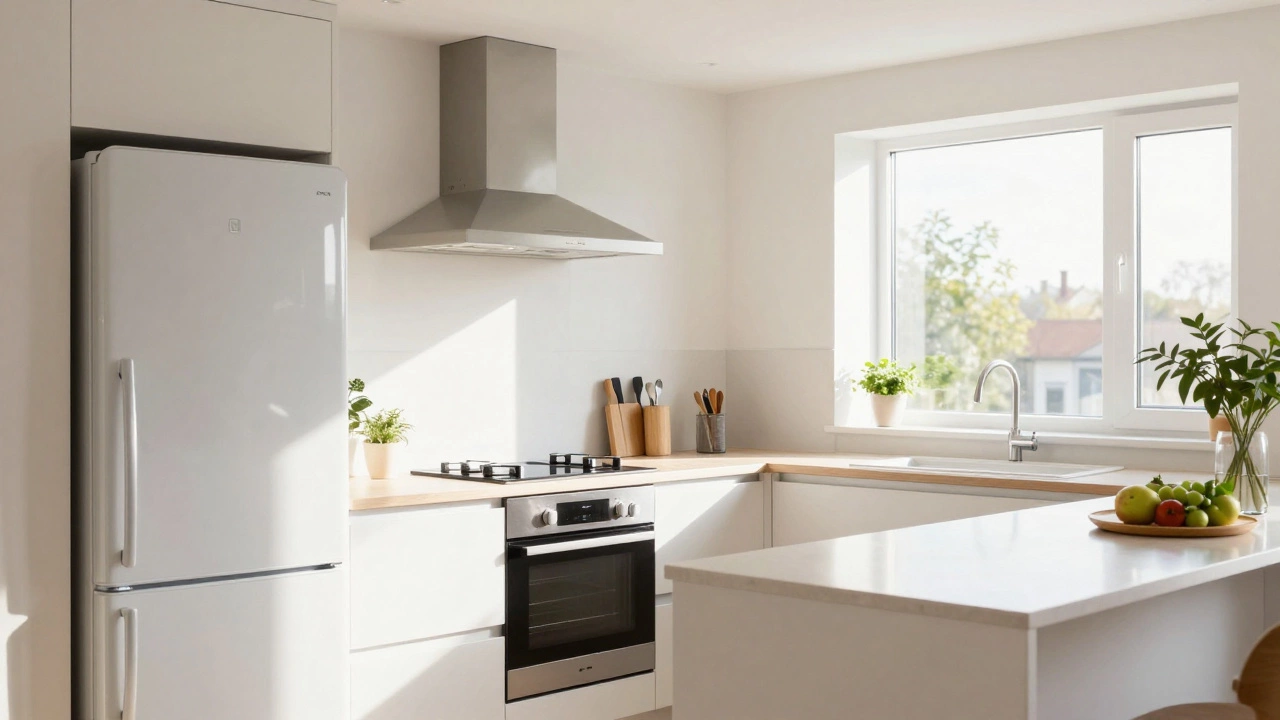
There are scenarios where side-by-side placement is a hard no. If you have an old, poorly insulated fridge, don’t do it. If your stove is a commercial-grade gas range with high-BTU burners, the radiant heat output is too intense for residential fridge insulation. In these cases, the risk of melting plastic components, warping doors, or even igniting nearby flammable materials (like paper towels stored in adjacent drawers) outweighs any space savings.
Also, consider accessibility. If the fridge and stove are side-by-side, who cooks? If the cook stands at the stove, the fridge door might swing into their path. If the fridge is on the left and the cook is right-handed, reaching across the hot stove to grab milk is awkward and dangerous. Flow matters as much as heat.
Frequently Asked Questions
Can I put my refrigerator directly next to my gas stove?
Technically yes, but it is not recommended without precautions. Gas stoves produce significant radiant heat. You should maintain at least 6 inches of clearance or install a heat shield to protect the refrigerator's compressor and insulation. Always check your specific appliance manuals for minimum clearance requirements.
Does having a fridge next to an oven increase electricity bills?
Yes. The refrigerator’s compressor has to work harder to maintain internal temperatures when exposed to external heat sources. This increased workload can raise energy consumption by 20-30%, leading to higher monthly utility costs over time.
What is the minimum distance between a stove and a refrigerator?
While some building codes allow zero inches if surfaces are non-combustible, best practice suggests at least 6 to 12 inches of separation. This allows for heat dissipation and safe access. Always prioritize the manufacturer’s installation guidelines over general rules.
Will heat from the stove damage my refrigerator?
Prolonged exposure to high heat can degrade the refrigerator’s insulation, warp plastic components, and shorten the lifespan of the compressor. It may also cause the exterior finish to fade or discolor over time. Using a heat barrier can mitigate these risks.
Is it better to have the fridge on the left or right of the stove?
It depends on your workflow and dominant hand. Generally, keeping the fridge on the left and the stove on the right creates a natural "work triangle" flow for right-handed cooks. However, the primary concern should be heat management, so whichever side allows for better ventilation and clearance is the safer choice.