
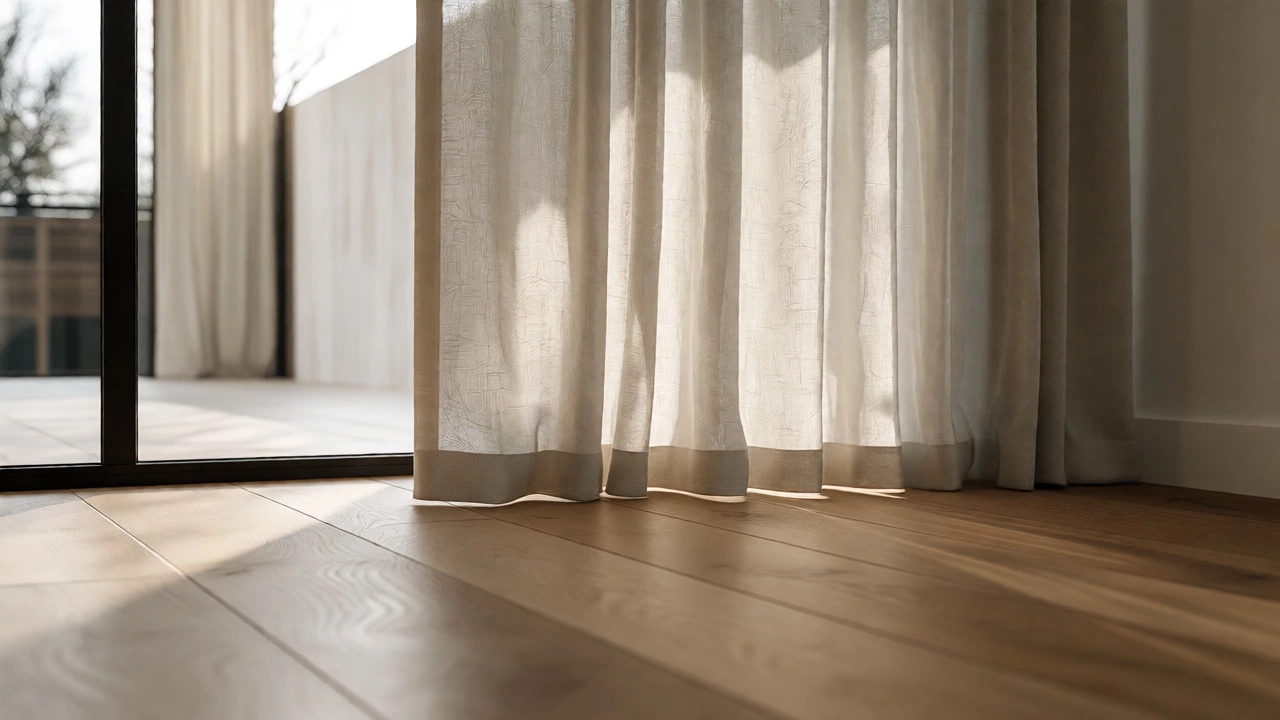
Curtain Clearance Calculator
Find the perfect curtain drop for your specific living situation. Avoid the "too short" look or the high-maintenance puddle.
Recommendation
Select your options above and click Calculate to see the recommended clearance style.
You’re standing on a step stool, measuring tape in hand, staring at your new linen drapes. The question haunting you is simple but stressful: can curtains be 2 inches off the ground? It’s not just about aesthetics; it’s about practicality, cleaning habits, and that elusive "designer" look everyone seems to have except you. The short answer? Yes, they absolutely can. In fact, for many modern homes, this specific clearance is the sweet spot between elegance and everyday reality.
But here’s the thing-there isn’t one universal rule for every room. A bedroom where you want a cozy, pooled effect needs different math than a kitchen where grease and crumbs are enemies of fabric. If you get this wrong, you either end up with curtains that look like they’re floating awkwardly in mid-air or ones that drag through dust bunnies and pet hair. Let’s break down exactly when 2 inches works, when it fails, and how to nail the measurement so you don’t have to re-hem them next week.
The Myth of the "Perfect" Length
Interior design magazines love to show photos of curtains pooling elegantly on marble floors. It looks luxurious. But unless you live in a sterile museum or have a robot vacuum running 24/7, that look is high-maintenance. The industry standard has shifted over the years. We used to see curtains stopping exactly at the sill or hovering several inches above it. Now, the trend leans toward floor-length treatments because they make ceilings look higher and windows appear larger.
So, why is 2 inches such a popular query? Because it’s the compromise. It gives you the visual weight of a floor-length drape without the fabric touching the floor. This is crucial if you mop frequently or if you have kids who might trip over excess fabric. However, calling it "off the ground" is slightly misleading. In professional terms, we talk about the "break." A break is the slight fold or bunching of fabric at the bottom. Without a break, curtains can look stiff and cheap, like they were cut too short by mistake.
When 2 Inches Is Your Best Friend
There are specific scenarios where keeping curtains 2 inches off the floor is not just acceptable-it’s the smartest choice. If you have hard flooring that gets wet often, like tile in a bathroom or entryway, letting fabric touch the ground is a recipe for mildew and stains. Water seeps into the hem, creates dark spots, and eventually ruins the fabric integrity.
Consider these situations:
- Kitchens and Bathrooms: These are high-traffic, high-spill zones. A 2-inch gap prevents splashes from hitting the fabric directly.
- Homes with Pets: If you have dogs that shed or cats that love to chew, elevated hems save your drapes from becoming toys.
- Small Windows: On shorter windows, a long pool of fabric can overwhelm the space. A clean 2-inch break keeps the proportions balanced.
- Rental Properties: You don’t want to damage the floor with heavy, dragging fabric, and you likely don’t want to invest in custom tailoring for a place you might leave in two years.
In these cases, the 2-inch rule provides a crisp, tailored appearance. It signals intentionality. You didn’t just buy curtains that happened to be too short; you chose a length that suits the function of the room.
| Clearance Type | Visual Effect | Best For | Maintenance Level |
|---|---|---|---|
| Float (1-2 inches) | Clean, modern, airy | Kitchens, bathrooms, small rooms | Low |
| Kiss (0-1 inch) | Polished, formal | Living rooms, dining rooms | Medium |
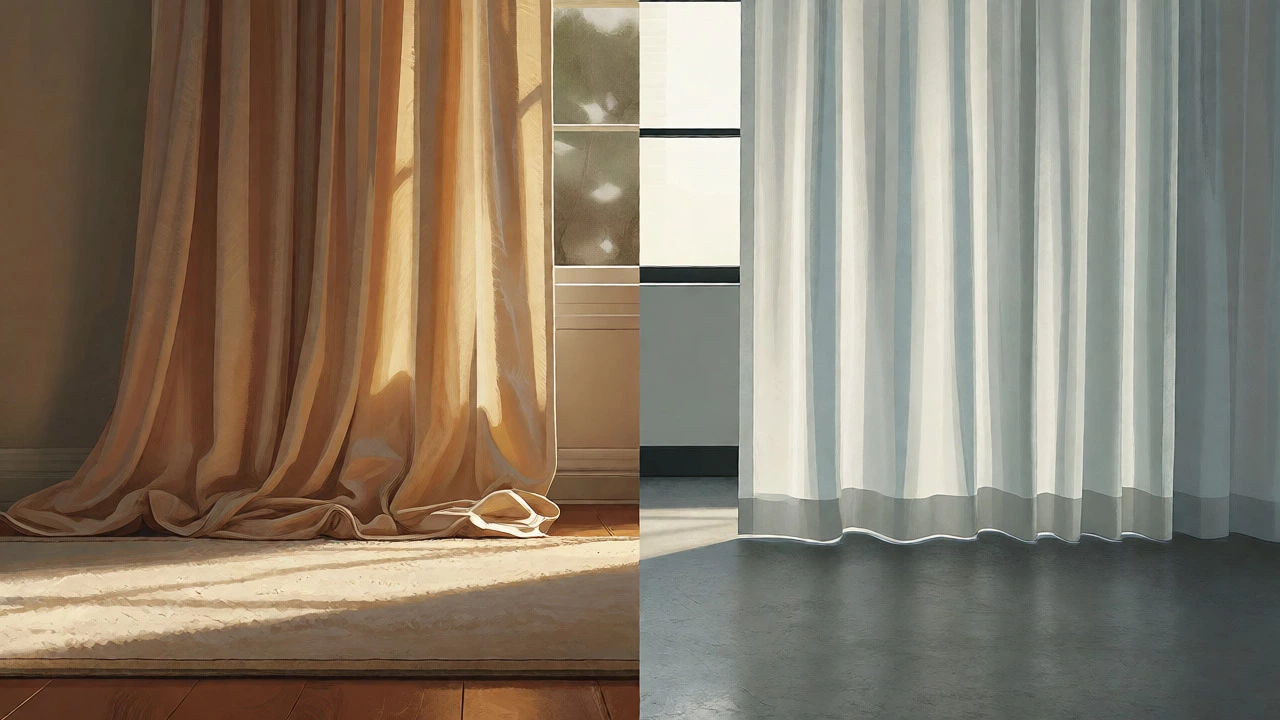
| Break (2-4 inches) | Classic, traditional | Bedrooms, offices | Medium-High |
| Pool (6+ inches) | Luxurious, dramatic | Formal living areas, bedrooms | High |
The Danger Zone: Why Too Short Looks Wrong
Here is where people mess up. They aim for "2 inches off," but they measure incorrectly. If your curtains hang 3 or 4 inches above the floor, they start to look unfinished. It’s similar to wearing pants that are half an inch too short-you notice it immediately, and it distracts from the outfit. With curtains, that gap breaks the vertical line of the wall, making the room feel choppy rather than cohesive.
The eye naturally follows lines. When curtains stop abruptly well above the floor, the eye stops there too. It doesn’t continue down to the baseboard or the rug. To avoid this, precision is key. You need to account for the rod diameter, the ring size, and the header style (like grommet vs. pinch pleat). A grommet curtain hangs differently than a rod-pocket curtain. If you use rings, add the height of the rings to your calculation. If you forget this, your "2-inch" plan turns into a "5-inch" disappointment.
Also, consider the fabric weight. Light, sheer fabrics might billow out, covering that 2-inch gap temporarily, while heavy velvet will hang straight and true. Test your setup before cutting. Hang the curtains, mark the desired length with chalk, and then let them settle for 24 hours. Fabrics stretch and relax. What looks perfect on day one might sag by day three.

Achieving the Look: Measurement Hacks
Don’t trust the label on the package. Ready-made curtains come in standard lengths like 84, 96, or 108 inches. These rarely fit perfectly because ceiling heights vary. Here’s how to get it right:
- Measure from the top of the rod, not the ceiling. Install the rod first. Standard placement is 4-6 inches above the window frame, but some designers go higher to elongate the wall.
- Decide on the break. Do you want the fabric to touch the floor (kiss) or hover? For a 2-inch float, subtract 2 inches from the total drop measurement.
- Add allowance for the header. If you’re using clip rings, the clips add height. Measure from the top of the ring, not the curtain tab.
- Check for uneven floors. Old houses aren’t level. Measure the distance from the floor to the rod at both ends of the window. Use the shorter measurement as your guide to ensure neither side drags.
If you find yourself stuck with curtains that are too long, don’t panic. You don’t always need a tailor. Iron-on hem tape is a quick fix for lightweight fabrics. For heavier drapes, you can use fusible webbing and an iron, though it may not hold up to repeated washing. Alternatively, you can gather the excess fabric at the back with clear fishing line or safety pins-a trick used by stylists for photo shoots.
Style Matters: Fabric and Header Choices
The type of curtain you choose affects how forgiving the length is. Sheer curtains, for example, are often designed to pool slightly even if you intend them to float. The light catches the folds, creating a soft, ethereal effect. If you keep sheers 2 inches off the ground, they might look sparse. Pairing them with heavier drapery panels that do touch the floor can create a layered look that hides the discrepancy.
For solid color drapes, a clean 2-inch break looks sharp and contemporary. This works best with minimalist interiors, Scandinavian designs, or industrial lofts. In contrast, traditional styles with elaborate valances or swags often benefit from a longer break (3-4 inches) to balance the ornate top treatment. The extra fabric at the bottom anchors the complex top.
Think about the texture, too. Linen wrinkles easily. If you have a 2-inch gap, any wrinkle at the bottom is visible against the floor. Heavy cottons or velvets hang smoother, making the precise gap look intentional rather than accidental. If you’re unsure, err on the side of slightly longer. It’s easier to raise a rod by an inch than to lower it if the curtains are already too short.
Maintenance and Practical Reality
Let’s talk about cleaning. Curtains 2 inches off the ground are easier to vacuum around. You can run the nozzle along the baseboard without sucking up the fabric. If they touch the floor, you have to lift them, which is annoying weekly chore. However, if they are too high, you lose the insulation benefit. Floor-length curtains act as a barrier against drafts. A 2-inch gap lets cold air slip underneath in winter.
To mitigate this, ensure your windows are well-sealed. Or, use thermal liners that extend all the way to the sill. Some people install a second layer of blinds behind the curtains for insulation, allowing the curtains to remain decorative and elevated. This hybrid approach gives you the best of both worlds: energy efficiency and low maintenance.
Another factor is sunlight exposure. Direct sun fades fabric. If your curtains are close to the floor, the bottom hem might fade faster than the rest of the panel due to reflected light from the floor. Keeping them elevated reduces this risk slightly, though UV protection is mostly about the material itself. Choose synthetic blends or treated linens if you have intense western-facing sun.
Common Mistakes to Avoid
One major error is ignoring the rug. If you have a thick, plush rug, your curtains might technically be 2 inches off the subfloor but dragging on the rug. Always measure from the top surface of whatever covers the floor where the curtains hang. If the rug moves, consider securing it with non-slip pads or choosing a length that clears the thickest part of the pile.
Another mistake is buying off-the-shelf without trying them on. Order multiple sizes if possible. Most online retailers allow free returns. Hang them, live with them for a day, and see how they interact with your light and furniture. Sometimes, what looks good in the store looks odd in your specific lighting conditions.
Finally, don’t obsess over perfection. Design is about feeling, not just millimeters. If the curtains look balanced and functional, the exact number of inches matters less than you think. Confidence in your choice makes the design work. If you hesitate every time you walk past the window, adjust it. But if it feels right, leave it alone.
Is it better for curtains to touch the floor or float?
It depends on the room's function and style. Touching the floor (or pooling) offers a more formal, luxurious look and better insulation. Floating 1-2 inches off the ground is more practical for high-traffic areas, easier to clean, and suits modern, minimalist aesthetics. There is no single "better" option, only what fits your lifestyle.
How much fabric should I leave for a hem?
Standard hemming usually requires 2-4 inches of extra fabric. If you are buying ready-made curtains and need to shorten them, check if they have a double hem. If they do, you can unpick the stitching and re-hem. If not, you may need to add a separate hem band or use iron-on tape for a temporary fix.
Do curtains make a room look bigger?
Yes, especially if hung correctly. Hanging curtains high (close to the ceiling) and wide (extending beyond the window frame) draws the eye upward and outward, creating the illusion of taller walls and wider windows. Floor-length curtains enhance this effect by continuing the vertical line uninterrupted.
What if my floor is uneven?
In older homes, floors are rarely level. Measure the distance from the rod to the floor at both the left and right edges of the window. Use the shorter measurement to determine your curtain length. This ensures that the curtains won't drag on the higher side of the floor, even if they barely miss the lower side.
Can I wash curtains that touch the floor?
Yes, but it requires care. Check the care label first. Many floor-length curtains need dry cleaning because water can shrink the fabric or cause discoloration at the hem. If they are machine washable, remove hooks or weights before washing to prevent damage to the drum and the fabric.