
Dining Room Couch Fit Calculator
Enter your room dimensions to see if a couch will fit comfortably without crowding the dining area.
Room Dimensions
Layout Visualization
- Total Space Needed: -
- Available Space: -
- Remaining Walkway: -
You’re staring at that empty corner in your dining room and wondering if a sofa would actually work there. Or maybe you have a tiny apartment where the living room is basically non-existent, so the dining table has to do double duty as a hangout spot. The short answer? Yes, you absolutely can put a couch in your dining room. In fact, it’s one of the best ways to make a formal space feel lived-in and comfortable. But it’s not just about dragging an old spare sofa into the room and hoping for the best. It requires a bit of spatial awareness and some smart styling choices.
Before we get into the nitty-gritty of measurements and fabric choices, let’s look at why this trend is taking over homes from Melbourne to Manhattan. Open-plan living has blurred the lines between rooms. Your dining area isn’t just for eating anymore; it’s a transition zone, a workspace, or a place to decompress after dinner. A couch softens the hard edges of a wooden table and chairs, adding texture and warmth that makes people want to linger longer.
When Does a Dining Room Couch Make Sense?
Not every dining room needs a sofa. If you have a dedicated, large family room next door, adding a couch to the dining area might just clutter the space. However, there are specific scenarios where this move is a game-changer:
- The "Living-Dining" Combo: In studio apartments or open-concept lofts, you often don't have enough square footage for two distinct seating areas. A compact loveseat or armchair near the dining table creates a cozy nook without stealing space from the main living zone.
- The Formal Guest Room: If you have a separate dining room that only gets used twice a year, turning it into a hybrid lounge/dining space keeps it active. You can eat there when needed and use the couch for reading or chatting the rest of the time.
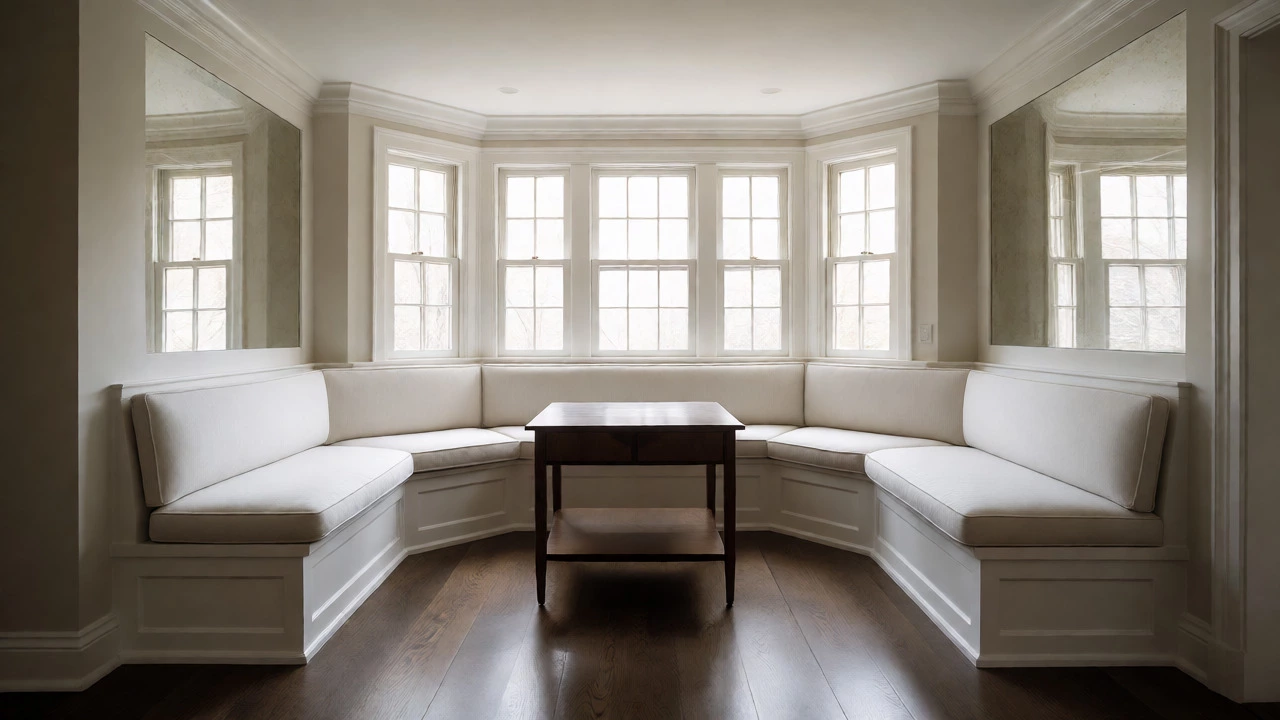
- The Breakfast Nook Upgrade: Instead of standard chairs, a built-in bench (banquette) acts like a fixed couch. This is incredibly space-efficient because benches tuck completely under the table when not in use.
Choosing the Right Type of Seating
The word "couch" can mean anything from a massive three-seater sectional to a sleek velvet settee. For a dining context, size and profile matter more than comfort levels. You need something that doesn't block traffic flow or crowd the table legs.
| Seating Type | Best For | Space Impact | Style Vibe |
|---|---|---|---|
| Banquette | Corners, tight spaces, families with kids | Low (tucks under table) | Cozy, custom, efficient |
| Loveseat | Small-to-medium rooms, couples | Medium (needs clearance) | Elegant, traditional, soft |
| Bench | Long tables, minimalist setups | Low to Medium | Modern, clean, versatile |
| Armchairs | Head-of-table spots, eclectic mixes | High (bulky arms) | Eclectic, luxurious, conversational |
A loveseat is usually the sweet spot for freestanding couches in dining areas. It seats two comfortably but doesn't dominate the room like a full-sized sofa. If you go bigger, ensure it has slim arms. Thick, rolled arms eat up inches of width that could be better spent on legroom for your diners.
Nailing the Measurements
This is where most DIY layouts fail. You cannot just guess. Here is the rule of thumb: You need at least 36 inches (90 cm) of clearance between the edge of the couch and any other piece of furniture or wall. This allows someone to pull out a chair or walk behind the couch without squeezing sideways.
If you are placing a couch against a wall opposite the dining table, measure the total width of the room. Subtract the width of the dining table (plus chair clearance). Then subtract the depth of the couch. If you have less than 3 feet left over, skip the couch. It will feel cramped. For example, in a 12-foot wide room, a 4-foot table plus 3 feet of chair clearance leaves 5 feet. A 3-foot deep couch fits here with 2 feet of walking space behind it-tight, but doable if you keep the back of the couch clear.
Practicality vs. Aesthetics: The Spill Factor
Dining rooms are high-risk zones for food spills. Wine splashes, sauce drips, and crumb accumulation are real issues. If you put a fabric couch right next to the table, you are inviting stains. Here is how to mitigate that risk without sacrificing style:
- Performance Fabrics: Look for materials treated with stain-resistant technology. Crypton or Sunbrella fabrics are designed for indoor/outdoor use but look sophisticated indoors. They wipe clean with a damp cloth.
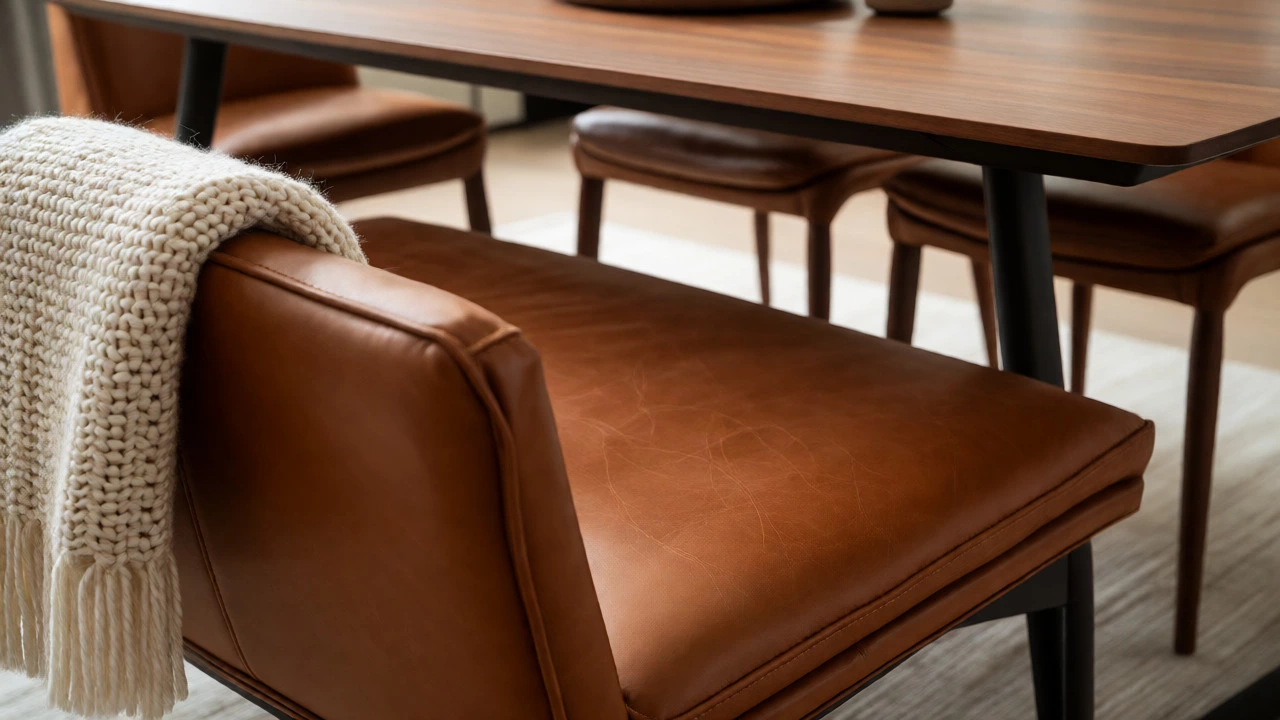
- Leather or Faux Leather: These are easy to wipe down and develop a nice patina over time. Just avoid light colors if you have young children or pets.
- Removable Covers: Choose a couch with zip-off covers that can be machine washed. This is a lifesaver for households with messy eaters.
- Distance Matters: If possible, position the couch slightly away from the primary eating zone. Use it for coffee and conversation after the meal, rather than during the main course.
Styling Tips to Blend the Zones
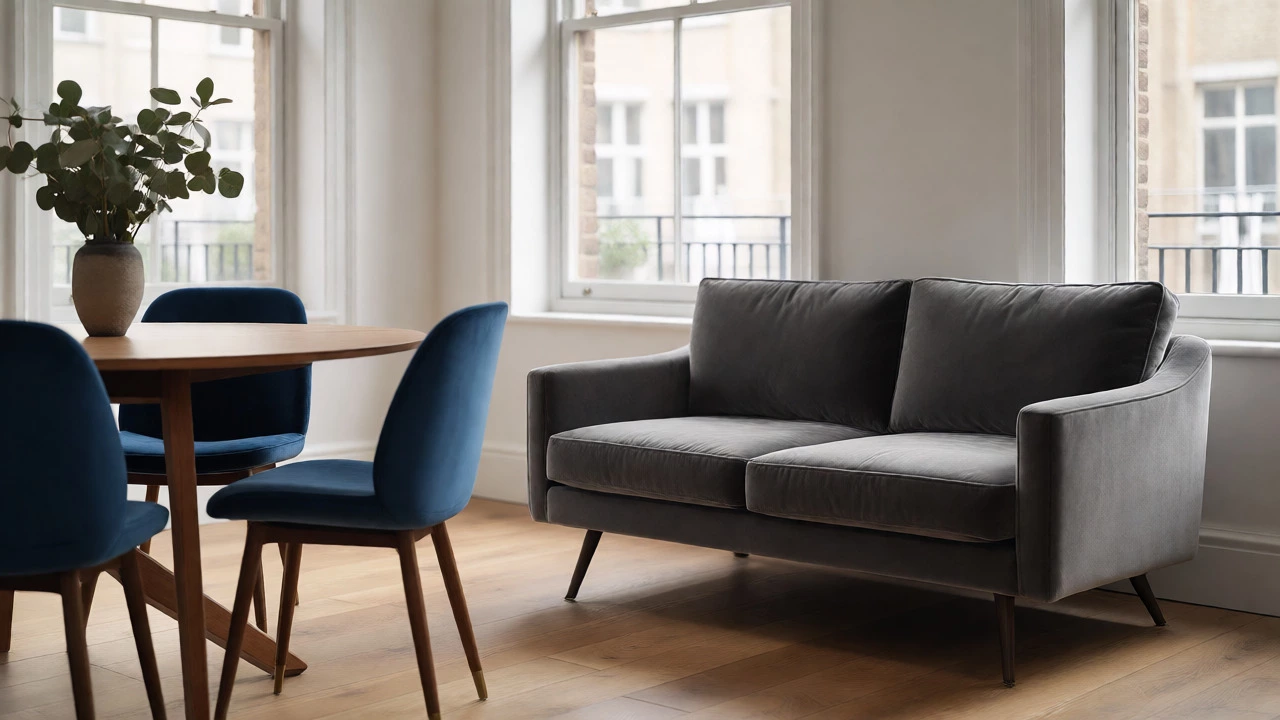
A common mistake is making the couch look like it was stolen from the living room. To make it feel intentional, tie it into the dining decor. Match the upholstery color to your dining chairs or rug. If your dining chairs are navy blue velvet, choose a couch in a complementary shade like charcoal grey or a lighter blue tone. This creates visual continuity.
Rugs play a huge role here. If you have a large area rug under the dining table, consider extending it or using a second smaller rug under the couch area to define the "lounge" zone. Alternatively, if the couch sits on hardwood, a textured throw blanket draped over the back adds warmth and connects it to the cozy vibe of the dining space.
Alternatives If a Full Couch Doesn't Fit
If your measurements show that a full couch is too bulky, don't give up on the idea entirely. There are clever alternatives that offer similar benefits:
- Two Accent Chairs: Place two upholstered armless chairs at one end of the table. They take up less visual weight than a couch but offer the same comfort upgrade.
- A Window Seat: If you have a bay window, build a cushioned seat into it. This uses dead space and provides extra seating without blocking pathways.
- Fold-Down Benches: Install a wall-mounted bench that folds up when not in use. This gives you a "couch-like" surface for pre-dinner drinks but disappears completely when you need floor space.
Ultimately, putting a couch in your dining room is about breaking rigid rules. It’s about creating a space that adapts to how you actually live, not how magazines say you should. Start with your measurements, pick a spill-friendly fabric, and watch how much more welcoming your home feels.
Is it okay to put a leather couch in a dining room?
Yes, leather is an excellent choice for dining rooms because it is durable and easy to clean. Unlike fabric, leather does not absorb liquids quickly, giving you time to wipe up spills before they stain. It also resists odors from cooking, which is a major benefit in open-plan kitchens and dining areas. Just ensure the leather is finished properly to prevent water rings.
How much space do I need between a dining table and a couch?
You generally need at least 36 inches (90 cm) of clearance between the back of the couch and the edge of the dining table or chairs. This ensures that guests can pull out their chairs comfortably and that people can walk behind the couch without bumping into each other. If the space is smaller than 30 inches, consider a backless bench instead of a couch.
Can I use a dining room couch as my main living room sofa?
In small apartments, yes. Many people use a "living-dining" setup where one larger couch serves both functions. To make this work, orient the couch so it faces the TV or fireplace but remains close enough to the table for serving. Use a console table behind the couch to visually separate the zones and provide storage for dining essentials.
What is the difference between a banquette and a regular couch?
A banquette is a built-in bench, often fitted into a corner or along a wall, typically paired with a dining table. Unlike a regular couch, it does not have legs or a frame that moves; it is part of the architecture. Banquettes save space because they tuck under the table, whereas a regular couch takes up its own footprint permanently.
Does a couch in the dining room make the house look smaller?
It can, if chosen poorly. A bulky, dark-colored couch in a small room can shrink the space. To avoid this, choose a couch with exposed legs (which lets light pass underneath), light-colored upholstery, and a low back. Mirrors placed above the couch can also reflect light and create an illusion of depth, preventing the room from feeling cramped.