
Dining Space Finder
What is your primary space constraint?
How many people usually dine at once?
Finding your match...
Loading recommendation...
Quick Wins for Your Space
- Kitchen Islands: Perfect for casual meals and food prep.
- Breakfast Bars: Great for narrow rooms and quick bites.
- Bistro Sets: Ideal for cozy, two-person corners.
- Foldable Options: Best for those who only host occasionally.
- Floating Shelves: The ultimate space-saver for tiny apartments.
The Power of the Kitchen Island
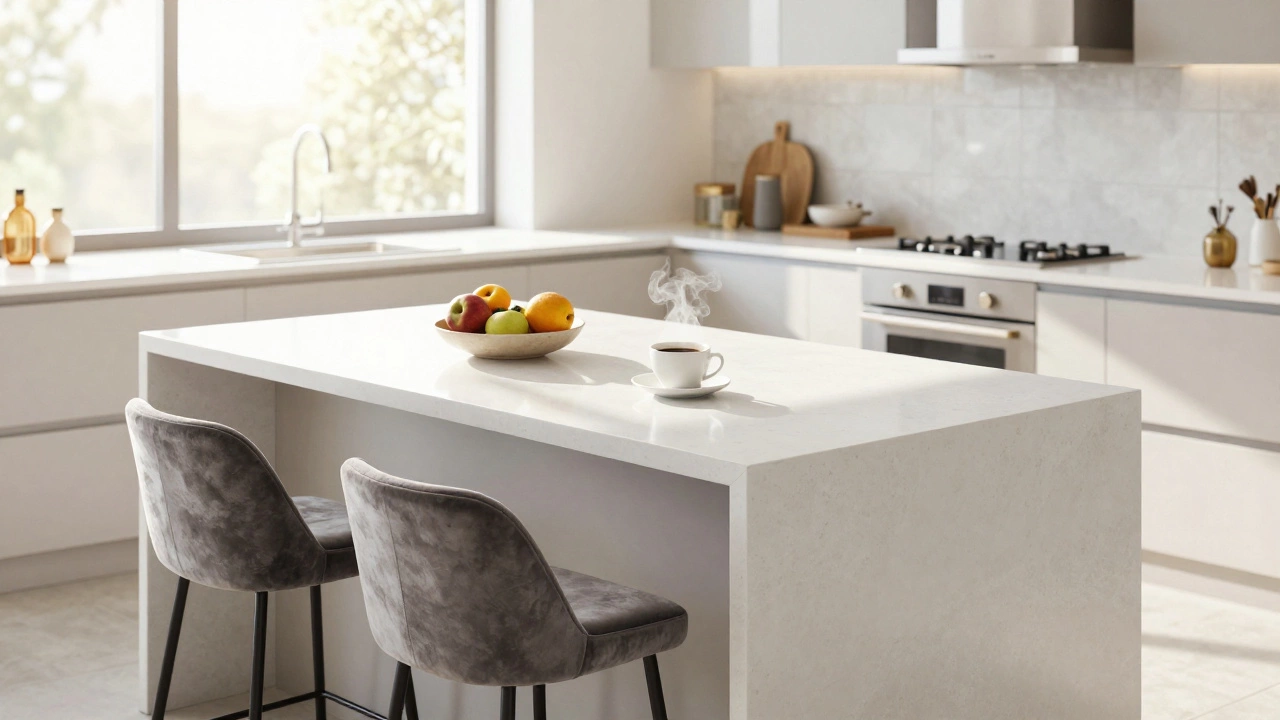
If you have the room in your kitchen, a Kitchen Island is the most practical dining table alternatives choice. Unlike a standalone table, an island works double duty. It gives you extra counter space for chopping vegetables and a place to put your laptop, all while serving as a hub for morning coffee.
To make this work as a dining spot, you need the right height. Standard countertops are about 36 inches high, which means you'll need Counter Stools. If you prefer a more relaxed, bar-like feel, look for an island with a raised tier-usually around 42 inches-which allows you to hide the kitchen mess from guests sitting on the higher side.
Creating a Breakfast Bar
For those with a long, narrow layout, a Breakfast Bar is a game-changer. Instead of a table that blocks the walking path, you attach a narrow ledge directly to the wall or the back of a counter. It's a minimalist approach that keeps the floor clear, making the room feel twice as large.
I've seen this work wonders in studio apartments. By installing a deep wooden slab-say, 15 to 18 inches wide-along a sunny wall, you create a dedicated eating zone without the bulk. Pair it with sleek, backless stools that slide completely under the ledge when not in use. This prevents the "obstacle course" feeling in small homes.
The Cozy Charm of Bistro Sets
Do you actually host ten people every Sunday? If the answer is no, a massive table is just wasted square footage. A Bistro Set consists of a small, round table (usually 30 inches in diameter) and two chairs. These are designed for intimacy and efficiency.
Round shapes are key here because they eliminate sharp corners, allowing for a smoother flow of movement. Place a bistro set in an unused corner or by a window to create a 'cafe vibe' right in your own home. It's less about a formal dinner party and more about a quiet place to read a book or enjoy a bowl of pasta.
| Option | Best For | Space Required | Versatility |
|---|---|---|---|
| Kitchen Island | Cooking & Socializing | High | Very High |
| Breakfast Bar | Narrow Spaces | Low | Medium |
| Bistro Set | Couples/Singles | Medium | Medium |
| Drop-Leaf Table | Occasional Guests | Variable | High |
Wall-Mounted and Folding Solutions
When space is non-existent, you have to look at the walls. A Wall-Mounted Table-often called a floating table-is a piece of furniture that can be flipped down when you need it and folded flat against the wall when you don't. This is the ultimate solution for people who prioritize floor space over a permanent dining area.
If you need something a bit more substantial but still flexible, consider a Drop-Leaf Table. These tables have sides that can be lowered. You can keep it as a thin console table against the wall for 90% of the year, then flip the leaves up when your family visits for the holidays. It gives you the flexibility of a small space with the capacity of a traditional dining room.
Integrating a Breakfast Nook
If you want a spot that feels more like a "destination" than just a place to eat, a Breakfast Nook is the way to go. This usually involves Banquette Seating-built-in benches that hug the corner of the room. By pushing the seating against the walls, you remove the need for the "clearance zone" usually required for chairs to pull out.
The beauty of a nook is that it creates a cozy, enclosed feeling. You can use a small pedestal table in the center, which prevents legs from getting in the way of people sliding into the bench. This setup is particularly effective in L-shaped rooms where a traditional table would feel awkward.
Rethinking the 'Dining Room' Concept
Sometimes the best alternative to a table is to stop thinking about the room as a "dining room" entirely. Why not turn that area into a Multi-purpose Zone? Use a large, sturdy ottoman or a coffee table with a lift-top mechanism in your living area. With a few trays and some cushions on the floor, you can transition from a movie night to a tapas dinner in seconds.
This flexible approach removes the psychological pressure of a formal dining space. Instead of a rigid room that only gets used twice a year, you create a living space that adapts to your actual habits. Whether it's a repurposed sideboard serving as a temporary buffet or a folding tray table for a cozy night in, the focus shifts from the furniture to the experience.
Can I use a kitchen island as my only dining surface?
Yes, absolutely. Many modern homes have completely replaced the formal dining table with an oversized island. The key is to ensure you have comfortable seating, such as stools with back support, and enough overhang (usually 10-15 inches) so your legs aren't hitting the cabinetry.
What is the best option for a very tiny studio apartment?
A wall-mounted drop-leaf table is usually the best bet. It stays out of the way during the day and provides a functional surface for meals or work when needed. Alternatively, a narrow breakfast bar along a wall takes up minimal floor space while providing a permanent spot to eat.
Are bistro sets practical for more than two people?
Bistro sets are designed for two. If you have a third person, it can feel very crowded. If you frequently have 3-4 people but still want a small footprint, look for a small round table with a 36-inch diameter instead of the standard 30-inch bistro size.
How do I choose the right stool height for a bar or island?
Match the stool to the surface. For standard kitchen counters (36"), use counter stools (approx 24-26"). For higher bars or islands (42"), use bar stools (approx 28-30"). Always leave about 10-12 inches of space between the seat and the underside of the counter for leg comfort.
What is a banquette and why does it save space?
A banquette is a built-in upholstered bench, usually placed against a wall or in a corner. It saves space because it eliminates the need for the "push-back" area that traditional chairs require. You can fit more people into a smaller footprint by utilizing the wall as the backrest.
What to Do Next
If you're still unsure which path to take, start by tracking your movements for one week. Do you find yourself eating most meals on the sofa? Then a lift-top coffee table is your best bet. Do you spend your mornings rushing through toast? A breakfast bar will serve you better. Once you identify your primary 'eating habit,' the choice of furniture becomes much simpler. If you're renting, start with non-permanent options like bistro sets or freestanding islands before committing to wall-mounted installations.