Dining Room Credenza Height Finder
Find the perfect fit for your space by analyzing your existing furniture and room constraints.
Room & Furniture Inputs
Recommendation
Visual Proportion Preview
Note: Visualizer scales inputs for proportional comparison only.
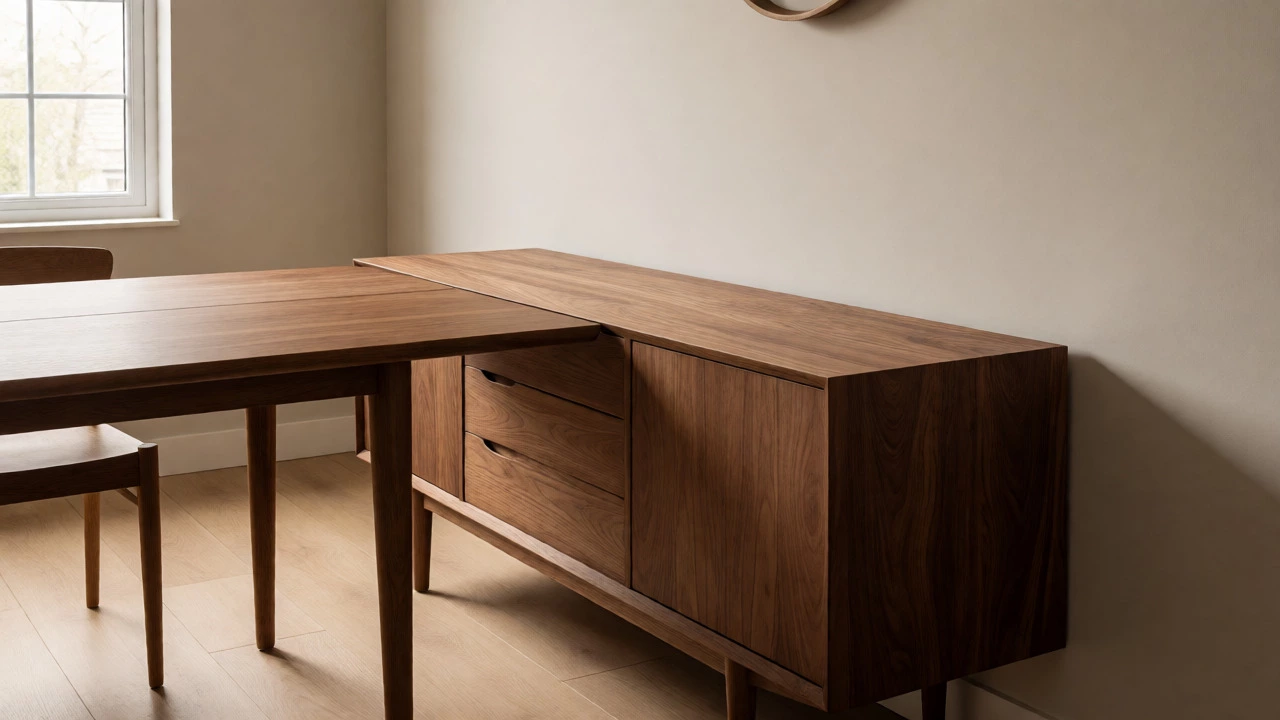
You just found the perfect credenzaa long, low storage cabinet often used in dining rooms for serving and display. It has the right wood tone, enough drawers for your linens, and that mid-century vibe you love. But when you measure it against your existing table or chair backs, something feels off. Is it too tall? Too short? Will it block the view across the room?
Getting the height wrong isn't just an aesthetic miss; it can make a room feel cramped or disjointed. The standard answer is simple-29 to 31 inches-but reality is messier than that. Your ceiling height, the type of chairs you own, and how you plan to use the piece all change the math. Let’s break down exactly how to find the right fit so your credenza looks intentional, not accidental.
The Standard Rule of Thumb
If you want a quick answer before diving into the nuances, here it is: most dining room credenzas stand between 29 and 31 inches (74-79 cm) tall. This range isn't arbitrary. It aligns with two critical ergonomic benchmarks in home design.
First, it matches the average seat height of a standard dining chair, which sits around 18 inches from the floor, plus the backrest. Second, it keeps the top surface within easy reach for standing adults without requiring them to stretch awkwardly. If you’re buying a mass-produced piece from a big-box store, this is almost certainly what you’ll get. It’s safe, it’s functional, and it works in 90% of homes.
But "standard" doesn’t mean "optimal." A 30-inch credenza next to a towering high-back wing chair might look stunted. Conversely, placing a 36-inch tall piece next to a sleek, low-profile modern bench can make the room feel unbalanced. You need to look at context.
Matching Your Dining Table Height
One of the biggest mistakes people make is ignoring their dining table. While the credenza doesn’t need to match the table height exactly, there should be a visual relationship. Standard dining tables are typically 28 to 30 inches high. If your credenza is significantly taller than your table, it can visually dominate the space, making the table feel small and insignificant.
A good heuristic is to keep the credenza top level with or slightly below the tabletop. Why? Because when guests are seated, they shouldn’t have to crane their necks to see over the credenza if it’s behind them. More importantly, when you’re standing and serving food, you want a seamless flow. If the surfaces are roughly equal, moving dishes from the table to the credenza (or vice versa) feels natural. If the credenza is much higher, you’re lifting plates up unnecessarily. If it’s much lower, you’re bending down.
| Furniture Piece | Standard Height Range | Design Goal |
|---|---|---|
| Dining Table | 28-30 inches | Ergonomic eating surface |
| Credenza / Sideboard | 29-31 inches | Serving convenience & visual balance |
| High-Back Chairs | 35-45 inches | Comfort & support |
| Buffet (Tall) | 36+ inches | Display & vertical interest |
Consider Your Chair Backs
Here’s where things get specific. Look at the chairs currently around your table. Are they low-slung modern pieces with backs ending at 30 inches? Or are they traditional wingbacks that shoot up to 45 inches?
If you have tall-backed chairs, a standard 30-inch credenza might disappear behind them when viewed from certain angles. In this case, going slightly taller-say, 32 to 34 inches-can help the credenza hold its own visually. It creates a stepped effect rather than a hidden one. However, don’t go too high. Once you pass 36 inches, you’re entering "bookshelf" territory, and the piece loses its function as a convenient serving surface.
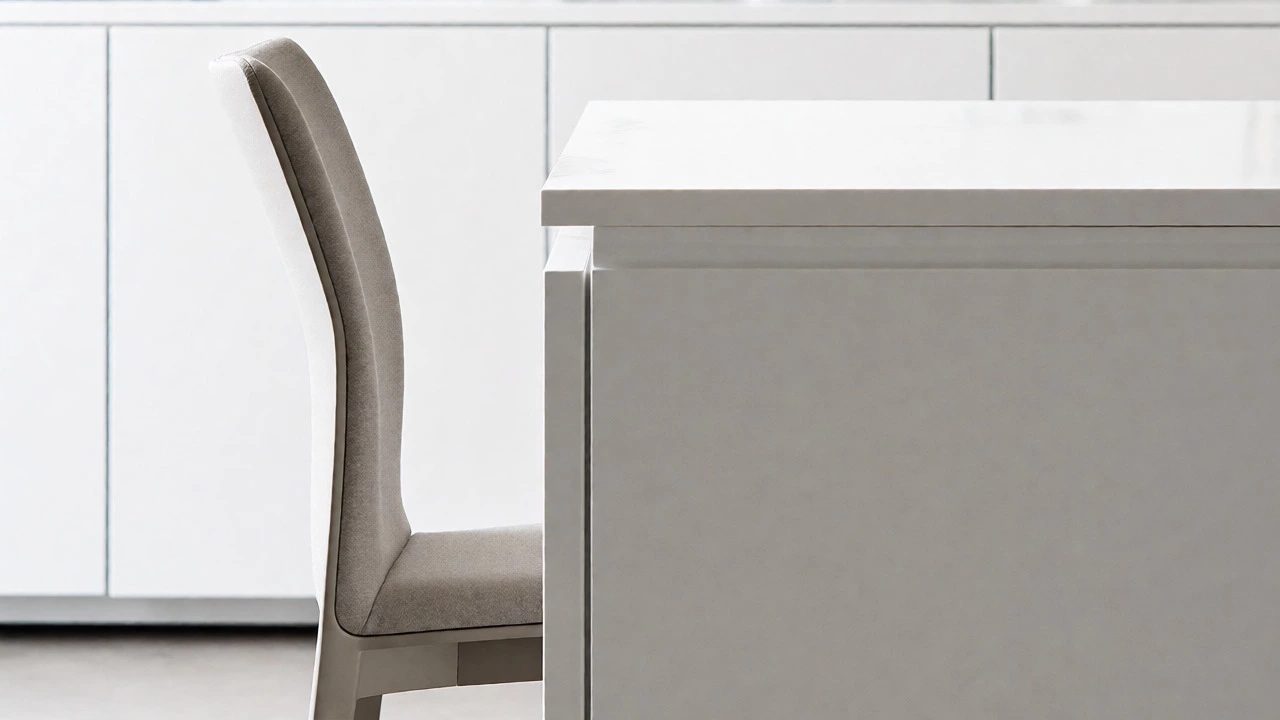
Conversely, if your chairs are armless and low-profile, a standard-height credenza provides necessary verticality. It adds weight to the room without overwhelming the delicate lines of the seating. The goal is harmony. You want the eye to travel smoothly from the chair to the credenza without hitting a jarring jump in height.
Function Dictates Form
Why do you actually need a credenza? The answer changes the ideal height.
For Serving: If this piece will hold platters of food during dinner parties, stick to the 29-31 inch sweet spot. This height allows you to place large serving bowls on top without blocking the sightlines of seated guests. You also want to ensure you can reach the center of the top surface easily while standing. Anything deeper than 18 inches becomes hard to access if it’s too high.
For Storage: If you’re using it primarily to hide clutter-wine glasses, extra napkins, board games-height matters less than internal configuration. However, taller units (up to 36 inches) offer more shelf space inside. Just be aware that the top surface becomes a display zone rather than a utility zone. You won’t want to put heavy casserole dishes on a tall, narrow unit because it might tip or look unstable.
For Display: Do you have art hanging above it? Or a collection of vases you want to showcase? Taller credenzas (34-36 inches) act like pedestals. They bring objects closer to eye level for standing viewers. This is great for open-concept spaces where the credenza acts as a room divider. You want people walking by to see what’s on top without bending down.
Proportion and Room Size
Height isn’t just about inches; it’s about perception. In a small dining room with 8-foot ceilings, a bulky 36-inch credenza can feel oppressive. It eats up vertical space and makes the room feel smaller. In these cases, opt for a lower profile (28-29 inches) or choose a leggy design with open space underneath. This lets light pass through and maintains a sense of airiness.
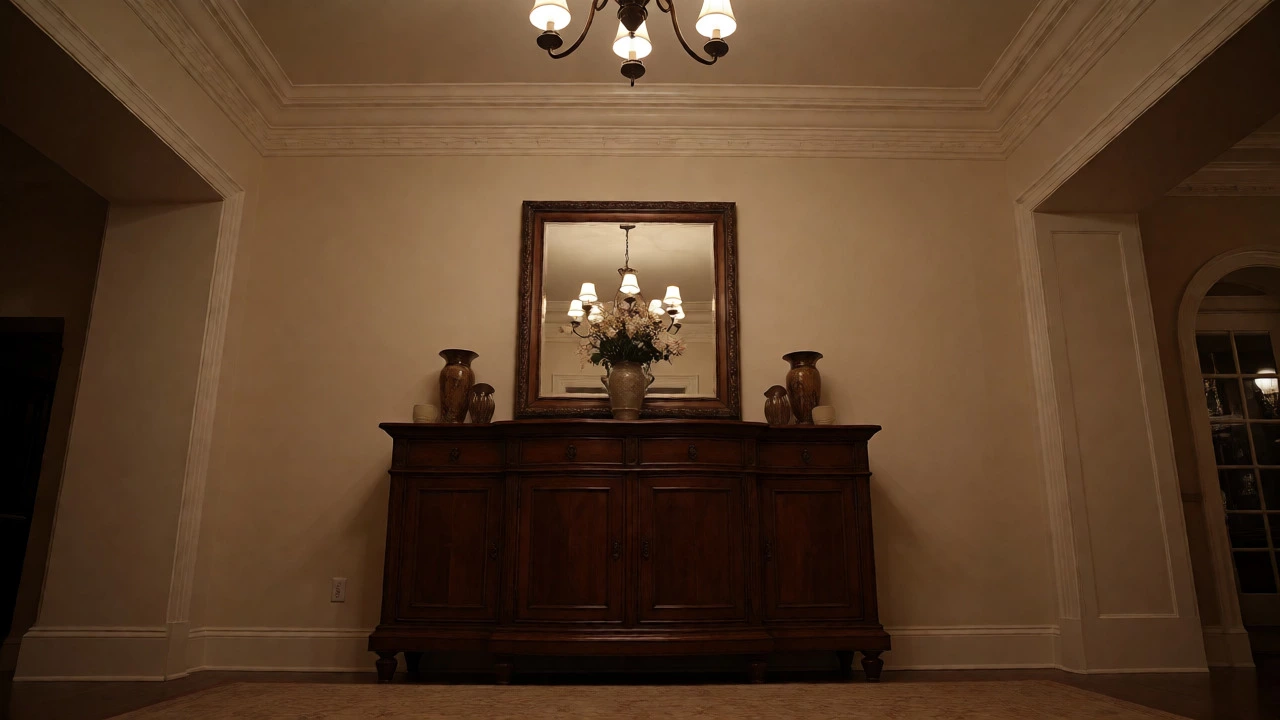
In contrast, a grand foyer or a formal dining room with 10-foot ceilings needs substance. A dinky 29-inch credenza might look toy-like against a massive wall. Here, a taller piece (32-34 inches) fills the void and anchors the room. If you have very high ceilings, consider adding a mirror or artwork above the credenza to bridge the gap between the furniture top and the ceiling line.
Also, consider the width relative to height. A wide, low credenza reads as horizontal and grounding. A narrow, tall one reads as vertical and airy. Match this to your room’s dominant lines. If your room has lots of horizontal elements (long windows, wide tables), a slightly taller credenza adds needed vertical contrast.
Common Pitfalls to Avoid
Don’t let the seller tell you "one size fits all." Measure your space first. Use painter’s tape to mark the outline of the credenza on the floor and wall. Step back. Does it crowd the walkway? You need at least 36 inches of clearance behind the credenza if you plan to sit at the table facing it, or 48 inches if you need to walk behind it while someone else is sitting.
Another trap: ignoring the rug. If your dining table sits on a rug, does the credenza legs land on the rug or the bare floor? If it’s on the bare floor, a slight difference in height due to rug pile thickness might cause wobbling. Ensure the legs are adjustable or the floor is level.
Finally, think about lighting. A tall credenza might cast shadows on the wall behind it, especially if you have sconces. Check how the light hits the piece at night. Sometimes, lowering the height by just two inches solves a glare issue.
Final Checklist Before Buying
- Measure your table: Note the exact height of your tabletop.
- Check your chairs: Measure the highest point of the chair back.
- Assess usage: Will you serve food on top? If yes, stay under 32 inches.
- Evaluate the room: Small room = lower profile. Large room = taller presence.
- Test the reach: Can you comfortably place a plate in the center of the top surface?
There is no single "correct" number, but there is a correct number for your room. By balancing ergonomics with aesthetics, you’ll end up with a piece that feels like it was custom-made for your home, even if you bought it off the shelf.
Is a credenza the same as a sideboard?
Yes, in modern usage, the terms are often interchangeable. Both refer to a low, long storage cabinet used in dining rooms. Technically, a sideboard might imply a piece used specifically for serving, while a credenza (from the Italian 'credere' meaning to believe/trust) historically referred to a piece where silverware was tested for poison. Today, they share the same height standards: 29-31 inches.
Can I use a bookcase as a credenza?
You can, but check the depth and height. Bookcases are often deeper (12-15 inches vs. 18-20 inches for credenzas) and taller (36+ inches). If you use a bookcase, you lose some counter space for serving. To make it work better, style the top carefully and ensure it doesn't tower over your dining chairs, which can create a visual barrier.
How much clearance do I need behind a credenza?
If the credenza is placed behind dining chairs, you need at least 36 inches of space between the back of the chair and the front of the credenza to allow people to pull out their chairs. If it's in a walkway, aim for 48 inches to allow comfortable passage. If it's purely decorative against a wall, 24-30 inches is sufficient for cleaning access.
Should the credenza match the dining table?
No, it doesn't need to match perfectly. In fact, mixing finishes (e.g., a walnut credenza with an oak table) adds character. However, they should share a similar style era or design language. A rustic farmhouse credenza next to a sleek glass modern table might clash unless intentionally styled as eclectic.
What if my ceiling is very low?
In rooms with low ceilings (under 8 feet), choose a credenza with legs rather than a solid base. This exposes more floor area, creating an illusion of height. Stick to the lower end of the height spectrum (28-29 inches) and avoid tall decor on top. Mirrors above the credenza can also reflect light and trick the eye into perceiving more vertical space.