

Nightstand Spacing & Height Calculator
Find the perfect distance between your bed and nightstand to ensure comfort, safety, and functionality.
Your Recommended Setup
Ideal Nightstand Height
Target: --
Align the top of the nightstand with the top of your mattress for easy sliding of objects.
Ideal Horizontal Gap
Range: --
Distance from the edge of the bed frame to the side of the nightstand.
Why this recommendation?
- Reachability: Ensures you can grab essentials without rolling over.
- Cleaning: Prevents dust traps while allowing vacuum access.
- Functionality: Accounts for drawer clearance and bed frame protrusions.
You wake up at 3 AM, thirsty and half-asleep. You reach out for your glass of water, but instead of smooth wood or metal, your hand hits empty air-or worse, the wall three feet away. This is the classic mistake of bad nightstand spacing. It’s not just about aesthetics; it’s about ergonomics. If you’ve ever felt like your bedroom furniture is fighting against you rather than supporting your rest, the distance between your mattress and your side table is likely the culprit.
The Golden Rule: Reachability Over Aesthetics
Let’s cut through the design jargon. The primary job of a Nightstand is to hold essentials within arm's reach while you are lying down. That means the gap between the edge of your bed and the nightstand needs to be small enough that you don’t have to roll over, but large enough that you can open drawers without hitting the mattress.
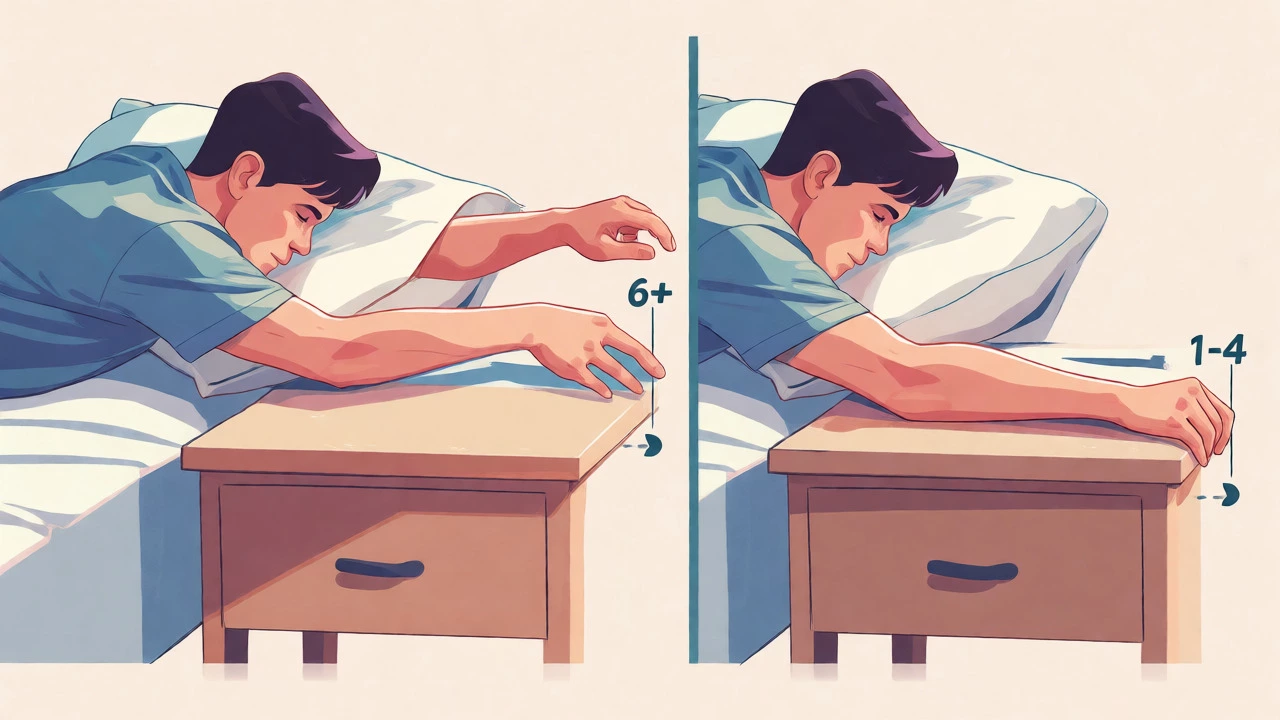
For most people, this sweet spot is between 1 to 4 inches (2.5 to 10 cm). Yes, that’s it. Anything less than an inch risks scratching your floorboards or trapping dust bunnies in a space too narrow to vacuum. Anything more than 6 inches starts feeling like a separate piece of furniture rather than a functional extension of your bed. If you’re taller than average or have limited mobility, lean toward the smaller end of that spectrum-closer is better for safety.
Why Standard Measurements Fail Some People
Most interior design blogs say "leave 6 inches," but they aren’t measuring your body. They’re measuring standard twin beds against standard IKEA tables. Here is where things get personal. Your ideal spacing depends on three specific variables: your mattress width, your drawer depth, and your sleeping habits.
- Mattress Width: A King-size bed has more surface area, meaning you might sleep closer to the edge. If you sleep near the border, a 2-inch gap feels cramped because your elbow might bump the table leg when you stretch. In this case, aim for 4-6 inches.
- Drawer Clearance: Do you pull out top drawers frequently? Measure your drawer depth. If the drawer pulls out 12 inches, you need at least 12 inches of clear space in front of it to open fully. If your bed frame has a bulky skirt or storage box underneath, subtract that overhang from your available space.
- Bed Frame Type: Platform beds often sit flush with the floor, allowing nightstands to tuck slightly under if designed for it. Upholstered beds with wide arms require more lateral space to avoid visual clutter and physical collision.
Height Matters More Than Distance
You might fix the horizontal gap but still hate how your nightstand feels. Why? Because the height is wrong. There is a strict ergonomic rule here: The top of the nightstand should be level with the top of your mattress.
If your nightstand is too low, you have to reach down, straining your shoulder. If it’s too high, you risk knocking items off as you lie back. For a standard mattress height of 24 inches, look for a nightstand between 24 and 28 inches tall. If you have a thick pillow-top mattress adding 6 inches, your nightstand needs to be 30+ inches. This vertical alignment creates a seamless flow from bed to table, making the horizontal distance feel much more forgiving.
Small Bedroom Hacks: When Space Is Tight
Living in a compact Melbourne apartment or a tiny guest room? You might not have room for even a 1-inch gap. That’s fine. In tight quarters, functionality trumps breathing room. Consider these alternatives:
| Solution | Space Saving Benefit | Ergonomic Impact |
|---|---|---|
| Wall-Mounted Shelves | Zero footprint on the floor | Requires reaching up; ensure shelf is at mattress height |
| Under-Bed Sliders | Tucks completely under the bed frame | Low access point; good for books, bad for lamps |
| Nesting Tables | Can be pulled close only when needed | Flexible positioning; may wobble if not locked |
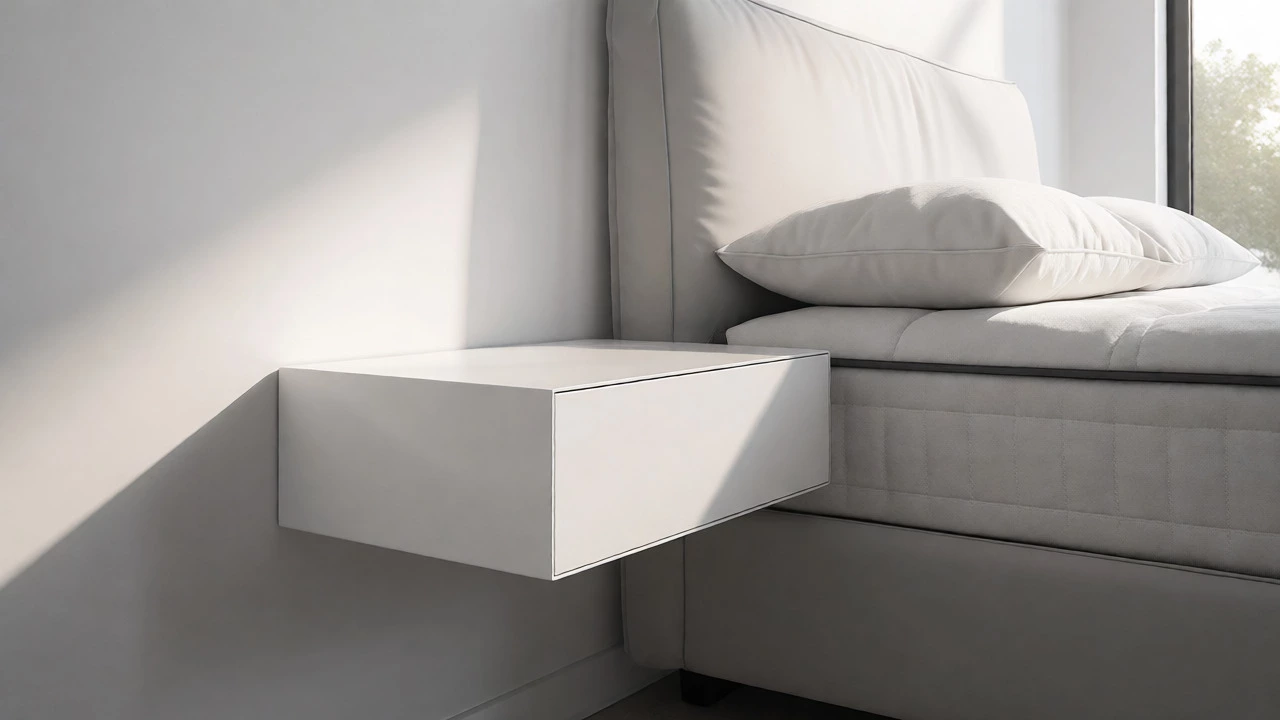
| Floating Nightstands | Visual lightness; no legs to trip over | Fixed position; must be installed at exact mattress height |
A floating nightstand attached directly to the headboard wall eliminates the gap entirely. You install it so it floats 1-2 inches above the mattress line. This looks modern and saves every square inch of floor space. Just make sure it’s anchored securely into studs, not just drywall, especially if you plan to load it with heavy books or a tablet.
Common Layout Mistakes to Avoid
Beyond the raw numbers, there are behavioral patterns that ruin a good setup. First, ignoring the door swing. If your bedroom door swings inward and hits the nightstand, you’ll naturally push the nightstand further away, creating that awkward 10-inch gap. Always check traffic flow before finalizing placement.
Second, forgetting about cleaning. That 1-inch gap? It becomes a black hole for socks, phone chargers, and dust. If you hate crawling under the bed to retrieve dropped items, consider a nightstand with a solid base or a rug that extends under both pieces. Alternatively, use a slim profile nightstand that sits flush against the bed frame if the design allows, eliminating the gap entirely. Note that some manufacturers explicitly warn against pushing furniture flush against upholstered sides due to potential fabric wear, so check your warranty.
How to Test Your Current Setup
Don’t guess. Test it tonight. Lie in bed exactly as you usually do. Close your eyes. Reach for where you expect your lamp or water to be. Did you hit it instantly? Or did you fumble? If you fumbled, move the nightstand two inches closer. Repeat until your muscle memory takes over. If you find yourself rolling your body to reach the table, it’s too far. If you feel like you’re climbing onto the table to get out of bed, it’s too close.
Remember, the goal isn't to follow a rulebook written by someone who doesn't sleep in your bed. It’s to create a sanctuary where everything you need is effortless to grab. Start with the 1-to-4-inch guideline, adjust for your mattress height, and prioritize ease of movement over perfect symmetry.
Is it okay if my nightstand touches the bed?
Yes, if you have very little space. Touching prevents gaps where dust accumulates. However, ensure the materials won't scratch each other (use felt pads) and that you can still open any drawers without obstruction. For upholstered beds, constant friction might wear the fabric over time, so a 1-inch buffer is safer.
What if I don't have a nightstand on one side?
Asymmetry is perfectly fine in modern design. Many people prefer a larger dresser or bench on one side and a small floating shelf on the other. The key is that essential items (lamp, phone, water) are accessible from the sleeping position. If you share the bed, ensure both partners have equal access to their own lighting and charging points.
How far should a nightstand be from the wall?
If your nightstand is against the wall opposite the bed, leave enough space to walk comfortably behind it if possible, or simply place it flush against the wall if space is tight. If it's on a freestanding wall, leave at least 2-3 inches for cable management and to prevent scuff marks from moving the unit during cleaning.
Does the type of bed frame change the spacing?
Absolutely. Sleigh beds with curved arms extend outward, requiring more lateral space (up to 6-8 inches) to avoid looking crowded. Platform beds with thin frames allow for tighter spacing (1-2 inches). Canopy beds with posts may require the nightstand to be placed outside the post perimeter, increasing the effective distance significantly.
What is the best height for a nightstand?
The top of the nightstand should align with the top of your mattress. This allows you to slide objects from the table to the bed (or vice versa) without lifting them up or dropping them down. Measure your mattress height including the foundation before buying furniture.