
Bed Sheet Inventory Calculator
Find your perfect linen rotation count. The standard recommendation is 3 sets per bed, but life happens. Adjust for pets, kids, and climate to see your custom number.
Your Situation
Recommended Total Sets
Why This Number?
- The Baseline (3 Sets): Covers immediate use, active washing cycle, and emergency backup.
- Pets/Kids (+1 Set): Accounts for unexpected accidents or increased shedding requiring more frequent swaps.
- Allergies (+1 Set): Allows for aggressive washing schedules without running out of clean linens.
- Seasonal Rotation (+1 Set): Ensures you have appropriate fabrics (e.g., flannel vs. linen) ready for weather changes.
- Low Laundry Frequency (-1 Set): If you wash rarely, you rely more on stored sets, but risk mustiness if not aired out.
You know that feeling when you strip the bed on a Sunday morning, only to realize the clean sheets are still in the dryer? Or worse, they’re buried under a pile of laundry you haven’t touched in two weeks? It’s annoying, right? That’s usually the moment we realize our bed sheet inventory is dangerously low. But how many do you actually need? Is three sets enough for a family of four? Do you really need five for yourself?
The answer isn’t one-size-fits-all. It depends on your climate, your washing habits, and how much effort you want to put into laundry day. Let’s break down exactly how many sets you need so you never have to sleep on a bare mattress again.
The Magic Number: Three Sets Per Bed
If you take nothing else from this article, remember this rule of thumb: three sets per bed. This is the golden standard recommended by most interior designers and home organization experts. Why three? Because it covers all your bases without cluttering your linen closet.
Here is how those three sets work in rotation:
- Set 1 (On the Bed): This is your current set. It’s what you sleep on tonight.
- Set 2 (In the Wash): When you strip Set 1, Set 2 goes into the washer or dryer. This ensures you always have a fresh backup ready within hours.
- Set 3 (In Storage): This is your emergency buffer. If Set 2 shrinks, gets stained, or takes too long to dry, you have a clean set waiting on the shelf.
Having fewer than three sets creates stress. Having more than five often leads to wasted space and money unless you have specific needs like allergies or kids who wet the bed.
Factors That Change Your Sheet Count
While three is the baseline, real life complicates things. Here are the variables that might push your number up or down.
Your Climate and Seasonality
If you live in Melbourne, like I do, you know the weather can swing wildly. In summer, you might prefer breathable cotton percale sheets that feel cool to the touch. In winter, you might switch to heavier flannel or brushed cotton. If you rotate materials based on seasons, you’ll likely need at least four sets: two for summer, two for winter, plus backups.
In hotter climates where you sweat more, you might wash sheets weekly instead of bi-weekly. This increases wear and tear, meaning you replace them faster. Keeping an extra set helps extend the lifespan of your favorites by giving them rest periods between washes.
Pets and Kids
Let’s be honest: pets shed, and accidents happen. If you have a dog sleeping on the bed or toddlers prone to midnight mishaps, bump your count up to four or five sets. You don’t want to be scrubbing urine out of expensive Egyptian cotton at 2 AM while searching for a spare set in a messy closet.
For households with allergies, frequent washing is non-negotiable. Dust mites thrive in warm, damp bedding. Washing weekly is ideal, but if you can’t manage that, having multiple sets allows you to swap them out quickly and wash less frequently without compromising hygiene.
Laundry Frequency
How often do you actually do laundry? If you’re a “once a month” person, you might get away with two sets, but you risk musty smells if the stored sheets aren’t aired out properly. If you’re a “weekly” person, three sets are perfect. If you hate doing laundry altogether, consider buying higher-quality, durable sheets that resist odor better, though you’ll still need the rotation to keep them fresh.
Material Matters: Durability vs. Comfort
Not all sheets age the same way. Knowing the material helps you decide how many backups you need.
| Material | Lifespan (Years) | Wash Frequency | Best For |
|---|---|---|---|
| Percale Cotton | 3-5 | Weekly/Bi-weekly | Hot sleepers, durability |
| Sateen Cotton | 2-4 | Bi-weekly | Softness, cooler climates |
| Flannel | 2-3 | Monthly | Cold winters, cozy feel |
| Linen | 5-10+ | Bi-weekly/Monthly | Eco-conscious, texture lovers |
Linen is interesting because it lasts forever. A single high-quality linen set can last a decade. However, linen wrinkles easily and takes longer to dry. You might need fewer sets overall, but you’ll spend more time ironing or accepting the rumpled look. Percale is crisp and durable but can pill over time. Sateen feels luxurious but wears out faster due to its tighter weave. Adjust your inventory based on which material you choose.
Storage Solutions for Multiple Sets
Buying four or five sets sounds great until you try to fit them into a tiny apartment closet. Here’s how to store them efficiently:
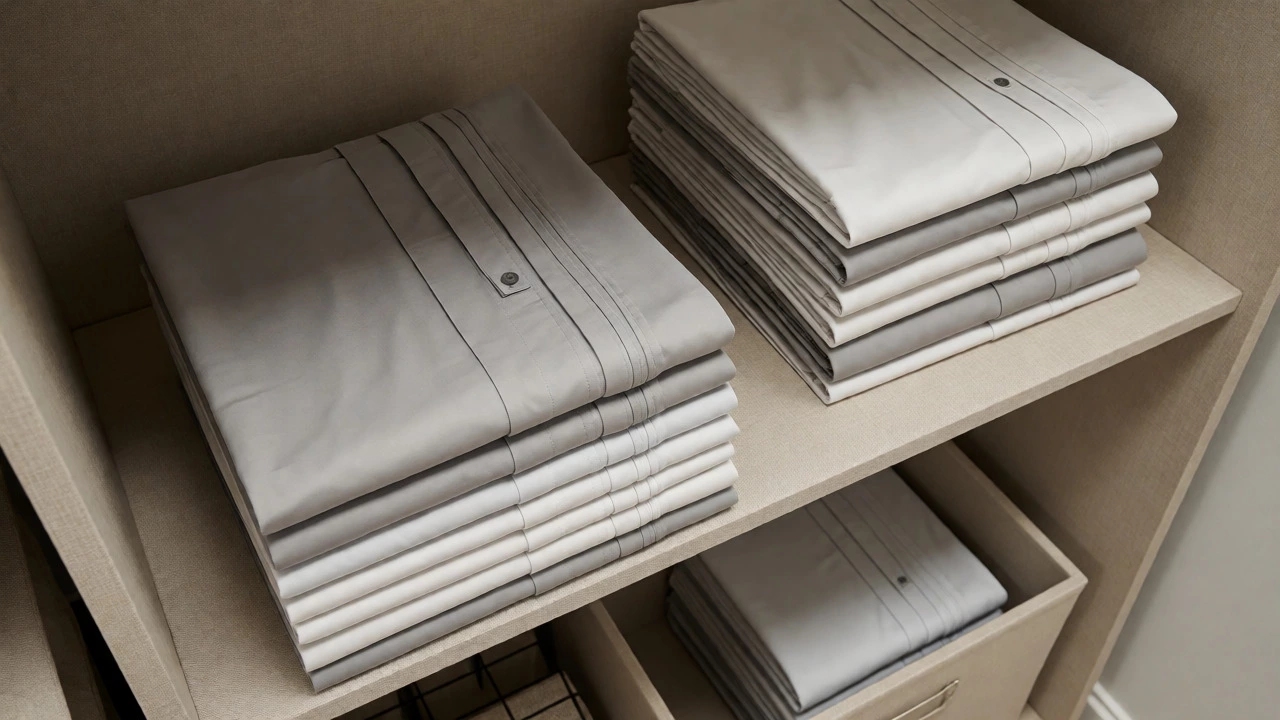
- Use the Pillowcase Trick: Fold your fitted sheet flat, then fold the top sheet and pillowcases into the open end of the pillowcase. This keeps the whole set together and prevents mismatched colors.
- Vertical Folding: Instead of stacking piles, fold sheets into rectangles and stand them up like books. This lets you see every color instantly without digging through stacks.
- Under-Bed Bins: If your closet is full, use vacuum-seal bags or slim bins under the bed for seasonal sets. Just make sure they’re completely dry before sealing to prevent mold.
When to Replace Your Sheets
Having enough sheets doesn’t mean keeping them forever. How do you know when it’s time to toss a set?
- Holes and Tears: Obvious, but small rips expand quickly.
- Thinning Fabric: Hold the sheet up to the light. If you can see through it easily, it’s worn out.
- Pilling: Those little balls of fabric on sateen sheets mean the fibers are breaking down.
- Stains That Won’t Go: If you’ve tried enzyme cleaners and bleach alternatives and the stain remains, let it go.
Average replacement cycle is every 2-3 years for daily-use cottons. Linens can last much longer. Rotate your oldest set to guest beds or pet beds before throwing them away.
Budgeting for Your Linen Closet
Sheets can range from $30 to $300+ per set. Buying five cheap sets might seem cost-effective, but they often shrink, fade, or tear within six months. Investing in three mid-range sets ($80-$150 each) is usually smarter. Look for sales during major retail events like Black Friday or EOFY (End of Financial Year) in Australia to stock up.
Don’t forget to buy matching pillowcases separately if you lose them often. Losing one pillowcase ruins a set, so buying extras in neutral colors saves headaches later.
Do I need different sheets for summer and winter?
It’s not strictly necessary, but highly recommended for comfort. Lightweight cotton or linen works best in summer, while flannel or heavy cotton provides warmth in winter. If you live in a temperate climate like Melbourne, having two distinct seasonal rotations improves sleep quality significantly.
Can I mix and match sheet colors?
Absolutely. In fact, mixing textures and colors adds depth to your bedroom decor. Just ensure the fabrics are similar in weight so they drape well together. Neutral tones like white, grey, and beige are easiest to mix, while bold patterns should be used as accents.
How many sheets do I need for a guest bed?
Two sets are sufficient for a guest bed. One for use and one backup. Since guests don’t stay every night, you won’t need the rapid rotation required for your primary bed. Store the backup in a clear bin so you can grab it quickly when visitors arrive.
What thread count is best for durability?
Between 200 and 400 thread count is ideal for durability and breathability. Higher counts (600+) often indicate thinner threads that may tear easier and trap heat. Focus on fiber quality (long-staple cotton) rather than just the number.
Should I buy deep pocket sheets?
Yes, if your mattress is thick or has a topper. Standard pockets are 12-15 inches. Deep pockets are 16-22 inches. Measure your mattress height before buying to avoid frustration. Elastic quality matters more than depth; look for reinforced corners.