Home Storage Planner
Select a room or problem area below to discover tailored storage solutions that don't require adding a closet.
Kitchen
Cluttered cabinets & counter overflow
Bedroom
Wardrobe full & floor clutter
Bathroom
Toiletries spread out & no shelf space
Living Room
Books, remotes & decor on tables
Recommended Solutions
Quick Cost Estimator
You stare at the pile of laundry on your chair. You look at the books stacked on the floor. You open the pantry door and watch three cans of beans tumble out because there is no room left. It feels like you need a whole new room just to put things away. But here is the truth: most homes have more storage than they use. The problem isn't that you lack space; it's that you aren't using the space you already have.
Building storage is the practice of creating designated places for belongings to prevent clutter accumulation doesn't always mean knocking down walls or hiring a contractor. It means seeing your house differently. It means looking at the empty gap above your toilet, the dead space under your stairs, or the air right above your kitchen cabinets. If you are tired of buying plastic bins that just move the mess from one corner to another, this guide will show you how to build real, lasting solutions into your existing structure.
Rethink Your Vertical Space
Most people store things on the floor. This is a mistake. Floor space is precious because we walk on it, stand on it, and place furniture on it. When you fill the floor with boxes, you shrink the room. The solution is to go up. Walls are vast, unused canvases waiting for purpose.
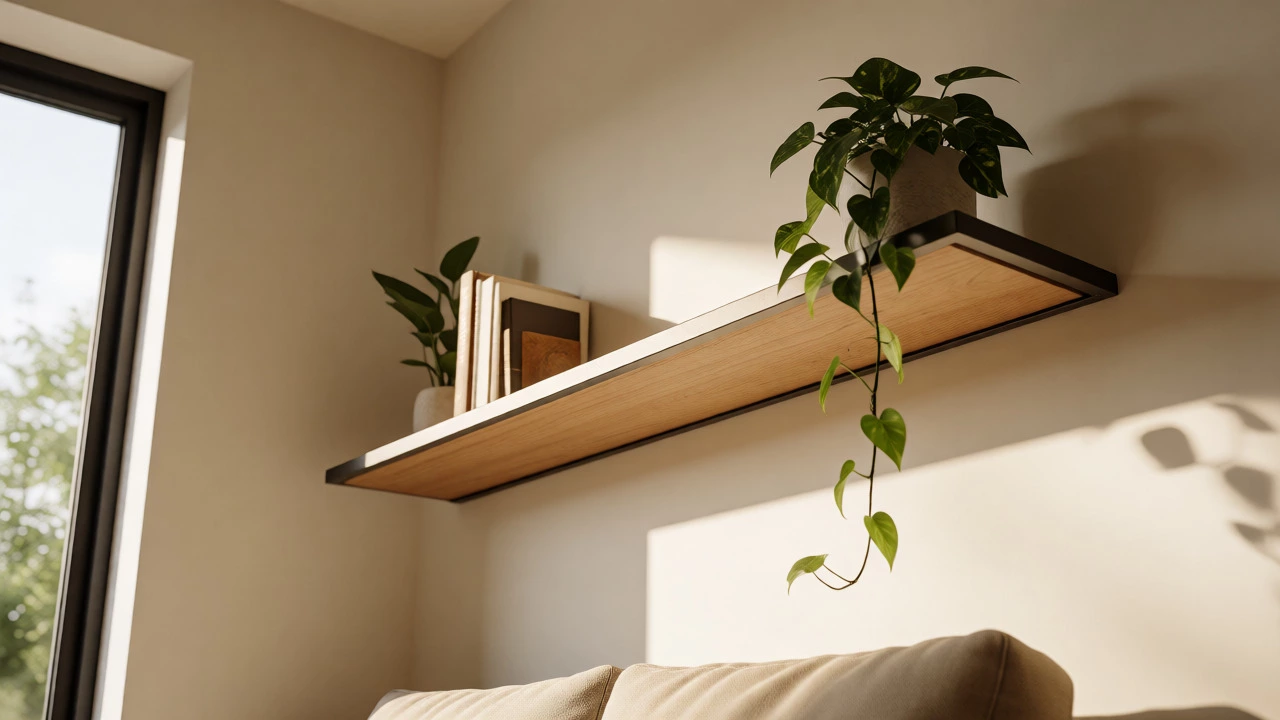
Start by installing floating shelves. Unlike bulky bookcases that eat up square footage, floating shelves attach directly to the wall studs, leaving the floor completely clear. In a living room, a shelf above the sofa can hold books and plants without crowding the seating area. In a bathroom, a narrow shelf above the door frame can hold towels or toiletries that usually clog the sink counter.
Consider the height of your ceilings. In older homes or modern apartments with high ceilings, there is often two feet of wasted air between the top of your wardrobe and the ceiling. Install a custom shelf or a simple plank across that gap. Use matching baskets to hide unattractive items like seasonal decorations or extra linens. This turns a dust-gathering ledge into a functional storage zone.
Don't forget the back of doors. Over-the-door organizers are cheap, but they often look messy. Instead, install shallow hooks or slim racks specifically designed for flat items. A hook on the back of a bedroom door holds robes or bags. A rack on the back of a pantry door holds spice packets or cleaning spray bottles. These small changes free up significant cabinet space.
Transform Dead Zones into Functional Areas
Every house has "dead zones." These are awkward corners, narrow gaps, or spaces under structures that seem useless. With a little creativity, these become prime real estate for home organization systems that maximize utility in overlooked areas.
The space under your staircase is a classic example. Many homeowners leave it empty or use it for random junk. But if you have a straight staircase, you can build pull-out drawers. These slide out like giant filing cabinets, perfect for shoes, coats, or tools. If the stairs turn, consider installing angled shelving units that fit snugly against the risers. This creates a display area for books or decor while hiding the structural bulk of the stairs.
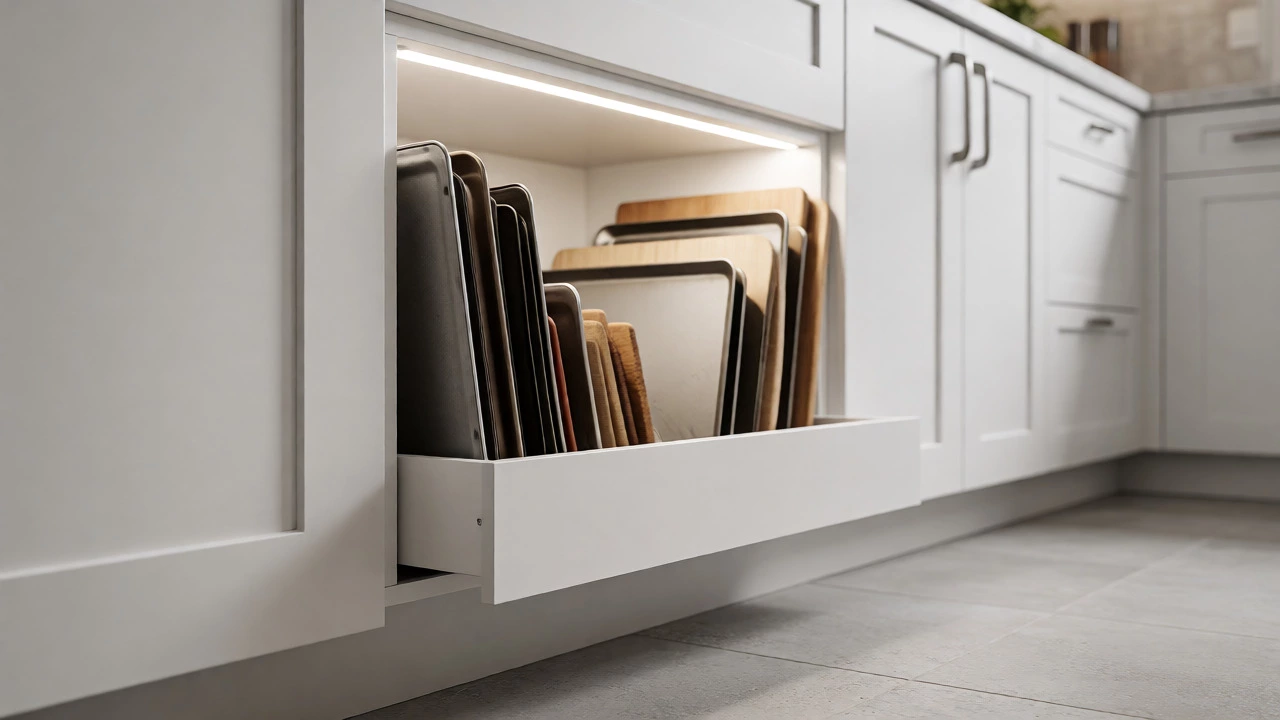
Kitchen toe-kicks are another hidden gem. The kickboard at the bottom of your base cabinets usually serves no purpose other than aesthetics. Replace it with a toe-kick drawer. This thin, wide drawer slides out easily and is ideal for storing flat items like baking sheets, cutting boards, or even wine bottles lying down. It requires minimal carpentry skill-just measuring, cutting, and attaching rails-but adds substantial capacity to a cramped kitchen.
Nook spaces around windows or fireplaces also offer opportunities. If you have a recessed window sill, extend the surface slightly and add cubbies underneath. This creates a reading nook with built-in book storage. In a hallway, a narrow console table with deep drawers can serve as a drop zone for keys and mail, keeping surfaces elsewhere in the house clean.
Master the Art of Under-Bed and Furniture Storage
Furniture shouldn't just be furniture. It should do double duty. The area under your bed is the largest single block of unused storage in most bedrooms, yet many people waste it on old shoeboxes. To make this work, you need the right container system.
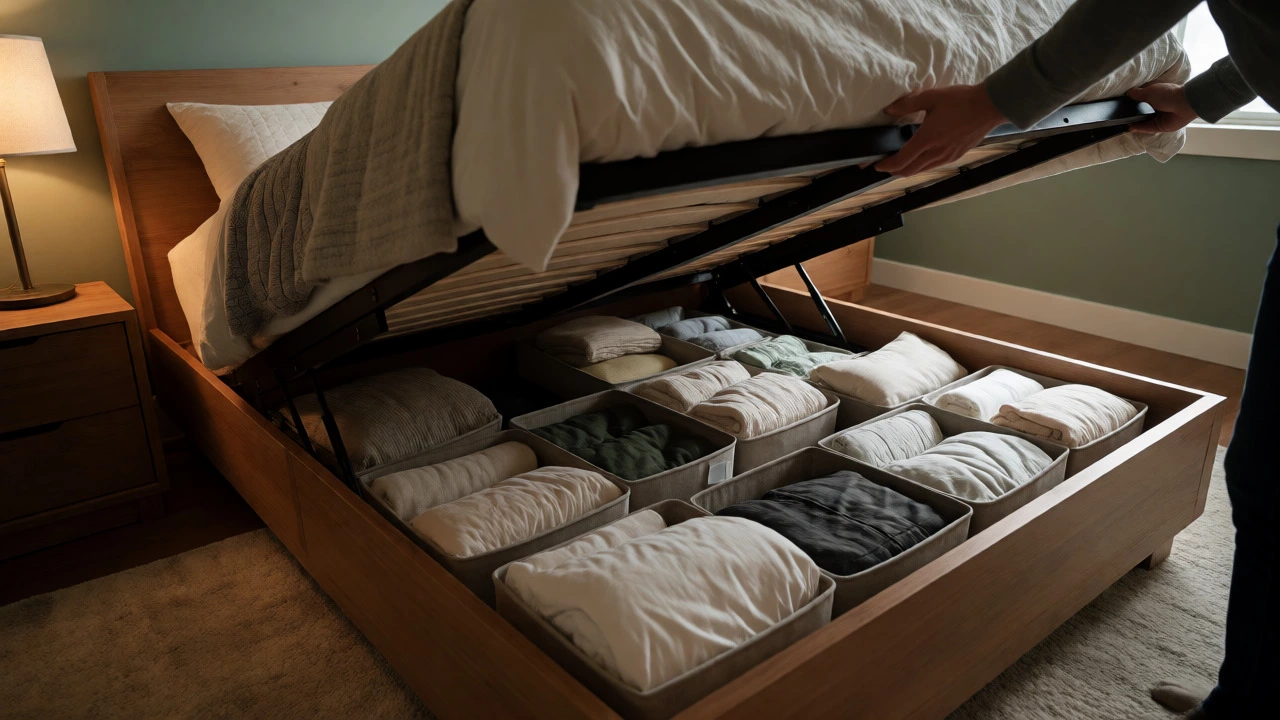
If your bed frame allows, switch to rolling storage bins. Hard-sided containers with wheels slide in and out effortlessly, unlike soft fabric bags that snag on carpet. Label them clearly so you don't have to dig through winter clothes in July. If you want something more permanent, consider building a platform bed with lift-up storage. This involves a hinged mattress base that reveals a massive hollow cavity beneath. It’s perfect for bulky items like suitcases or bedding sets.
Ottomans and benches are often ignored storage heroes. Choose an ottoman with a hinged lid instead of a solid footstool. This provides a seat, a place to rest your feet, and a box for blankets or toys. In entryways, a bench with open cubbies below lets kids sit down to put on shoes while providing immediate spots for backpacks and sports gear. The key is accessibility. If you have to unzip a bag to get to the contents, you won't use it consistently.
Utilize Ceiling and Loft Spaces
When floor space is tight, look up. Ceiling-mounted systems are particularly effective in garages, mudrooms, and large kitchens. Installing a pulley system for bicycles or kayaks lifts heavy, awkward items off the floor entirely. This frees up ground space for parking cars or walking through the room.
In kitchens, ceiling-height cabinets often go unused because reaching the top shelf is difficult. Install a pull-down mechanism or a step ladder rail along the cabinet face. Alternatively, use the top of tall cabinets for items you rarely touch, such as holiday dishes or specialized cookware. Keep these items in uniform, labeled bins to maintain visual order. If you can see chaos from the kitchen island, it defeats the purpose.
Loft spaces in split-level homes or rooms with high ceilings can be converted into sleeping lofts or study nooks. Building a sturdy platform halfway up the wall creates a private zone below and storage above. Or vice versa. This vertical layering effectively doubles the usable square footage of a small room without adding a single foot to the foundation.
Smart Kitchen and Bathroom Hacks
Kitchens and bathrooms are where clutter hits hardest because these rooms have high traffic and many small items. Standard cabinets often fail to accommodate oddly shaped objects. Custom inserts solve this.
Install tension rods inside lower cabinets to create vertical dividers for baking trays and cutting boards. Stand them upright instead of stacking them horizontally. This saves space and makes grabbing a tray easy. For pots and pans, use stackable organizers that allow you to nest lids separately from bases. This prevents the "pan tower" collapse when you try to reach the bottom pot.
In bathrooms, medicine cabinets are often too shallow. Add adhesive hooks inside the cabinet door for hair tools or jewelry. Use shower caddies that hang from the head rather than sitting on the floor, which collects mold and grime. Behind the toilet, install a slim shelving unit that fits over the tank. This utilizes the vertical space above the bowl, which is otherwise empty, for toilet paper rolls and guest towels.
| Solution Type | Best Location | Installation Difficulty | Cost Estimate (AUD) |
|---|---|---|---|
| Floating Shelves | Living Room, Bathroom | Low (DIY) | $50 - $150 per shelf |
| Toe-Kick Drawers | Kitchen | Medium (Carpentry) | $200 - $400 per run |
| Under-Stair Pull-outs | Hallway, Entryway | High (Custom Build) | $800 - $1,500 |
| Lift-Up Bed Base | Bedroom | Medium (Assembly) | $300 - $600 |
Aesthetic Integration Matters
Storage fails when it looks like storage. If you line every wall with mismatched plastic bins, your home will feel chaotic even if it's organized. The goal is to blend storage into the architecture.
Use materials that match your existing decor. If you have wood floors, choose wooden crates or baskets. If your style is industrial, metal wire bins work well. Paint custom-built shelves the same color as the wall to make them disappear visually. Uniformity is powerful. Using identical white bins across all closets creates a calm, cohesive look that tricks the eye into seeing less clutter.
Lighting plays a role too. Dark corners invite neglect. Install battery-operated LED strip lights inside dark cabinets or under floating shelves. Illuminating the contents makes it easier to find what you need and encourages you to keep things tidy. A well-lit closet feels larger and more inviting, reducing the psychological resistance to putting things away.
Finally, remember the rule of one-in-one-out. Building storage capacity is great, but if you keep bringing new stuff in without removing old stuff, you'll overflow any system. Regular editing ensures your new built-in storage remains functional and accessible over time.
Can I add storage without drilling holes in my walls?
Yes. Adhesive hooks, command strips, and freestanding furniture with built-in storage (like ottomans or storage benches) require no drilling. Tension rods in doorways or between walls also provide temporary hanging solutions without damaging paint.
Is it cheaper to buy bins or build custom shelves?
Buying standard bins is usually cheaper upfront and faster to implement. However, custom-built shelves made from raw lumber often cost less than pre-made furniture pieces and fit awkward spaces perfectly, maximizing value per dollar spent on materials.
How much weight can floating shelves hold?
It depends on the bracket type and whether they are anchored into wall studs. Properly installed floating shelves with steel brackets attached to studs can typically hold 50-100 lbs per linear foot. Drywall anchors alone support significantly less, usually around 10-20 lbs.
What is the best way to organize a small apartment?
Focus on verticality and multi-functional furniture. Use wall-mounted shelves instead of floor-standing bookcases. Choose beds with under-storage and sofas with hidden compartments. Declutter aggressively to reduce the volume of items needing a home.
Do toe-kick drawers really save space?
Yes, they utilize otherwise wasted space at the very bottom of cabinets. While not suitable for tall items, they are excellent for flat goods like trays, placemats, or wine bottles, freeing up main cabinet shelves for larger appliances.