
Closet-Free Storage Planner
Answer a few quick questions to get personalized storage strategies for your home.
Specific Tips for Your Selection:
You open the door to your bedroom and see... nothing. No sliding doors, no hanging rods, just empty wall space staring back at you. If you live in an older apartment, a studio, or a minimalist new build, you’ve likely faced the "closet-less" dilemma. It feels like a design flaw, but it’s actually a blank canvas. The problem isn’t a lack of space; it’s a lack of strategy. When you don’t have a closet, you can’t hide your mess behind a door. You have to make your storage part of the decor.
Go Vertical: Use Walls as Your Primary Closet
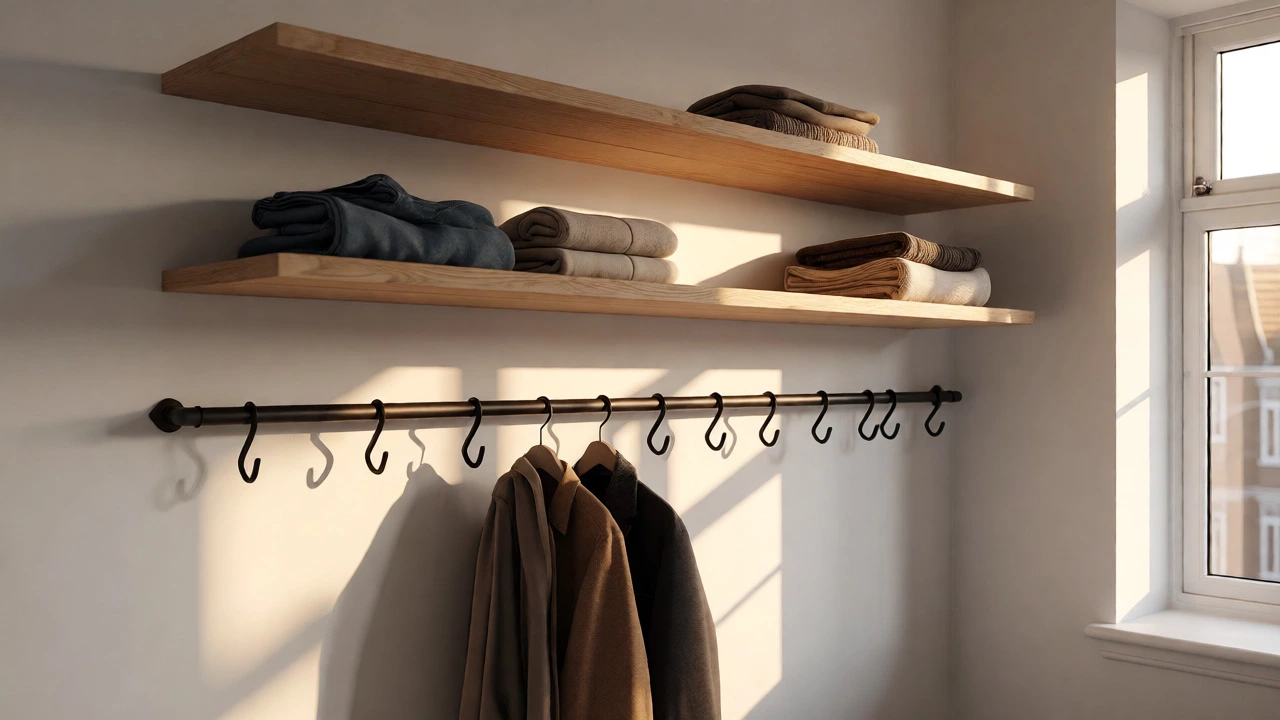
When floor space is limited, walls are your best friend. Most people ignore the area above eye level, treating it as dead space. But if you’re short on storage, every inch counts. Installing shelves high up allows you to store seasonal items-like winter coats in summer or beach gear in winter-that you don’t need daily access to.
Consider installing wall-mounted rails with S-hooks. Unlike bulky wardrobes, these take up zero floor footprint. You can hang jackets, bags, and scarves right by the entryway or in the bedroom corner. For a more polished look, use a continuous rail system that runs along the length of a wall. This mimics the function of a closet rod but keeps everything visible and accessible.
- Floating Shelves: Great for folded sweaters, jeans, and accessories. Keep them shallow (10-12 inches deep) so stacks don’t topple over.
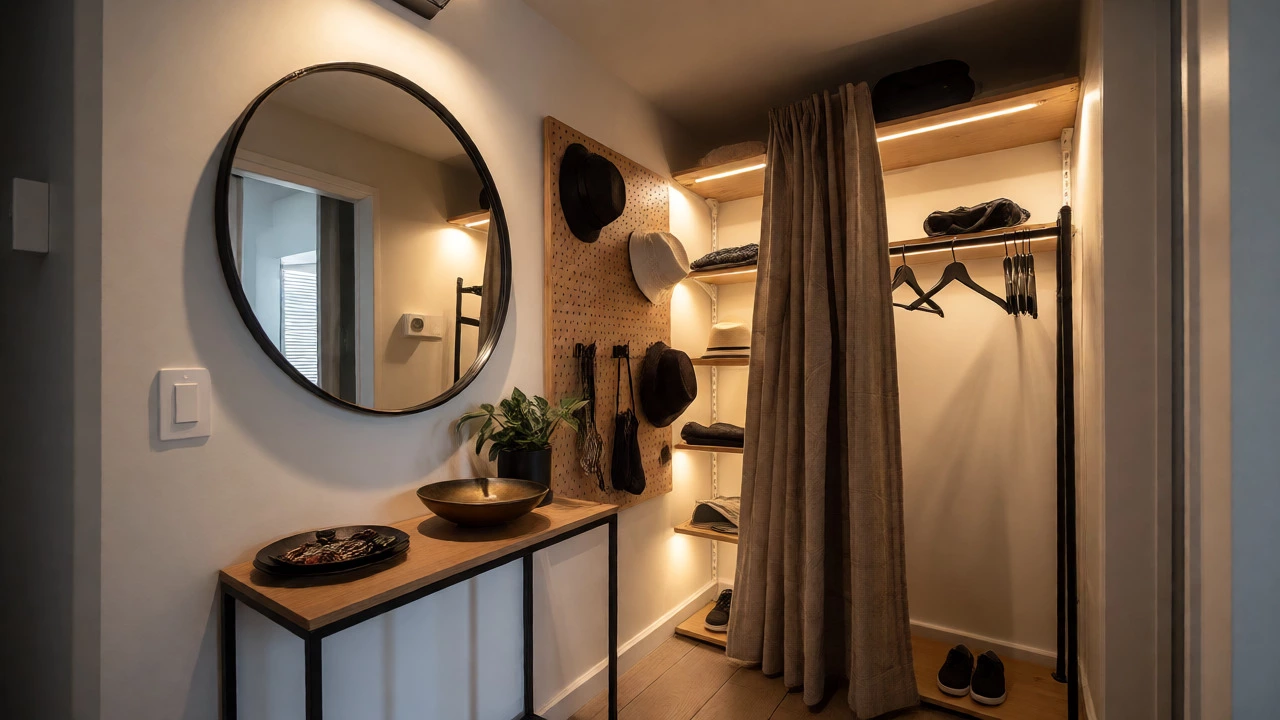
- Pegboards: Often seen in garages, pegboards are surprisingly chic in bedrooms or laundry rooms. They allow you to rearrange hooks and baskets instantly as your needs change.
- Tension Rods: Cheap and renter-friendly. Install one between two walls or inside a niche to create an instant hanging zone for shirts or dresses.
Repurpose Furniture That Does Double Duty
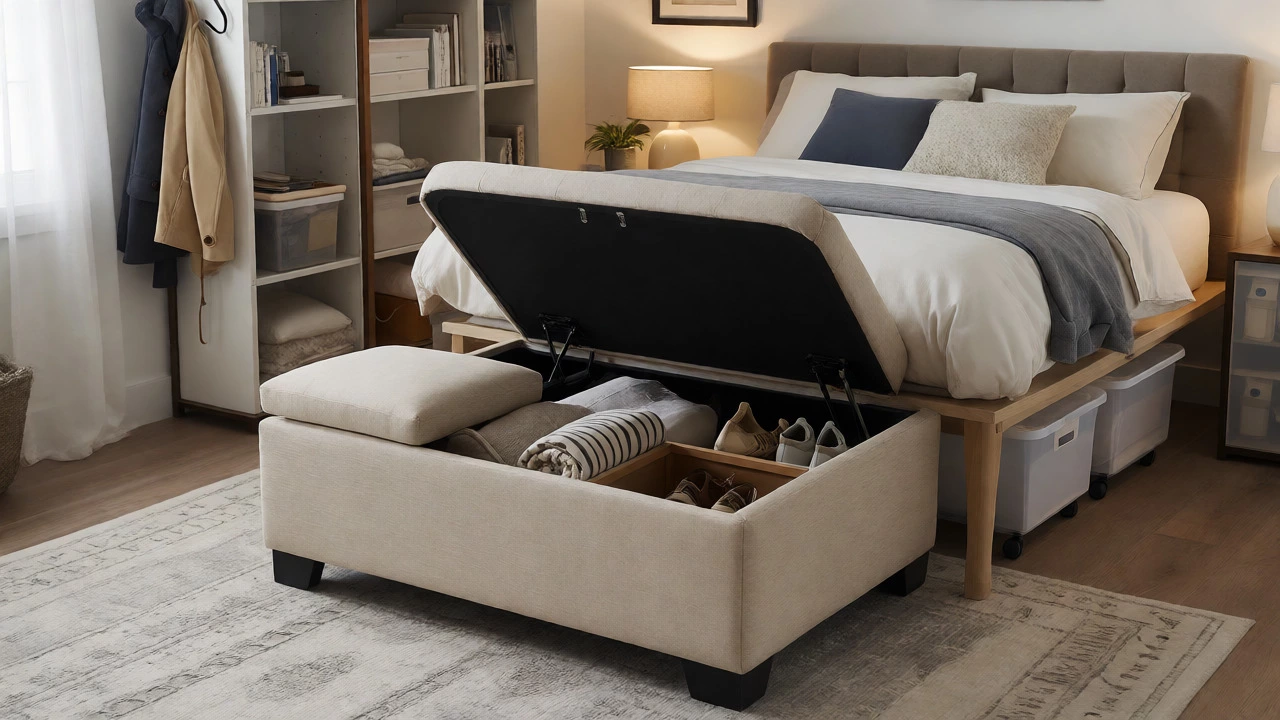
If you don’t have a closet, you probably have furniture that isn’t pulling its weight. A standard dresser might hold socks, but what about your bulkier items? Look for pieces with hidden compartments. An ottoman with lift-top storage is a classic solution. It sits at the foot of your bed, looks like seating, but swallows blankets, pillows, or off-season shoes.
Beds themselves are massive storage opportunities. If you don’t already have a platform bed with drawers underneath, consider adding rolling bins under your current frame. Measure the clearance height first-usually, you need at least 6 inches of space to slide a bin underneath. Label these bins clearly. "Winter Shoes" or "Extra Linens" prevents the mystery box syndrome where you forget what’s inside.
Ottomans aren’t the only multi-taskers. Benches with hinged lids work well at the end of beds or in hallways. Even your headboard can be swapped for a model with built-in cubbies. This turns a passive object into an active storage unit, keeping books, glasses, and chargers within arm’s reach without cluttering nightstands.
The Power of Baskets and Bins
Visual noise is the enemy of small spaces. If you leave piles of clothes on a chair, it looks messy. Put those same clothes in a woven basket, and it looks intentional. Baskets soften the hard lines of modern furniture and add texture. However, not all baskets are created equal.
For clothing, choose sturdy wicker or fabric-lined bins that hold their shape. Soft, floppy bags collapse when full, making them hard to stack. Place these bins on top of dressers, inside open shelving units, or even on the floor in corners. Color-coordinating your bins helps too. If your room has neutral tones, stick to natural fibers like seagrass or jute. If you want a pop of color, use uniform fabric bins in a single hue to create a sense of order.
| Container Type | Best For | Durability | Aesthetic Impact |
|---|---|---|---|
| Woven Wicker Baskets | Bulkier items (blankets, towels) | High | Warm, rustic, organic |
| Wire Mesh Baskets | Shoes, toys, heavy items | Very High | Industrial, modern, airy |
| Fabric Cube Organizers | Clothes, office supplies | Medium | Clean, customizable, soft |
| Acrylic Boxes | Shoes, collectibles, cosmetics | Low (breakable) | Sleek, invisible, premium |
Create Zones Instead of Rooms
In a house without closets, you don’t have a "dressing room," so you must create zones. Think of your living space as a series of functional pockets. One pocket is for sleeping, one for working, and one for getting ready. You can define these areas using rugs, lighting, or freestanding screens.
A freestanding screen or curtain can act as a pseudo-closet. Hang a tension rod across a doorway or window alcove and drape a heavy curtain. Behind it, install a simple clothing rack. When you’re done dressing, pull the curtain closed. This hides the visual clutter of hangers while keeping your outfit selection process private. It’s a low-cost hack that works beautifully in studios or open-plan lofts.
Another zoning trick is using bookcases as dividers. In an open-concept apartment, place a tall, narrow bookshelf perpendicular to the wall. On one side, keep your books and decor; on the other, hang a hook for your coat or bag. This breaks up the monotony of long walls and creates a sense of enclosure around your personal items.
Optimize Entryways and Hallways
Hallways are often wasted space. They’re narrow, dark, and usually empty. But they are perfect for transitional storage. Items you grab on the way out-keys, wallets, mail, umbrellas-need a home. Without a closet, these items tend to pile up on kitchen counters or dining tables.
Install a slim console table against the hallway wall. Pair it with a mirror above it. The mirror reflects light, making the narrow space feel wider, while the table catches daily essentials. Add a few decorative bowls for keys. Below the table, place a bench or a set of shoe racks. This keeps footwear contained and prevents the "shoe mountain" effect near the front door.
For coats and jackets, consider a coat tree instead of a traditional rack. Coat trees branch out vertically, taking up less horizontal space than a bar. Choose a design with a base tray to catch dropped gloves or hats. This keeps the floor clear and makes the entryway look curated rather than chaotic.
Declutter Ruthlessly Before You Buy Storage
Here’s the hard truth: no amount of clever shelving will fix a hoarding problem. If you try to stuff too many items into open storage, it will look like a stockroom, not a home. Before you buy another basket, do a purge. Ask yourself: Have I worn this in the last six months? Do I actually need three spare phone chargers?
Adopt the "one in, one out" rule. If you buy a new shirt, donate an old one. This maintains equilibrium. Since you don’t have a closet to push unused items into, every item in your home must earn its place. Open storage forces honesty. You see what you own, which psychologically encourages you to keep only what you love and use.
Lighting Makes Storage Look Intentional
Dark corners make clutter look worse. If you’re storing items on open shelves, ensure they are well-lit. Use LED strip lights under floating shelves or inside cabinet interiors. This highlights your organized items and adds ambiance. A dimly lit shelf of folded clothes looks dusty; a brightly lit one looks like a boutique display.
Spotlights aimed at specific storage areas can also draw attention away from empty walls. By focusing light on your organized bins or hanging rails, you guide the eye to the neatness rather than the lack of doors. It’s a subtle psychological trick that elevates the perceived value of your storage solutions.
Frequently Asked Questions
Is open shelving really practical for clothes?
Yes, but it requires discipline. Open shelves expose dust and wrinkles, so you must fold clothes neatly and rotate items regularly. It works best for casual wear, jeans, and sweaters. Delicate fabrics or formal wear should still be stored in garment bags or covered sections to prevent fading and dust accumulation.
How do I store shoes without a closet?
Use clear acrylic boxes stacked on shelves for visibility and protection. Alternatively, wire mesh baskets placed under benches or on lower shelves keep shoes ventilated and easy to find. Avoid piling shoes directly on the floor, as this creates visual clutter and scuffs.
What is the cheapest way to add storage?
Tension rods and second-hand wooden crates are among the most affordable options. Tension rods cost under $20 and require no drilling. Wooden crates can be found cheaply at thrift stores, sanded down, and used as modular shelving units or bedside tables.
Will open storage make my house look smaller?
Not necessarily. Bulky wardrobes block sightlines and make rooms feel cramped. Open, airy storage solutions like floating shelves or slim racks maintain visual flow. Keeping colors consistent and avoiding over-stuffing ensures the space feels larger, not smaller.
How do I handle seasonal items without a closet?
Store seasonal items in vacuum-sealed bags and place them on the highest shelves or under beds. Label the containers clearly. Rotate them twice a year. This keeps your primary living area free of bulky coats and heavy linens during the wrong seasons.