
Clutter Assessment Calculator
How Many Items Could You Donate?
Based on the article's "12-month rule" and usage frequency, this calculator estimates how many items you might be ready to donate or discard.
Most people don’t realize how much space they’re losing to stuff they never use. By the time you’re done reading this, you’ll know exactly how to clear out the chaos in your house - no extreme minimalism required. You don’t need to throw everything away. You just need to know where to start, what to keep, and how to make it stick.
Start with one room - not the whole house
Trying to declutter your entire house in one weekend is a recipe for burnout. Pick one room. Any room. The kitchen, the bedroom, even the hallway closet. Start small so you can see progress fast. When you finish that room, you’ll feel the momentum. That’s when you’ll want to move to the next one.
In Melbourne, where space is tight and storage is expensive, people who declutter one room at a time end up with more usable space than those who go all-in and quit halfway. I’ve seen it. A client in Hawthorn cleared out a single linen closet and suddenly had room for all her towels, sheets, and spare toiletries - without buying a single storage bin.
Use the four-box method
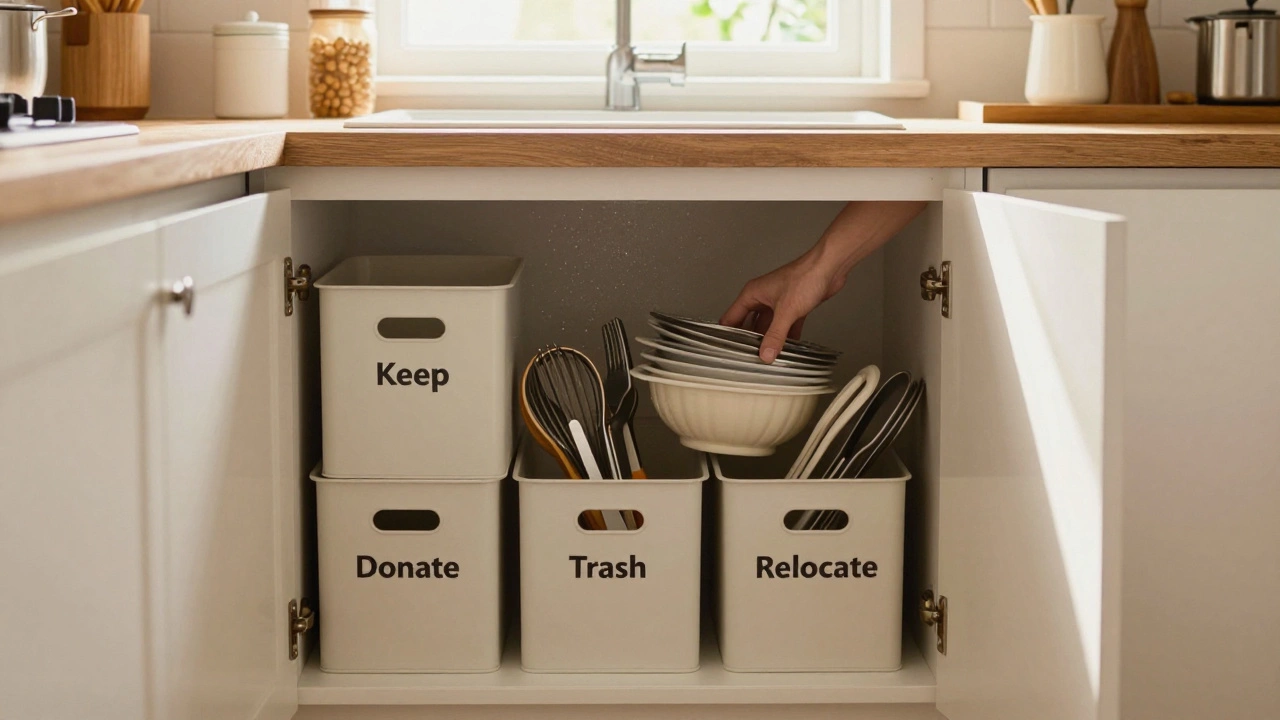
Before you touch anything, get four boxes or bins and label them:
- Keep - things you use regularly or truly love
- Donate - items in good condition that someone else could use
- Trash - broken, stained, or unusable stuff
- Relocate - items that belong somewhere else in the house
Go through every drawer, shelf, and cupboard. If you haven’t used it in the last 12 months, ask: Would I buy this again today? If the answer is no, it’s not yours to keep. That includes holiday decorations you only use once a year, duplicate kitchen gadgets, and clothes that don’t fit anymore.
Pro tip: Don’t sort by category (like clothes or books). Sort by location. Pull everything out of one cabinet, then sort what’s in front of you. It’s easier to see duplicates and excess when everything’s out.
Let go of sentimental clutter
Sentimental items are the hardest. Photos, letters, kids’ artwork, gifts from loved ones. These aren’t clutter - they’re memories. But storing every single one? That’s not memory-keeping. That’s hoarding.
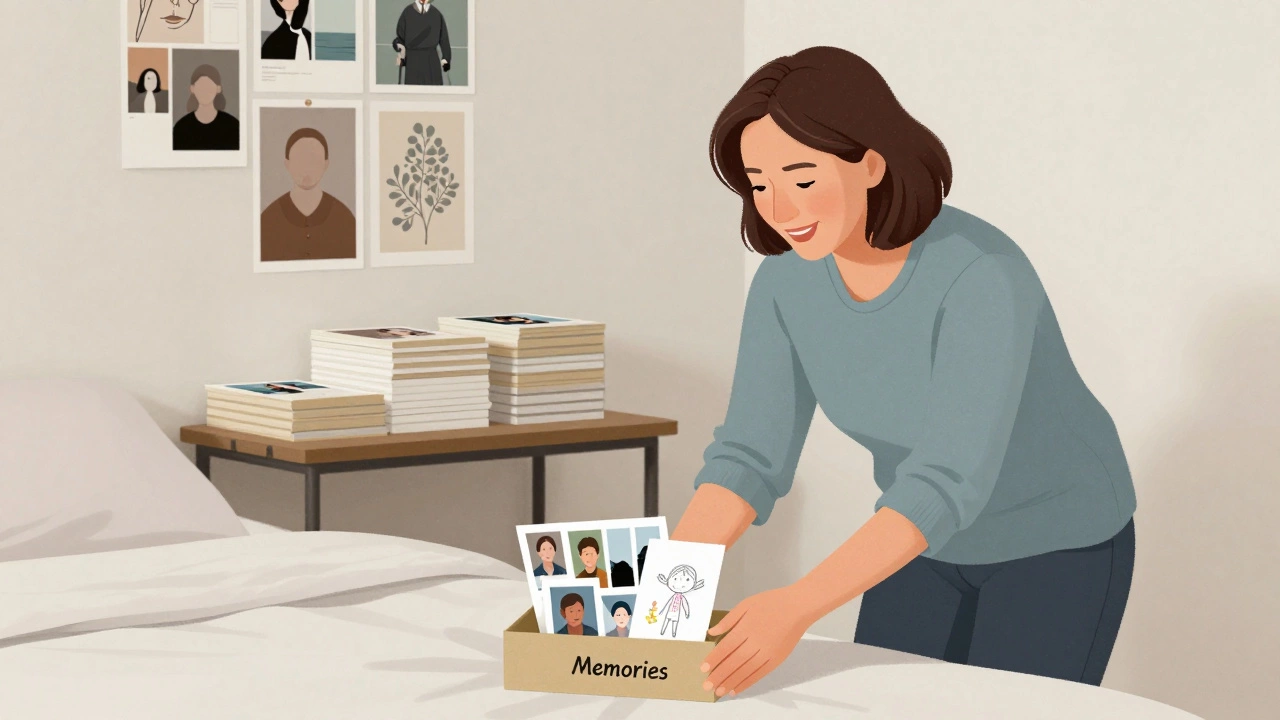
Here’s how to handle it: Pick one box. Not a bin. One box. Choose the most meaningful items - maybe five photos, three cards, one toy. Put them in a labeled box and store it in a closet or under the bed. The rest? Take photos of them. Digitize letters. Scan the artwork. You’ll keep the memory without the physical weight.
One woman I worked with saved 20 years of her daughter’s school drawings. She took photos of all 300+ pieces, printed a small collage for the wall, and donated the rest. She said, "Now I remember the joy, not the mess."
Stop buying storage solutions until you’ve decluttered
Too many people buy baskets, bins, and shelves before they’ve even cleared out what’s already there. That’s like putting a lid on a overflowing sink. You’re not fixing the problem - you’re hiding it.
Once you’ve sorted everything into the four boxes, then ask: Do I need storage for what’s left? Often, the answer is no. You’ll find you have more space than you thought. If you do need storage, choose simple, open solutions - wire baskets, clear bins, or floating shelves. Avoid closed cabinets unless you absolutely need to hide things.
And never buy storage just because it looks nice. A pretty drawer organizer won’t help if you’re still keeping 17 spatulas you never use.
Designate a "maybe" zone - temporarily
If you’re unsure about something - like a sweater that might fit next winter, or a tool you think you’ll need someday - don’t toss it. Don’t keep it in your main space either. Put it in a labeled box and store it out of the way: under the bed, in the garage, on a high shelf. Give yourself 30 days. If you haven’t reached for it in that time, donate or trash it.
This works because it removes the pressure of instant decisions. You’re not being harsh. You’re just giving yourself space to test whether something truly matters.
Build habits that stick
Decluttering isn’t a one-time project. It’s a rhythm. The goal isn’t to have a perfectly clean house forever. It’s to make it easy to stay tidy.
Here are three habits that work:
- The 5-minute rule - If a task takes less than five minutes, do it now. Hang up the coat. Put the mug in the dishwasher. File the receipt. Don’t let small messes pile up.
- One in, one out - Every time you bring something new into the house, let go of something old. It doesn’t have to be the same category. A new shirt? Donate an old one. A new book? Pass along an unread one.
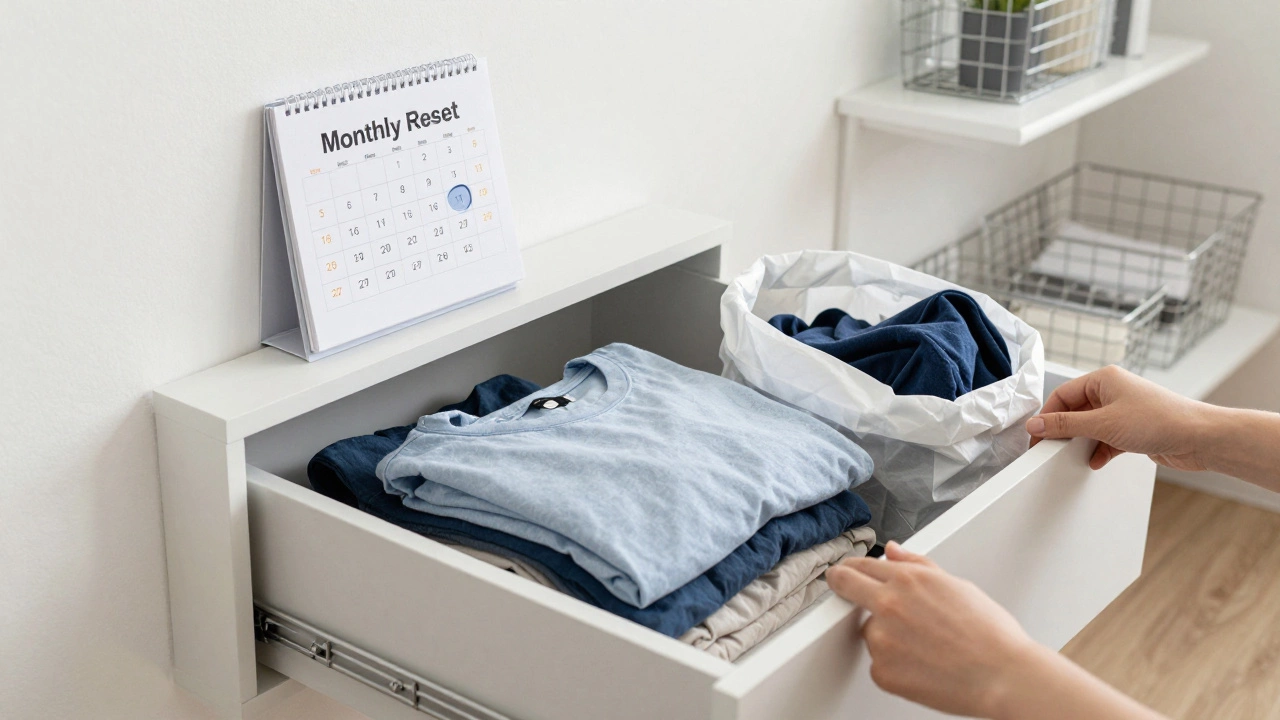
- Monthly reset - Pick one drawer or shelf every month to revisit. You’ll be surprised how fast clutter creeps back in.
These habits don’t take time. They take awareness. And they’re the reason some people stay clutter-free for years - not because they’re perfect, but because they’ve built systems that work with their lives.
What to do with what you’ve cleared out
Don’t just dump donations at the curb. Be intentional.
- Donate to local charities like Vinnies, Salvation Army, or community centers. Many offer free pickup. You can even schedule it online.
- Sell gently used items on Facebook Marketplace or eBay. Even small things - a coffee maker, a lamp, a kids’ bike - can bring in cash or trade.
- Recycle electronics, batteries, and textiles. Melbourne has drop-off points at Bunnings, Officeworks, and council recycling centers.
- Compost paper, cardboard, and organic waste. Many suburbs offer curbside compost bins.
When you give things away with purpose, it feels better than just throwing them out. You’re not losing stuff - you’re passing it on.
Why this works - and why most people fail
Most decluttering guides focus on the physical act of sorting. But the real problem isn’t the clutter. It’s the emotional attachment. The guilt. The fear of wasting. The "what if I need this someday?"
The method above works because it addresses the psychology behind clutter - not just the mess. It gives you clear rules, deadlines, and alternatives. You’re not being asked to be perfect. You’re being asked to be practical.
People who succeed don’t have more willpower. They have better systems. They don’t wait to feel motivated. They just start with one room. One box. One decision.
And in Melbourne, where space is limited and life moves fast, that’s the only way to keep your home feeling like a refuge - not a warehouse.
How long does it take to declutter a house?
It doesn’t have to take weeks. Most people finish one room in a weekend - about 4 to 6 hours total. The key is consistency. If you spend 30 minutes a day on one area, you’ll clear a whole room in under a week. The goal isn’t speed - it’s sustainability. Rushing leads to overwhelm. Slow, steady progress leads to lasting change.
What if I don’t have time to declutter?
You don’t need hours. Start with five minutes. Pull one drawer open. Take out everything. Put back only what you use. Close it. That’s it. Do that every day for a week, and you’ll have cleared five drawers without feeling overwhelmed. Time isn’t the issue - momentum is. Small actions build up faster than you think.
Do I need to buy storage containers?
No, not at first. Many people spend hundreds on bins before they’ve even sorted their stuff. Use what you already have: shoeboxes, laundry baskets, old tins, or even paper bags. Once you know exactly what you’re keeping, then buy storage that fits your needs. Focus on function, not form. Clear bins help you see what’s inside. Open baskets let you grab things easily. Avoid anything that hides clutter.
How do I stop clutter from coming back?
Adopt the one-in, one-out rule. Every time you bring something new in, let go of something old. Also, pause before you buy. Ask: "Where will this go?" If you can’t answer that, don’t bring it home. And do a quick monthly reset - spend 20 minutes on one area to catch small buildups before they become problems.
What should I do with items that are broken or worn out?
If it’s broken beyond repair - a cracked mug, a frayed cord, a torn blanket - toss it. Don’t keep it "just in case." For electronics, batteries, or textiles, use local recycling programs. Melbourne councils offer free drop-offs for e-waste and textiles at Bunnings, Officeworks, and community centers. Recycling isn’t just good for the planet - it’s good for your peace of mind.