
Wall Decor Planner
Plan your wall decoration with precision. Enter your furniture and wall dimensions to get professional recommendations for art size and placement.
Measure Your Space
Enter measurements above and click Calculate to see your personalized wall decor guide.
You walk into a room and your eyes land on that big, empty stretch of plaster. It feels cold, unfinished, maybe even a bit lonely. We’ve all been there-staring at a plain wall wondering if it’s just going to stay bare forever. But here’s the thing: an empty wall isn’t a problem; it’s a canvas waiting for you to make a statement. Whether you’re renting with strict rules or own your place outright, turning a blank space into a focal point is easier than you think.
Before you run out and buy a giant abstract print, let’s pause. Decorating a wall isn’t just about filling space. It’s about balance, lighting, and reflecting who you are. You don’t need a designer budget to pull this off. In fact, some of the most striking interiors use simple, accessible items. Let’s break down exactly how to transform those stark surfaces without losing your mind-or your security deposit.
Assess Your Space Before You Buy Anything
Most people skip this step, and that’s why their walls end up looking cluttered or disjointed. Take ten minutes to look at the wall critically. What’s the purpose of the room? A bedroom needs calm; a living room invites conversation. Check the natural light. If the room is dark, a massive black-and-white photo might absorb too much light, making the space feel smaller. Conversely, a bright, sun-drenched hallway can handle bold colors.
Measure everything. I’m not talking about rough estimates. Get a tape measure. Note the width of the wall, the height from floor to ceiling, and crucially, the position of outlets, switches, and vents. Nothing kills the vibe faster than a beautiful piece of art sitting awkwardly high because you forgot the thermostat was right in the center. Also, consider the furniture below the wall. If you have a sofa, the art should generally be no wider than two-thirds of the sofa’s length. This rule of thumb keeps things visually grounded.
The Gallery Wall: Curating Without Chaos
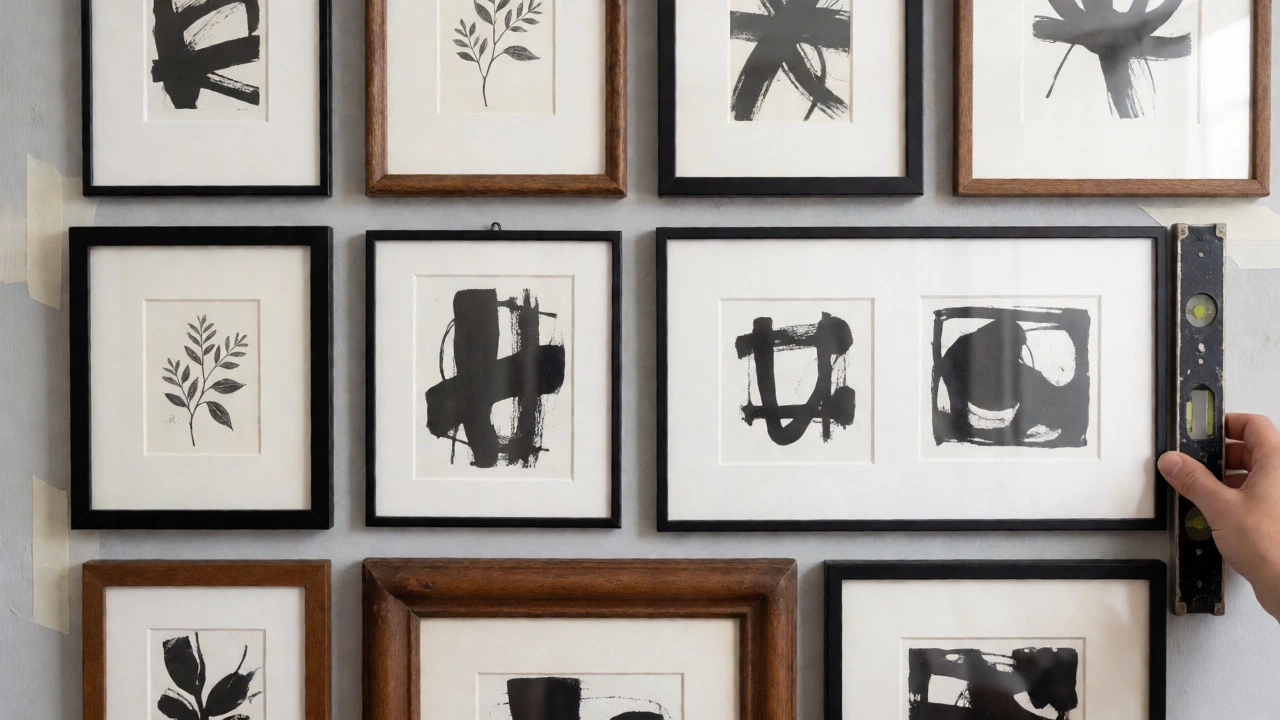
The gallery wall is a curated arrangement of multiple frames, photos, or objects grouped together to create a cohesive visual display. It’s popular for a reason-it’s flexible and personal. But “curated” doesn’t mean “random.” The biggest mistake is treating each frame as an island. They need to talk to each other.
Start by choosing a theme or color palette. Maybe it’s all black-and-white family photos. Maybe it’s vintage botanical prints in gold frames. Stick to one style to avoid visual noise. Next, lay your pieces out on the floor before touching the wall. This lets you experiment with spacing. Aim for consistent gaps between frames-usually 2 to 3 inches works well. Use painter’s tape to trace the outline of your layout on the wall. Step back. Does it feel balanced? If one side looks heavier, swap a large frame for two smaller ones.
For renters, command strips are your best friend, but check the weight limit. For homeowners, proper anchors are non-negotiable. Drywall alone won’t hold heavy frames. If you’re unsure where to drill, use a stud finder. Hitting a stud gives you peace of mind and a secure hang.
Textiles and Tapestries: Softening the Hard Lines
If you hate drilling holes, textiles are a game-changer. Hanging fabric adds warmth and texture, which hard plaster often lacks. Think macramé, woven tapestries, or even a large scarf pinned neatly to the wall. This approach works exceptionally well in bedrooms and bohemian-style living areas.
You don’t need to sew anything. A simple wooden dowel and some twine can turn a large piece of cloth into a hanging. Alternatively, use adhesive hooks designed for lightweight fabrics. One trick I love is using a large, patterned rug hung vertically. It sounds counterintuitive, but rugs are durable, come in endless patterns, and instantly add acoustic dampening to a room. Just make sure the rug is clean and pressed flat so it doesn’t look like you’re hiding a stain.
| Method | Best For | Renter Friendly? | Cost Level |
|---|---|---|---|
| Gallery Wall | Personal stories, eclectic styles | Yes (with command strips) | $-$$$ |
| Large Art Print | Minimalist spaces, modern homes | No (requires nails/screws) | $$-$$$$ |
| Wall Shelves | Displaying plants, books, decor | Sometimes (floating shelves vary) | $$ |
| Removable Wallpaper | Accent walls, adding pattern | Yes | $$ |
| Mirrors | Small rooms, low-light areas | No (heavy) | $$-$$$ |
Functional Decor: Shelves That Double as Art
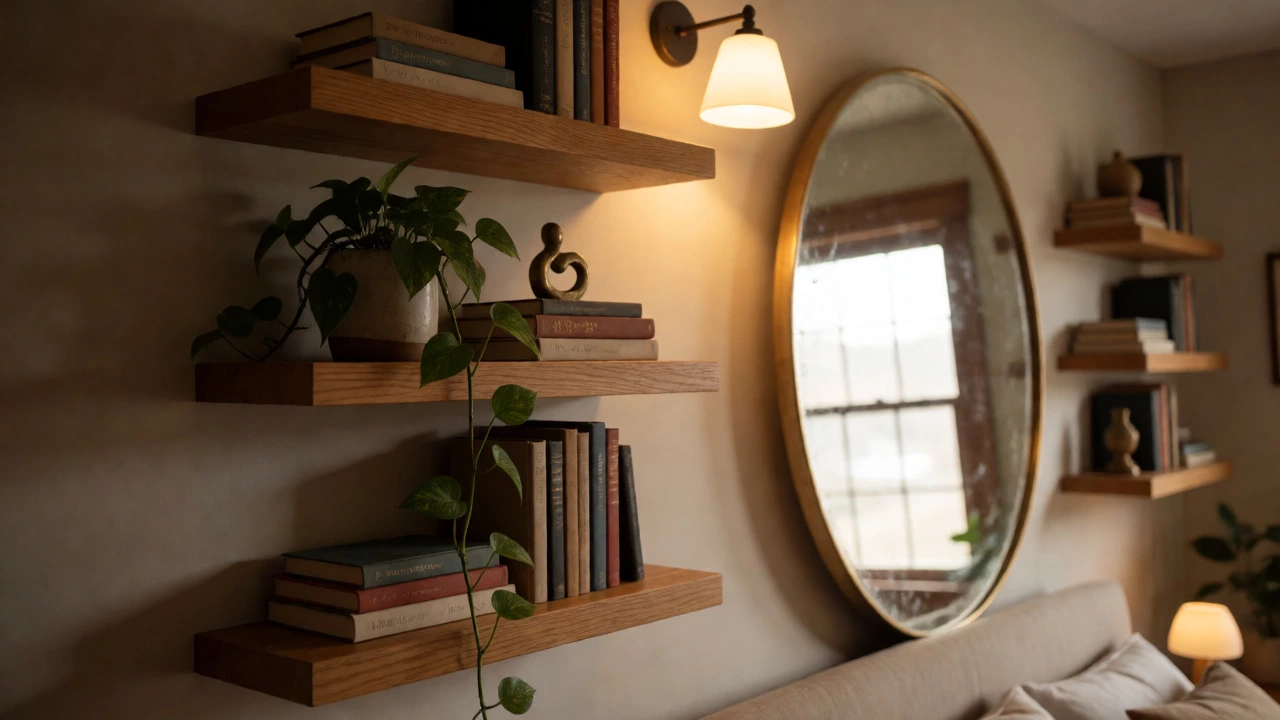
Why decorate when you can store? Floating shelves are incredibly versatile. They break up the monotony of a plain wall while giving you a place to put things. But don’t just stack books randomly. Style them like a mini exhibit. Mix vertical books with horizontal stacks. Add a small potted plant-the trailing vines of a pothos look great cascading over the edge. Throw in a candle or a small sculpture.
The key is negative space. Don’t fill every inch of the shelf. Leave gaps so the eye can rest. If you have a long wall, consider installing three shelves in a staggered pattern rather than straight lines. This creates movement and draws the eye across the room. Ensure the shelves are level. A crooked shelf screams “amateur hour,” even if the decor on top is expensive.
Lighting as Decoration
We often forget that light fixtures are decor. A standard flush mount ceiling light does its job, but it doesn’t decorate. Consider installing sconces on either side of a mirror or above a bed. Sconces free up table space and cast a warm, ambient glow that changes the mood of the entire room.
If wiring new lights is too much hassle, use plug-in sconces. These attach directly to the wall and plug into an outlet, giving you the look of hardwired lighting without the electrician bill. Picture lights are another subtle touch. Placing a small light above a framed print highlights the artwork and adds depth during evening hours. It’s a small detail that makes a room feel intentional and high-end.
Greenery: Bringing Life to Static Surfaces
Plants are arguably the easiest way to add life to a dull wall. You don’t need a green thumb to succeed here. Start with hardy varieties like snake plants or ZZ plants, which tolerate neglect. Mount them in wall planters or place tall plants in corners to draw the eye upward.
For a more dramatic effect, try a living wall or moss panel. Preserved moss requires zero maintenance and stays green year-round. It brings a spa-like tranquility to bathrooms or entryways. If you’re worried about water damage, stick to faux options. High-quality artificial plants have come a long way. Look for ones with realistic textures and varied leaf shapes. Dust them regularly, though-fake plants gathering dust look worse than no plants at all.
Mirrors: Illusion and Utility
A large mirror is a cheat code for small rooms. It reflects light and creates the illusion of depth. But beyond utility, mirrors are decorative. An ornate, gilded frame can serve as the centerpiece of a dining room wall. A sleek, round mirror fits perfectly in a modern bathroom.
Positioning matters. Hang a mirror opposite a window to bounce natural light deeper into the room. Avoid placing mirrors directly facing cluttered areas, as they will double the mess. If you want to get creative, lean a large floor mirror against the wall instead of hanging it. This casual angle feels relaxed and contemporary, and it saves you from dealing with heavy-duty wall anchors.
Final Touches: Cohesion and Confidence
Once you’ve hung your art, added shelves, or placed a plant, step back. Really look at it. Does it match the rest of the room? If your sofa is navy blue, maybe incorporate hints of blue in your wall decor. Consistency ties the room together. But don’t be afraid to break the rules occasionally. A single pop of unexpected color can be refreshing.
Remember, decorating is iterative. You can always move things around. If a piece feels wrong after a week, take it down. Try something else. There’s no permanent record of your first attempt. The goal is to create a space that feels good to you, not one that looks perfect in a magazine. Start small, trust your instincts, and enjoy the process of making your house feel like home.
How high should I hang pictures?
The general rule is to hang art at eye level, which is typically 57 to 60 inches from the floor to the center of the piece. If you are hanging art above furniture, such as a sofa, leave 4 to 6 inches of space between the top of the furniture and the bottom of the frame. This keeps the connection between the object and the wall clear.
Can I decorate a wall without damaging paint?
Yes. Adhesive products like Command Strips are excellent for renters. They hold significant weight and remove cleanly without leaving holes or pulling off paint. For lighter items, poster putty or removable mounting squares work well. Always test a small, inconspicuous area first to ensure the adhesive doesn't damage your specific paint finish.
What size art is appropriate for a large wall?
Avoid tiny frames on huge walls, as they get lost. For a large wall, opt for oversized statement pieces or a substantial gallery wall. A single piece of art should ideally cover at least half the width of the wall or the furniture beneath it. If you prefer multiple smaller pieces, group them tightly to create a unified block of visual interest.
How do I choose a color scheme for my wall decor?
Pull colors from existing elements in the room, such as your rug, curtains, or upholstery. Choose one dominant color, one secondary color, and one accent color. This creates harmony without being boring. If your room is neutral, use wall decor to introduce bold hues. If the room is already colorful, stick to neutral tones in your frames and art to provide visual rest.
Are floating shelves difficult to install?
Not necessarily, but precision is key. You need a level, a drill, and wall anchors suitable for your drywall type. If you miss a stud, use toggle bolts or heavy-duty plastic anchors rated for the weight of the shelf plus your decor. Always check that the shelf is perfectly level before loading it with items, as even a slight tilt becomes obvious once books or plants are added.