
Bathroom Refresh Planner
Select the upgrades you are considering to see your estimated total investment, time commitment, and potential visual impact score.
Your Project Estimate
You stare at that beige tile and the builder-grade fixtures every morning. It’s not broken, but it feels stuck in 1995. The good news? You don’t need to gut the room or hire a contractor to make it feel fresh. Most people think a bathroom makeover requires tearing out walls, but 80% of the visual impact comes from surface-level changes and smart swaps. If you’re ready to stop dreading your shower routine, here is how to inject personality into a tired space without touching a hammer.
The Power of Hardware Swaps
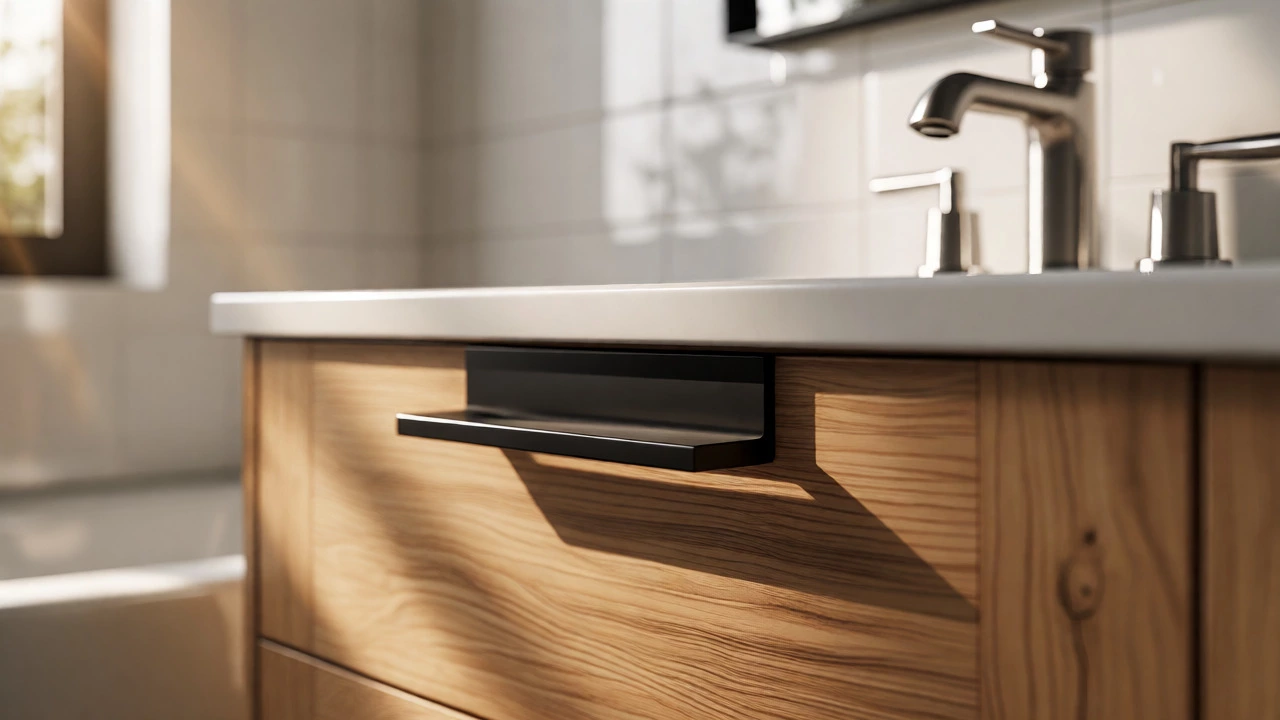
Let’s start with the easiest win: hardware. Your cabinet pulls, towel bars, and faucet handles are the jewelry of the room. Replacing them takes twenty minutes and costs less than a nice dinner out. If your current setup is chrome or brass that has seen better days, switch to matte black, brushed nickel, or unlacquered brass. These finishes hide water spots and fingerprints, which means less scrubbing for you.
Consider the difference between a standard round knob and a sleek bar pull. A bar pull on a vanity drawer instantly modernizes the look. For faucets, you don’t even need plumbing skills if you choose widespread or centerset models that fit existing holes. A single-hole faucet might require drilling, so check your sink configuration first. This simple change shifts the entire vibe from "rental property" to "designer hotel."
Lighting Fixes That Transform Mood
Bad lighting makes any room feel cheap. Most older bathrooms rely on a single overhead fluorescent fixture that casts harsh shadows under your eyes. Swap this out for something with character. A linear LED vanity light provides even illumination across your face, making shaving and makeup application easier. If you want warmth, choose bulbs with a color temperature between 2700K and 3000K. Anything above 4000K looks clinical and sterile.
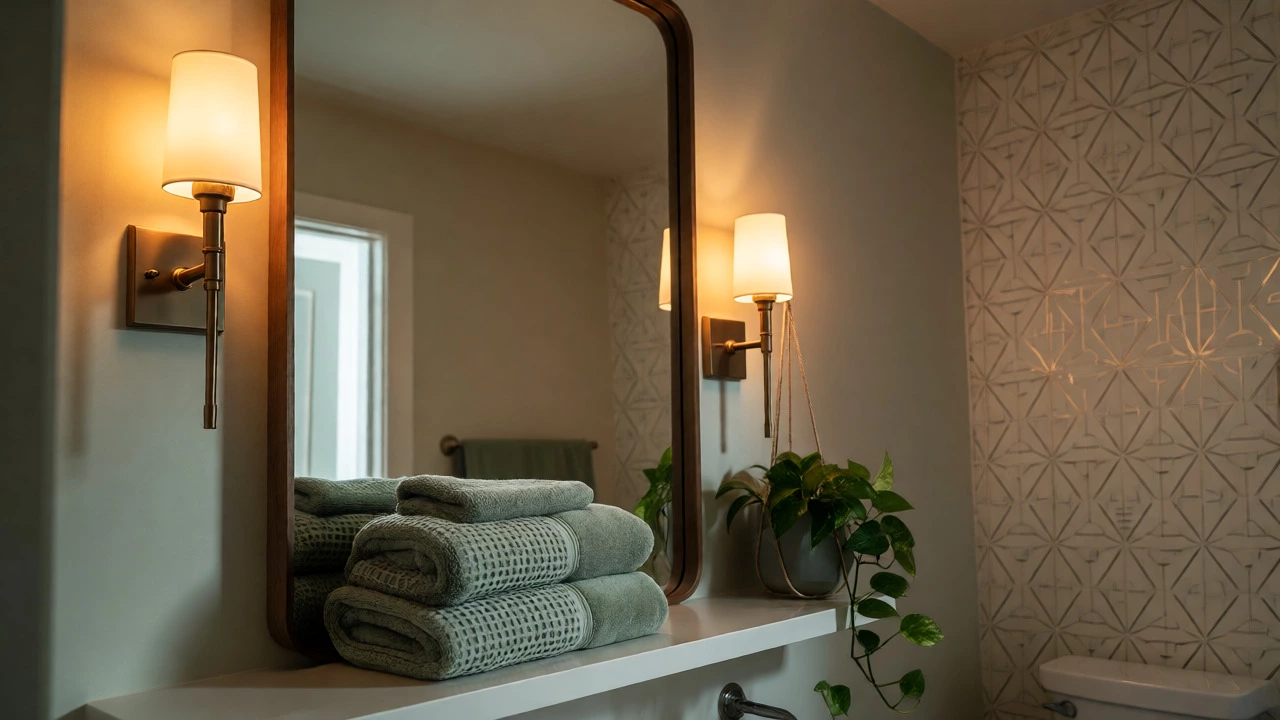
Don’t ignore the mirror. An oversized framed mirror reflects more light and creates the illusion of depth. If your current mirror is small and plastic-framed, replace it with one that has a wooden or metal frame. Alternatively, install sconces on either side of the mirror. This eliminates shadows and adds a layer of sophistication that overhead lights simply cannot match.
Textiles and Soft Goods
Hard surfaces dominate bathrooms, so soft goods are your best friend for adding texture and color. Throw away the matching sets of towels you bought ten years ago. Instead, mix textures. Combine waffle-weave hand towels with plush bath sheets. Use neutral tones like charcoal, sage green, or terracotta rather than bright primary colors, which can look dated quickly.
A high-quality bath mat makes a huge difference. Look for materials like cotton chenille or bamboo. Avoid rubber-backed mats that trap moisture and smell mildewy over time. If you have a window, swap heavy curtains for lightweight linen or sheer fabrics that let natural light filter through while maintaining privacy. These small tactile changes make the space feel curated rather than utilitarian.
Wall Treatments and Art
You don’t need to paint every wall to refresh the room. Accent walls work wonders. Choose one wall-usually the one behind the toilet or next to the tub-and apply removable wallpaper or peel-and-stick tiles. Patterns like geometric shapes or botanical prints add interest without overwhelming the space. Just ensure the material is rated for humid environments; standard paper wallpaper will bubble and peel within months.
Art is often overlooked in bathrooms because of humidity concerns. But if you use sealed frames or acrylic prints, you can hang art safely. Small gallery walls using waterproof frames create a focal point. If you prefer simplicity, a large piece of abstract art in a moisture-resistant frame draws the eye upward, making low ceilings feel higher.
Greenery and Natural Elements
Bathrooms are naturally humid, which makes them perfect for certain plants. Unlike other rooms where plants struggle, your steamy shower environment helps tropical varieties thrive. Snake plants, pothos, and peace lilies tolerate low light and high moisture. Place them on floating shelves or in hanging planters to save floor space.
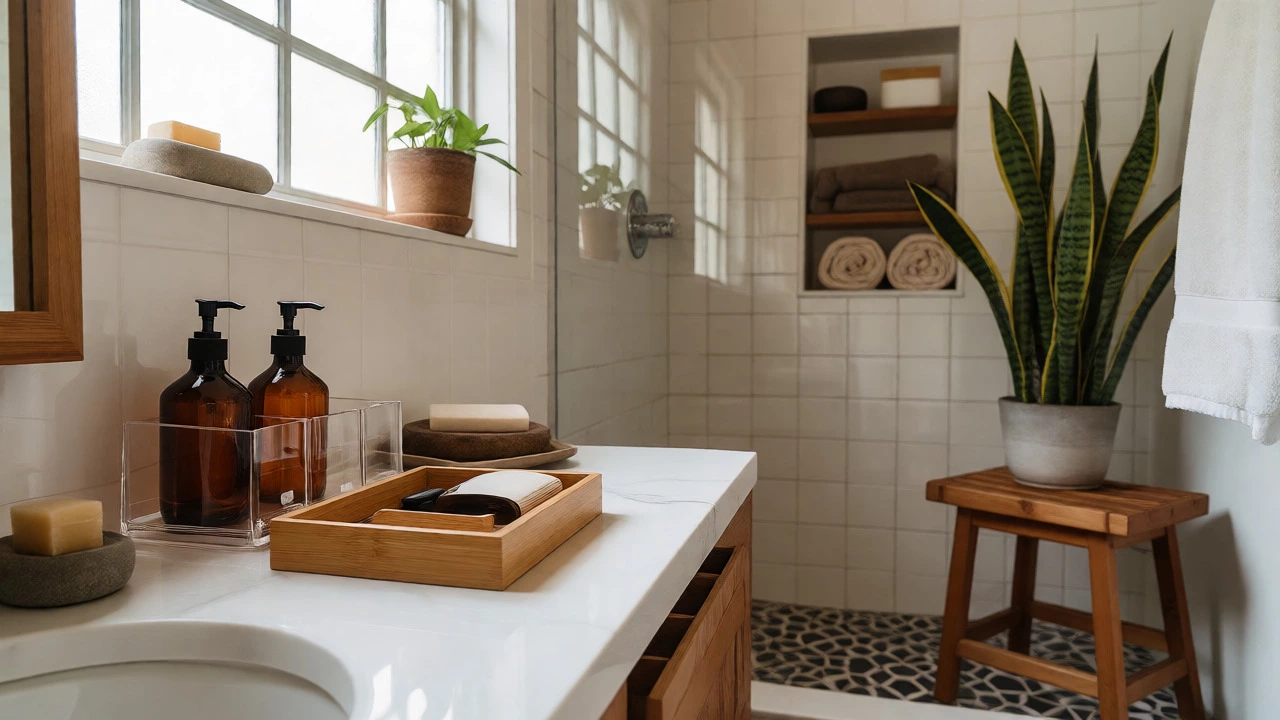
Natural elements also mean wood accents. Bamboo trays hold toiletries neatly and prevent clutter. Teak stools offer seating without rotting. Stone soap dishes or marble trays elevate everyday items like toothbrushes and lotions. These organic materials contrast beautifully with ceramic tiles and glass, creating a spa-like atmosphere that feels grounded and calm.
Decluttering and Smart Storage
No amount of decor fixes a cluttered counter. Get rid of half-empty bottles and expired products. Consolidate toiletries into matching dispensers. Clear acrylic organizers or woven baskets keep things tidy and accessible. Vertical storage is key in small bathrooms. Install floating shelves above the toilet or inside the shower niche. Magnetic strips for hair tools or razors free up drawer space.
If you have open shelving, style it intentionally. Don’t just stack towels randomly. Fold them neatly or roll them for a boutique look. Limit visible items to five per shelf to avoid visual noise. Hidden storage, like bins under the sink, keeps essentials out of sight but within reach. A clean surface equals a clean mind, and it’s the fastest way to make a small bathroom feel larger.
| Upgrade | Estimated Cost (USD) | Time Required | Impact Level |
|---|---|---|---|
| Hardware Replacement | $20 - $150 | 30 mins | High |
| Vanity Lighting | $50 - $200 | 1 hour | High |
| Peel-and-Stick Tiles | $100 - $300 | 4-6 hours | Medium-High |
| New Textiles | $50 - $100 | Instant | Medium |
| Plants & Decor | $30 - $80 | Instant | Medium |
Frequently Asked Questions
Can I paint my bathroom tiles?
Yes, but it requires preparation. You must clean the tiles thoroughly with a degreaser, sand them lightly to create adhesion, and use a specialized epoxy or urethane enamel paint designed for wet areas. Standard latex paint will chip and peel due to moisture exposure. It is a viable option for updating outdated colors without demolition.
What is the best way to hide pipes under the sink?
A skirt made from fabric or a decorative panel works well for pedestal sinks. For vanity cabinets, installing doors covers the mess entirely. If you prefer an open look, use potted plants or stylish baskets to conceal the plumbing visually while adding greenery or storage.
How do I prevent mold when adding plants?
Ensure proper ventilation by running the exhaust fan during and after showers. Choose plants that thrive in humidity, such as ferns or spider plants, and avoid overwatering since the air provides moisture. Wipe leaves occasionally to remove dust and spores, and rotate pots regularly to promote even growth.
Is peel-and-stick flooring durable enough for bathrooms?
Modern luxury vinyl plank (LVP) peel-and-stick options are quite durable and water-resistant. However, they may not last as long as traditional tile in high-traffic areas. Ensure the subfloor is perfectly level and dry before installation to prevent lifting. They are ideal for renters or temporary updates.
How many mirrors should a small bathroom have?
One large mirror is usually sufficient and often preferable to multiple small ones, which can create visual clutter. A large mirror reflects more light and expands the perceived size of the room. If you want extra reflection, consider a mirrored medicine cabinet that offers both function and optical illusion benefits.