
Tiny House Space Efficiency Calculator
Your Current Setup
Adjust the sliders above to see how different storage strategies impact your tiny home's efficiency.
Living in a tiny house isn't just about downsizing; it's about upgrading how you live. When your floor plan is measured in square meters rather than acres, every inch counts. You don't need magic to make a small space feel vast-you need strategy. The secret lies in treating your walls as storage opportunities and your furniture as tools that do double duty.
If you are staring at a cluttered corner and wondering where everything went, you aren't alone. Many tiny home owners hit a wall when their possessions start to outpace their square footage. The solution isn't necessarily buying less, but organizing smarter. By focusing on verticality, hidden compartments, and flexible layouts, you can create a home that feels airy, functional, and surprisingly spacious.
Key Takeaways
- Go Vertical: Use wall-mounted shelves and tall cabinets to free up floor space.
- Multi-Functional Furniture: Invest in pieces like sofa beds and drop-leaf tables that serve two purposes.
- Hidden Storage: Utilize under-bed drawers, stair cubbies, and toe-kick drawers for clutter control.
- Zoning Matters: Define areas with rugs or lighting instead of walls to keep the flow open.
- Edit Ruthlessly: Keep only what serves a purpose or brings joy; donate the rest.
Mastering Vertical Storage
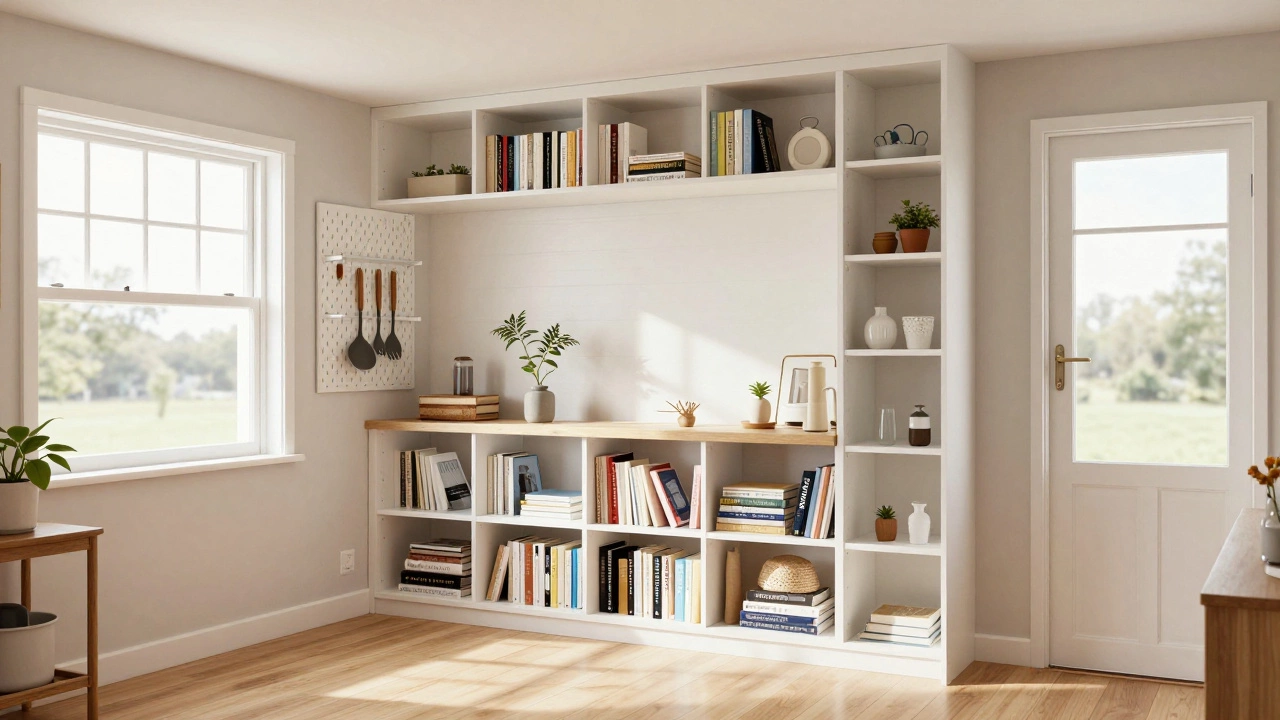
The biggest mistake people make in small spaces is ignoring the air above them. In a standard house, you might leave the upper third of a bookshelf empty. In a tiny house a residential dwelling significantly smaller than the average home, typically under 400 square feet, that empty space is wasted real estate. Start by looking up. Install shelving units that reach all the way to the ceiling. Yes, even the top shelf. If you can't reach it easily, use a small step stool or store seasonal items there-things you only need once or twice a year, like winter coats or holiday decorations.
Wall-mounted racks are another game-changer. Instead of a bulky coat stand that takes up floor space, mount hooks near the entryway. For the kitchen, think beyond the cabinet doors. Magnetic strips for knives and spice jars not only save drawer space but also turn your cooking tools into part of the decor. Pegboards are incredibly versatile here. They allow you to rearrange hooks and shelves as your needs change, making them perfect for workshops, kitchens, or home offices where tools and supplies shift frequently.
Consider the "dead zones" around windows and doors. Narrow shelving units can fit perfectly in these tight gaps, providing storage for books, plants, or decorative objects without obstructing light or movement. This approach turns awkward architectural features into functional assets.
Furniture That Does Double Duty
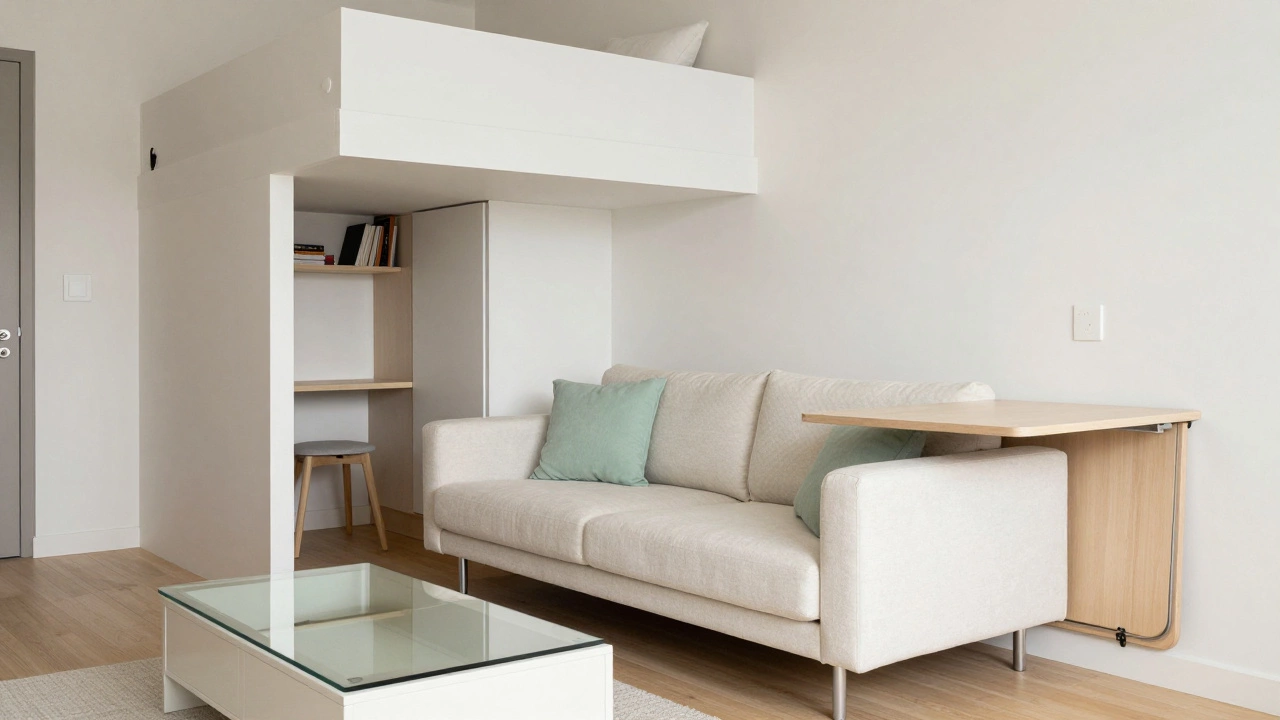
In a compact living area, single-purpose furniture is a luxury you can't afford. Every piece you bring in should earn its keep by serving at least two functions. A coffee table with built-in drawers isn't just a surface for your morning coffee; it's a hiding spot for remotes, magazines, and board games. A sofa bed transforms your living room into a guest bedroom overnight, eliminating the need for a separate spare room.
Drop-leaf tables are essential for dining. During the day, the table folds down to become a narrow console against the wall, freeing up walking space. When guests arrive, you unfold the leaves to accommodate four or six people. Look for nesting tables too. These small side tables can tuck away when not in use but provide extra surfaces when you're entertaining or working from home.
Beds are often the largest piece of furniture in a tiny house. Choose a platform bed with deep storage drawers underneath. Alternatively, a lofted bed creates an entire new level of space below it. You can fit a desk, a reading nook, or even a small closet under a lofted bed. This is particularly effective for children's rooms or studios where you need to combine sleeping and working areas.
| Furniture Type | Primary Function | Secondary Function | Best For |
|---|---|---|---|
| Sofa Bed | Seating | Guest Sleeping | Living Rooms / Studios |
| Drop-Leaf Table | Dining Surface | Console / Desk | Entryways / Small Kitchens |
| Storage Ottoman | Footrest / Seating | Hidden Storage | Bedrooms / Living Areas |
| Lofted Bed | Sleeping | Workspace / Lounge Below | Kids' Rooms / Apartments |
Hidden and Underutilized Spaces
Clutter kills the feeling of space. If you can see it, it adds visual noise. If you hide it, your brain perceives the room as cleaner and larger. One of the most overlooked storage areas is under the stairs. If your tiny house has a staircase leading to a loft, those triangular voids are prime real estate. Build shallow drawers for shoes or deeper cabinets for bulkier items like vacuum cleaners or suitcases.
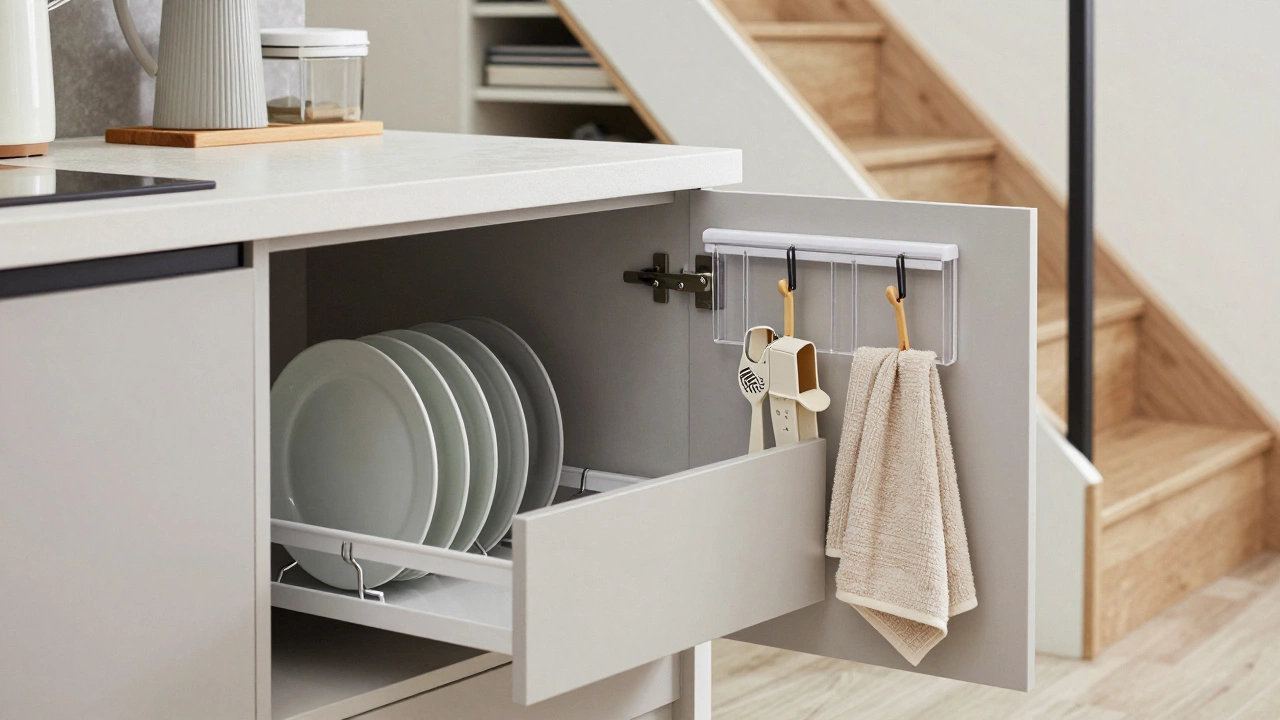
Toe-kick drawers are a clever hack for kitchens. The small gap between the bottom of your cabinets and the floor is usually dead space. By installing slim drawers in this area, you gain storage for flat items like baking sheets, cutting boards, or pantry staples. It’s a subtle addition that doesn’t change the look of your kitchen but adds significant utility.
Don't forget the back of doors. Over-the-door organizers are great for bathrooms (shampoos, towels) and closets (accessories, belts). In the kitchen, magnetic knife strips or hanging pot racks utilize the vertical space behind cabinet doors or on walls, keeping countertops clear for food prep.
Visual Tricks to Expand Perception
Physical storage is only half the battle. How you style your space affects how big it feels. Light colors reflect light, making rooms appear more open. While dark colors can be cozy, they tend to absorb light and make walls feel closer. Stick to whites, creams, or pastels for large surfaces like walls and major furniture pieces. Use bolder colors in small accents like cushions or art to add personality without overwhelming the space.
Mirrors are your best friend in a tiny house. Placing a large mirror opposite a window reflects natural light and creates the illusion of depth, effectively doubling the visual space. Glass furniture, such as glass-top tables or chairs, also helps because your eye can see through them, reducing visual weight. Avoid bulky, solid wood furniture that blocks sightlines.
Keep pathways clear. A common error is pushing furniture against all four walls, leaving a huge empty center. This actually makes the room feel smaller because it emphasizes the boundaries. Pull furniture slightly away from walls or arrange it to define zones. For example, place a rug under your seating area to define the "living zone" without building a wall. This keeps the flow open and allows light to travel freely across the floor.
Editing Your Possessions
No amount of clever storage will fix a problem caused by owning too much stuff. Living in a small home a residence with limited square footage requiring intentional organization forces a lifestyle of minimalism. You have to ask yourself: Do I use this? Do I love this? If the answer is no, let it go. Host a garage sale, donate to charity, or sell online. The goal is to own fewer things so that each item has a designated home.
Categorize your belongings. Group similar items together. All kitchen gadgets in one bin, all office supplies in another. This makes it easier to see duplicates and decide what to keep. If you find yourself hoarding "just in case" items, consider digital alternatives. Scan documents, switch to e-books, and stream music instead of collecting CDs. Digital files take up zero physical space.
Implement a "one in, one out" rule. For every new item you bring into your tiny house, one old item must leave. This maintains equilibrium and prevents clutter from creeping back in over time. It’s a simple habit that ensures your space remains manageable and stress-free.
Tiny House Kitchen Hacks
The kitchen is often the heart of the home, but it’s also where clutter accumulates fastest. To maximize space here, focus on stackable containers. Clear, airtight containers for dry goods like pasta, rice, and flour not only look uniform and tidy but also stack securely in cupboards, using vertical space efficiently. Label them clearly so you know exactly what’s inside without opening every jar.
Use tension rods inside cabinets to create dividers. Slide a rod vertically between shelves to separate plates or baking sheets. Horizontally, they can hold pots and pans upright, making them easy to grab. Drawer dividers are equally important. Without them, utensils become a tangled mess. With them, every spoon and fork has its own slot, maximizing the usable area of the drawer.
Consider a pull-out pantry if you have a narrow gap between your fridge and counter. Even a few inches wide, a pull-out rack can hold spices, oils, and canned goods, turning a useless gap into a highly organized storage unit. This is especially useful in galley-style kitchens where counter space is at a premium.
What is the most important rule for tiny house storage?
The golden rule is "vertical first." Always look up before buying a new floor-standing piece. Utilizing wall space frees up your floor, making the room feel larger and more navigable.
How can I make my tiny bathroom feel bigger?
Install floating vanities and wall-mounted toilets to expose more floor space. Use a large mirror to reflect light and add over-the-door organizers for towels and toiletries to keep counters clear.
Is it worth investing in expensive multi-functional furniture?
Yes, if it saves significant floor space. A high-quality sofa bed or lift-top coffee table eliminates the need for multiple pieces, reducing visual clutter and improving daily functionality in a small footprint.
What color schemes work best for small spaces?
Light, neutral colors like white, beige, and soft gray reflect light and make walls recede. Use bold colors sparingly in accessories to add interest without shrinking the perceived size of the room.
How do I handle seasonal clothing in a tiny house?
Store off-season clothes in vacuum-sealed bags placed under beds or in high ceiling shelves. Only keep current season attire in your accessible wardrobe to reduce daily decision fatigue and clutter.