
Under-Bed Storage Calculator
Estimated Storage Capacity
If you’re living in a small apartment, a tiny house, or even a cozy condo with barely enough closet space for your winter coats, you’re not alone. Millions of people around the world are figuring out how to fit their lives into spaces that were never designed for modern living. The good news? You don’t need more square footage to have a clean, calm, and functional home. You just need smarter ways to use what you already have.
Start by decluttering like a pro
Before you buy a single storage bin, take everything out. Yes, everything. Pull clothes from closets, empty drawers, clear off shelves, and dump out cabinets. This isn’t about being dramatic-it’s about seeing what you actually own. Most people keep things they haven’t used in over a year, not because they love them, but because they’re afraid they’ll need them someday. The truth? You probably won’t.Here’s a simple rule: if you haven’t used it in 12 months, let it go. That includes holiday decorations you only use once a year, broken appliances you swear you’ll fix, and clothes that don’t fit but you’re holding onto for ‘motivation.’ Donate, sell, or recycle them. The space you free up is the first step to real organization.
Use vertical space like it’s gold
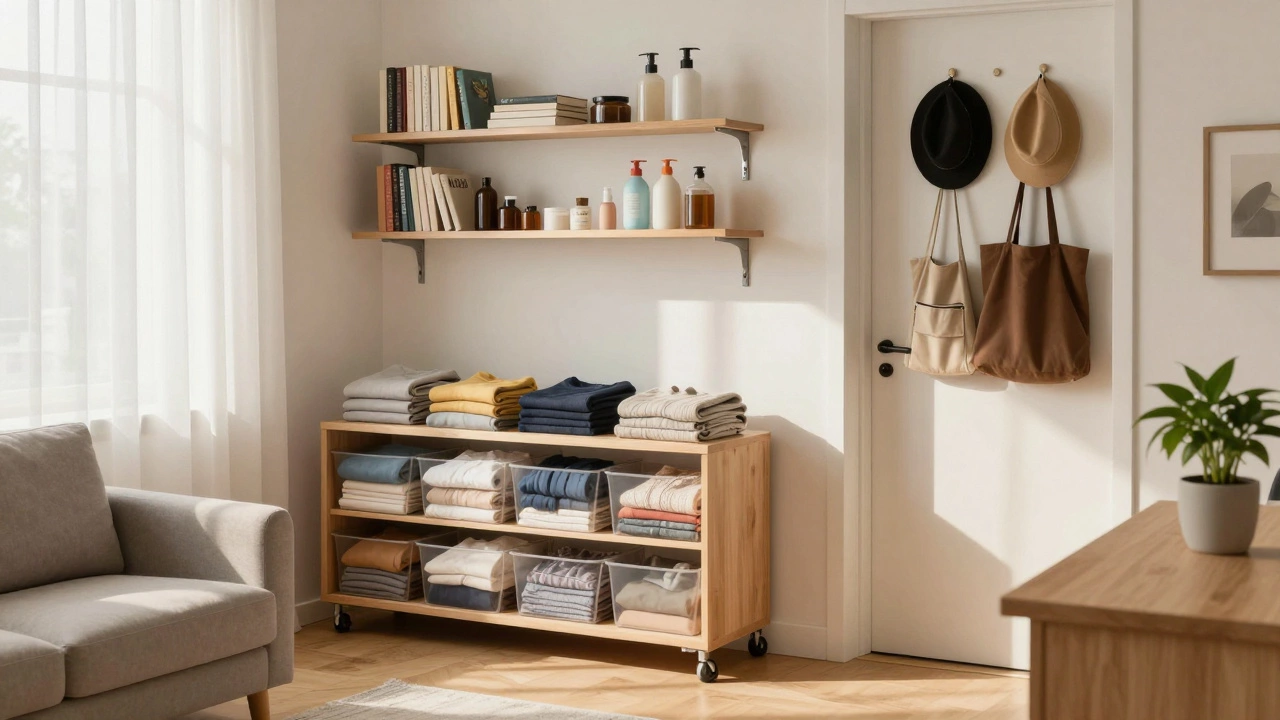
When floor space is limited, your walls and ceilings become your best friends. Install floating shelves above doors, along hallways, or even above your bed. These aren’t just for books or decor-they can hold toiletries, kitchen supplies, or folded linens. Use tension rods under sinks to hang spray bottles or cleaning tools. Mount hooks on the back of doors for bags, hats, or towels.In the kitchen, hang pots and pans from a ceiling rack or wall-mounted rail. In the bathroom, add a narrow shelf above the toilet for extra towels or toiletries. Even in a tiny bedroom, a tall bookshelf that reaches the ceiling gives you storage without eating up floor space. Vertical storage doesn’t just save room-it makes everything easier to find.
Choose furniture that works double duty
Every piece of furniture in a small space should earn its keep. A bench with hidden storage under the seat? Perfect for storing blankets or shoes. A bed with drawers built into the frame? That’s four extra storage bins you didn’t have to buy. A coffee table with lift-top storage? Now you’ve got a place for remotes, board games, or extra linens.Look for pieces labeled as ‘multifunctional’ or ‘space-saving.’ Ottoman benches, nesting tables, fold-out desks, and Murphy beds are all designed to disappear when you don’t need them. You don’t need to spend a fortune-thrift stores and Facebook Marketplace are full of hidden gems. Just test the mechanism before you buy. A drawer that sticks or a lid that won’t stay open is worse than no storage at all.
Use clear containers and label everything
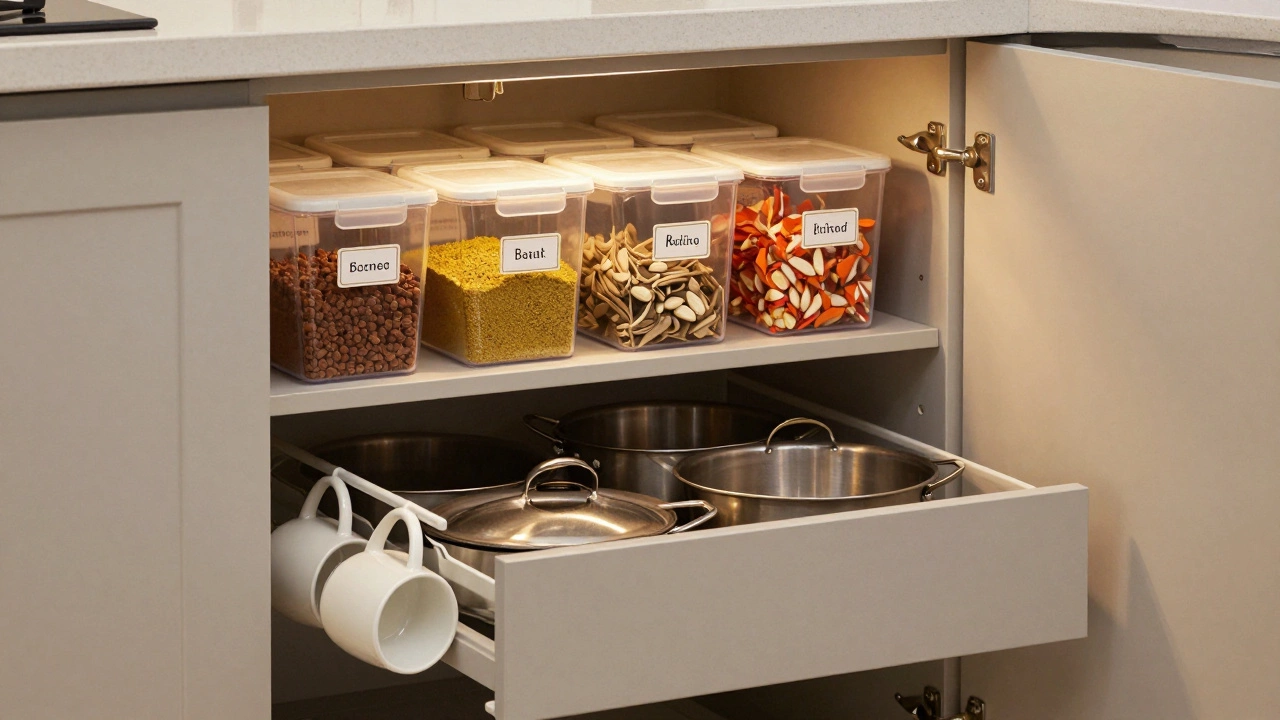
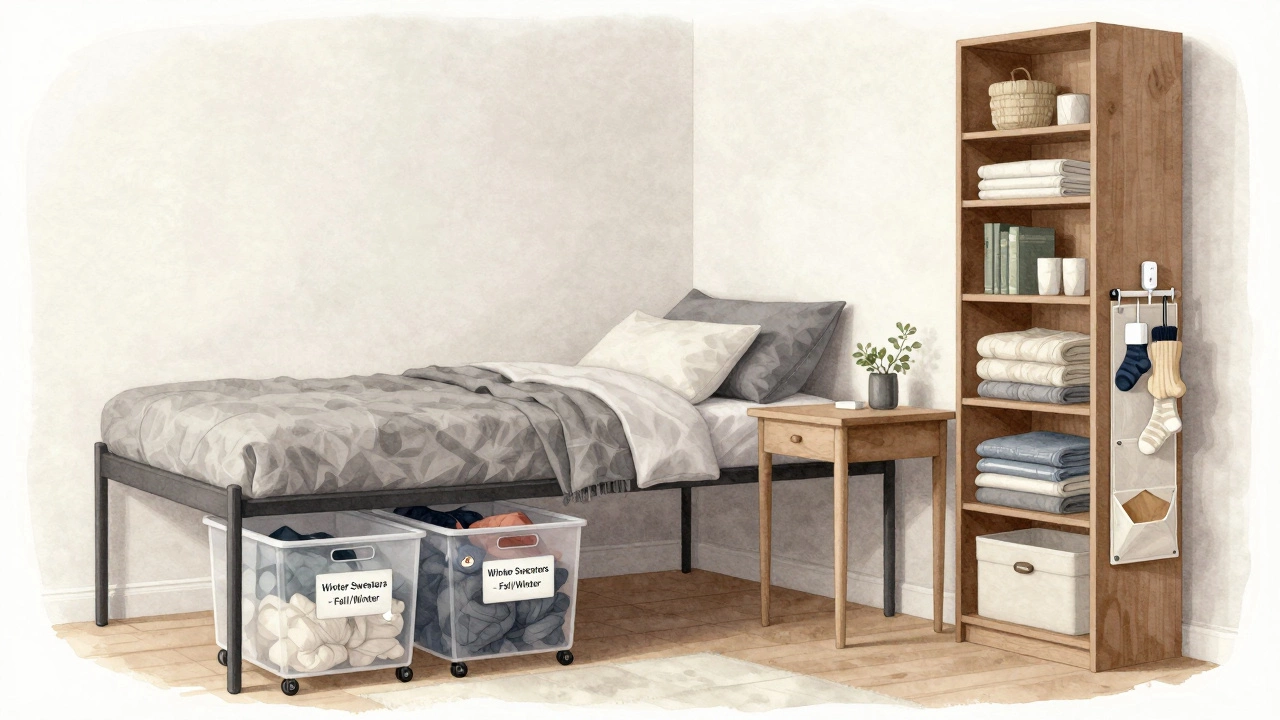
Once you’ve got your stuff sorted, store it in clear plastic bins. Why? Because you can see what’s inside. No more digging through five boxes looking for last year’s holiday lights. Clear bins also make it easier to stack and organize. Use uniform sizes so they fit neatly on shelves or under beds.And don’t skip the labels. A Sharpie and some sticky labels take 30 seconds per bin, but they save you 10 minutes every time you need something. Write the contents and the season (e.g., ‘Winter Sweaters - Fall/Winter’) so you know exactly when to pull things out. This is especially helpful for seasonal items like swimwear, snow gear, or holiday decorations.
Turn dead zones into storage zones
There are spaces in your home you probably never think about-but they’re perfect for storage. The space between your fridge and the wall? Slide in a narrow cart for spices or canned goods. The area under your stairs? Install shallow drawers or a pull-out cabinet. The back of your bathroom door? Hang an over-the-door organizer for hair tools or makeup.Even the inside of cabinet doors can hold things. Mount a rack inside your pantry door for spice jars. Stick a small pocket organizer behind your bedroom door for socks, belts, or phone chargers. These tiny spots add up. In a 500-square-foot apartment, you might be wasting 20 square feet of usable space just because you didn’t notice it.
Keep it visible and accessible
The biggest mistake people make in small homes is hiding things away so well they forget they exist. If you can’t easily reach it, you won’t use it. That means your best-used items-like coffee mugs, daily vitamins, or your favorite hoodie-should be front and center.Use open shelving for things you grab every day. Keep your morning coffee setup on the counter. Store frequently worn clothes in a dresser you can open without pulling out a ladder. Store rarely used items up high or under the bed. The goal isn’t to hide everything-it’s to make the everyday easy and the occasional manageable.
Adopt a one-in, one-out rule
Once you’ve got your system in place, protect it. Every time you bring something new into your home, let something else go. Buy a new pair of shoes? Donate an old pair. Get a new book? Pass along one you’ve already read. This keeps clutter from creeping back in.It’s not about being perfect. It’s about being aware. When you pause before buying something and ask, ‘Where will this live?’ you start making smarter choices. Over time, you’ll stop accumulating stuff you don’t need-and your space will stay calm, clean, and clutter-free.
Why this works better than buying more storage
Most people think the answer to small-space problems is more storage bins, shelves, or cabinets. But adding more stuff just makes the problem worse. You end up with more boxes, more clutter, and more stress trying to keep it all tidy.The real solution isn’t about storage-it’s about reduction. When you own less, you need less space. When you organize what you have with purpose, everything has a home. And when you can see and reach everything, you stop wasting time and energy looking for things.
Small homes don’t have to feel cramped. They can feel calm, efficient, and even luxurious-if you design them for how you actually live, not for how you think you should live.
What’s the most important step when organizing a small home?
The most important step is decluttering. You can’t organize what you don’t need. Removing unused, broken, or unwanted items creates breathing room and makes every other storage solution work better. Start by taking everything out and asking: Have I used this in the last year? If not, let it go.
Can I use under-bed storage in a small bedroom?
Yes, under-bed storage is one of the best uses of hidden space in a small bedroom. Use low-profile bins with wheels so they slide easily. Store off-season clothes, extra linens, or shoes. Make sure your bed has enough clearance-ideally at least 6 inches. If your bed is too low, consider raising it with bed risers.
How do I organize kitchen cabinets with limited space?
Start by removing everything and grouping items by use: baking, cooking, drinks, snacks. Use shelf risers to create two levels in deep cabinets. Install pull-out drawers for pots and pans. Hang mugs on a rail inside a cabinet door. Keep everyday items at eye level and rarely used items up high or in a corner cabinet with a lazy Susan.
What are the best storage containers for small spaces?
Clear, stackable plastic bins with lids are the best choice. They let you see contents, stack neatly, and protect items from dust. Look for bins with handles and uniform sizes. Avoid bulky fabric bins-they take up more space and don’t stack well. For clothes, vacuum-seal bags work for seasonal items but not everyday wear.
Is it worth investing in custom built-ins?
Only if you’re staying long-term and have the budget. Custom built-ins can maximize every inch, but they’re expensive and hard to change later. For renters or people who move often, freestanding solutions like shelving units, modular cabinets, and over-the-door organizers are more practical and affordable.
How do I keep my small home from feeling cluttered?
Keep surfaces clear. Countertops, tables, and floors should have room to breathe. Put away items after use-even if it’s just five minutes of tidying. Use closed storage for messy items like toys or cables. Add plants or a single piece of art to create visual calm. Less stuff + intentional design = less clutter, even in a tiny space.