
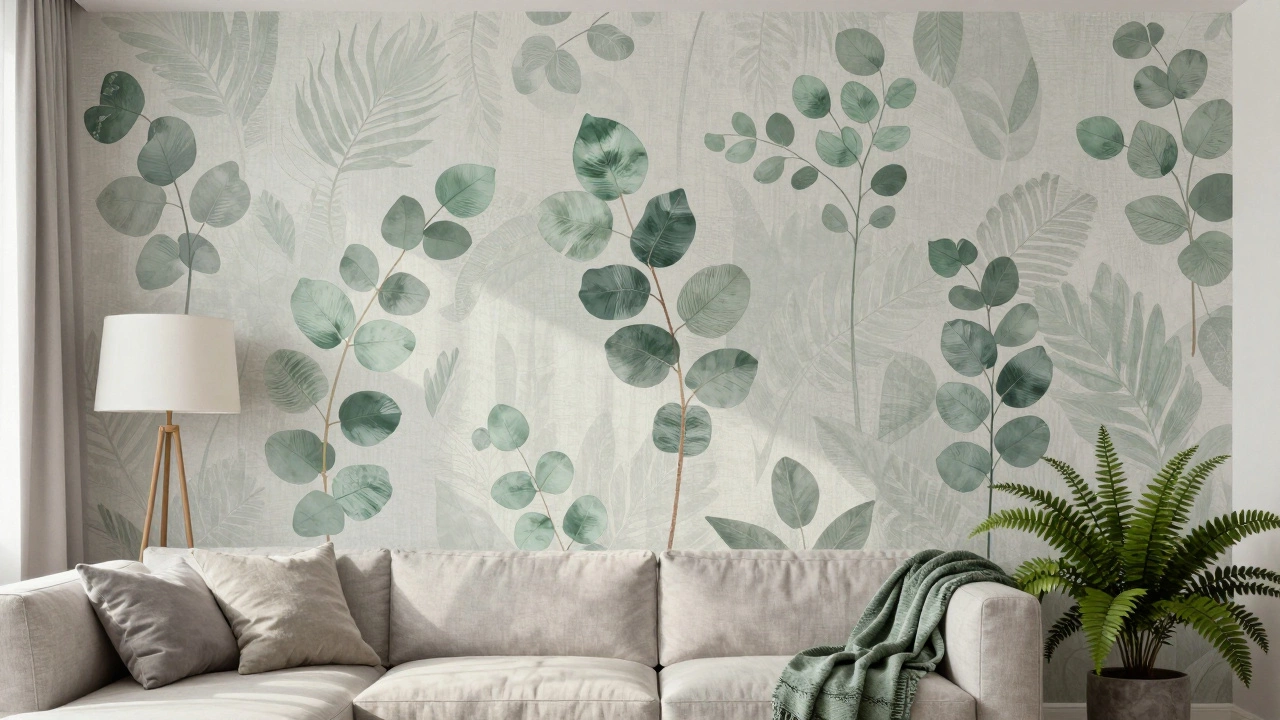
Wallpaper used to be the go-to for every living room, bedroom, and even bathroom in the 1980s and 90s. But somewhere between the rise of minimalist interiors and the obsession with white walls, it got labeled as "old-fashioned." If you’re standing in a showroom right now wondering if putting up wallpaper makes you look stuck in the past, the answer is no - not anymore. In fact, wallpaper is having a serious comeback, and it’s not just a nostalgic throwback. It’s smarter, bolder, and more flexible than ever before.
Why Wallpaper Got a Bad Reputation
Let’s be honest - wallpaper earned its bad rep. Thick, heavy patterns from the 80s didn’t age well. Think giant floral bouquets, gold foil borders, and textured vinyl that peeled after a decade. People associated it with outdated homes, rental apartments with bad paint jobs, and that one aunt’s living room that never changed. But here’s the thing: wallpaper today isn’t that wallpaper.
Modern wallpaper is made with breathable, washable non-woven fabrics. It’s easier to install, removes cleanly without damaging walls, and comes in finishes that look like linen, concrete, or even hand-painted murals. Brands like Cole & Son, Graham & Brown, and even local Australian designers like Wall & Deco is a Melbourne-based wallpaper studio known for its nature-inspired, eco-friendly designs are leading the charge. These aren’t the same products your parents had.
What’s Changing in Wallpaper Design
Designers in Melbourne, Sydney, and beyond are using wallpaper in ways that surprise even longtime interior enthusiasts. Here’s what’s trending right now:
- Textured neutrals - Think subtle grasscloth, linen-look, or stone-effect finishes that add depth without overwhelming a space.
- Large-scale botanicals - Not the tiny florals of the past. Think oversized ferns, eucalyptus branches, or abstract leaves that feel like a living wall.
- Geometric patterns - Sharp lines, asymmetrical shapes, and monochrome grids that add rhythm to modern rooms.
- Custom murals - You can now order a full-wall mural of your own photo, a city skyline, or even a hand-drawn sketch of your backyard.
- Removable vinyl panels - Perfect for renters. Stick it on, peel it off, no residue. No more landlord drama.
These aren’t just design fads. They’re functional. A textured wallpaper in a bedroom can soften sound. A dark, moody pattern in a narrow hallway can make the space feel intentional, not cramped. A bold mural behind a bed turns a simple room into a statement.
Where Wallpaper Actually Works Best
It’s not about using wallpaper everywhere. It’s about using it where it adds value. Here are the top spots where designers are putting it to work in 2026:
- Accent walls - Still the most popular. One wall behind a bed, sofa, or dining table creates drama without commitment.
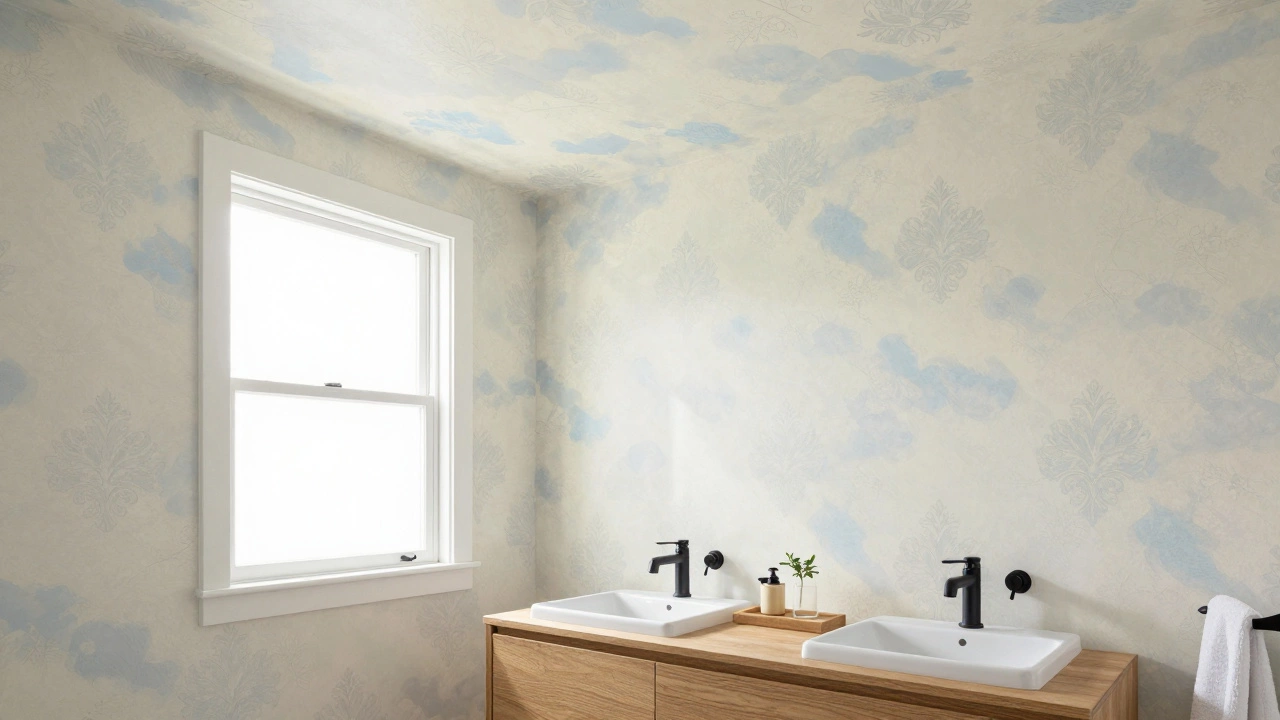
- Ceilings - Yes, really. A patterned ceiling makes a room feel taller and more luxurious. Think subtle damask or soft clouds.
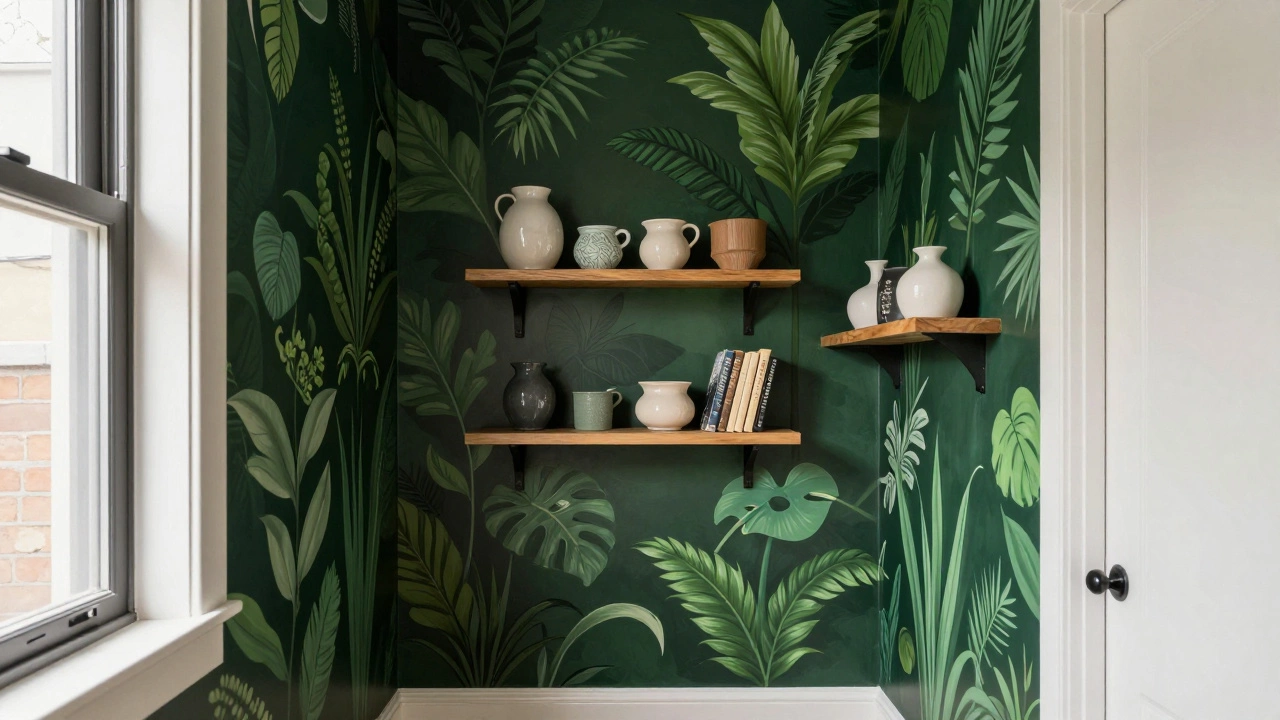
- Behind shelving - Adds depth to bookshelves or display cabinets. The contrast makes objects pop.
- Small spaces - A bold pattern in a powder room or home office can make the space feel curated, not small.
- Stairwells - A vertical mural or gradient pattern turns a functional space into a visual journey.
One Melbourne designer I spoke to recently put a dark green, leafy wallpaper behind floating shelves in a narrow hallway. The result? People stop and ask, "Is that art?" It’s not. It’s wallpaper. And it’s working.
Wallpaper vs. Paint: The Real Comparison
People say, "Why not just paint?" That’s fair. Paint is cheaper and easier. But here’s what paint can’t do:
| Feature | Wallpaper | Paint |
|---|---|---|
| Texture | Yes - linen, grasscloth, embossed | No - flat or sheen only |
| Pattern complexity | High - murals, gradients, intricate designs | Low - limited to color shifts |
| Installation time | 1-2 days (DIY-friendly) | 2-4 days (drying between coats) |
| Removal | Peels off cleanly (modern types) | Requires sanding, repatching |
| Cost (per wall) | $80-$250 | $50-$150 |
| Longevity | 10-15 years | 5-7 years |
Wallpaper isn’t replacing paint. It’s complementing it. A room with white walls and one bold wallpaper feature feels intentional. A room with all wallpaper? That’s a different vibe - and it’s becoming more common in high-end homes.
Real People, Real Rooms
I visited a home in Fitzroy last week where the owner, a 32-year-old graphic designer, put up a custom mural of her childhood neighborhood in Brisbane. It’s not a print. It’s hand-painted onto removable vinyl. She didn’t want to move back, but she wanted to feel connected. That’s not old-fashioned. That’s personal.
Another client in St Kilda used a subtle charcoal geometric pattern in her bathroom. She said, "I used to think wallpaper was for grandmas. Then I saw how it made the space feel like a spa. Now I can’t imagine going back to tile."
These aren’t outliers. They’re the new normal.
When Wallpaper Still Doesn’t Work
It’s not magic. There are still places where wallpaper doesn’t belong:
- High-moisture areas without proper backing - Kitchens and bathrooms need moisture-resistant vinyl, not paper.
- Peeling or uneven walls - Wallpaper shows every imperfection. Prep work matters.
- Small, dark rooms with busy patterns - A busy floral in a tiny north-facing room can feel claustrophobic.
- When you’re renting and your landlord hates it - Always check. But remember: removable vinyl is usually fine.
And if you’re going for a minimalist look? You can still use wallpaper - just pick one with a barely-there texture. Think soft grey linen. It’s not "no pattern." It’s "quiet pattern."
So, Is It Old-Fashioned?
No. Not even close.
Wallpaper isn’t coming back because people miss the 80s. It’s coming back because it’s better. It’s more expressive. It’s more durable. It’s more personal. And it’s finally being treated like the design tool it is - not a relic.
If you’re hesitating because you think it’s outdated, you’re not seeing what’s out there. Walk into a design store. Look at the new collections. Touch the samples. See how light plays on a textured surface. Notice how a single wall can change the entire mood of a room.
Wallpaper isn’t about nostalgia. It’s about intention. And in 2026, intention matters more than ever.
Is wallpaper expensive compared to paint?
It can be, but not always. A basic roll of modern wallpaper costs about $50-$80, and one roll usually covers one wall. Premium designs or custom murals can run $200-$400. Paint is cheaper upfront - around $50 for a gallon - but wallpaper lasts longer (10-15 years vs. 5-7), so over time, it often costs less per year. Plus, you’re not paying for labor if you install it yourself.
Can I use wallpaper in a rental?
Yes, if you choose removable vinyl wallpaper. Brands like Tempaper and Chasing Paper make peel-and-stick options that come off cleanly without damaging paint or drywall. Always check with your landlord, but most won’t mind if you’re not leaving a mess. Just avoid traditional paste-on paper - it’s not renter-friendly.
What’s the easiest way to try wallpaper without committing?
Start with one accent wall or use removable panels on a single surface like a bookshelf, headboard, or even the inside of a closet. You can also buy a sample swatch for under $10 to test the pattern and texture in your lighting. A small test lets you see how it feels in your space before going all-in.
Does wallpaper make a room feel smaller?
It can, if you pick the wrong pattern. Dark, busy designs in small rooms can feel overwhelming. But light textures, vertical stripes, or subtle gradients actually make a room feel taller and more spacious. The key is matching the pattern to the room’s size and light. A soft linen finish in a narrow hallway, for example, adds warmth without closing in the space.
Is wallpaper hard to install?
Not anymore. Modern non-woven and removable wallpapers are designed for DIY. You don’t need paste or a professional. Just measure, cut, and stick. Most come with instructions, and YouTube has hundreds of short tutorials. If you can hang a picture frame, you can hang wallpaper. The biggest mistake? Not measuring properly. Always double-check your wall dimensions.
What’s Next for Wallpaper?
The next wave is sustainability. More brands are using recycled materials, plant-based inks, and biodegradable backings. Australian companies like Wall & Deco is a Melbourne-based wallpaper studio known for its nature-inspired, eco-friendly designs are leading this shift. You can now get wallpaper made from eucalyptus fibers, recycled cotton, or even mushroom-based materials.
And smart wallpaper? Yes, that’s coming. Some prototypes include embedded LED lighting, temperature-sensitive color shifts, and even sound-absorbing layers. It’s not mainstream yet - but it’s on the horizon.
Wallpaper isn’t a trend. It’s a tool. And tools don’t go out of style - they just get better.