
Modern vs. Contemporary Architecture Quiz
Loading question...
...
Quiz Complete!
You scored 0 out of 5.
Great job! You have a good understanding of architectural styles.
You’ve probably scrolled through Pinterest or Instagram and seen two photos labeled similarly. One looks like a sleek box with flat roofs and steel beams. The other feels airy, with curved lines and warm woods. Both are called "modern." But they aren’t the same thing. In fact, confusing modern and contemporary architecture is one of the most common mistakes homeowners make when planning a renovation or a new build.
The short answer? Modern is a specific historical style that happened in the past. Contemporary is what is happening right now. If you mix them up, you might end up buying furniture that clashes with your home’s bones or hiring an architect who doesn’t understand your vision. Let’s clear up the confusion so you can define exactly what kind of space you want to live in.
The Core Difference: Time vs. Style
To understand these terms, you have to look at how we use language in design. "Contemporary" simply means "current." It refers to the time period we are living in right now. Because time moves forward, contemporary design changes every year. What was contemporary in 2015 looks different from what is contemporary in 2026.
On the other hand, "Modern" refers to a specific movement that occurred roughly between the 1920s and the 1970s. It has a fixed set of rules, materials, and philosophies. You can’t really "invent" new modern design today because the era is over. You can only replicate it.
Think of it this way: Modern is like wearing a vintage 1950s leather jacket. It’s a specific cut, made of specific materials, with a history attached to it. Contemporary is like wearing whatever is trending on the runway this season. It evolves, adapts, and reflects current technology and tastes.
| Feature | Modern (Mid-Century) | Contemporary (Current) |
|---|---|---|
| Time Period | 1920s - 1970s | Present day (evolving) |
| Lines & Shapes | Straight, horizontal, geometric | Clean but often curved or organic |
| Materials | Steel, glass, brick, early plastics | Sustainable wood, stone, smart glass, concrete |
| Color Palette | Earthy tones, black/white, bold accents | Neutral base, natural textures, muted tones |
| Philosophy | Form follows function; rejection of ornament | Comfort, sustainability, open connection |
Defining Modern Architecture
When designers say "Modern," they are usually talking about Mid-Century Modern or the broader Bauhaus movement. This style emerged as a reaction against the heavy, ornate Victorian homes of the 19th century. Architects wanted to strip away the clutter. They believed that decoration without purpose was wasteful.
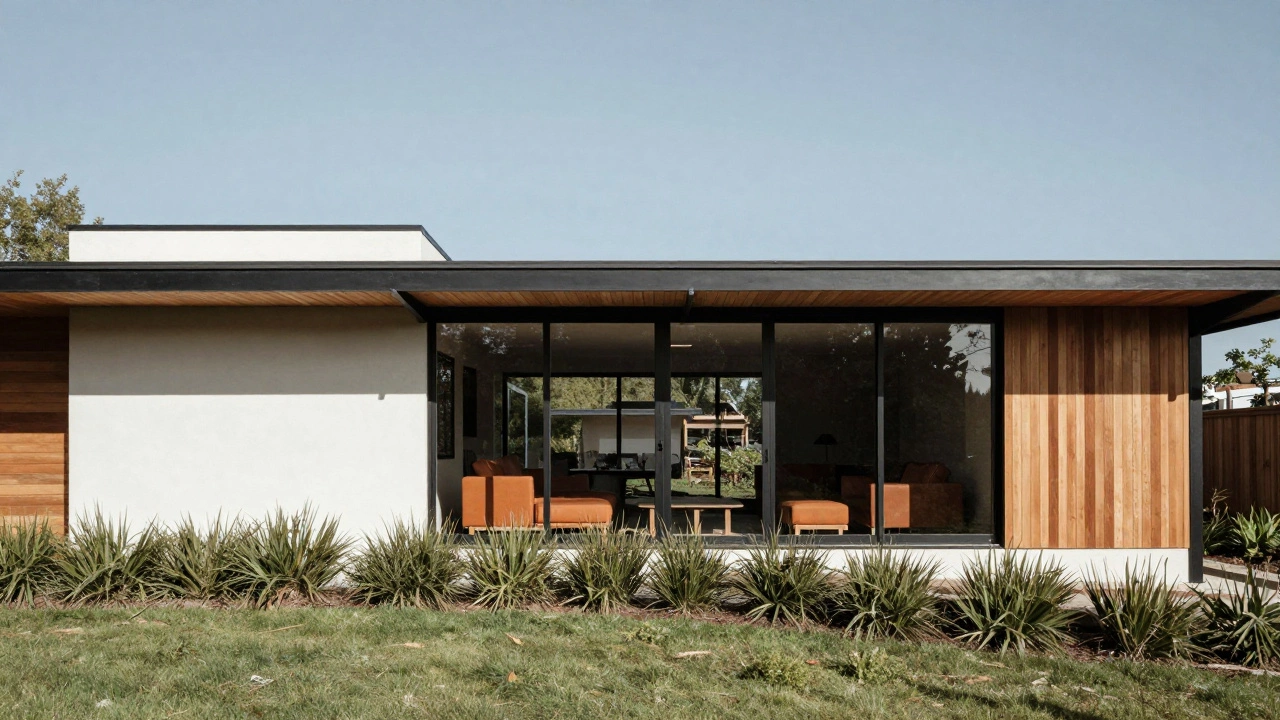
Key figures like Ludwig Mies van der Rohe and Le Corbusier championed the idea that "less is more." Their buildings were characterized by flat roof planes, lack of ornamentation, and an emphasis on volume rather than mass. If you see a house with a flat roof, large rectangular windows, and exposed structural elements like steel columns, you are looking at Modern architecture.
In interiors, Modern homes feature clean lines and functional furniture. Think of Eames chairs or Noguchi tables. These pieces are sculptural but practical. The color palette often includes earthy greens, oranges, and browns, mixed with stark black and white. Materials are honest-you see the wood grain, the metal finish, and the glass clarity without hiding them behind paint or veneer.
A hallmark of Modern design is the separation of spaces. While open plans exist, Modern homes often use sliding glass doors or partial walls to define rooms while maintaining visual flow. The goal was to bring the outdoors in, but in a structured, geometric way.
Understanding Contemporary Design
Contemporary design is fluid. It borrows from many styles, including Modern, Minimalism, and even Industrial, but it adds a layer of current comfort and technology. Since we are in 2026, contemporary homes prioritize sustainability, energy efficiency, and wellness.
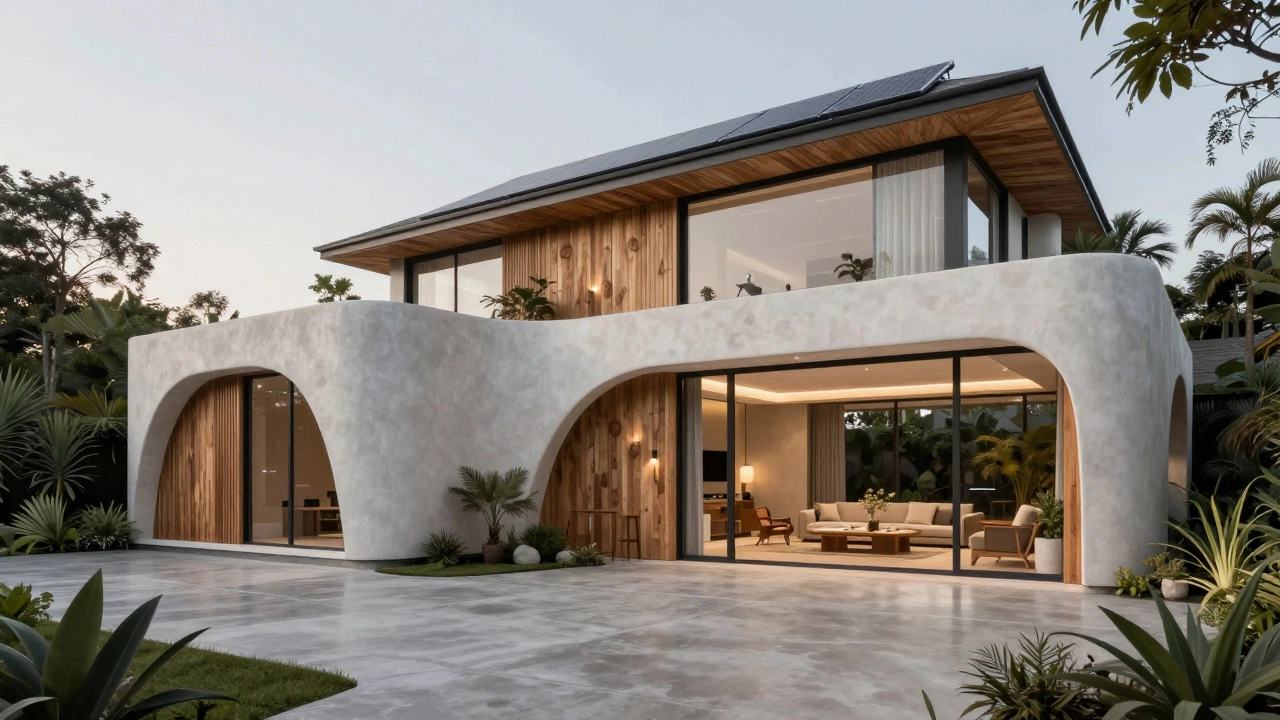
Unlike the rigid geometry of Modern homes, contemporary structures often feature curved walls, arched doorways, and organic shapes. This softness makes the space feel less sterile and more inviting. You’ll see more use of natural light, not just for aesthetics, but to reduce energy consumption. Smart home integration is also a key part of contemporary living-think automated lighting, climate control, and security systems that blend seamlessly into the architecture.
Material-wise, contemporary design leans heavily on sustainable options. Reclaimed wood, recycled steel, and low-VOC paints are standard. Stone and concrete are used, but often with textured finishes that add warmth rather than the cold, polished look of earlier eras. The color palette tends to be neutral-whites, grays, and beiges-with pops of color coming from art or textiles rather than painted walls.
Open-concept living is the norm in contemporary homes. Walls are removed to create large, flexible spaces that serve multiple purposes. A kitchen isn’t just for cooking; it’s a social hub connected to the dining and living areas. This reflects our changing lifestyle, where work, play, and relaxation happen in the same fluid environment.
Exterior Clues: How to Spot the Difference
If you’re driving around your neighborhood, here’s how to tell them apart from the street.
Modern Homes:
- Rooflines: Flat or slightly pitched roofs. No gables or dormers.
- Façade: Symmetrical or asymmetrical geometric blocks. Large expanses of glass.
- Windows: Rectangular, often floor-to-ceiling. Frames are thin and minimal.
- Details: Lack of decorative trim. Exposed structural elements like beams or columns.
Contemporary Homes:
- Rooflines: Can be flat, but also include complex angles, green roofs, or subtle curves.
- Façade: Mix of materials (wood siding next to stone). Less rigid symmetry.
- Windows: Large, but may include arched tops or irregular shapes. High-performance glazing.
- Details: Integrated outdoor living spaces. Solar panels or rainwater harvesting systems visible.
Interior Design: Furniture and Finishes
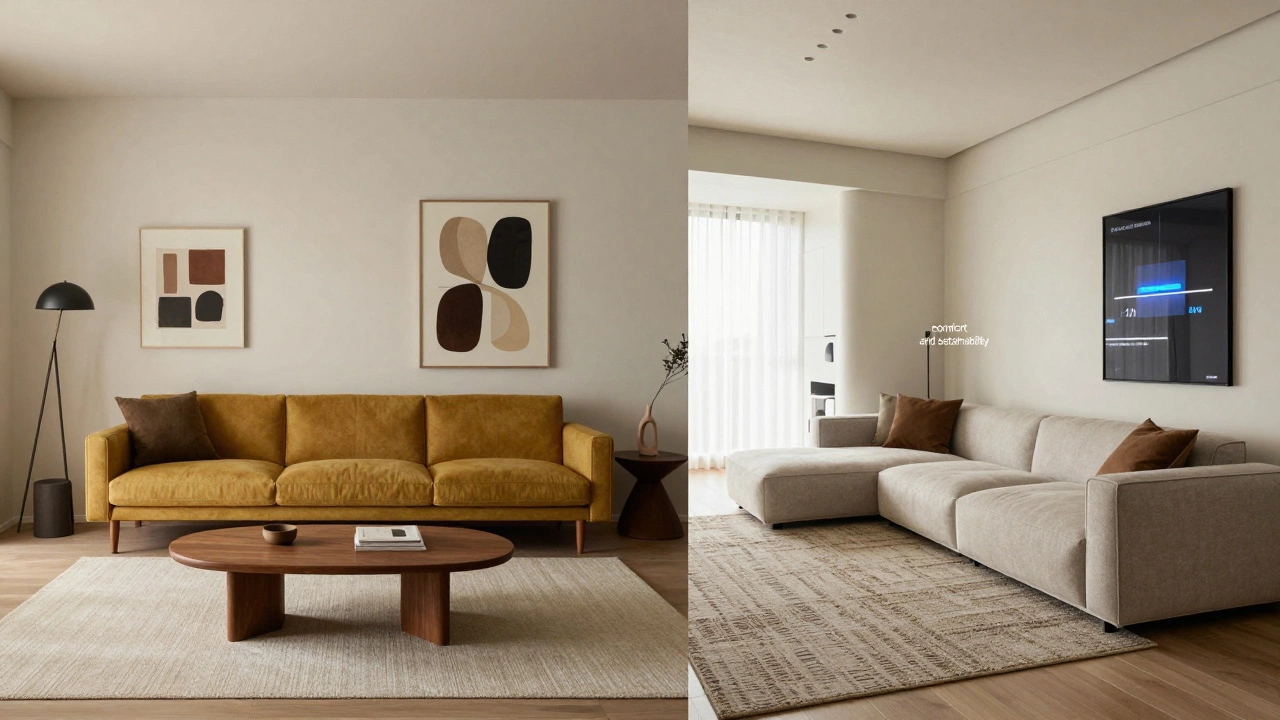
The difference becomes even clearer inside the home. Modern interiors feel curated and intentional. Every piece of furniture has a place and a purpose. You won’t find clutter. A Modern living room might feature a low-profile sofa with tapered legs, a coffee table made of molded plywood, and abstract art on the wall. The lighting is often statement-making, like a sputnik chandelier or a sleek track system.
Contemporary interiors feel relaxed and layered. While still uncluttered, there’s more texture and comfort. A contemporary sofa might be plush and oversized, upholstered in a soft fabric. Rugs are thicker and softer. Lighting is ambient and dimmable, creating mood rather than just illuminating space. You’ll see more plants, bringing biophilic design principles into the home. Art might be digital or interactive, reflecting current technological trends.
Kitchens highlight this divide well. A Modern kitchen features sleek cabinetry with no handles, stainless steel appliances, and a monochromatic color scheme. It looks like a showroom. A contemporary kitchen might have shaker-style cabinets in a matte finish, quartz countertops, and integrated appliances hidden behind wood panels. It feels lived-in but still stylish.
Why Does It Matter?
Knowing the difference helps you make better decisions. If you love the crisp, historic vibe of Mid-Century Modern, you should invest in authentic reproductions or vintage pieces. Mixing those with trendy contemporary items can look disjointed. Conversely, if you want a home that feels current and adaptable, don’t get locked into strict Modern rules. Embrace curves, sustainable materials, and smart technology.
For architects and builders, understanding these distinctions ensures that the design matches the client’s lifestyle. A family with young children might prefer the durability and flexibility of contemporary design over the delicate fragility of some Modern furniture. A collector of vintage art might need the gallery-like neutrality of a Modern backdrop.
Ultimately, both styles share a love for simplicity and functionality. But one looks back to a revolutionary past, while the other looks forward to a sustainable future. Choose the one that resonates with how you want to live today.
Can a house be both modern and contemporary?
Technically, no. "Modern" refers to a specific historical period (1920s-1970s), while "contemporary" means current. However, many people use the terms interchangeably in casual conversation. A house built today with Mid-Century Modern styling is often called "Modern Revival," but it is technically contemporary in construction methods and materials.
Is minimalist design the same as modern?
No. Minimalism is a philosophy of reducing possessions to essentials, which can apply to any era. Modern design is an architectural style with specific aesthetic rules. While Modern design often embraces minimalism, you can have a minimalist home that is contemporary, traditional, or industrial.
What are the best colors for a modern home?
Authentic Modern homes use a palette of black, white, gray, and earth tones like mustard yellow, olive green, and burnt orange. These colors reflect the post-war optimism and industrial materials of the mid-20th century. Avoid pastel shades, which are more associated with traditional or transitional styles.
Are contemporary homes more expensive to build?
Not necessarily. Contemporary design often uses cost-effective materials like concrete and drywall, but high-end smart home technology and custom curved forms can increase costs. Modern homes require precise craftsmanship for their clean lines, which can also drive up labor costs. Budget depends more on material quality and location than the style itself.
How do I decorate a modern apartment on a budget?
Focus on key statement pieces rather than filling every corner. Look for affordable replicas of iconic Mid-Century Modern furniture, such as Eames lounge chairs or Noguchi lamps. Use paint to create contrast-black window frames against white walls instantly evoke a Modern feel. Keep clutter to a minimum to maintain the style’s core principle of functional simplicity.