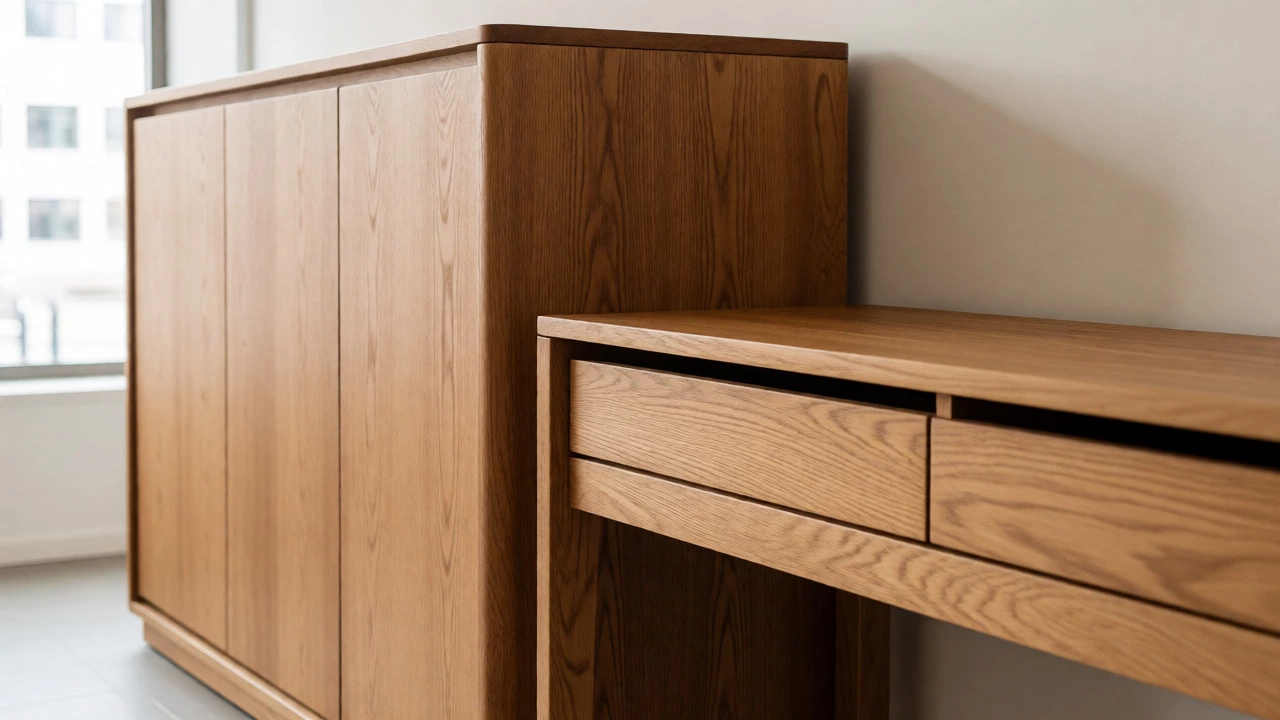
Sideboard vs. Server Selector
Answer these 5 questions to find out which piece of furniture fits your lifestyle best.
You’re standing in a furniture showroom, staring at two large wooden cabinets that look nearly identical. One has a tag that says "Sideboard," and the other whispers "Server." You know you need extra storage for your plates and linens, but which one actually fits your space? It’s a common confusion, and honestly, it’s not entirely your fault. The terms are often used interchangeably by retailers who just want to sell you a cabinet. But there are subtle differences in height, function, and design history that matter when you’re trying to create a functional dining area.
The core difference usually comes down to this: a sideboard is generally taller, designed for heavy-duty storage, and often used as a primary piece in smaller spaces or open-plan living areas. A server (sometimes called a buffet) is typically lower, wider, and specifically designed for serving food during meals. Think of the sideboard as the workhorse of the dining room, while the server is the host with the most.
Height and Proportions Matter
If you have to pick one distinguishing feature, look at the height. This isn’t just about aesthetics; it’s about ergonomics. Standard dining tables sit around 75cm high. A traditional server is designed to align with this table height, making it easy to pass dishes from the cabinet to the table without awkward reaching. They usually top out between 80cm and 90cm.
A sideboard, on the other hand, tends to be taller, often ranging from 90cm to over 1 meter. Why the extra height? Because sideboards are built for volume. That vertical space allows for deeper drawers or larger shelves to accommodate bulky items like platters, serving bowls, and stacks of dinnerware. If you’re storing a massive collection of Christmas china, the sideboard wins on capacity every time.
Storage Configuration: Drawers vs. Doors
How the inside looks tells you more about its purpose than how the outside looks. Servers prioritize accessibility for quick tasks. You’ll often find them with shallower drawers perfect for cutlery, napkins, and wine accessories. The interior layout is optimized for things you grab quickly during a meal service.
Sideboards lean into enclosed storage. They frequently feature large doors concealing adjustable shelving units. This setup protects fine glassware from dust and keeps unsightly clutter hidden. In Melbourne homes, where we often blend indoor and outdoor living, a sideboard’s ability to hide messy picnic gear or outdoor entertaining essentials behind closed doors is a huge plus. It keeps the visual noise down while keeping everything within arm's reach.
| Feature | Server | Sideboard |
|---|---|---|
| Primary Height | 80-90cm (Table height) | 90-110cm+ (Taller) |
| Main Function | Serving food & drinks | High-volume storage |
| Typical Layout | Shallow drawers, open tops | Cupboards, deep shelves |
| Best For | Frequent entertainers | Small spaces needing storage |
| Visual Weight | Lighter, sleeker profile | Bulkier, substantial presence |
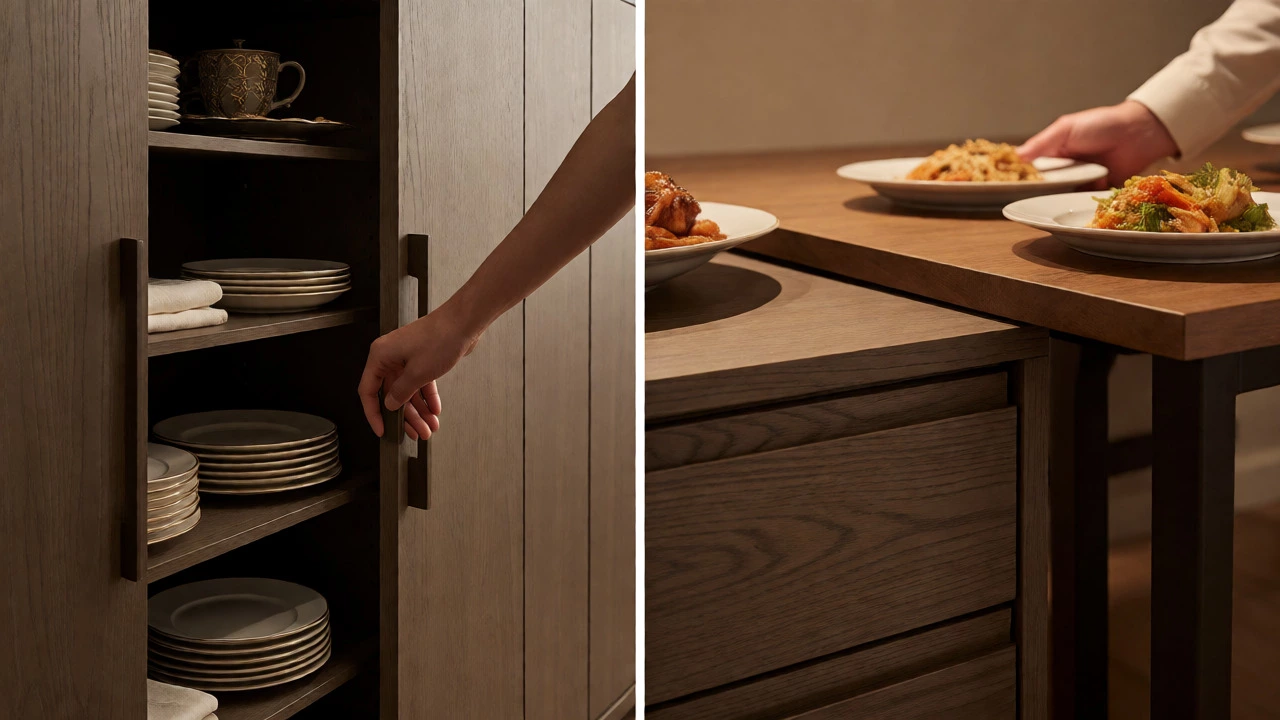
Where Do They Fit in Your Home?
Location dictates choice. If your dining room doubles as a home office or a casual lounge, a sideboard might feel too imposing. Its height can block sightlines or make a small room feel cramped. In these cases, a server offers a sleeker silhouette that doesn’t dominate the walls. It feels lighter, literally and figuratively.
Conversely, if you have a dedicated formal dining room, a sideboard makes sense. It anchors the room. It provides a surface for decorative objects-think vases, lamps, or family photos-that sit above eye level, adding vertical interest to the space. Since you aren’t constantly passing plates across it, the extra height becomes an asset rather than a hindrance.
Consider the flow of traffic. A server placed against a wall near the kitchen door acts as a natural transition zone. Guests can grab a drink or a plate before sitting down. A sideboard, being deeper and taller, requires more clearance. You don’t want someone bumping their elbows into it while trying to pull out a chair.
Design Styles and Materials
Historically, servers were associated with formal Victorian or Edwardian dining rooms, featuring ornate carvings and dark woods. Today, modern servers are minimalist, often using materials like marble, glass, or light oak to keep things airy. They’re designed to disappear into the background until needed.
Sideboards have evolved from purely utilitarian pieces into statement furniture. You’ll see them in mid-century modern designs with tapered legs, or industrial styles with metal frames and reclaimed wood. Because they occupy more visual space, manufacturers put more effort into their exterior finishes. A sideboard is meant to be looked at, not just used. If you want a piece that contributes to your interior design narrative, the sideboard offers more canvas for style.
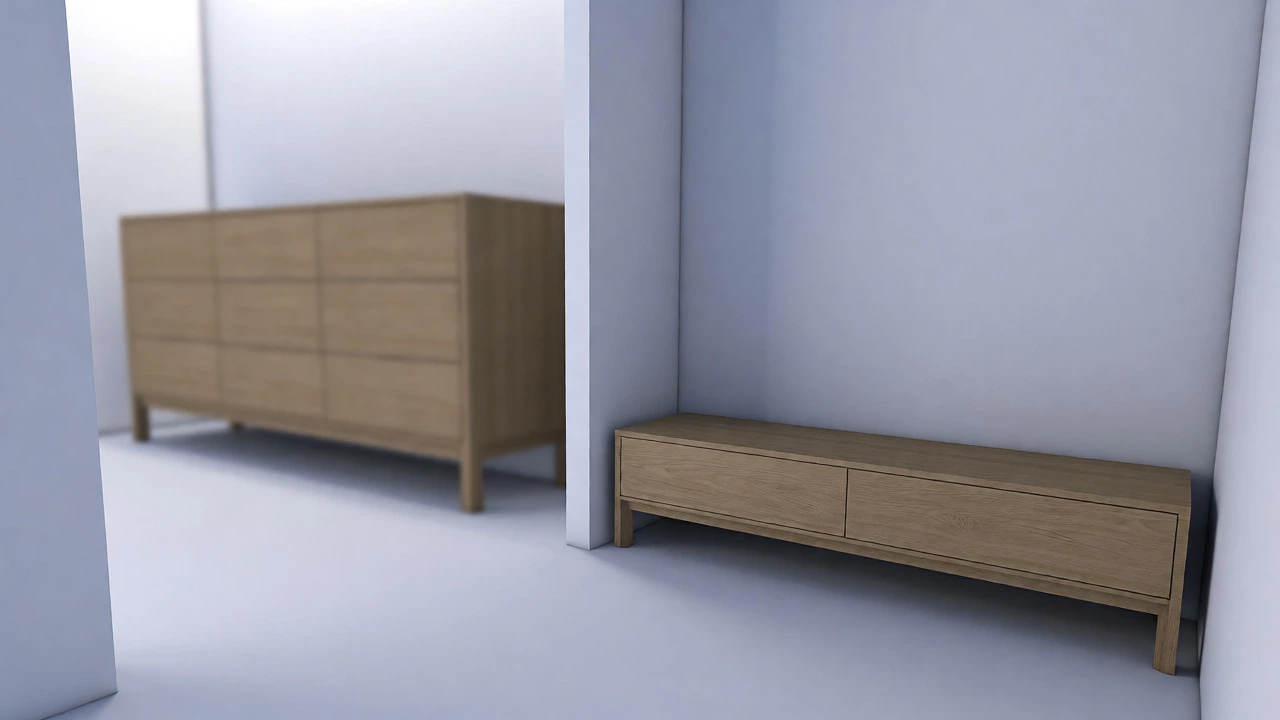
The "Buffet" Confusion
Let’s clear up the third term in the trio: the buffet. In many regions, especially in Australia and North America, "buffet" and "server" are synonyms. Both refer to low, wide cabinets used for self-service meals. However, some designers distinguish a buffet as having no back panel, allowing it to stand freely in the middle of a room. If you see a piece labeled "freestanding," check if it’s finished on all sides. If yes, it’s likely a buffet/server hybrid. If it’s unfinished on the back, it’s meant to go against a wall, regardless of whether it’s called a sideboard or server.
Which One Should You Buy?
Ask yourself three questions before swiping your credit card:
- Do I serve food from this piece regularly? If yes, choose a server. The height alignment saves your back and speeds up service.
- Is my main goal hiding clutter? If you need to stash blankets, board games, or spare linens, go for a sideboard. The enclosed storage is superior.
- Is my space tight? In a narrow dining nook, a lower server prevents the room from feeling boxy. A tall sideboard might overwhelm it.
There’s no wrong answer here, only better fits. Many people end up owning both-a server in the dining room for hosting, and a sideboard in the hallway or living area for general household storage. If you can only afford one, match it to your lifestyle, not just your decor mood board.
Can I use a sideboard as a TV stand?
Yes, absolutely. Sideboards are excellent TV stands because they offer ample storage for media consoles, gaming systems, and cables. Their height is often ideal for viewing comfort, though you may need to add risers if the TV is very large. Just ensure the top surface is sturdy enough to support the weight of your television.
What is the difference between a credenza and a sideboard?
A credenza is similar to a sideboard but is typically lower and wider, often used in offices or living rooms. While sideboards focus on dining storage, credenzas are versatile multi-purpose units. The lines blur significantly in modern furniture, but credenzas rarely have the upper hutch or display shelf that some traditional sideboards feature.
Do servers always have legs?
No. While many modern servers feature raised legs for a lighter look, traditional servers sit flush with the floor. The presence of legs is a stylistic choice rather than a functional requirement. Raised legs do make cleaning underneath easier, which is a practical benefit in high-traffic dining areas.
Which is cheaper, a server or a sideboard?
Generally, servers can be slightly less expensive due to simpler construction and less material usage, especially if they lack complex internal shelving. However, price depends more on materials (solid wood vs. veneer), brand, and craftsmanship than on the category name. Always compare specific models rather than assuming one type is inherently cheaper.
Can I paint a sideboard to match my decor?
Most solid wood sideboards take paint well. Veneered surfaces require proper sanding and priming to ensure adhesion. Painting a sideboard is a great way to update an older piece or customize it to fit a specific color scheme. Just be aware that painting may void warranties on pre-finished furniture.