
Bathroom Finish Harmony Calculator
Choose the primary finish for your sink faucet.
Choose the finish for cabinet pulls/towel bars.
Analysis Result
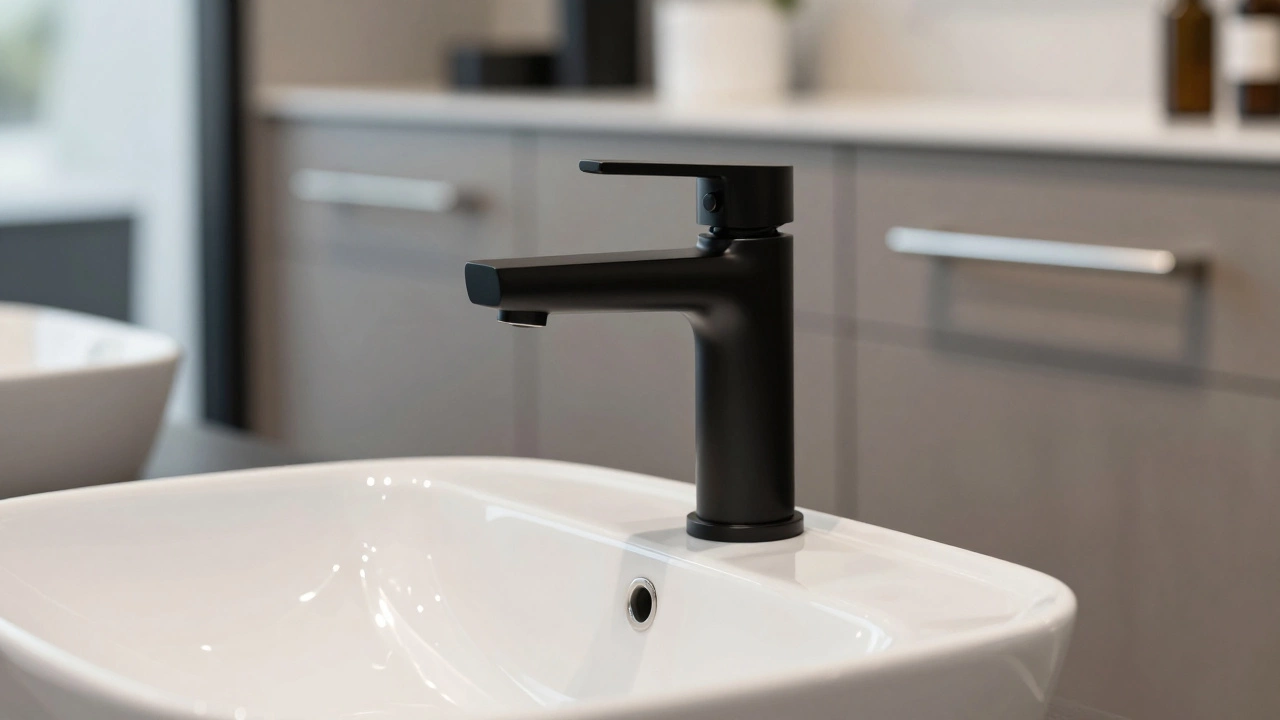
You stand in the showroom, staring at a stunning matte black bathroom faucet that looks perfect against your white ceramic basin. But then you look at your brushed nickel cabinet pulls and chrome towel bars. Does it clash? Does it work? This is the single most common dilemma homeowners face when renovating their bathrooms. The short answer is: no, they don’t have to match perfectly. In fact, strict matching is often outdated.
The goal isn't uniformity; it's cohesion. You want your space to feel intentional, not accidental. Whether you are refreshing a powder room or gutting a master suite, understanding how to pair faucet finishes with sinks and hardware will save you from buyer’s remorse and help you create a layered, sophisticated look.
The Old Rule vs. The New Reality
For decades, interior design dictated that every metallic element in a room had to be identical. If your faucet was oil-rubbed bronze, your toilet paper holder, showerhead, and cabinet knobs needed to be oil-rubbed bronze too. It created a sterile, catalog-perfect look that felt cold and rigid.
Today, the rule has shifted toward "coordinated contrast." Designers now encourage mixing metals, provided there is a dominant finish and supporting accents. Think of it like clothing: you wouldn’t wear a gold necklace with silver earrings unless you were intentionally styling them together. The same logic applies to your bathroom fixtures. Mixing allows for depth and visual interest, preventing the room from feeling flat.
| Aspect | Traditional Approach | Modern Approach |
|---|---|---|
| Finish Consistency | 100% identical across all fixtures | Dominant finish with 1-2 accent metals |
| Visual Impact | Uniform, sometimes sterile | Layered, textured, dynamic |
| Flexibility | Low (hard to update individual pieces) | High (easy to swap accents) |
| Cost Implication | Higher (buying full sets) | Moderate (mixing stock items) |
Faucet vs. Sink: The Functional Pairing
When deciding whether the faucet should match the sink, functionality usually trumps aesthetics. A vessel sink, for instance, sits on top of the counter and often requires a tall, widespread faucet. These faucets are statement pieces themselves. If your vessel sink is a neutral stone or white porcelain, the faucet finish becomes the primary decorative element.
In this case, the faucet does not need to "match" the sink material because materials like ceramic, glass, and stone don't have metallic finishes. Instead, the faucet finish should complement the tone of the sink. A warm brass faucet pairs beautifully with a cream-colored travertine sink, while a sleek chrome faucet enhances a glossy white vitreous china basin.
If you have an undermount or drop-in sink, the faucet is less visible relative to the sink itself. Here, the faucet finish matters more in relation to the countertop and the surrounding hardware than the sink bowl. For example, if you have quartz countertops with grey veining, a brushed nickel faucet might pick up those cool tones better than a bright polished chrome.
Faucet vs. Hardware: The Visual Harmony
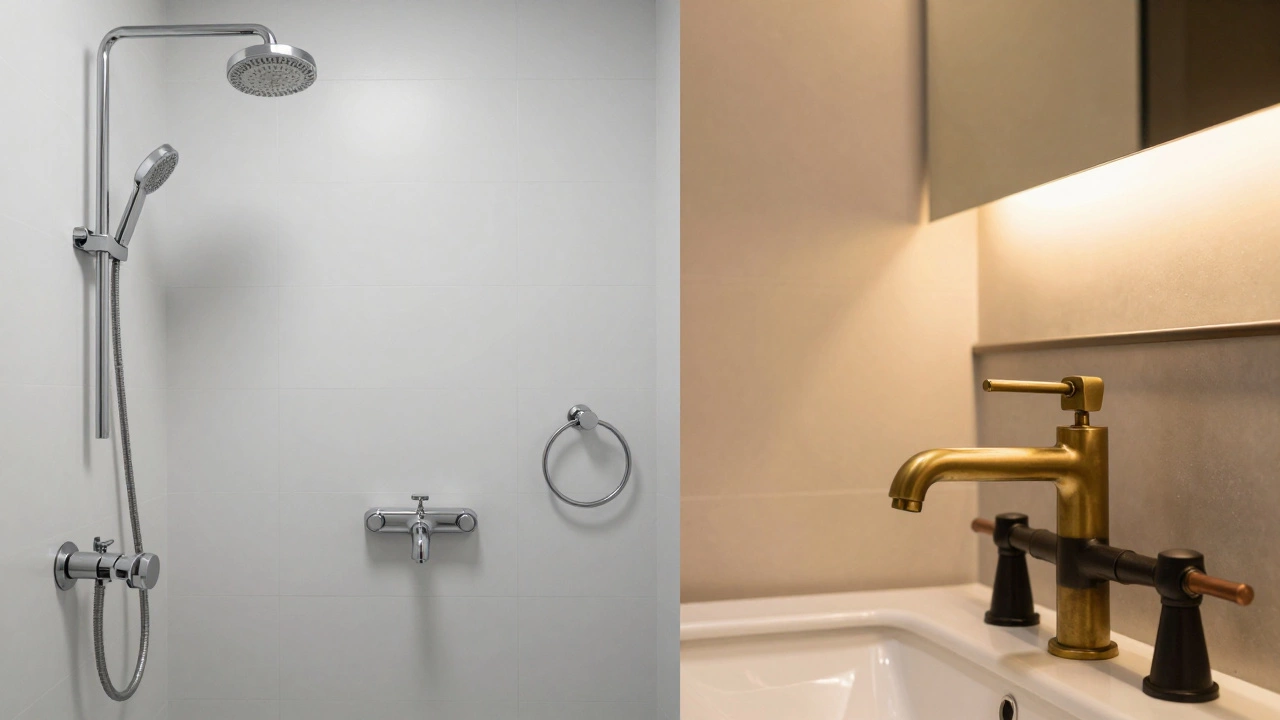
This is where most people get stuck. Should the faucet match the cabinet pulls, towel bars, and toilet paper holders? Ideally, yes, but with caveats. The faucet is the largest and most frequently used fixture. It sets the tone for the room. Therefore, your major hardware (cabinet pulls, large towel bars) should generally align with the faucet finish to establish a dominant theme.
However, smaller accessories can diverge. This is known as the "60-30-10" rule applied to metals:
- 60% Dominant Finish: Faucet, shower trim, and main cabinet hardware.
- 30% Secondary Finish: Towel rings, small knobs, or mirror frames.
- 10% Accent Finish: Decorative items like soap dispensers, toothbrush holders, or artwork frames.
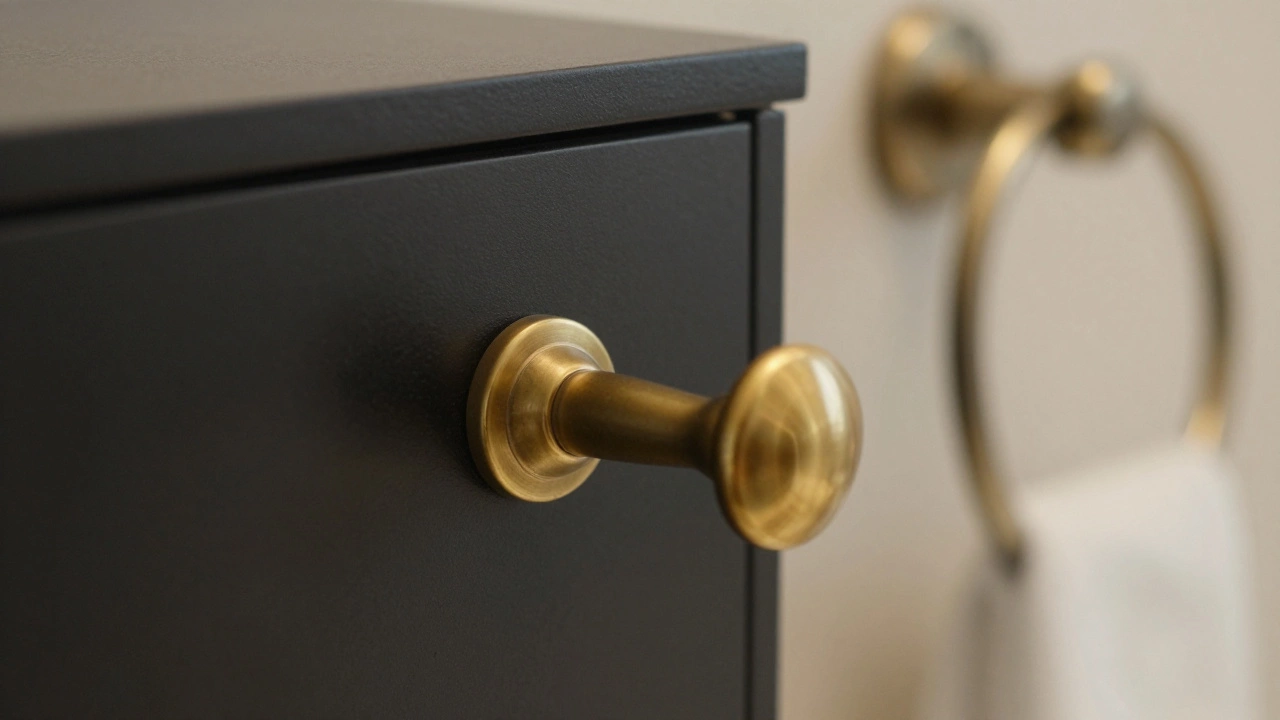
For example, if your faucet and vanity pulls are matte black, you can introduce brushed gold in your towel rings and mirror frame. This creates a high-end, curated look without overwhelming the eye. The key is ensuring the finishes share a similar undertone-warm with warm, cool with cool-or are deliberately contrasting for modern impact.
Understanding Undertones: Warm vs. Cool
To mix metals successfully, you must understand undertones. Every metal finish falls into either the warm or cool spectrum. Warm Finishes:
- Brass
- Copper
- Bronze
- Gold
- Oil-Rubbed Bronze (often has warm brown notes)
- Chrome
- Nickel (Brushed or Polished)
- Stainless Steel
- Satin Nickel
- Matte Black
- White (Ceramic/Porcelain)
Generally, warm finishes pair well with other warm finishes. A brass faucet looks natural next to copper piping exposed in an industrial-style vanity. Cool finishes blend seamlessly with one another; a chrome faucet and stainless steel appliances in a wet bar won't fight for attention. Matte black is the ultimate wildcard-it acts as a neutral anchor that can bridge both warm and cool palettes effortlessly.
Common Pitfalls to Avoid
Even with the best intentions, mixing finishes can go wrong. Here are the most frequent mistakes:
- Too Many Finishes: Limit yourself to two, maximum three, distinct metallic finishes. Four or more will make the room look cluttered and chaotic.
- Ignoring Lighting: Metal finishes change dramatically under different lighting. Chrome reflects light sharply, making it appear brighter and colder. Brushed nickel diffuses light, appearing softer. Always check your samples in the actual bathroom lighting, not just under store fluorescents.
- Confusing Texture with Color: Don't mix high-shine polished chrome with heavily textured hammered bronze unless you are going for a very specific eclectic vibe. Usually, matching the texture level (satin with satin, polished with polished) creates a more harmonious look even if the colors differ slightly.
- Forgetting the Shower: The shower valve and head are often overlooked. If your bathroom has a separate shower area, ensure the shower trim matches the dominant finish established by the faucet. Mismatching the faucet and shower trim is a jarring error that screams "renovation unfinished."">
Practical Scenarios for Decision Making
Scenario 1: The Small Powder Room In a small space, visual continuity is key. Too much contrast can shrink the room further. Stick to one dominant finish for the faucet, hardware, and mirror frame. If you want interest, use color in your tiles or accessories rather than mixing metals.
Scenario 2: The Master Bath with Vanity and Separate Shower Here, you have more canvas to work with. Let the vanity faucet dictate the primary finish. Use that same finish for the shower trim and main cabinet pulls. Then, introduce a secondary finish in the towel bars or linen closet handles. This separates the zones subtly while maintaining overall harmony.
Scenario 3: The Budget-Friendly Update If you cannot afford to replace everything at once, prioritize the faucet and shower trim. These are the functional anchors. Buy affordable cabinet pulls and towel bars in a matching finish later. It is easier to upgrade small hardware pieces than to replace a custom-fitted faucet set.
Can I mix matte black and brushed nickel?
Yes, absolutely. Matte black is considered a neutral finish and pairs exceptionally well with brushed nickel. The dark, solid tone of the black provides a strong anchor, while the soft sheen of the nickel adds brightness and sophistication. Just ensure the black is truly matte and not glossy, as gloss black can clash with the diffuse reflection of brushed nickel.
Does the faucet have to match the showerhead?
It is highly recommended that the faucet and showerhead trim match. Since these are the two primary plumbing fixtures visible in the bathroom, mismatching them creates a disjointed look. Even if you mix other hardware like towel bars, keeping the faucet and shower trim consistent ensures the core infrastructure looks cohesive.
What is the easiest finish to match with others?
Matte black and brushed nickel are the most versatile. Matte black works with almost any other metal because it absorbs light rather than reflecting it, acting as a neutral backdrop. Brushed nickel is a subtle, low-sheen finish that doesn't compete with other metals, allowing brass or chrome accents to shine without clashing.
Should I match my faucet to my kitchen fixtures?
No, you do not need to match your bathroom faucet to your kitchen faucet. Each room is its own design entity. However, if your home has an open plan where the kitchen and bathroom are visually connected, maintaining a similar undertone (e.g., warm brass in both) can help unify the entire home's aesthetic.
How do I choose between polished and brushed finishes?
Choose based on maintenance and style. Polished finishes (like polished chrome or polished brass) are shiny and reflective but show fingerprints, water spots, and scratches easily. Brushed or satin finishes hide imperfections better and offer a softer, more contemporary look. For busy households, brushed finishes are often more practical.