
Interior Design '3 E's' Room Auditor
Rate your room from 1 (Poor) to 5 (Excellent) for each criterion to see where your design stands.
Economy
Spatial EfficiencyEnergy
Flow & VibeEmotion
Psychological ConnectionRoom Balance Score
Here is the quick breakdown of what we are talking about:
- Economy: Not about money, but about the efficient use of space and resources.
- Energy: The flow, light, and "vibe" of a room.
- Emotion: How a space makes you feel and the memories it evokes.
Economy: The Art of Spatial Efficiency
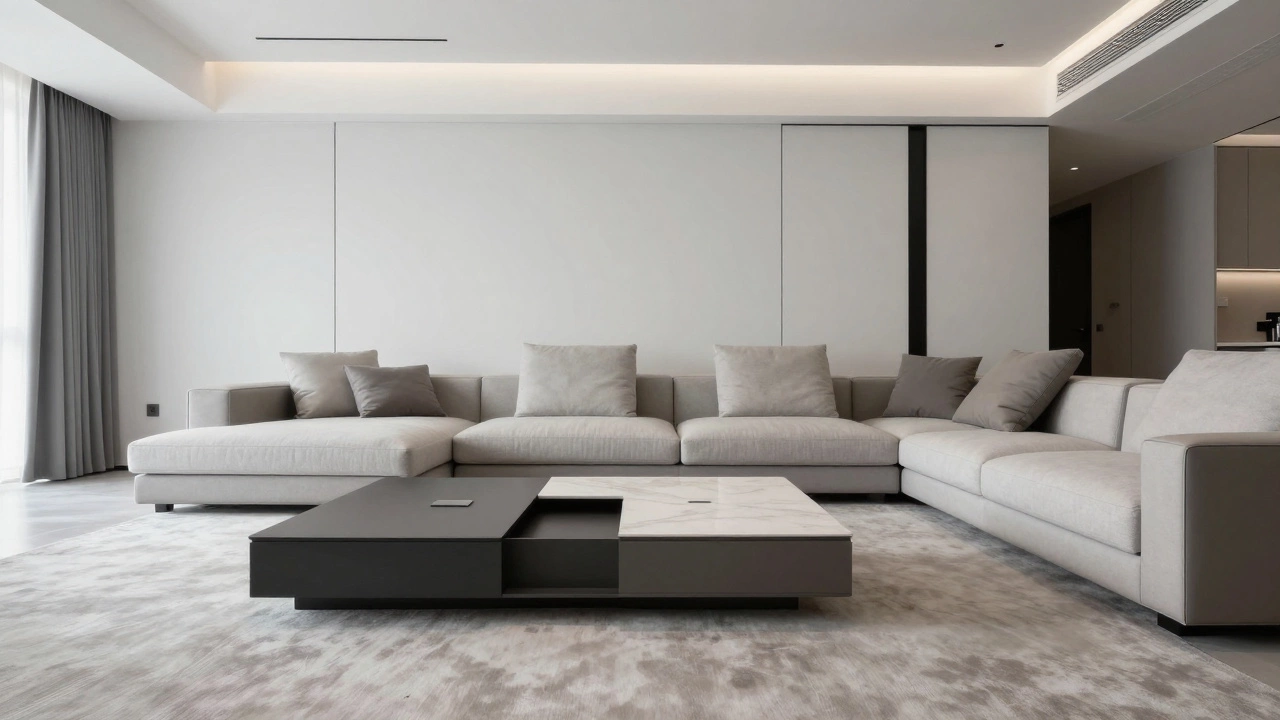
When designers talk about economy, they aren't talking about finding the cheapest rug at a warehouse sale. They are talking about Spatial Economy, which is the strategic distribution of elements within a room to maximize utility without cluttering the area.
Think about a narrow hallway. If you put a massive console table there, you've wasted your spatial economy. You've traded the ability to walk comfortably for a piece of furniture. A better economic choice would be a slim floating shelf or a series of wall-mounted hooks. The goal is to achieve the maximum result with the minimum amount of "visual noise."
In a modern living room, this often manifests as multi-functional furniture. A coffee table with hidden storage or a sectional sofa that doubles as a guest bed allows you to maintain an open floor plan. If every piece of furniture has a clear purpose and a designated place, the room feels intentional rather than accidental. When you ignore economy, you end up with "dead zones"-corners of the room that serve no purpose and only collect dust.
Energy: Managing the Flow and Vibe
Energy in a room isn't mystical; it's a combination of Lighting Design, color temperature, and traffic patterns. Have you ever felt "stuck" in a room because the furniture layout forced you to walk in a weird zig-zag pattern to get to the kitchen? That's poor energy flow.
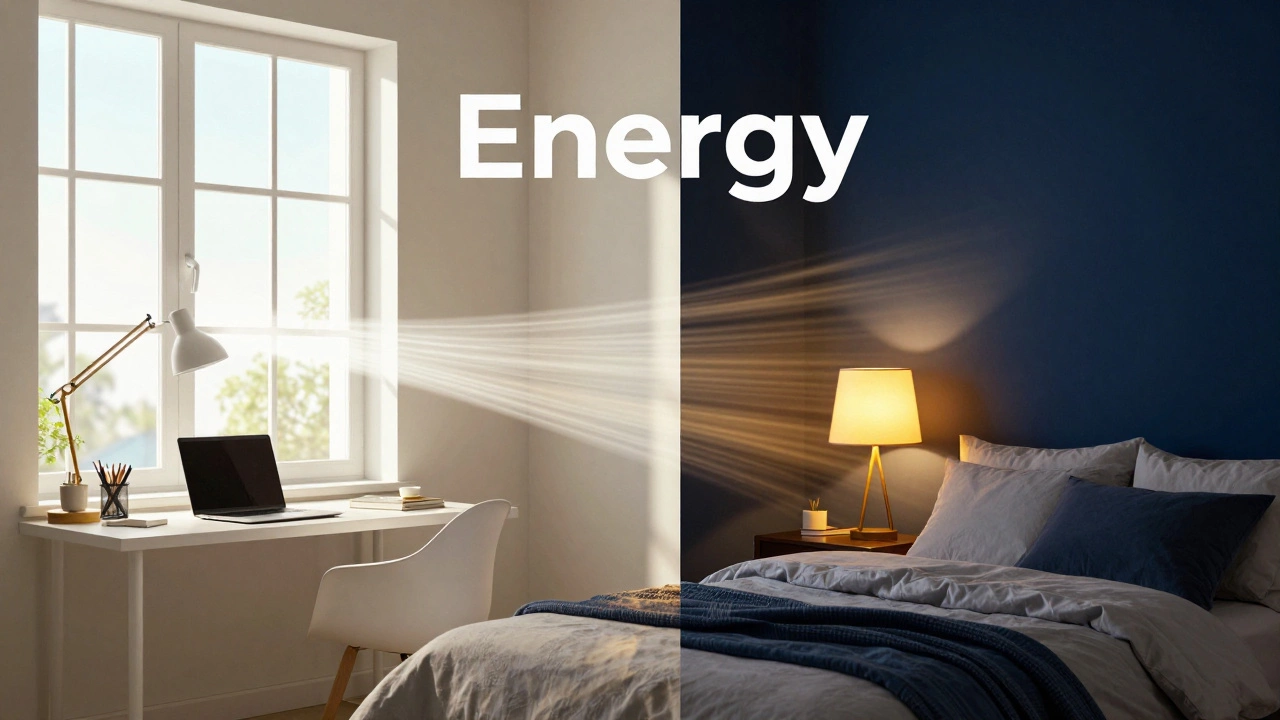
A huge part of energy is managed through light. Natural light from large windows creates a high-energy, alert feeling, which is why we put home offices and kitchens near the brightest parts of the house. Conversely, low, warm lighting in a bedroom signals to the brain that it's time to wind down. If you put a bright, cool-white LED bulb in your bedroom, you're fighting the natural energy of the space.
Color also plays a massive role. A room painted in a deep, saturated navy blue has a different energy than one painted in a soft, airy cream. Navy can feel cozy and enveloping (low energy, high intimacy), while cream feels open and breathable (high energy, high clarity). To balance the energy, designers often use the 60-30-10 rule: 60% dominant color, 30% secondary color, and 10% accent color. This prevents the energy of the room from feeling overwhelming or boring.
| Element | High Energy (Active) | Low Energy (Calm) |
|---|---|---|
| Lighting | Cool White / Daylight | Warm Yellow / Dimmed |
| Color Palette | Bright Reds, Yellows, Whites | Muted Blues, Sage Greens, Taupes |
| Materials | Glass, Polished Metal, Glossy Tiles | Wool, Linen, Natural Wood |
| Layout | Open Concept / Fluid | Zoned / Enclosed Nooks |
Emotion: Designing for the Human Psyche
Emotion is where a house becomes a home. This is the psychological layer of design. If Economy is the brain and Energy is the spirit, Emotion is the heart. Biophilic Design is a great example of this. By bringing plants, stone, and organic shapes into a room, designers tap into our evolutionary need to connect with nature, which lowers cortisol levels and reduces stress.
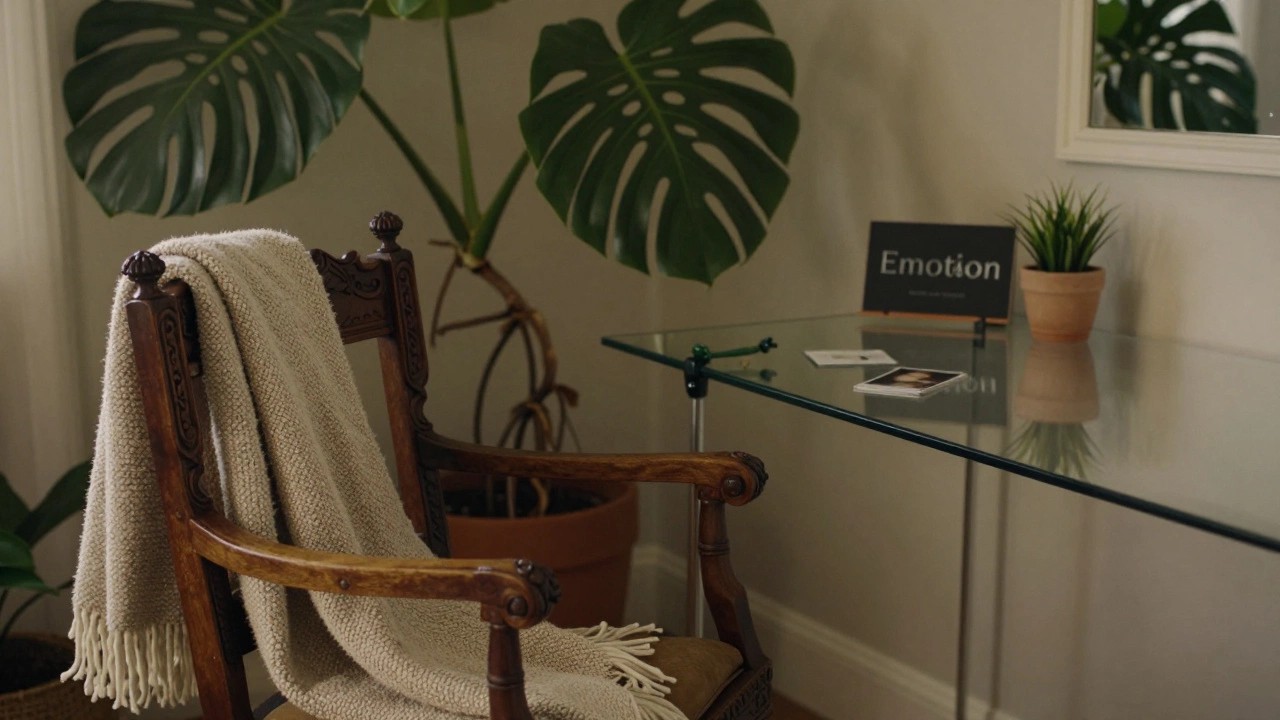
Think about your favorite childhood blanket or a photo of your grandparents. These aren't "designed" in the traditional sense, but they provide an emotional anchor. A room that is perfectly symmetrical and color-coordinated but devoid of personal history feels like a hotel room. It's sterile. To inject emotion, you need contrast-a vintage wooden chair passed down through generations placed next to a sleek, modern glass desk.
The key to emotional design is understanding the "mood" you want to evoke. If you want a sanctuary, you focus on soft textures (like boucle or velvet) and scent (like lavender or vanilla). If you want a place of creativity and productivity, you might use sharp lines, bold pops of orange, and a curated gallery wall of inspiring art. When the emotion matches the intended use of the room, the space feels "right."
Putting the 3 E's Together: A Real-World Scenario
Let's say you're redesigning a small home office in a corner of your bedroom. If you only focus on the look, you might buy a desk that is too big and a chair that doesn't fit. Here is how you apply the 3 E's instead:
- Economy: Choose a wall-mounted floating desk. This keeps the floor clear, making the room feel larger and allowing you to tuck a small stool underneath when not in use.
- Energy: Place the desk perpendicular to the window to get natural light without the glare on your screen. Use a warm desk lamp for evening work to signal a transition from "work mode" to "sleep mode."
- Emotion: Add a small potted plant and a few personal mementos. Use a rug with a texture you love to create a tactile boundary between the "office zone" and the "sleeping zone."
By hitting all three, you've created a space that isn't just a desk in a room, but a functional, energetic, and emotionally supportive workspace.
Common Mistakes When Ignoring the 3 E's
Many homeowners fall into the trap of prioritizing aesthetics over these principles. One common error is over-furnishing. This is a failure of Economy. People buy pieces they love individually, but when put together, the room feels cramped. If you can't move through a room without dodging a corner of a table, your spatial economy is broken.
Another mistake is lighting monotony. This is an Energy failure. Using a single overhead ceiling light for every activity-eating, reading, and relaxing-creates a flat, lifeless energy. Professional designers use "layering," combining ambient, task, and accent lighting to shift the energy of the room throughout the day.
Finally, there is the showroom effect. This happens when a room looks like a catalog page but feels cold. This is an Emotional failure. When you buy everything from one store's "Living Room Collection," you lose the curated, lived-in feeling that comes from mixing textures, eras, and personal stories.
Can I apply the 3 E's to a rental property where I can't change the layout?
Absolutely. While you can't move walls, you can control Spatial Economy by using vertical storage and multi-functional furniture. You can shift Energy using plug-in lamps and peel-and-stick wallpaper, and you can drive Emotion through art, textiles, and personal decor.
Which of the 3 E's is the most important for a small apartment?
Economy is usually the most critical for small spaces because the physical constraints are the biggest hurdle. If the spatial economy is wrong, the room will feel cluttered regardless of how good the energy or emotion is. Start with the layout, then refine the vibe and feeling.
How does color affect the "Energy" part of the 3 E's?
Colors have different psychological frequencies. Warm colors (reds, oranges) are stimulating and increase heart rate, creating high energy. Cool colors (blues, greens) are calming and lower blood pressure, creating low, restful energy. The key is balance-using a neutral base with strategic pops of energy-shifting colors.
What is the difference between Energy and Emotion in design?
Energy is about the immediate, almost physical sensation of the space-how light hits a surface or how you move through a room. Emotion is a deeper, psychological connection-how a space reminds you of home, safety, or inspiration. Energy is the "vibe," while Emotion is the "soul."
Do I need a professional designer to implement the 3 E's?
Not at all. This framework is designed to help homeowners make better decisions. By asking yourself "Does this piece help the spatial economy?" or "How does this color change the energy?", you are essentially performing the same analysis a professional designer would.
Next Steps for Your Home
If you're feeling overwhelmed, don't try to fix everything at once. Start with a Spatial Audit. Walk through your home and identify one "dead zone" where the Economy is failing. Maybe it's a cluttered entryway or a wasted corner in the bedroom. Solve that first by adding a piece of functional furniture or removing something that doesn't belong.
Once the layout feels right, move to Lighting Layers. Buy a few affordable lamps to replace the harsh overhead light in your main living area. This instantly shifts the Energy from "industrial" to "inviting." Finally, look for one "Emotional Anchor"-a piece of art, a textile, or a vintage find-that makes the space feel uniquely yours. When you balance these three, your home stops being just a place to stay and starts being a place that actually recharges you.