Living Room Flooring Matchmaker
Answer the questions below to see which of the two biggest 2026 flooring trends fits your living room best.
Recommendation:
Hardwood Fit Score
LVT Fit Score
You walk into a living room, and your eyes hit the floor before they hit the sofa. It sets the tone for the entire space. If you are staring at tired carpet or outdated laminate right now, you might be wondering what is actually worth investing in for 2026. The market has shifted away from the cold, sterile look of the early 2010s. We are seeing a massive pivot toward materials that feel alive underfoot and stand up to real life.
Two specific trends dominate the conversation among designers and homeowners this year: extra-wide natural hardwood planks and high-definition Luxury Vinyl Tile (LVT). These aren't just aesthetic choices; they reflect how we live now. We want warmth, durability, and ease of maintenance. Let's break down why these two options are winning and which one fits your lifestyle.
The Rise of Extra-Wide Natural Hardwood
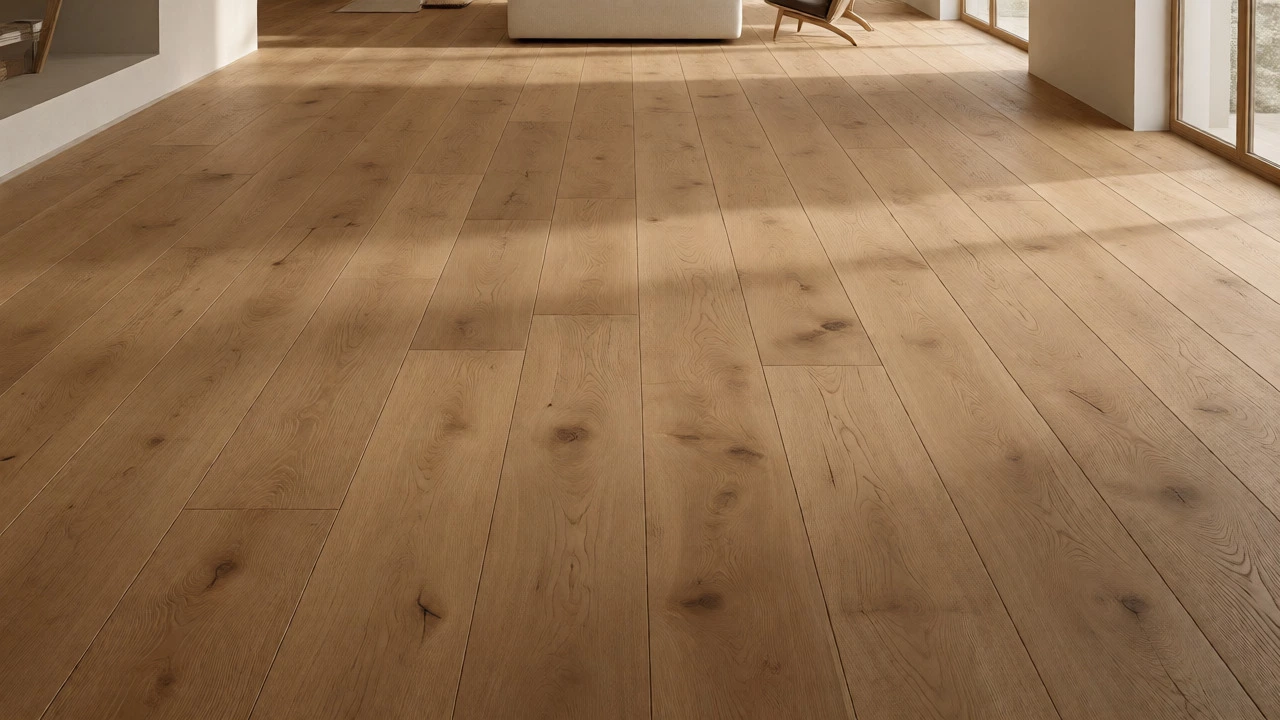
Remember when narrow strips of dark oak were everywhere? That era is over. In 2026, width equals luxury. Standard planks used to be 3 to 4 inches wide. Now, the trend is pushing toward 7 to 10-inch widths, sometimes even wider. Why does this matter? Because fewer seams mean less visual noise. A wide-plank floor makes a small living room feel larger and a large open-plan area feel cohesive rather than chopped up.
European Oak remains the gold standard here. Unlike American Red Oak, which has prominent grain patterns, European Oak offers a tighter, more uniform grain that looks sophisticated. When you pair this with a matte finish, you get a surface that hides dust better than high-gloss polyurethane ever could. It feels organic. You can see the knots and the color variations, which adds character. This isn't about perfection; it's about authenticity.
Installation methods have evolved too. Engineered hardwood is often preferred over solid timber for wide planks because it resists warping due to humidity changes. This is crucial if you live in a climate like Melbourne, where damp winters and hot summers can wreak havoc on solid wood. Engineered boards have a top layer of real wood bonded to plywood layers. They offer the same beauty but with greater stability.
- Visual Impact: Creates a seamless, expansive look.
- Value Retention: High-quality wood floors still add significant resale value.
- Sustainability: Look for FSC-certified sources to ensure responsible forestry.
Luxury Vinyl Tile: The Practical Powerhouse
If you have kids, pets, or just hate worrying about scratches, Luxury Vinyl Tile is likely your best friend. Don't confuse LVT with the cheap, peeling vinyl sheets from decades past. Modern LVT is a multi-layered synthetic product designed to mimic stone or wood with incredible realism. The technology behind printing and embossing has advanced so much that you often cannot tell the difference between a high-end LVT plank and real timber by sight alone.
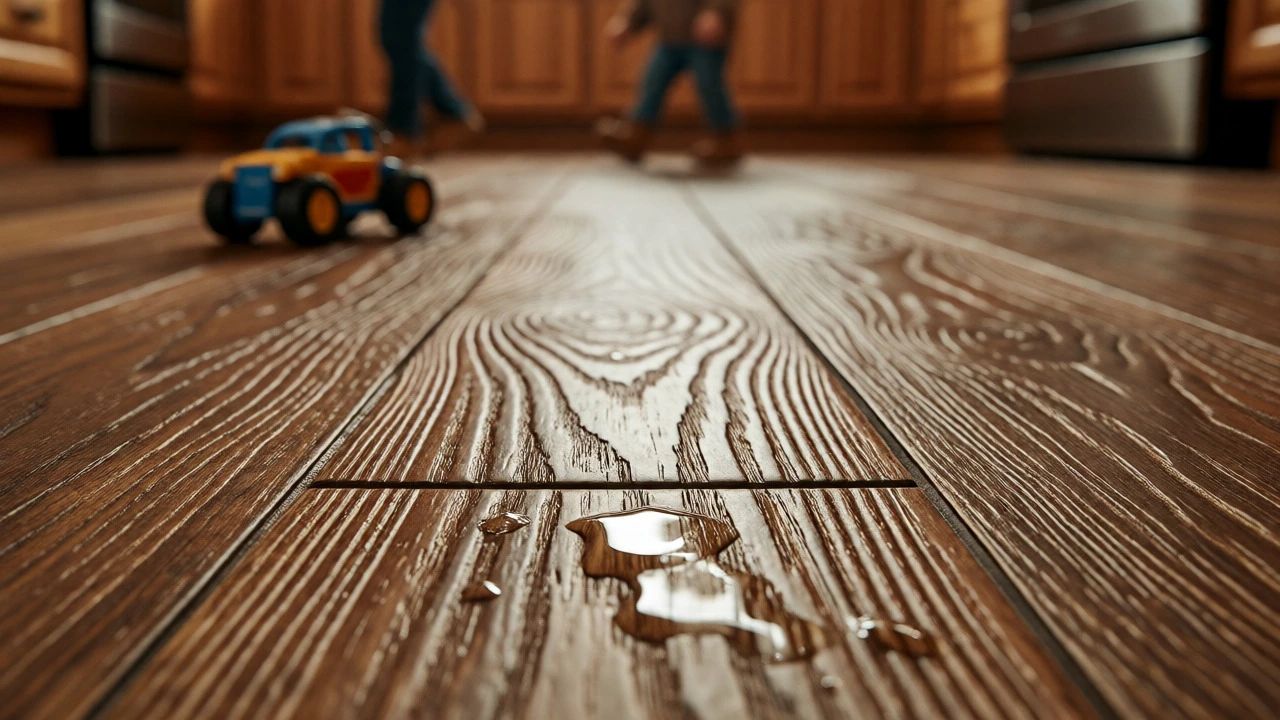
Luxury Vinyl Tile (LVT) is categorized as a resilient flooring material. Its core structure typically includes a wear layer, a printed design layer, a vinyl core, and a backing layer. The wear layer is the hero here. A 20-mil wear layer can handle heavy foot traffic without showing scuffs. For a busy family living room, this is non-negotiable. Real wood dents when a toy car hits it. LVT bounces back.
The biggest selling point for LVT in 2026 is its waterproof nature. Traditional hardwood hates water. Spill a glass of red wine on an oak floor, and you have a race against time. With LVT, you wipe it up, and the stain disappears. There is no swelling, no cupping, and no anxiety. This makes it ideal for living rooms that flow into kitchens or dining areas, where spills are common.
Comparing the Contenders: Wood vs. LVT
Choosing between these two trends comes down to your priorities. Do you want the prestige and tactile feel of natural material, or do you prioritize low maintenance and budget efficiency? Here is a direct comparison to help you decide.
| Feature | Extra-Wide Natural Wood | Luxury Vinyl Tile (LVT) |
|---|---|---|
| Cost | High ($80-$150+ per sqm installed) | Moderate ($40-$90 per sqm installed) |
| Durability | Scratches and dents easily; requires refinishing every 10-15 years. | Highly resistant to scratches, dents, and moisture. |
| Maintenance | Requires specific cleaners; avoid steam mops. | Vacuum and damp mop only; very easy to clean. |
| Feel Underfoot | Warm, natural texture; can be cold in winter without rugs. | Softer and warmer than ceramic; rigid core options feel solid. |
| Resale Value | Adds premium value to homes. | Neutral to positive; seen as practical rather than luxurious. |
| Best For | Formal living rooms, minimal traffic households. | Families, pet owners, open-plan spaces. |
Why Texture and Finish Matter More Than Color
Both trends share a common trait: a move away from high gloss. Whether you choose wood or LVT, matte finishes are dominating. Glossy floors show every speck of dust and every footprint. Matte surfaces diffuse light, reducing glare and hiding imperfections. This is a practical choice that also aligns with the broader interior design shift toward calm, muted environments.
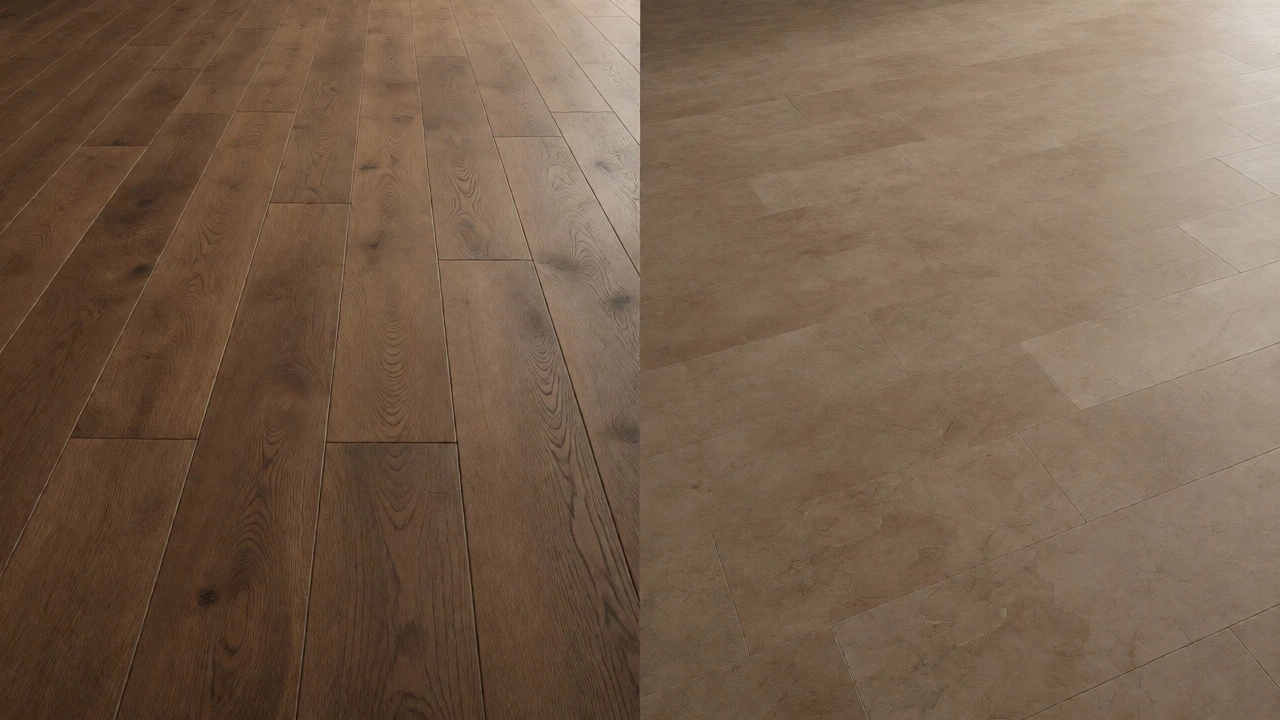
Texture is another critical factor. In LVT, manufacturers use "embossed-in-register" technology. This means the texture you feel matches the grain pattern you see. If you run your hand across a plank that looks like weathered oak, you will feel the ridges of the grain. This sensory detail tricks the brain into believing it is real wood. For natural wood, wire-brushed finishes are popular. They remove softer wood fibers, leaving the harder grain raised. This creates depth and shadow play, especially when sunlight hits the floor during the day.
Color palettes have also stabilized. While gray was the king of the last decade, 2026 sees a return to warm neutrals. Think honey tones, rich browns, and creamy whites. These colors ground a room and make it feel inviting. Cool grays can make a living room feel clinical. Warm woods connect us to nature, which is psychologically comforting in a home environment.
Installation Tips for Long-Term Success
Even the most expensive flooring fails if installed poorly. For wide-plank wood, acclimation is vital. Bring the boxes into your living room and let them sit for at least 48 hours before installation. Wood expands and contracts with temperature and humidity. If you install it straight from a cold warehouse into a warm house, gaps will appear later.
For LVT, subfloor preparation is everything. Vinyl is thin. If there is a bump in your concrete slab, you will see it through the vinyl after six months. Use a self-leveling compound to ensure the base is perfectly flat. Also, check for moisture in concrete slabs using a calcium chloride test. Excess moisture can cause adhesive failure in glue-down LVT, leading to bubbles and lifting edges.
- Acclimate Wood: Leave planks in the room for 2-3 days before installing.
- Level Subfloors: Ensure concrete or plywood bases are flat within 3mm over a 3-meter radius.
- Expansion Gaps: Always leave a 10-12mm gap around walls to allow for movement.
- Underlay: Use acoustic underlay for LVT to reduce noise transmission to downstairs neighbors.
Which Trend Fits Your Lifestyle?
Ask yourself three questions. First, how much traffic does your living room get? If it is the main thoroughfare for dogs, toddlers, and muddy boots, LVT is the stress-free choice. Second, what is your budget? If you have the funds and want long-term asset value, go for wide-plank engineered oak. Third, how much maintenance do you tolerate? If you dread polishing and special cleaners, LVT wins. If you enjoy the ritual of caring for natural materials, wood is rewarding.
There is also a hybrid approach. Some homeowners use wide-plank wood in formal sitting areas and LVT in adjacent kitchen-dining zones. This creates a visual distinction while maintaining practicality. Just ensure the transition strips are flush and safe to walk on.
Ultimately, flooring is a foundation. It anchors your furniture and defines the mood of your home. By choosing either extra-wide natural wood or high-quality LVT, you are selecting a trend that balances aesthetics with function. Both options offer longevity, provided you respect their specific care requirements. Choose the one that lets you relax in your living room, not worry about the floor beneath your feet.
Is LVT really waterproof?
Yes, high-quality LVT is 100% waterproof. However, this refers to the plank itself. Water can still seep through the seams if the installation isn't tight or if the subfloor is uneven. Always wipe up spills promptly to prevent water from pooling in joints.
Do wide-plank floors make a room look smaller?
No, they usually make a room look larger. Fewer seams create a continuous line of sight, which extends the perceived boundaries of the space. Narrow planks can visually chop up the floor, making the area feel fragmented and smaller.
Can I install LVT over existing tiles?
You can, but it is risky. Tiles have grout lines that create dips. Unless you grind down the tiles or use a thick leveling compound, those dips will telegraph through the LVT. It is often cheaper and safer to remove old tiles or install a new subfloor layer.
How long does engineered wood last compared to solid wood?
Solid wood can last 100+ years with multiple refinishes. Engineered wood typically lasts 20-40 years depending on the thickness of the top wear layer. You can usually sand and refinish engineered wood 1-3 times, whereas solid wood can be sanded many more times.
Are wide planks more expensive to install?
Not necessarily. Labor costs are similar. Material costs vary by species and grade. Sometimes wide planks cost less per square meter than narrow ones because there is less waste during manufacturing. Always get quotes based on total square meters, not just plank width.