

Vinyl vs Laminate Flooring Calculator
Answer a few questions to get a personalized recommendation based on your home's specific needs and conditions.
Choosing between vinyl and laminate flooring isn’t just about looks-it’s about how your home actually lives. You want something that handles kids, pets, spills, and heavy foot traffic without looking worn out in two years. But you also don’t want to pay for something that’s overkill for your space. So which one really wins? Let’s cut through the marketing noise and look at what these two floors actually do in real homes.
What vinyl flooring really is
Vinyl flooring isn’t one thing-it’s a whole family. There’s luxury vinyl plank (LVP), luxury vinyl tile (LVT), and basic sheet vinyl. The good stuff today has a rigid core, often made of stone plastic composite (SPC) or wood plastic composite (WPC), which makes it stable, waterproof, and quiet underfoot. The top layer is a clear, wear-resistant film that protects against scratches and stains. Beneath that, there’s a printed design layer that mimics wood, stone, or even concrete. It’s not a photo-it’s a high-res print fused into the material.
Real-world test: A family in Ohio installed LVP in their kitchen and mudroom in 2023. Their two dogs, a toddler, and a leaky dishwasher didn’t faze it. After 18 months, there were no warps, no swelling, and no fading-even with direct afternoon sun hitting the floor. That’s because modern vinyl is 100% waterproof. Water doesn’t seep in. It sits on top and wipes off.
What laminate flooring really is
Laminate is a sandwich. The bottom is a moisture-resistant backing, then a high-density fiberboard (HDF) core, then a printed image layer, and finally a clear protective overlay. It looks like wood because it copies the grain patterns of real planks-sometimes very well. But it’s not wood. It’s compressed wood dust and resin.
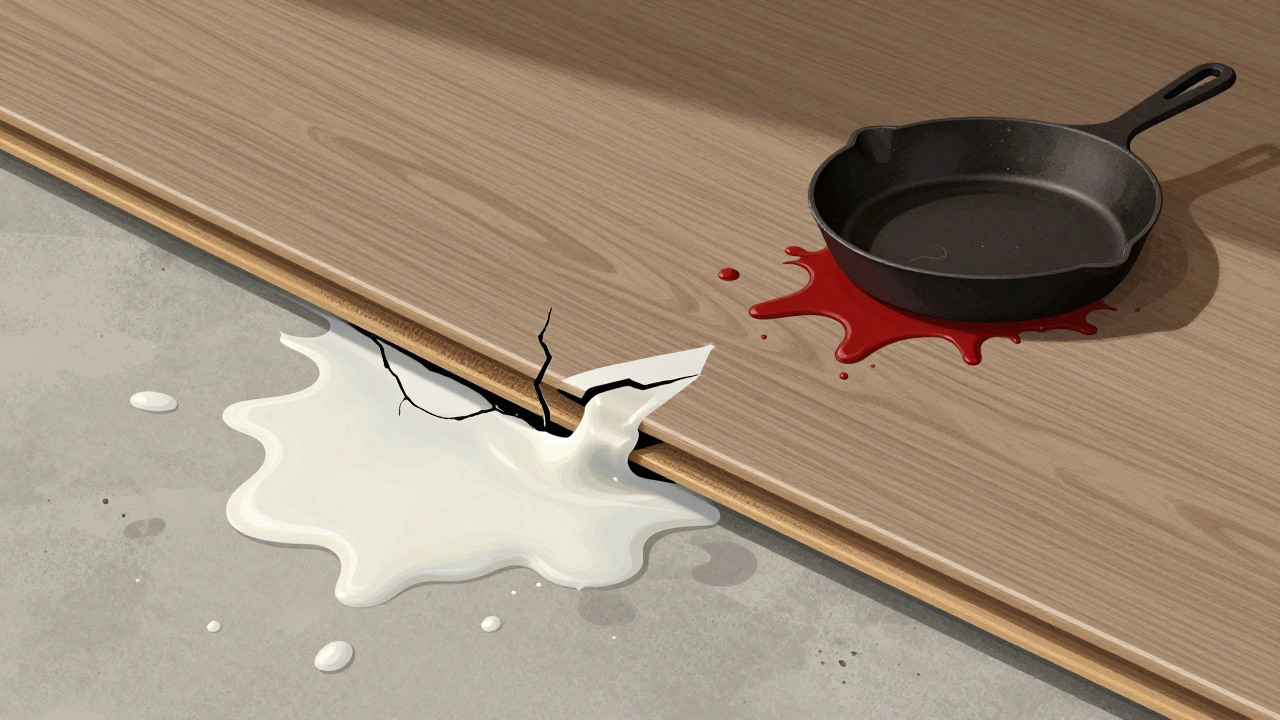
The big problem? Water. Laminate swells when it gets wet. Not a little. A lot. A spilled glass of milk left for 20 minutes can cause the planks to buckle. A leaky pipe under the sink? That’s a full replacement job. Even humidity changes can make laminate expand and push against walls, causing it to lift or buckle. In basements or bathrooms? Not recommended. In kitchens? Only if you’re super careful.
But here’s the upside: laminate has improved. Newer brands like Pergo and Shaw use water-resistant cores that can handle short-term spills better than older versions. Still, they’re not waterproof. They’re just less likely to explode if you mop up fast.
Real durability: scratches, dents, and pets
If you have dogs with claws, kids who drop toys, or heavy furniture you move around, durability matters more than color.
Vinyl scores higher here. The wear layer on luxury vinyl is often rated AC4 or AC5-the same as commercial-grade flooring in malls and schools. It resists scratches from pet nails and doesn’t dent easily under heavy appliances. I’ve seen vinyl floors with deep gouges from dropped cast iron pans that still looked fine after a light buffing.
Laminate is tougher than it looks, but it’s brittle. A dropped hammer or heavy bookend can chip the edge of a plank. Once that happens, moisture gets in-and then it’s game over. You can’t sand or refinish laminate like real wood. You replace the whole plank. And good luck finding the exact match two years later.
Installation: DIY or hire?
Both vinyl and laminate are sold as floating floors. That means they’re not glued down. They click together and float over the subfloor. That makes them popular for DIY.
Vinyl planks are heavier and stiffer, especially SPC. They click together with a tighter, more solid feel. You need a bit more strength to install them, but once they’re locked, they’re rock solid. Many vinyl planks also come with attached underlayment, which cuts down on noise and makes installation faster.
Laminate is lighter and easier to cut with a handsaw. The click system is usually simpler, so beginners find it less intimidating. But the downside? Laminate needs a perfect subfloor. Any bump or dip shows up as a creak or a gap. Vinyl is more forgiving. It can handle minor imperfections without you having to level the whole floor.
Cost: upfront vs long-term
Vinyl ranges from $2 to $7 per square foot installed. Basic sheet vinyl is cheaper, but you’re usually looking at LVP for homes. Laminate runs $1.50 to $5 per square foot. On paper, laminate wins. But here’s the catch: vinyl lasts longer.
A 2024 study by the National Association of Home Builders found that luxury vinyl floors lasted 15-25 years in average homes. Laminate? 10-15 years. If you’re planning to stay in your home more than 10 years, vinyl saves you money in the long run. You’re not replacing it halfway through your mortgage.
Also, vinyl doesn’t need transition strips between rooms as often. Laminate expands and contracts with temperature, so you need expansion gaps and trim pieces everywhere. That adds labor and material cost.
Look and feel: does it fool people?
Both can look amazing. High-end vinyl can mimic the texture of hand-scraped oak, the veining of marble, or the roughness of reclaimed brick. Some even have embossed-in-register (EIR) technology-that means the texture matches the pattern. So if there’s a knot in the wood print, you can feel it under your fingers.
Laminate has come a long way too. The best brands now use 4K printing and textured surfaces. But here’s the difference: vinyl can replicate the feel of real stone or tile. Laminate can’t. If you want a bathroom floor that looks like slate but feels warm underfoot, vinyl is the only choice.
Also, vinyl is quieter. Laminate can sound hollow or clicky when you walk on it, especially over concrete. Vinyl absorbs sound better. That’s why you’ll find it in apartments, nursing homes, and hotels.
Where each one shines
- Choose vinyl if: You have a kitchen, bathroom, laundry room, basement, or mudroom. You have pets or kids. You want a floor that lasts 20 years without worry. You care about warmth underfoot and quiet steps.
- Choose laminate if: You’re on a tight budget, you’re installing in a dry, above-ground room like a living room or bedroom, and you’re willing to be extra careful with spills. You love the look of wood and don’t mind replacing it sooner.
What experts don’t tell you
Vinyl is often called "fake" because it’s not real wood. But so is laminate. The difference is, vinyl doesn’t pretend to be something it’s not. It’s designed to be water-resistant, durable, and low-maintenance. That’s not a flaw-it’s a feature.
Laminate was designed to look like wood at a low price. It was never meant to survive a flooded basement or a dog that pees on the floor. If you treat it like real wood, you’ll be disappointed.
Bottom line: if you want a floor that doesn’t ask you to change your life, vinyl wins. If you want a floor that looks nice for a few years and then gets replaced, laminate works.
What to look for when buying
- For vinyl: Look for a wear layer of at least 20 mil (thousandths of an inch). Thicker is better for high-traffic areas. Check if it’s SPC or WPC-both are great. Avoid peel-and-stick vinyl unless you’re renting and plan to move soon.
- For laminate: Look for an AC4 rating (best for homes). Make sure the core is water-resistant, not just water-repellent. Avoid products with no warranty against moisture damage.
Both types should come with at least a 15-year residential warranty. If a brand won’t guarantee it for 10 years, walk away.
Can you install vinyl over existing laminate?
Yes, if the laminate is flat, secure, and clean. No major bumps or gaps. Vinyl is flexible enough to lay over it, but you’ll need to use an underlayment if the laminate is noisy or uneven. Don’t install vinyl over damaged or loose planks-they’ll show through.
Is vinyl flooring toxic?
Modern vinyl flooring made after 2018 meets strict VOC standards. Look for FloorScore or GreenGuard certification. Avoid cheap vinyl from unknown brands-some still use phthalates. But reputable brands like Armstrong, Mohawk, and Shaw have phased out harmful chemicals. The smell you get during installation? It fades in 2-3 days with good ventilation.
Can you use a steam mop on laminate?
No. Steam mops introduce too much moisture too fast. Even water-resistant laminate can warp. Use a damp microfiber mop instead. Never soak the floor. Dry it immediately after cleaning.
Which is better for radiant floor heating?
Vinyl. It conducts heat better and doesn’t expand as much with temperature changes. Laminate can crack or separate over time with radiant heat because the HDF core is sensitive to dryness. Always check manufacturer guidelines, but vinyl is the safer bet.
Do either of these increase home value?
Yes, but vinyl does it better. Buyers notice durable, low-maintenance flooring. Vinyl’s waterproof nature makes it ideal for kitchens and bathrooms-rooms that matter most in resale. Laminate is seen as temporary. If you’re selling in 3-5 years, vinyl gives you a stronger return on investment.
Final decision: what should you pick?
If you’re asking this question, you’re probably trying to avoid regret. You don’t want to spend money and then hate your floor in six months. So think about your life.
Do you cook? Do you have pets? Do you live in a humid area? Do you plan to stay in the house for more than a decade? If you answered yes to any of those, vinyl is the smart choice. It’s not glamorous. It’s not trendy. But it’s reliable.
Laminate has its place. If you’re renting, on a budget, or just want a quick update for a dry room, it’s fine. But treat it like a temporary fix-not a long-term solution.
The best floor isn’t the one that looks the most like wood. It’s the one that lets you live your life without worrying about it.