
Bedroom Space Calculator
Room Measurements
Bed Selection
Furniture Preferences
Space Analysis
Enter your room dimensions and furniture preferences to see optimal placement.
When you’re designing a bedroom, it’s not about filling space-it’s about creating a place that helps you rest, recharge, and feel at home. You don’t need a showroom full of pieces. In fact, three smart choices can make all the difference. These aren’t just things to sit on or store clothes in-they’re the backbone of a functional, calming bedroom.
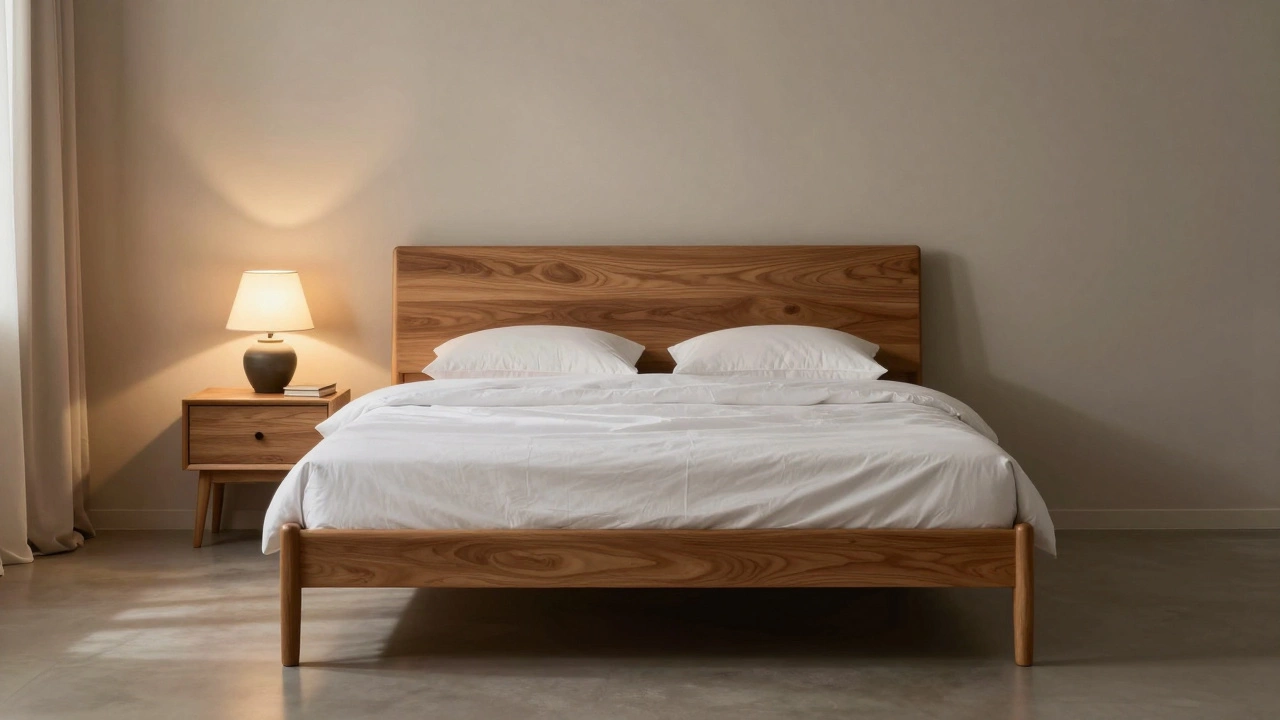
The Bed
The bed is the only non-negotiable. Everything else builds around it. But not all beds are created equal. A sturdy frame with proper support keeps your mattress in good shape and reduces creaking noises that wake you up. If you sleep on your side, look for a bed with a low profile-around 14 to 18 inches off the ground-so getting in and out feels natural. For people who read in bed or have trouble standing up, a taller frame (20 inches or more) gives you better leverage.
Material matters too. Solid wood frames last decades and don’t wobble. Metal frames can be noisy and cold to the touch. Avoid particleboard beds unless you’re on a tight budget and plan to replace them in a few years. A good bed frame doesn’t need fancy headboards or storage drawers. Just solid construction. Brands like IKEA’s MALM or West Elm’s basic wooden frames have proven durability over 5+ years of daily use.
The Nightstand
Think of the nightstand as your personal command center. It holds your phone, your glasses, your book, your lamp, and sometimes your morning coffee. The right one isn’t too big, not too small. It should sit level with the top of your mattress-usually between 22 and 26 inches high. Anything taller makes reaching for things awkward. Anything shorter and you’re constantly bending down.
Storage is key. A drawer or two keeps clutter out of sight. Open shelves look nice but quickly turn into junk piles. If you’re tight on space, a slim side table with a single drawer works better than a bulky dresser. Look for one with a smooth finish-no rough edges that catch your pajamas. And don’t overlook the lamp. A soft, warm light (under 3000K color temperature) is better for winding down than harsh white LEDs.
Real-world tip: Many people buy nightstands that are too wide. Measure your space. If your bed is 60 inches wide, a nightstand wider than 20 inches will make the room feel cramped. Stick to 16 to 20 inches for comfort.
The Dresser
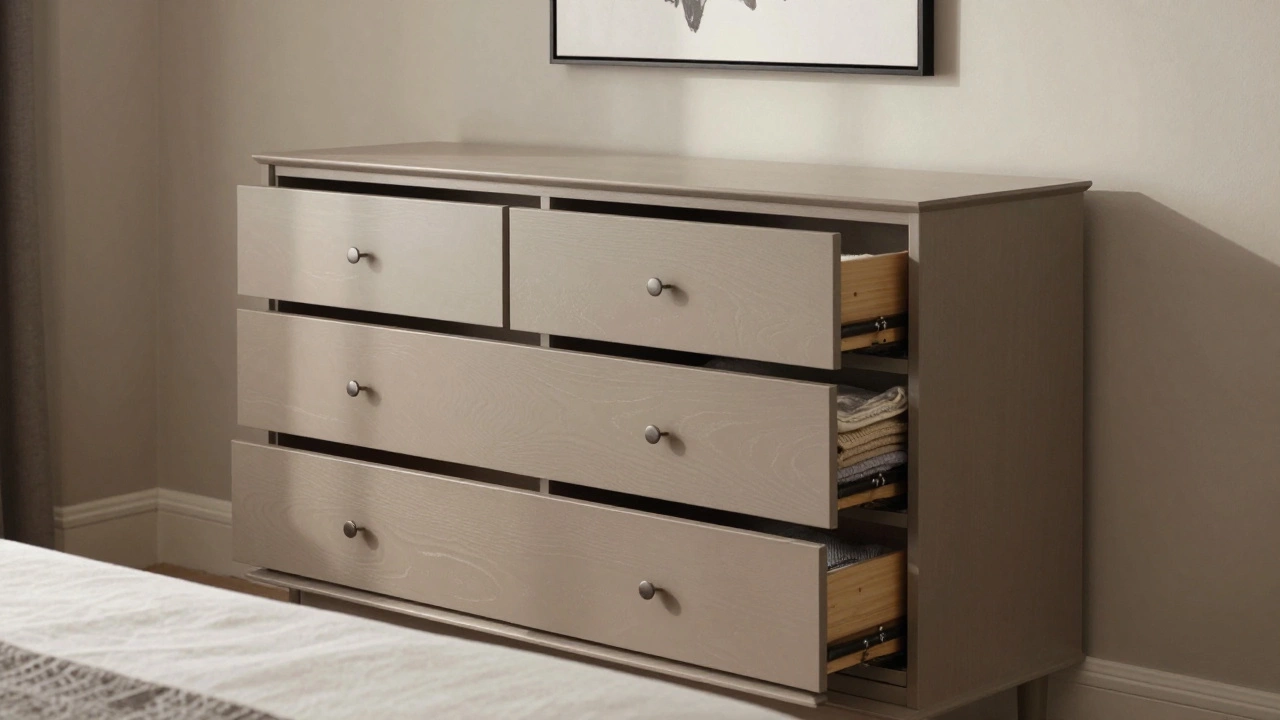
A dresser isn’t just for clothes. It’s for folding, organizing, and keeping your daily essentials within reach. You don’t need a 6-drawer monster unless you have a huge closet or a shared room. For most people, a 4-drawer dresser (about 30 to 40 inches wide) is enough. It fits under standard ceiling heights and leaves room for wall art or a mirror above.
Material and finish matter more than you think. A dresser with a matte lacquer or oil-rubbed finish resists fingerprints and scratches better than glossy paint. Drawer glides should be metal, not plastic. Plastic ones wear out after 2-3 years of heavy use. Look for full-extension slides-they let you pull the drawer all the way out so you can see everything inside.
Placement matters too. Don’t shove it right next to the door. Leave at least 24 inches of walking space. If your room is small, consider a lowboy (a short, wide dresser) instead of a tall chest. It takes up less vertical space and feels less imposing.
Why These Three?
These pieces-the bed, the nightstand, the dresser-cover the core needs of a bedroom: sleep, access, and storage. Add anything else, and you’re decorating, not designing. A bench at the foot of the bed? Nice, but optional. A vanity? Only if you actually do your makeup there. A reading chair? Great, but only if you read daily.
Most people overcomplicate bedrooms. They buy a bed, then a headboard, then a media console, then a rug, then five decorative pillows. In the end, the room feels cluttered, not cozy. The three-piece rule keeps things simple. You can always add a mirror, a plant, or wall art later. But if the bed, nightstand, and dresser don’t work well together, nothing else will fix it.
Common Mistakes to Avoid
- Buying a bed that’s too big for the room. A king bed in a 10x10 room leaves no walking space.
- Choosing a nightstand without storage. You’ll end up with clutter on the floor.
- Ignoring drawer quality. Cheap drawers jam, stick, or fall out.
- Matching everything. A bedroom doesn’t need to look like a catalog. Mix wood tones, textures, and finishes for warmth.
Real-Life Example
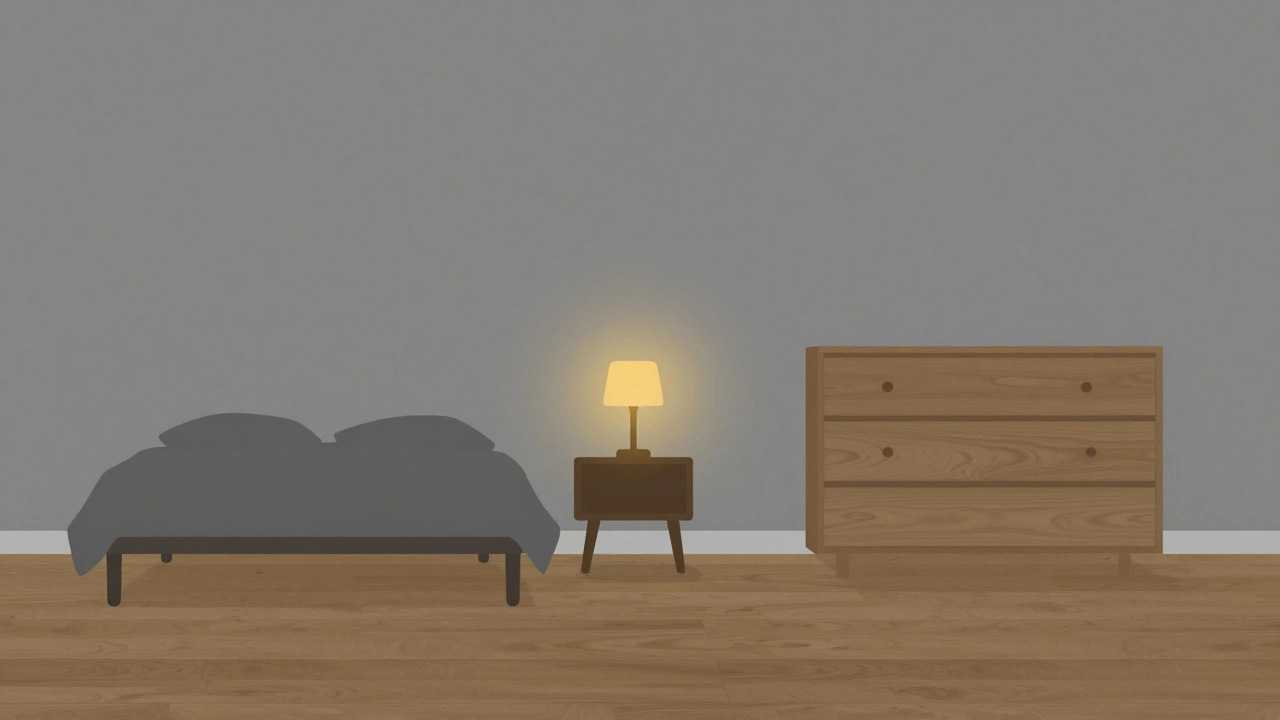
Take a 12x12 bedroom. Place a queen bed (60x80 inches) centered on the longest wall. On either side, a 18-inch-wide nightstand with one drawer. Opposite the bed, a 36-inch-wide dresser with four drawers. That’s it. You’ve got 3 feet of walking space on each side and 2 feet in front of the dresser. You can open drawers fully, reach your lamp without stretching, and still hang a piece of wall art above the dresser. No extra furniture. No clutter. Just function.
Final Thought
Designing a bedroom isn’t about trends. It’s about what works for you, night after night. The bed you sleep on, the nightstand you reach for at 2 a.m., the dresser that keeps your clothes tidy-those are the pieces that define your space. Skip the extras. Focus on these three. Build around them. Everything else is just decoration.