

Luxury Wall Color Selector
Discover the wall color that makes your space look expensive—without spending more money. Answer a few quick questions to get personalized recommendations based on the article's luxury color principles.
Your Luxury Recommendation
Want your walls to make you look rich? It’s not about spending more money-it’s about choosing the right color. The most expensive-looking rooms don’t have gold leaf or marble floors. They have walls that feel deep, quiet, and intentional. And the color that does this best isn’t white, isn’t beige, and definitely isn’t bright coral. It’s a shade that sits between darkness and light, with just enough warmth or coolness to make everything else in the room feel expensive by association.
Dark Greens Are the New Black
For years, black walls were the go-to for luxury. But black can feel cold, even harsh, especially in rooms with little natural light. Enter deep green. Not the kind you see in a forest, but a muted, almost charcoal-green like Benjamin Moore’s Green Shadow or Farrow & Ball’s Parma Gray. These colors absorb light softly, giving walls a velvety texture that makes furniture and art pop. They’re the color of old libraries, luxury hotels in London, and the walls of homes that cost millions but feel lived-in, not staged. In a living room, this shade turns a simple sofa into a statement. In a bedroom, it creates a cocoon that feels like a high-end spa.
Deep Blues for Calm Authority
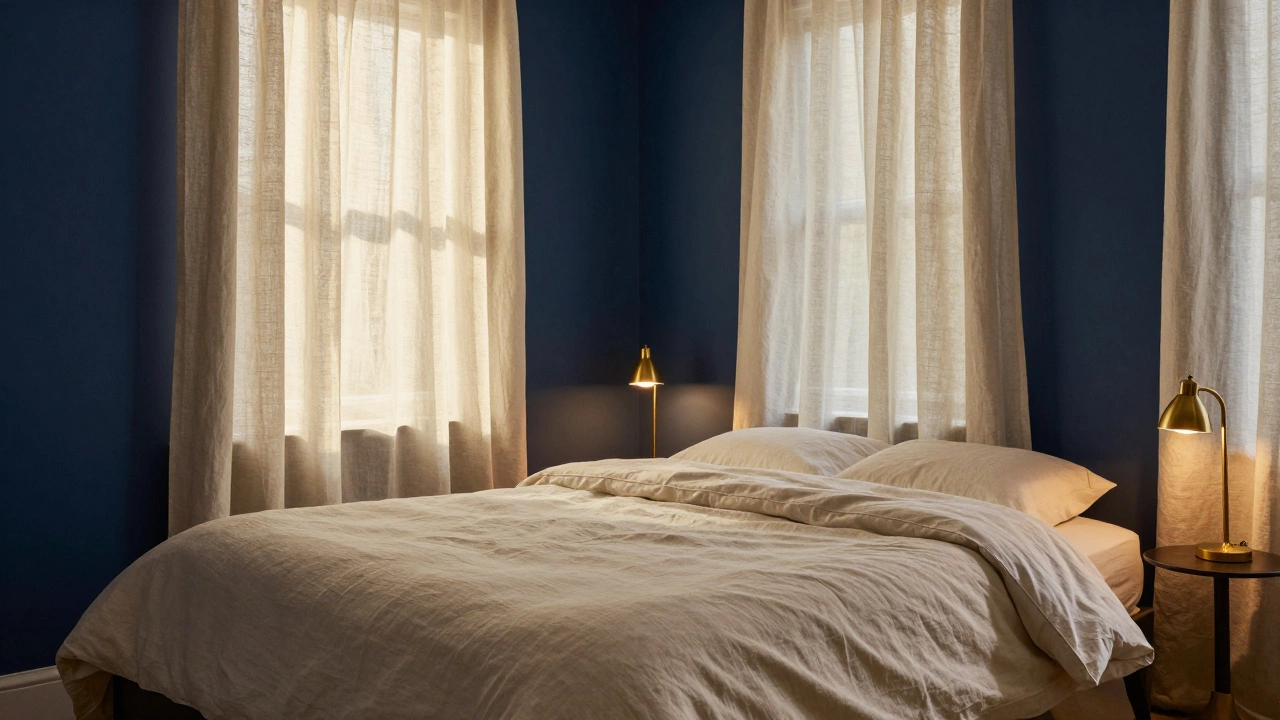
If green feels too earthy, try a rich navy. Not the kind you wear to a wedding, but a blue with a hint of black or gray-like Sherwin-Williams’ Naval or Farrow & Ball’s Hague Blue. This color has been used in boardrooms, yacht interiors, and upscale boutiques for decades because it doesn’t shout. It commands. It says, "I don’t need to be loud to be noticed." Pair it with brass fixtures, linen curtains, and a single piece of abstract art, and the room feels curated, not decorated. Unlike lighter blues that feel airy and casual, deep blue walls add weight and seriousness. They make even basic furniture look like designer pieces.
Warm Neutrals That Feel Expensive, Not Boring
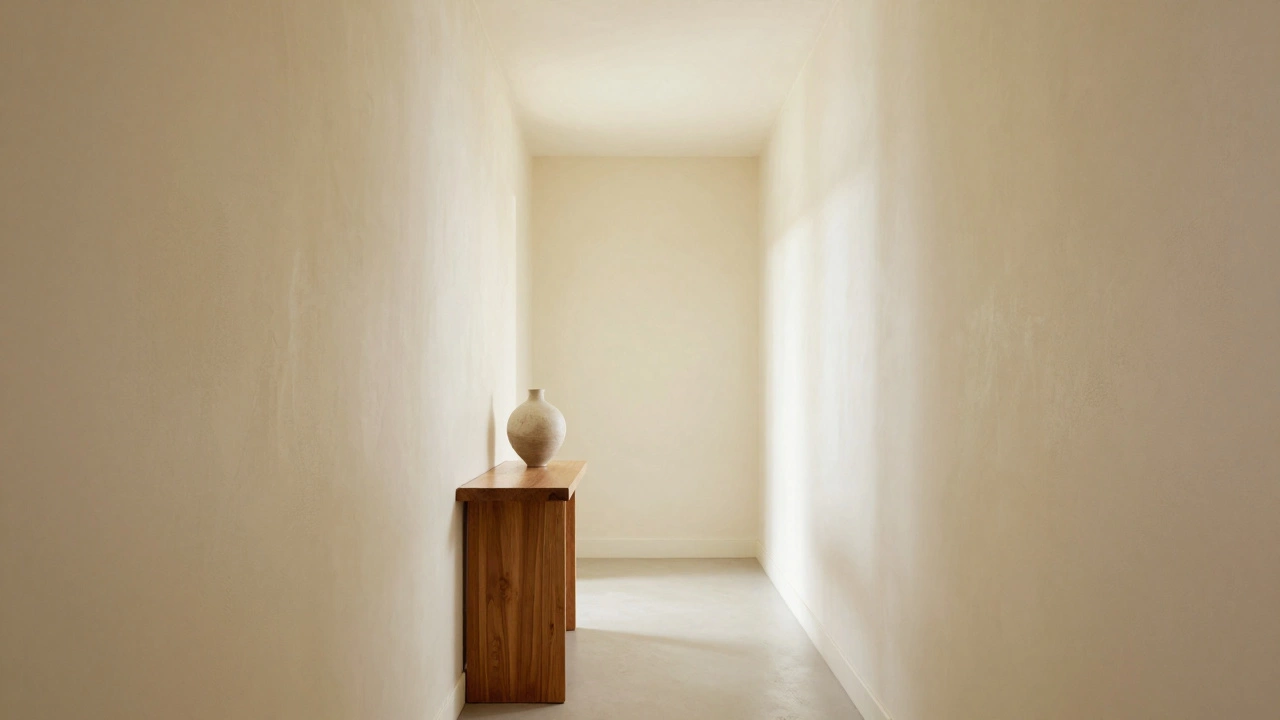
Neutral doesn’t mean beige. The most expensive-looking neutrals have a personality. Think warm grays with a touch of brown, like Benjamin Moore’s Revere Pewter, or creamy off-whites with a hint of yellow, like Sherwin-Williams’ Alabaster. These colors don’t look expensive because they’re bold-they look expensive because they’re balanced. They reflect light gently, making rooms feel bright without being sterile. They work with wood tones, stone, and metal without competing. In a dining room, a warm neutral wall makes a dark wood table look richer. In a hallway, it makes the space feel longer and more intentional. The trick? Avoid anything too cool or too flat. A touch of warmth makes all the difference.
Why White Doesn’t Work (Unless It’s Perfect)
White walls are everywhere. And most of the time, they look cheap. Why? Because real luxury white isn’t pure white. It’s off-white with a subtle undertone-slightly gray, slightly pink, slightly green. Pure white reflects everything, including dust, imperfections, and yellowing from sunlight. It makes rooms feel like a hospital waiting area. The whites that look expensive are ones that change with the light. Benjamin Moore’s White Dove has a soft gray base that stays calm in morning light and warms up in the afternoon. Sherwin-Williams’ Cloud White has a whisper of cream. These aren’t just paint names-they’re the difference between a rental apartment and a home that feels like it’s been lived in for decades.
Texture Matters More Than You Think
Color alone won’t do it. The finish and texture of your wall are just as important. A flat paint on a perfectly smooth wall looks dull. A matte finish on a slightly textured surface-like lime wash, plaster, or even a subtle grasscloth wallpaper-adds depth. That’s why luxury homes often use hand-applied finishes. You don’t need to spend thousands on wallpaper, but even a light texture from a paint technique like rag rolling or sponging can make a big difference. The goal isn’t to make the wall look fancy-it’s to make it look like it was made with care. A wall that catches light unevenly feels more real, more valuable.
What Colors to Avoid
Some colors scream "budget" no matter how expensive the furniture is. Bright yellows, neon greens, and overly saturated reds make rooms feel like a children’s playroom. Even soft pastels-like blush pink or mint-can look dated or cheap if they’re too light. They lack the visual weight that makes a space feel grounded. Avoid colors that are too trendy, too bright, or too uniform. The most expensive-looking walls have a quiet complexity. They’re not the first thing you notice. They’re the thing that makes everything else feel better.
How to Test Colors Like a Pro
Don’t buy paint based on a swatch. Paint a 2x2 foot square on three different walls in the room. Watch it at 8 a.m., noon, and 6 p.m. over three days. Notice how it changes with natural light and artificial light. Does it look gray in the morning? Does it turn green under LED bulbs? Does it feel cozy at night? The right color will feel different at different times but still feel right. If it looks good in the morning and bad at night, it’s not the one. The best colors work in all lighting conditions without needing to be fixed with lamps or curtains.
Real Examples, Real Results
A client in Chicago painted her living room walls Green Shadow. She had a $300 sofa and thrifted side tables. Within a week, three friends asked where she bought her "new designer sofa." She hadn’t bought anything new. The color made everything look intentional. Another homeowner in Austin used Naval in her bedroom. She replaced her white duvet with a linen one in ivory. Suddenly, her $200 bed looked like it belonged in a magazine. These aren’t magic tricks. They’re simple choices that use color as a tool, not just decoration.
Final Rule: Less Is More
The richest-looking rooms aren’t the ones with the most color. They’re the ones with the most restraint. One wall in a deep tone, or the whole room in a quiet neutral. No accent walls with wild patterns. No contrasting trim. Just a single, thoughtful color that lets the space breathe. It’s not about how much you spend. It’s about how much you leave out.