

Flooring Installation Cost Calculator
Calculate Your Flooring Costs
Estimate total installation costs based on your room size and flooring choice. Note: Costs include materials, labor, and critical hidden preparation steps.
When you’re planning a home renovation, flooring often eats up the biggest chunk of your budget-not because of the material itself, but because of what it takes to get it down. Some floors look stunning, feel incredible underfoot, and last a lifetime. But they also demand serious skill, time, and preparation. So what’s actually the most expensive flooring to install? It’s not always the one with the highest price tag on the box.
Real-World Costs: It’s Not Just About the Plank
Many people assume that exotic hardwoods like Brazilian cherry or walnut are the most expensive to install. They’re pricey, sure-but the real cost killer is how those materials behave during installation. Take solid oak, for example. It’s a classic. But if your subfloor isn’t perfectly level, or if the humidity in your Melbourne home swings from 30% to 70% across seasons, that oak will cup, warp, or squeak. That means weeks of prep work: moisture barriers, plywood underlayment, acclimation periods of 7-14 days, and precision cutting. Labor for that alone can add $15-$25 per square meter on top of the material cost.
But even that doesn’t beat natural stone.
Natural Stone: The Unforgiving Luxury
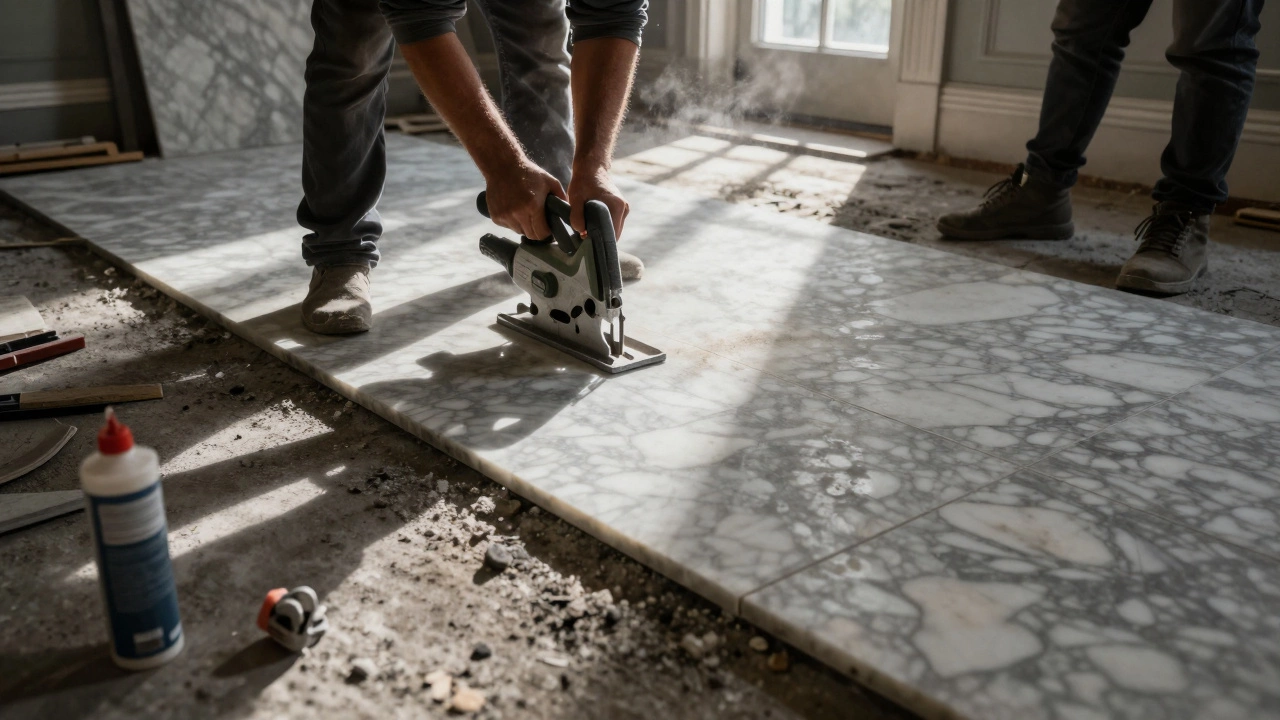
Marble, travertine, limestone, and slate aren’t just expensive to buy-they’re brutal to install. Unlike engineered wood or laminate, stone doesn’t forgiving. It cracks if you drop a tool. It stains if the adhesive isn’t sealed properly. And it requires a perfectly flat, reinforced concrete slab underneath. Most homes aren’t built for that.
In Melbourne, where older homes have uneven timber subfloors, installing stone often means pouring a new concrete slab-adding $80-$120 per square meter just for the base. Then there’s the cutting. Stone tiles are heavy, brittle, and need diamond blades and wet saws. Installers charge $60-$90 per hour for this work, and a typical kitchen floor might take three full days. Multiply that by 15-20 square meters, and labor alone hits $2,500-$4,000.
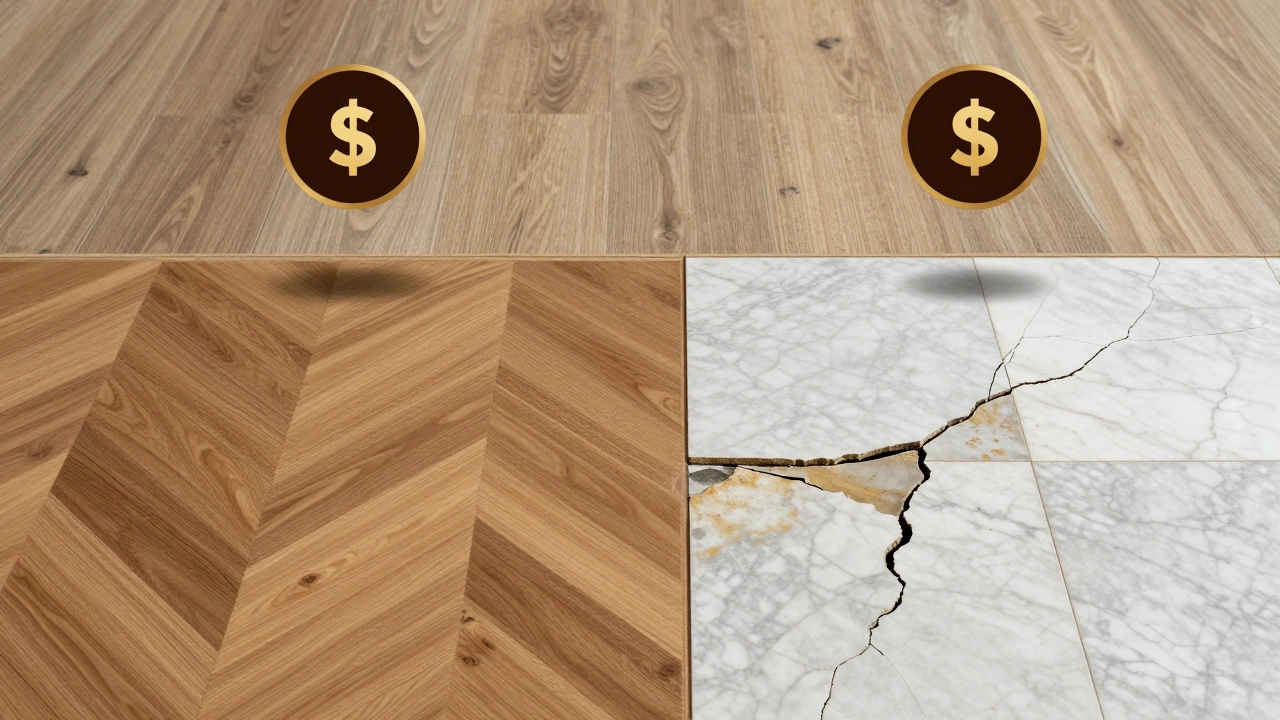
Plus, stone needs sealing. Not once. Not twice. But every 1-2 years, depending on traffic. That’s $200-$400 every couple of years, just to keep it from staining. And if you get a chip? You’re not patching it. You’re replacing the whole tile. It’s not repairable-it’s replaceable.
Custom Inlaid Wood: Where Art Meets Architecture
If stone feels too cold, consider custom inlaid hardwood. Think herringbone, parquet, or geometric patterns made from multiple wood species-oak, walnut, maple, even teak. These aren’t just planks laid straight. They’re puzzles. Each piece is hand-cut, fitted, and glued individually. A simple herringbone pattern can double or triple the installation time compared to standard straight-lay flooring.
One client in Hawthorn had a 12-square-meter living room done in a three-tone herringbone with black walnut borders. The wood cost $180/m². But labor? $220/m². Total: over $4,800 for just one room. That’s more than most people spend on full-house vinyl plank.
Why so high? Because every joint must be perfect. No gaps. No misalignments. One mistake means pulling up and starting over. Installers with this skill are rare. Most general flooring contractors won’t touch it. You need a specialist-someone who’s done this before, and charges accordingly.
Hand-Scraped and Wire-Brushed Hardwoods: The Hidden Labor
There’s a big difference between machine-sanded hardwood and hand-finished. Hand-scraped floors have texture-deep grooves, chipped edges, subtle variations that make each board look aged. But that texture isn’t machine-made. It’s done by hand, with chisels and rasps. Each board gets 10-15 minutes of artisan work before it’s even laid.
And then there’s wire-brushing. That rustic, weathered look? It’s not just a finish. It’s a process. The wood is brushed with metal bristles to remove the soft grain, leaving the harder grain raised. That takes time. And it’s not something you can do after installation. It has to be done before the planks go down. So you’re paying for both the material and the pre-installation craftsmanship.
These floors often cost $150-$250/m² installed, even when the raw wood is only $80/m². The rest? Skill. Patience. Time.
Why Some ‘Luxury’ Floors Are Actually Cheaper to Install
Here’s the twist: some of the most expensive-looking floors are actually the easiest to install. Luxury vinyl plank (LVP) with realistic wood grain? It clicks together. No glue. No nails. No acclimation. You can lay it over existing tile. That’s why it’s so popular-even in high-end homes.
Same with engineered hardwood. It’s made of real wood on top, but a stable plywood base underneath. It doesn’t expand and contract like solid wood. That means less prep. Less risk. Less labor. It costs less to install than solid oak, even if the material price is similar.
Even porcelain tile, which looks like stone, is cheaper to install than natural stone. It’s lighter. Less brittle. And the adhesive requirements are simpler. You’re still paying for skilled labor, but not for the kind that requires a PhD in geology.
The Real Hidden Costs
Most people don’t think about what happens before the flooring even arrives. You need:
- Removal of old flooring-$20-$50/m² if it’s glued-down tile or nailed hardwood
- Subfloor repair-$30-$80/m² if there’s rot, unevenness, or moisture damage
- Moisture testing-$150-$300 for a professional report (required for stone and solid wood)
- Acclimation time-up to two weeks for solid wood, during which you can’t start other work
- Transition strips, thresholds, and baseboard adjustments-$500-$1,500 extra
These aren’t optional. Skip them, and your expensive floor will fail within a year. In Melbourne’s humid summers and dry winters, ignoring moisture control is asking for warping, gaps, or mold.
What’s Actually Worth the Cost?
Is it worth spending $300/m² on hand-scraped walnut? Only if you plan to live in the house for 20+ years. Stone? Only if you’re building a showpiece home and don’t mind the maintenance. For most people, the best value is high-quality engineered hardwood-real wood top layer, stable core, easier installation, and a lifespan of 30-50 years with proper care.
Here’s the truth: the most expensive flooring to install isn’t the one with the fanciest name. It’s the one that demands perfection. The one that can’t be rushed. The one that requires specialists, not generalists. And the one that punishes mistakes with expensive, irreversible damage.
If you’re going for luxury, go for something that’s beautiful-but forgiving. Because the most expensive floor isn’t the one with the highest price tag. It’s the one that breaks your budget twice: once to install, and again to fix.