
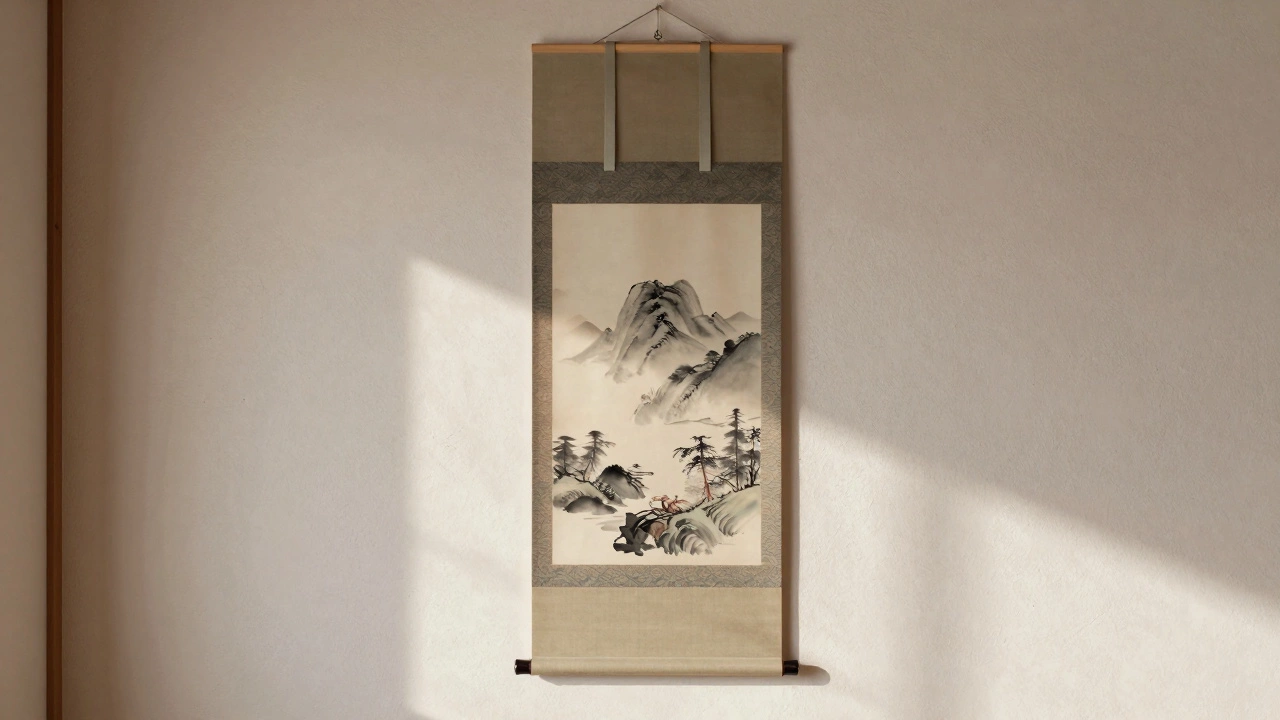
Interactive Kakemono Anatomy
Use the slider to unroll the scroll and reveal its structure.

Component Details
Hikidashi
Top rod used for hanging.
Material: Bamboo or wood wrapped in fabric.Kawa
Inner border layer.
Material: Silk or cotton fabric.Naka-kawa
Outer border layer providing structure.
Material: Silk or brocade fabric.Omiyari
Bottom weight rod keeping scroll taut.
Material: Wood or bamboo.Picture this: you walk into a room that feels calm, focused, and deeply intentional. There’s no clutter, just one striking piece of art commanding your attention. It isn’t framed in glass or mounted on rigid canvas. Instead, it hangs vertically, its fabric swaying slightly with the air currents, revealing layers of ink and color that seem to breathe. This is kakemono art, and it is changing how we think about wall decor.
If you have ever scrolled through interior design feeds and wondered about those elegant vertical banners from Japan, you are not alone. Kakemono (pronounced *kah-keh-moh-noh*) translates simply to "hanging picture." But calling it just a "picture" misses the point entirely. It is a ritual, a medium, and a statement all rolled into one textile object.
The Anatomy of a Kakemono
To understand why kakemono looks the way it does, you need to look at its construction. Unlike Western paintings that are static once hung, a kakemono is an engineered object designed for display and storage. It consists of several distinct parts, each serving a specific function.
At the center is the scroll painting itself, usually created on paper or silk using ink, watercolor, or gold leaf. Surrounding this core image are multiple layers of fabric borders called okimono. These borders aren't just decorative; they provide structural support and protect the delicate artwork from dust and light damage.
| Component | Function | Material |
|---|---|---|
| Hikidashi | Top rod for hanging | Bamboo or wood wrapped in fabric |
| Omiyari | Bottom weight rod | Wood or bamboo, often heavier than top rod |
| Kawa | Inner border layer | Silk or cotton fabric |
| Naka-kawa | Outer border layer | Silk or brocade fabric |
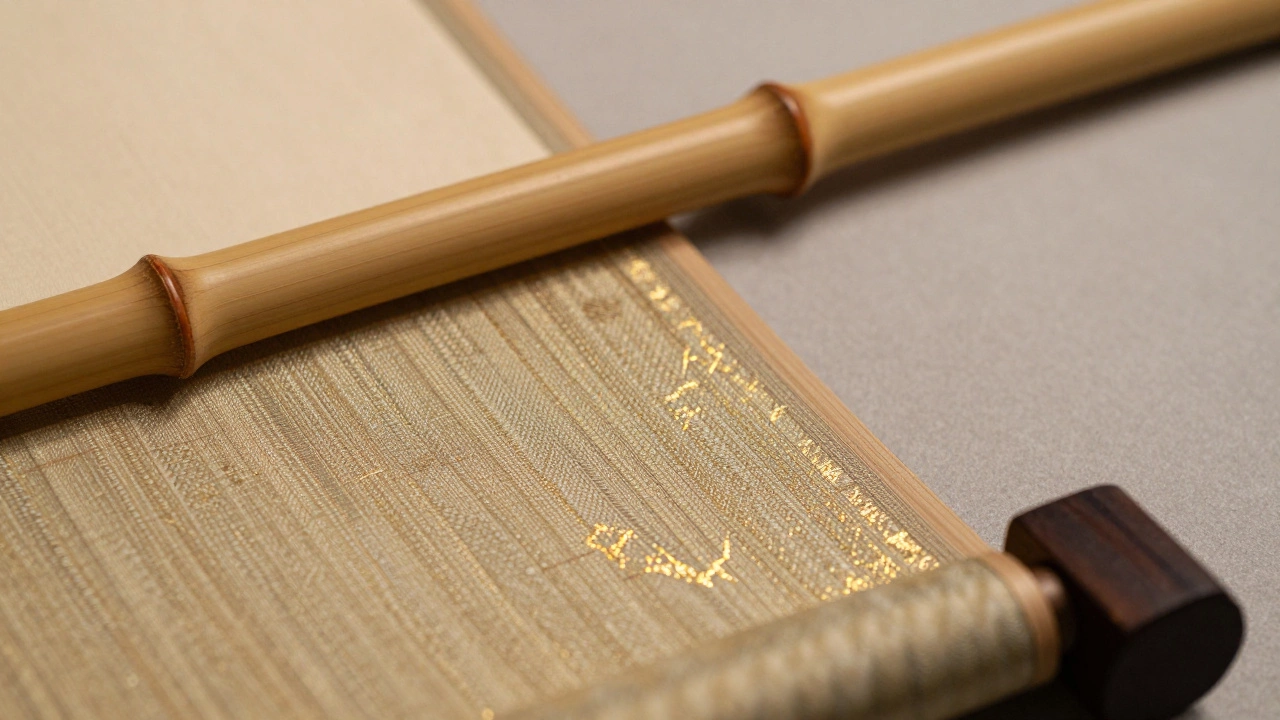
The bottom rod, known as the *omiya*, is crucial. It keeps the scroll taut and straight. Without it, the silk would sag, distorting the image. When you unroll a kakemono, you are literally unveiling a moment in time. The act of rolling it up when not in use protects the pigments from fading, which is why these artworks can survive for centuries while oil paintings on canvas often degrade faster due to constant exposure.
History and Cultural Significance
Kakemono didn't start as mere decoration. In ancient China and later Japan, these scrolls were tools for meditation and spiritual practice. During the Edo period (1603-1867), displaying a kakemono became part of the tea ceremony (*chanoyu*). The host would choose a scroll that matched the season, the occasion, or the philosophical theme of the gathering.
This context matters because it explains why kakemono art often features minimalist subjects: a single branch, a misty mountain, or calligraphy with a Zen proverb. The goal wasn't to overwhelm the viewer with detail but to invite contemplation. When you hang a kakemono today, you are tapping into a tradition that values presence over permanence.
In modern Melbourne homes, where open-plan living is common, this quality is incredibly valuable. A kakemono acts as a visual anchor without closing off a space. Its verticality draws the eye upward, making ceilings feel higher and rooms more airy. Plus, because it’s not fixed to the wall, you can rotate your collection based on mood or season-a flexibility that framed art rarely offers.
How to Display Kakemono Like a Pro
One of the biggest mistakes people make is treating kakemono like standard framed art. They nail hooks directly into drywall and hang the top rod, leaving the bottom to dangle loosely. This leads to wrinkling, uneven tension, and eventual damage to the fabric edges.
Here’s how to do it right:
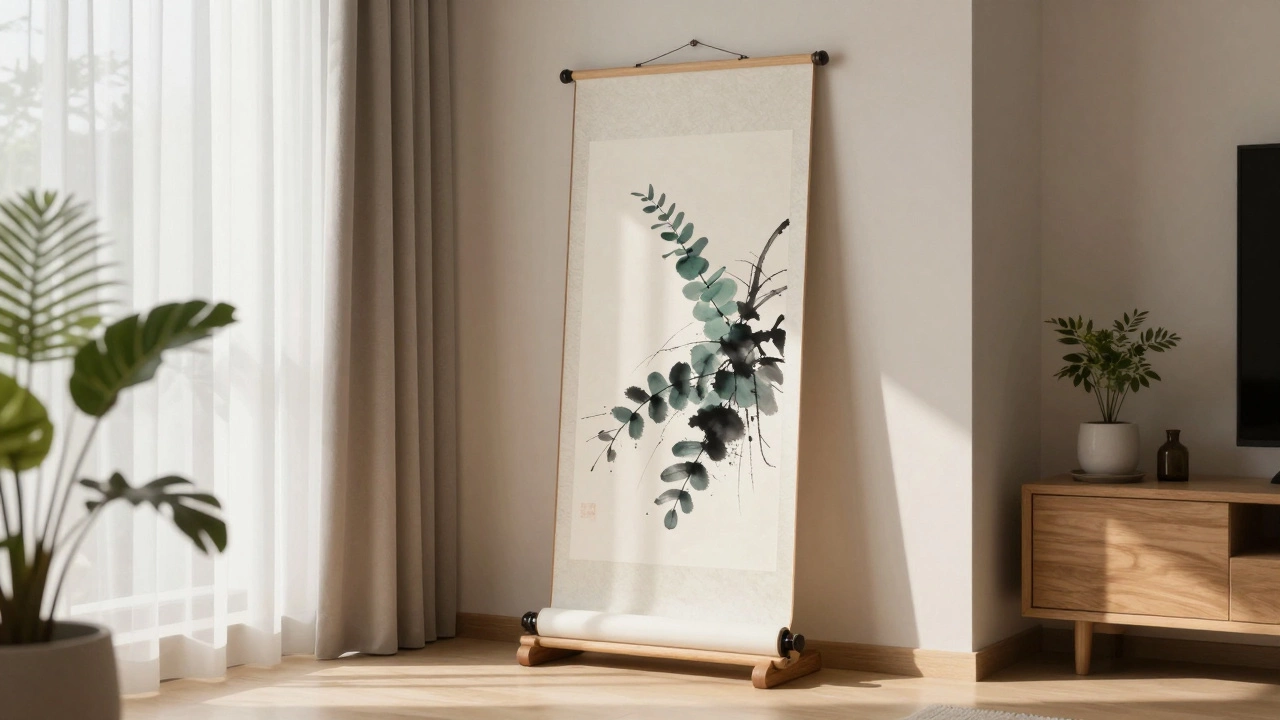
- Use a dedicated scroll stand: If you want authenticity, invest in a wooden *kakemono stand* (called a *shiki*). These freestanding units hold the scroll upright without any wall penetration. Perfect for renters or those who love rotating their decor.
- Wall mounting with care: If hanging on the wall, use two points of attachment. Secure the top rod with a sturdy hook, then attach the bottom rod to a second hook or cleat below. This ensures the scroll remains perfectly vertical and taut.
- Avoid direct sunlight: Silk and paper are sensitive to UV rays. Even if your scroll is high-quality, prolonged sun exposure will fade the colors within months. Place it in indirect light areas.
- Control humidity: Extreme dryness makes paper brittle; excessive moisture encourages mold. Aim for 40-50% relative humidity in the room where the scroll hangs.
I recently helped a friend in Fitzroy set up her first kakemono. She had bought a beautiful landscape scroll online but was worried about damaging her rental walls. We opted for a simple bamboo stand placed in a corner near a reading chair. The result? A cozy nook that felt instantly serene. No drills, no nails, just pure aesthetic impact.
Choosing the Right Kakemono for Your Space
Not all kakemono are created equal. Some are mass-produced reproductions printed on synthetic fabrics, while others are hand-painted originals by contemporary artists. Here’s how to navigate the options:
| Type | Best For | Price Range (AUD) |
|---|---|---|
| Reproduction Prints | Beginners, temporary spaces | $50 - $200 |
| Contemporary Artist Works | Collectors, unique interiors | $300 - $1,500+ |
| Antique/Restored Scrolls | Serious collectors, museums | $2,000 - $10,000+ |
If you’re new to kakemono, start with a reproduction print. Look for ones that use acid-free paper and natural fiber borders. Avoid cheap polyester versions-they lack the texture and depth that make the medium special.
For something more personal, seek out local Australian artists who work in traditional techniques. Many Melbourne creatives blend Japanese aesthetics with local flora, creating pieces that resonate with both heritage and place. Imagine a kakemono featuring eucalyptus branches rendered in sumi ink-it’s familiar yet exotic, grounding yet ethereal.
Caring for Your Scroll Art
Unlike oil paintings that sit behind glass, kakemono requires active maintenance. You won’t need to clean them weekly, but regular checks are essential.
- Dust gently: Use a soft brush (like a makeup brush) to remove surface dust from the borders. Never wipe the painted area.
- Roll correctly: Always roll the scroll around the top rod, never the other way. Keep the painted side facing inward to prevent creasing.
- Store properly: When not displayed, store scrolls horizontally in a cool, dry place. Wrap them in acid-free tissue paper before placing them in a tube or box.
- Inspect annually: Check for signs of mold, insect damage, or loose stitching. Early detection prevents costly repairs.
If you notice any discoloration or fraying, consult a professional conservator specializing in Asian textiles. DIY fixes often cause more harm than good.
Why Kakemono Fits Modern Interiors
We live in an era of maximalism and digital noise. Our walls are covered in screens, photos, and memorabilia. Kakemono offers a counterpoint: simplicity, silence, and space. It doesn’t shout for attention; it invites you to pause.
In Scandinavian-inspired minimalism, Japandi styles, or even bohemian eclecticism, kakemono bridges gaps between cultures and eras. Its vertical form complements tall windows, bookshelves, and doorways. Its muted tones harmonize with neutral palettes, while bold calligraphy adds graphic punch to monochrome schemes.
Think of it as wearable architecture for your walls. Just as a kimono transforms a body, a kakemono transforms a room-not by covering it, but by framing emptiness.
Is kakemono art difficult to maintain?
Not if you follow basic care guidelines. Dust lightly, avoid sunlight, and roll carefully. Most issues arise from improper storage or exposure to humidity. With minimal effort, a kakemono can last decades.
Can I hang kakemono on textured walls?
Yes, but ensure the bottom rod is secured independently so the fabric doesn’t touch the wall. Textured surfaces may leave impressions on the silk borders over time.
Where can I buy authentic kakemono in Australia?
Look for galleries specializing in Asian art, such as those in Melbourne’s Chinatown or Sydney’s Darlington district. Online marketplaces like Etsy also offer verified sellers, but always check reviews and material descriptions.
Are there modern alternatives to traditional kakemono?
Yes. Many contemporary artists create "neo-kakemono" using mixed media, photography, or abstract designs. These retain the vertical format and fabric borders but break away from classical imagery.
How wide should a kakemono be for a standard living room?
A typical residential kakemono ranges from 30cm to 60cm in width. For larger spaces, go wider; for hallways or small corners, narrower sizes work best. Height usually exceeds 1.5 meters.