
Modern vs Contemporary Design Identifier
This tool helps you identify whether your space follows true Modern design (1920s-1950s) or contemporary trends. Select characteristics that match your space to see which style it most closely aligns with.
Select Features Present in Your Space:
Your Design Style
If you've ever walked into a room with clean lines and a lack of clutter, you might think it's 'modern' design. But here's the truth: what most people call 'modern' is actually 'contemporary'. True modern interior design is a specific style from the 1920s to 1950s. Let's clear up the confusion.
Modern Interior Design Style is a design movement that originated in the early 20th century, emphasizing functionality, simplicity, and clean lines. It rejects excessive ornamentation in favor of purposeful design elements. Also known as Modernism in interior design, it emerged from movements like the Bauhaus and International Style.
Core Principles of Modern Design
Modern interior design isn't about being trendy. It's a philosophy rooted in functionality and simplicity. Here are the key principles:
- Form follows function: Every element serves a purpose. Decorative features are minimal or nonexistent.
- Clean lines: Straight edges and geometric shapes dominate. Curves are rare and intentional.
- Minimal ornamentation: No excessive details. Think 'less is more' as Mies van der Rohe famously said.
- Open spaces: Walls are minimized to create flow between rooms. Open floor plans are common.
- Industrial materials: Steel, glass, concrete, and wood are used raw or polished.
Key Elements of Modern Interior Design
What makes modern design stand out? Let's look at the specifics:
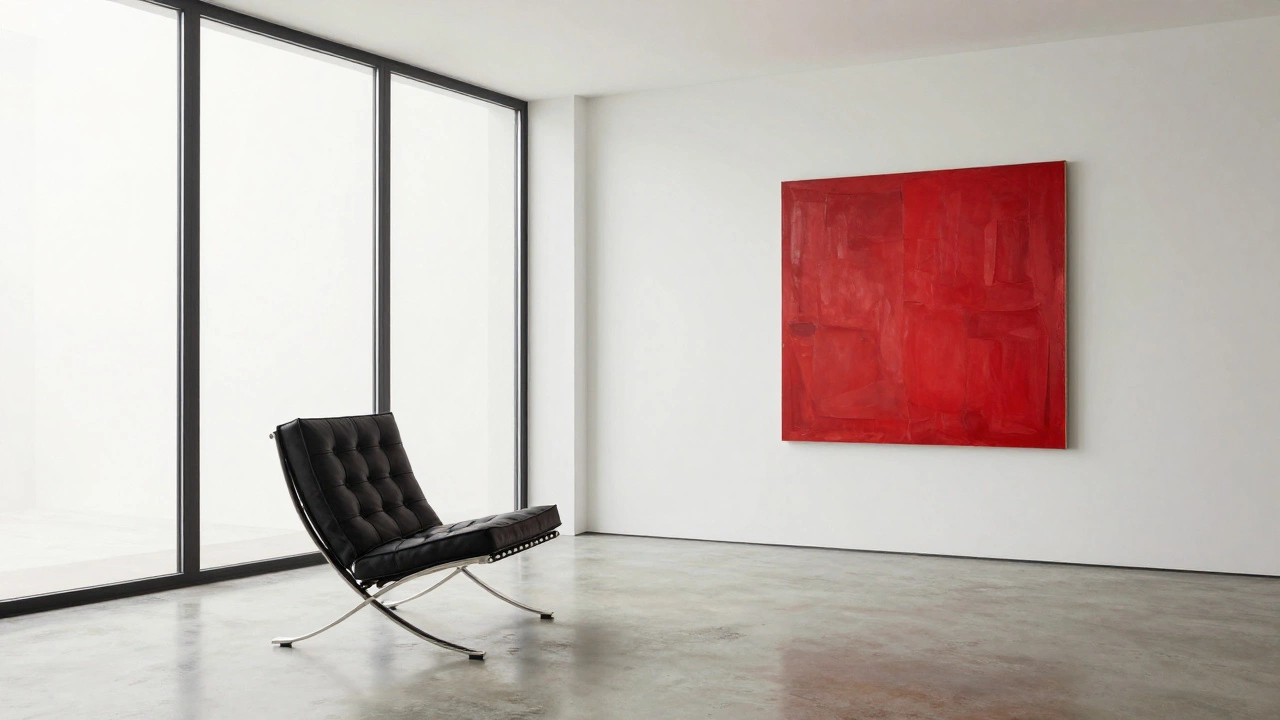
Color palette is usually neutral-white, black, gray, beige. But it's not boring. Bold accents like deep red or navy blue appear in furniture or art. Natural light is crucial, so large windows are common. In fact, modern design often uses floor-to-ceiling windows to blur the line between indoor and outdoor spaces. This creates a sense of openness and connects the interior with nature.
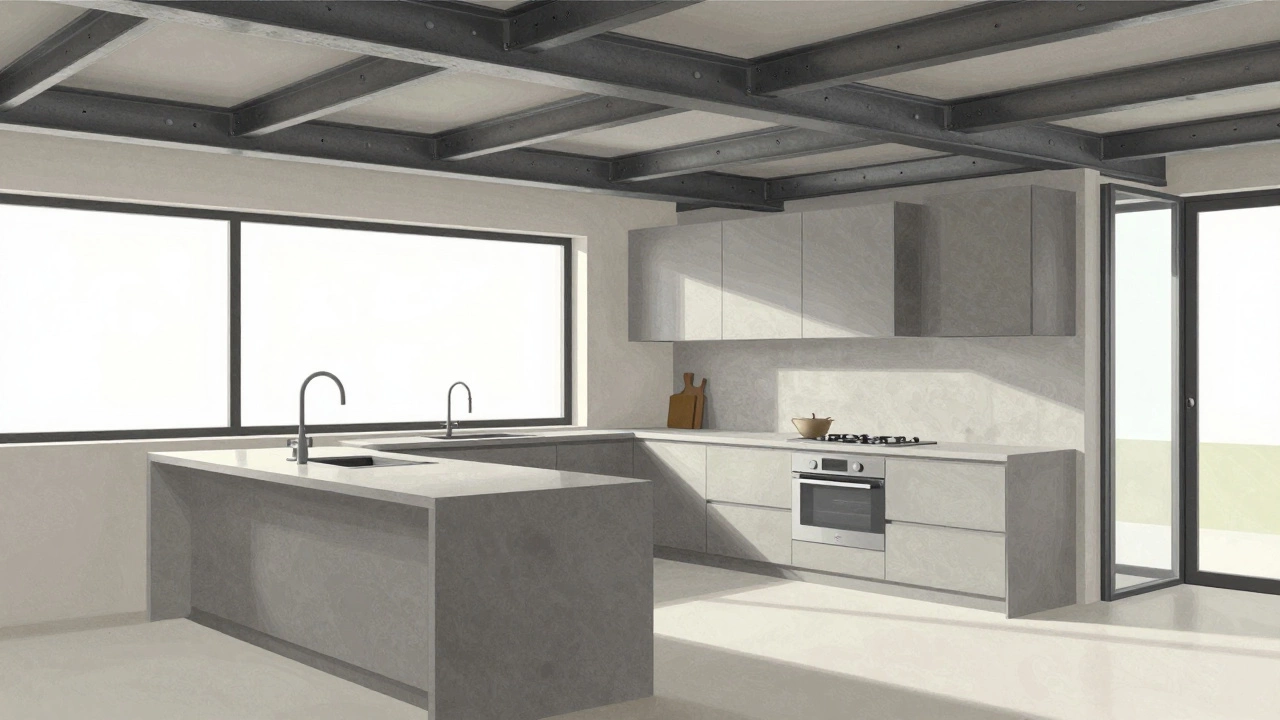
Materials matter. You'll see exposed steel beams, glass partitions, and polished concrete floors. Wood is often used in its natural state-teak or walnut furniture with clean lines. For example, the iconic Eames Lounge Chair uses molded plywood and leather, showing how modern design blends industrial materials with comfort. Even concrete is used as a design element, not just a utilitarian surface.
Furniture is low-profile and geometric. Think of the Barcelona Chair by Mies van der Rohe. No ornate carvings or fancy details. Everything is functional and sleek. Storage solutions are hidden or built-in to maintain clean lines.
Modern vs Contemporary: What's the Difference?
This confusion happens all the time. Modern design refers to a specific historical period (1920s-1950s), while contemporary design reflects current trends. Here's how they compare:
| Aspect | Modern Design | Contemporary Design |
|---|---|---|
| Time Period | 1920s-1950s | Current trends (changes over time) |
| Design Philosophy | Function over form; minimalism | Reflects current aesthetics; flexible |
| Color Palette | Neutral with bold accents | Varies; often includes trending colors |
| Materials | Industrial (steel, glass, concrete) | Varied; may include sustainable materials |
| Furniture Style | Geometric, low-profile | Varied; often eclectic |
Common Mistakes to Avoid
Even with a clear vision, it's easy to mess up modern design. Here's what not to do:
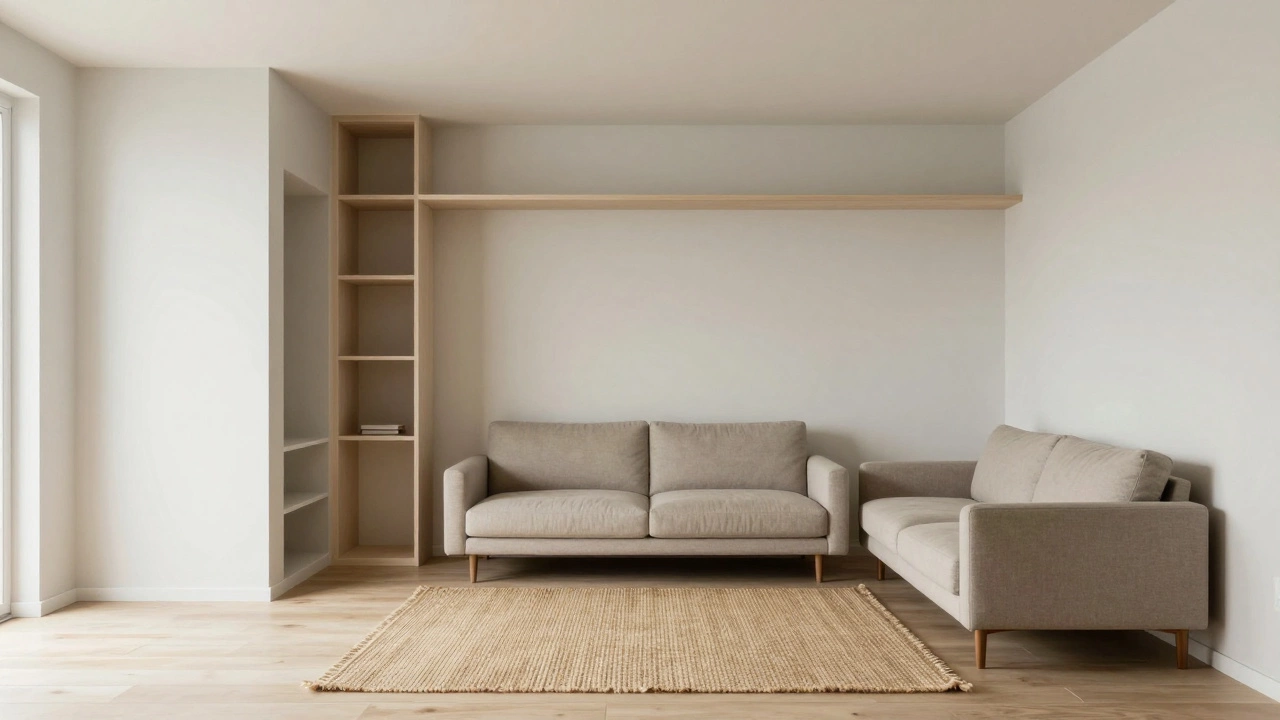
- Adding too much clutter: Modern design thrives on open space. Every item should have a purpose. In a living room, this means no knick-knacks on shelves. Instead, a single piece of art or a sculptural vase adds character without overwhelming the space.
- Using too many patterns: Stick to solid colors or subtle textures. Busy patterns clash with clean lines. For example, a striped rug might work in a traditional space, but in modern design, a solid-colored rug with a woven texture is better. Patterns should be limited to one or two elements at most.
- Ignoring natural light: Windows should be large and unobstructed. Heavy curtains are a no-no. In fact, many modern homes use floor-to-ceiling windows to let in as much light as possible. If privacy is needed, sheer curtains or blinds that can be fully opened maintain the connection to the outdoors.
- Mixing styles: Don't throw in a traditional chandelier or ornate sofa. Stay consistent. For instance, pairing a modern sofa with a vintage armchair might look interesting, but it breaks the cohesive aesthetic of modern design. Stick to one style to keep the space harmonious.
- Overlooking functionality: Modern design is about purpose. A beautiful piece that's uncomfortable isn't modern. For example, a sleek dining chair should still be ergonomic. If it's hard to sit in, it's not truly modern.
How to Incorporate Modern Design into Your Home
Ready to try it? Start here:
- Declutter: Remove anything that doesn't serve a purpose. Keep surfaces clear. In a modern space, every item should have a clear role. A coffee table might hold a single vase, not stacks of magazines. This creates a sense of calm and order.
- Choose a neutral base: Paint walls white or light gray. This creates a calm backdrop. But don't stop there-use texture to add depth. A smooth concrete wall paired with a woven rug adds visual interest without clutter.
- Invest in functional furniture: Pick pieces with clean lines and purpose. A sofa with a simple frame, not a bulky design. The Barcelona Chair, designed by Mies van der Rohe in 1929, remains a staple. Its steel frame and leather cushions exemplify form following function.
- Maximize natural light: Use sheer curtains or none at all. Position mirrors to reflect light. Large windows are a hallmark of modern design. If your windows are small, use reflective surfaces like glass tables or polished metal to bounce light around the room.
- Add texture, not patterns: Use materials like wool rugs or concrete walls for depth without visual noise. A textured throw pillow on a smooth sofa can create contrast. Avoid busy patterns; instead, focus on the natural texture of materials like wood grain or woven fabric.
- Keep technology hidden: Modern design integrates tech seamlessly. Use built-in charging stations or hide cords behind walls. Smart home features should be invisible, not the focal point of the room.
Is Mid-Century Modern the same as modern design?
No. Mid-Century Modern is a specific subset of modern design that became popular in the 1950s and 1960s. It shares the clean lines and functionality of modern design but includes more organic shapes and warmer materials like teak wood. Think of it as a chapter within the broader modern design movement.
Can modern design work in a small space?
Absolutely. Modern design is perfect for small spaces. Its emphasis on open floor plans, minimal clutter, and functional furniture creates the illusion of more room. Use multi-functional pieces like a sofa bed or wall-mounted shelves to maximize space without sacrificing style.
What's the biggest mistake people make with modern design?
Over-decorating. Modern design is about simplicity. Adding too many accessories or trying to fit in too many styles defeats the purpose. Stick to a few key pieces that serve a purpose and let the space breathe.
How do I choose the right colors for modern design?
Start with a neutral base-white, gray, or beige. Then add one or two bold accent colors in furniture or artwork. Avoid pastels or overly bright colors; stick to deep, saturated hues like navy, emerald, or burgundy for impact.
Is modern design sustainable?
Modern design can be sustainable. Its focus on longevity and functionality means furniture is built to last. Using natural materials like wood or recycled steel also helps. However, sustainability depends on the choices you make-opt for eco-friendly materials and energy-efficient lighting to enhance this aspect.