
Wall Art Terminology Finder
Not sure what to call that piece on your wall? Select the characteristics below to find the precise term.
Select options above to get started.
We will provide the most accurate terminology based on current interior design standards.
You’ve probably stood in a gallery or scrolled through an interior design blog and seen that perfect piece hanging on the wall. You want to describe it, but "wall art" feels too broad. It’s like calling every vehicle a "car." You need precision. You might be looking for a specific term to search for online, or perhaps you just want to sound more knowledgeable when talking to your designer. The truth is, there isn’t one single magic word that covers everything from a $50 poster to a million-dollar oil painting. However, depending on what exactly is hanging up there, there are much better words than "art."
Let’s clear up the confusion. If you are looking for the most accurate umbrella term, wall decor is often what people actually mean. But if you want to get specific-and you should-here are the exact terms you need to know.
The Umbrella Term: Wall Decor vs. Fine Art
First, let’s distinguish between decoration and art. This distinction matters because it changes how you buy, hang, and value the item. When people ask for "one word," they usually want the category name. In the retail world, especially in places like IKEA or Target, this is called Wall Decor. This includes anything hung on a wall that isn't structural. It covers mirrors, clocks, shelves, and yes, artwork.
If you are talking about original creations meant to evoke emotion or commentary, we use the term Fine Art. This implies originality. A print of the Mona Lisa is wall decor; the actual painting in the Louvre is fine art. Knowing this difference helps you set your budget. Fine art costs more because you are paying for the artist's unique labor and vision. Wall decor is mass-produced or functional.
Specific Types of Wall Art: Know Your Medium
To find the right word, you have to look at the material. Here are the most common types and their specific names.
| Material / Type | Specific Term | Best For |
|---|---|---|
| Paper reproduction of a painting | Budget-friendly updates, galleries walls | |
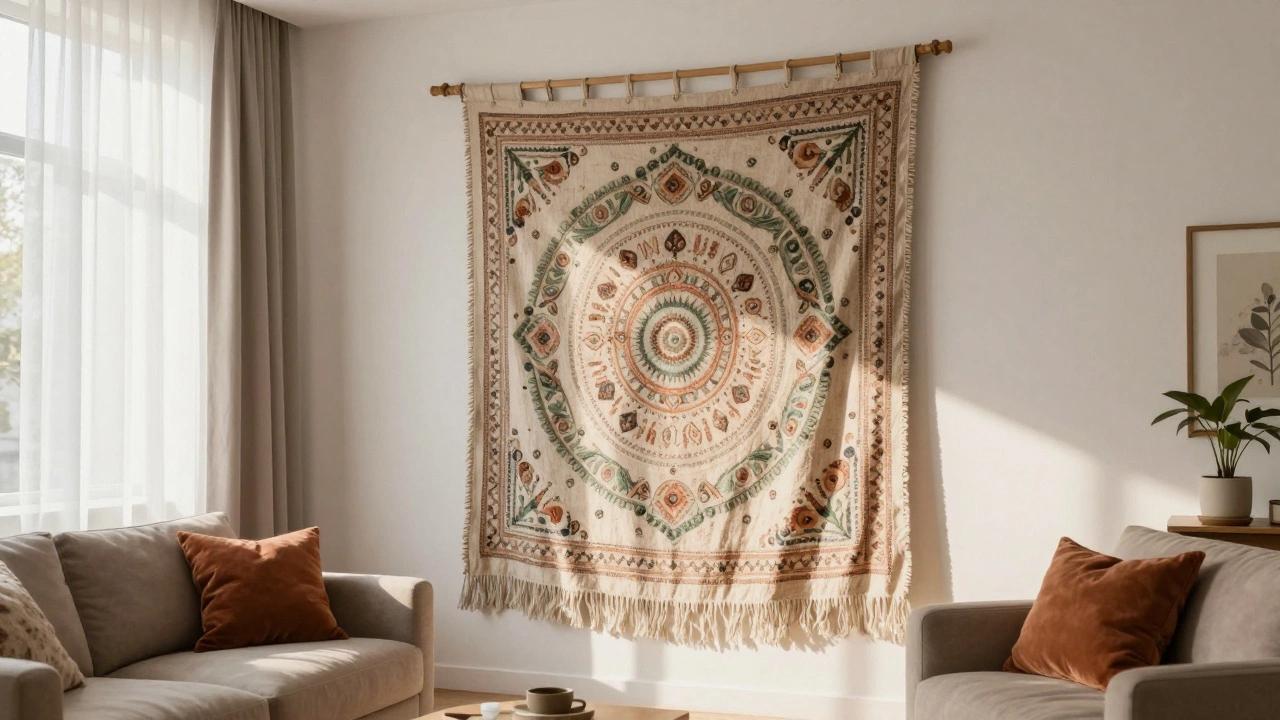
| Fabric woven into images | Tapestry | Dorm rooms, bohemian styles, sound dampening |
| Painted directly on the wall | Mural | Feature walls, commercial spaces, kids' rooms |
| Three-dimensional objects | Sculpture or Relief | Modern interiors, adding texture and depth |
| Handwritten or typewritten text | Calligraphy or Typography | Inspirational quotes, minimalist homes |
| Photographic image | Photograph | Personal memories, landscape lovers |
Prints: The Most Common "Wall Art"
If you bought something from Etsy or Amazon, it’s likely a Print. A print is a reproduction of an original work. There are different kinds of prints, and knowing the difference saves you money and heartache. A Giclée print is high-quality, using archival inks on canvas or heavy paper. It looks almost identical to the original. A standard poster is printed on glossy or matte paper with lower resolution. Use "print" when you want quality; use "poster" when you want cheap and cheerful.
Tapestries: Textile Wall Coverings
A Tapestry is a piece of cloth hung on a wall. Historically, these were hand-woven masterpieces depicting stories. Today, they are often machine-made polyester fabrics with large-scale patterns. People love them because they add warmth and softness to a room. Unlike framed art, tapestries don’t need nails (you can use hooks). They are great for renters who can’t drill holes. If you see a large fabric hanging in a dorm room or a boho-style living room, call it a tapestry, not a painting.

Murals: Paint That Becomes Part of the Wall
When the art is painted directly onto the surface, it’s a Mural. Murals transform a space. They aren’t objects you can take down and move to another house. They become part of the architecture. You might also hear the term fresco, which refers to a specific ancient technique of painting on wet plaster. Modern murals use acrylics or latex paints. If you are hiring someone to paint a scene on your dining room wall, you are commissioning a mural.
Sculptures and Reliefs: Adding Depth
Not all wall art is flat. If it sticks out from the wall, it’s three-dimensional. A Sculpture stands alone, but when attached to a wall, it’s often called a Relief. Relief sculptures are carved or molded so that the figures project from a background plane. Think of the coins in your pocket-the heads are raised reliefs. In home decor, metal reliefs, wood carvings, or ceramic tiles create shadows that change throughout the day. This adds dynamic interest that flat prints cannot match.
Eclectic Mix: Gallery Walls and Collages
What do you call a collection of different pieces arranged together? A Gallery Wall. This isn’t a single medium but a styling technique. It mixes frames, sizes, and mediums. You might combine a black-and-white photograph, a small sculpture, a vintage postcard, and a botanical print. The goal is visual balance. Another term is Collage, though this usually refers to a single artwork made by assembling different materials onto one backing. A gallery wall is multiple artworks; a collage is one artwork made of many parts.

Rare and Academic Terms
If you really want to impress your friends with vocabulary, here are two less common terms. First, Parergon. This is a philosophical term coined by Kant. It refers to accessories to the main work of art, like the drapery on a statue or the frame around a painting. While technically accurate for frames, no one uses this in casual conversation. Second, Ephemera. This refers to paper items not expected to survive long, like tickets, menus, or old maps. When framed, ephemera becomes nostalgic wall art. It tells a personal story rather than just decorating a space.
How to Choose the Right Word for Your Search
Your choice of word depends on what you are trying to do. Are you shopping? Searching for "fine art" will lead you to expensive galleries. Searching for "wall decor" leads to affordable options. Searching for "prints" gives you a middle ground. Are you describing your home to a guest? Saying "I have a tapestry" sounds more intentional than "I have a blanket on the wall." Precision communicates taste.
Consider the context. In a professional setting, use "artwork" or "piece." In a DIY blog, use "project" or "hack." In a real estate listing, use "features" or "finishes." The word you choose sets the tone for the entire conversation.
Common Mistakes to Avoid
Don’t call a photograph a painting. Photographers work hard, and mislabeling their work is disrespectful. Don’t call a cheap poster a Giclée. Check the printing method. Don’t call a relief a sculpture if it’s flat against the wall. These distinctions matter for insurance, resale value, and care instructions. Paintings need UV protection. Prints fade faster. Tapestries collect dust. Knowing the correct term helps you maintain your investment.
Is "parergon" a good word to use for wall art?
No, unless you are writing a philosophy paper. Parergon refers to the accessories of art, like frames or curtains, not the art itself. It is too academic for everyday use. Stick to "frame" or "border" instead.
What is the difference between a print and a poster?
A print is typically higher quality, often on thick paper or canvas, using archival inks. A poster is usually on thin, glossy paper with lower resolution. Prints last longer and look more expensive.
Can I call a mirror wall art?
Technically, no. Mirrors are functional decor. However, decorative mirrors with ornate frames are often grouped with wall art in stores. For accuracy, call it "decorative mirror" or "wall decor."
What do you call art made of fabric?
If it is woven, it is a tapestry. If it is sewn together from patches, it is a quilt or textile art. If it is embroidered, it is needlepoint or cross-stitch. Fabric art is a broad category.
Is a mural considered furniture?
No, a mural is part of the building structure. Furniture is movable. Murals are fixed installations. This matters for rental agreements and home sales.