
Ever walked into a furniture store and stared at two pieces that look almost identical-one called a dresser, the other a dressing table-and wondered, "What’s the real difference?" You’re not alone. People mix them up all the time. Even some interior designers slip up. But if you’re trying to organize your bedroom or buy something that actually fits your routine, knowing the difference matters more than you think.
Dresser: Your Go-To Storage Workhorse
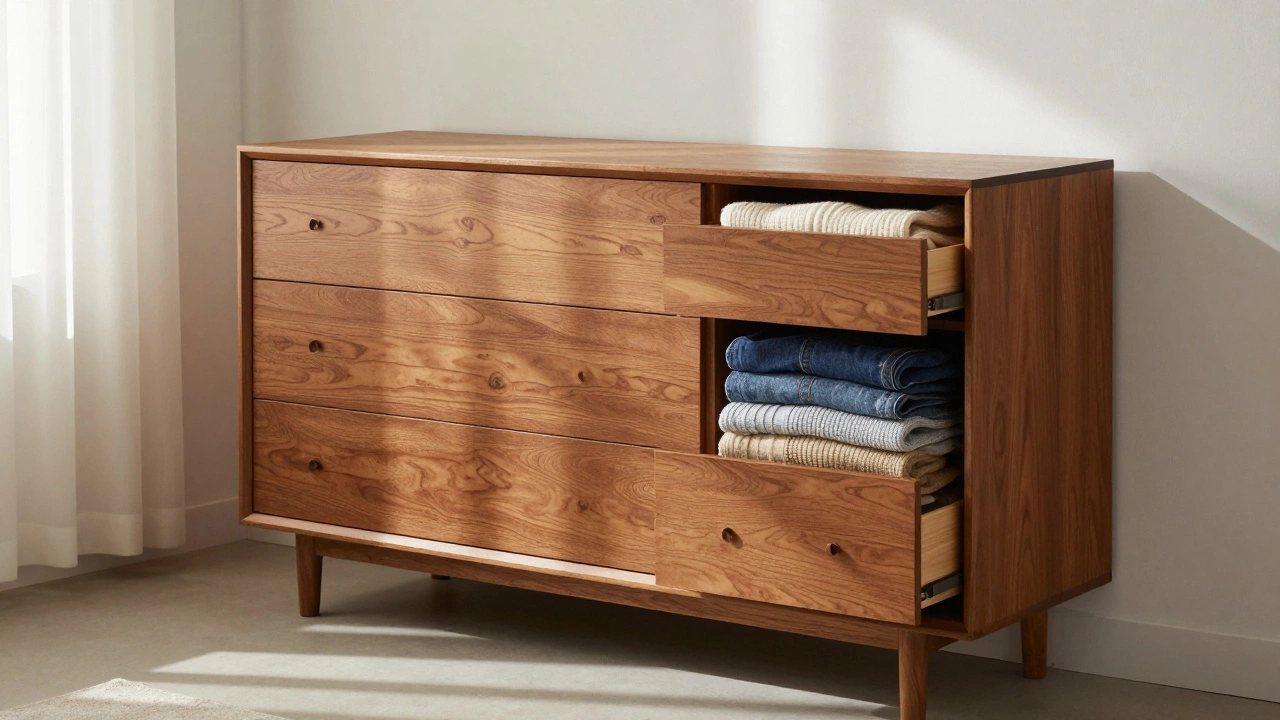
A dresser is built for storage. Plain and simple. It’s a tall, wide piece of furniture with multiple deep drawers, designed to hold clothes, linens, socks, underwear-basically anything you need to tuck away out of sight. Most dressers have four to six drawers, sometimes more. They’re often made from solid wood, engineered wood, or metal, and they’re built to last. Think of it as the backbone of your bedroom storage system.You’ll find dressers in nearly every bedroom. They’re practical. You open a drawer, grab your jeans, close it, and move on. No mirrors, no lights, no extra frills. Just clean, functional space. A standard dresser is usually 36 to 60 inches wide, 20 to 22 inches deep, and 30 to 40 inches tall. It sits low to the ground, making it easy to pull drawers open without bending too far.
Some modern dressers come with built-in USB ports or soft-close drawers, but those are upgrades-not defining features. The core job? Store clothes efficiently. That’s it.
Dressing Table: The Personal Beauty Station
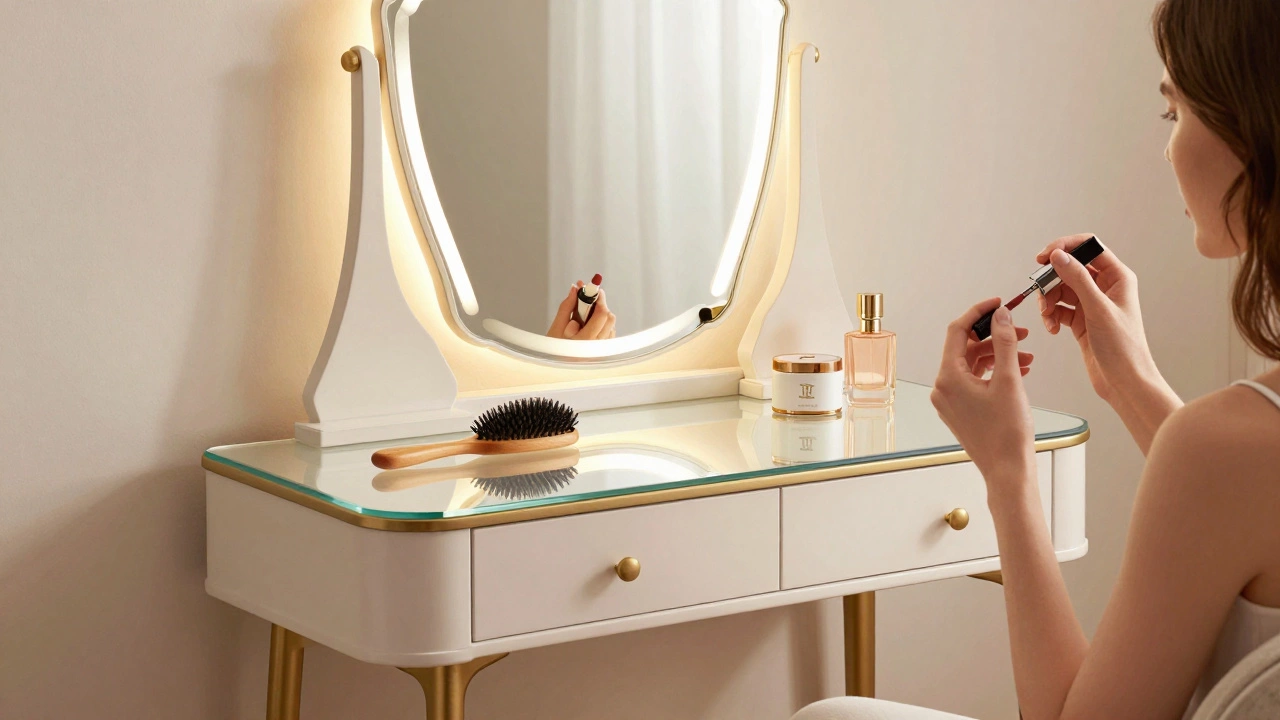
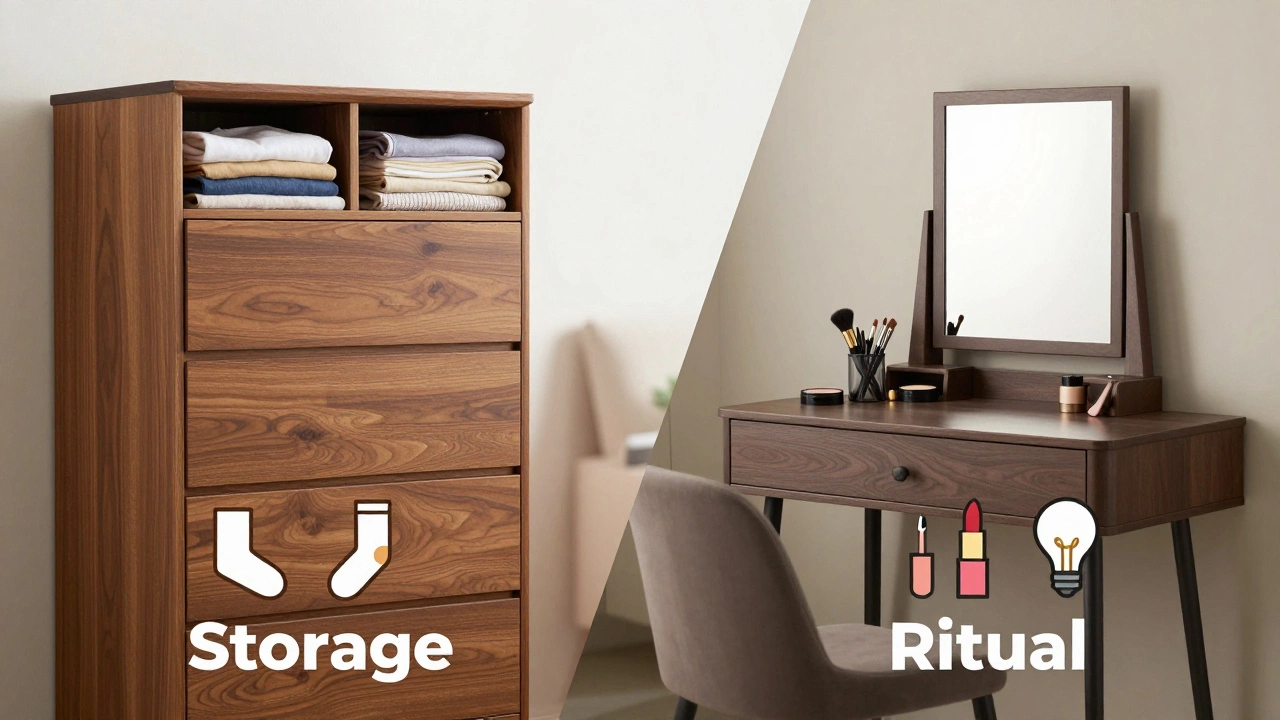
Now, a dressing table (also called a vanity table) is different. It’s not about storage-it’s about ritual. This piece is designed for getting ready. It’s where you sit, look in the mirror, apply makeup, brush your hair, or put in your earrings. The key giveaway? It almost always has a mirror attached or placed directly in front of it.Dressing tables are usually smaller than dressers. They’re often 30 to 48 inches wide, 16 to 20 inches deep, and 28 to 32 inches tall. That height is intentional-it matches a standard chair or stool so you can sit comfortably while using it. Many have one or two shallow drawers on the sides or below the surface, but they’re not meant for bulk storage. You might stash a lipstick, a hairbrush, or your favorite perfume there, but not your entire sock collection.
Some dressing tables come with built-in lighting around the mirror, or even LED strips. Others have decorative legs, glass tops, or velvet-lined compartments for jewelry. These aren’t just aesthetics-they’re part of the experience. A dressing table turns your morning routine into a moment of calm, not a chore.
Side-by-Side Comparison
| Feature | Dresser | Dressing Table |
|---|---|---|
| Primary Purpose | Storage for clothes and linens | Personal grooming and makeup application |
| Typical Height | 30-40 inches | 28-32 inches |
| Drawer Depth | Deep (18-22 inches) | Shallow (10-16 inches) |
| Includes Mirror? | No | Yes, almost always |
| Typical Use | Storing folded clothes, seasonal items | Applying makeup, brushing hair, styling |
| Best For | Small bedrooms needing maximum storage | Those who value a morning routine with style |
See how different they are? One is a closet in furniture form. The other is a personal spa station.
Why It Matters When You’re Buying
If you buy a dresser thinking it’ll double as a vanity, you’ll end up standing awkwardly in front of it, holding your foundation and squinting at a reflection that’s too far away. You might even knock over your perfume trying to reach the mirror you thought was there.On the flip side, if you buy a dressing table thinking it’ll hold your winter coats, you’ll be frustrated when you realize you can only fit two drawers of t-shirts. You’ll end up with clutter on the counter because there’s nowhere else to put it.
Here’s what works in real life: If your bedroom is small and you need to store clothes, go with a dresser. Add a separate mirror on the wall or a freestanding one next to it. You get the storage you need without sacrificing style.
If you love your skincare routine, spend time on your hair, or just enjoy having a dedicated spot to get ready, invest in a dressing table. Pair it with a small storage cabinet or a narrow side table for extra bins or jewelry boxes. That way, you keep the grooming area clean and the storage separate.
What About Dresser With Mirror?
You’ve probably seen pieces labeled "dresser with mirror"-and yes, they exist. But here’s the catch: even when a mirror is attached, it’s still a dresser first. The mirror is an add-on. The drawers are deep. The structure is sturdy. It’s designed to store, not to sit at.A true dressing table is built for sitting. Its height, depth, and surface area are all optimized for someone seated in front of it. A dresser with a mirror? You’re still meant to stand and reach into drawers. The mirror is there for quick checks, not for detailed grooming.
Some people try to use a dresser with a mirror as a vanity. It works-but it’s not ideal. You’ll be leaning over, craning your neck, and probably knocking things off the top. It’s functional, yes. But it’s not comfortable. And comfort matters when you’re doing this twice a day, every day.
Real-Life Scenarios
- Case 1: Sarah, 32, lives in a studio apartment. She needs to store clothes, shoes, and blankets. She buys a tall dresser with six drawers. She hangs a mirror above it. She gets dressed standing up, checks her outfit, and moves on. Simple. Efficient.
- Case 2: Marcus, 45, works from home and takes video calls. He wants to look polished without leaving his room. He buys a dressing table with a large mirror and soft LED lighting. He keeps his skincare products, tweezers, and hair gel in the shallow drawers. He sits down every morning like it’s a ritual. He feels ready-not just dressed.
Neither person made a mistake. They just chose the right tool for the job.
What to Look for When Shopping
- For a dresser: Look for sturdy drawer glides, full-extension drawers (so you can see the whole bottom), and a solid back panel. Avoid flimsy particleboard if you plan to store heavy items like sweaters or jeans.
- For a dressing table: Check the mirror angle-is it adjustable? Is the lighting even? Are the drawers shallow enough to actually use without digging? Look for a surface that’s easy to wipe down (glass, laminate, or sealed wood).
Don’t get fooled by marketing. A "vanity dresser" isn’t a real category. It’s just a dresser with a mirror slapped on top. True dressing tables are designed differently from the ground up.
Final Thought: It’s About How You Live
This isn’t just about furniture. It’s about how you start and end your day. Do you rush through your routine, or do you savor it? Do you need to hide your clothes, or do you need a space that feels personal?There’s no right or wrong answer. But if you know the difference, you won’t end up with the wrong piece sitting in your room, collecting dust-or worse, making your daily routine harder.
Can I use a dresser as a dressing table?
Yes, but it’s not ideal. You can add a mirror above it, but dressers are too tall for comfortable seated use. You’ll have to bend over or stand while applying makeup, which can strain your neck and back. If you’re short on space, it’s a workaround-not a solution.
Does a dressing table need a mirror?
Almost always. The mirror is what defines it as a dressing table. Without it, it’s just a small table with drawers-maybe a side table or console. The mirror isn’t optional; it’s the reason the piece exists.
Can I put a dressing table in the living room?
You can, but it’s unusual. Dressing tables are designed for private, personal use. Placing one in the living room might feel out of place unless you’re using it as a decorative console with a mirror-then it’s more of a vanity-style console table. Stick to the bedroom for true functionality.
Are dressing tables outdated?
Not at all. While modern bedrooms lean minimalist, dressing tables are making a comeback-especially with people who care about skincare, self-care routines, and intentional design. Sleek, low-profile models with hidden lighting and clean lines are trending right now.
What’s the best material for a dressing table?
For durability and easy cleaning, sealed wood, laminate, or glass tops work best. Avoid unfinished wood-it can stain from makeup or perfume. If you want a luxury feel, look for pieces with velvet-lined drawers or brass hardware. The material should match your daily use, not just your style.