
Furniture Name Finder Tool
Answer 3 simple questions to find out what your low cabinet should be called.
Key Features
Best For
Walk into any high-end furniture store or scroll through interior design blogs, and you might notice something odd. The classic sideboard is a low cabinet used in dining rooms for storing plates, silverware, and linens, often featuring drawers and cupboards seems to have vanished from the label tags. Instead, you see words like "buffet," "credenza," "media console," or even "storage unit." It’s confusing, especially if you’re trying to replace an old piece or describe your home office setup.
The short answer? There isn’t just one modern name. The term has splintered based on function, style, and where the piece sits in your home. If you want to know what to call that long, low cabinet against your wall, you need to look at its shape, its purpose, and the era it mimics.
The Buffet: The Dining Room’s Workhorse
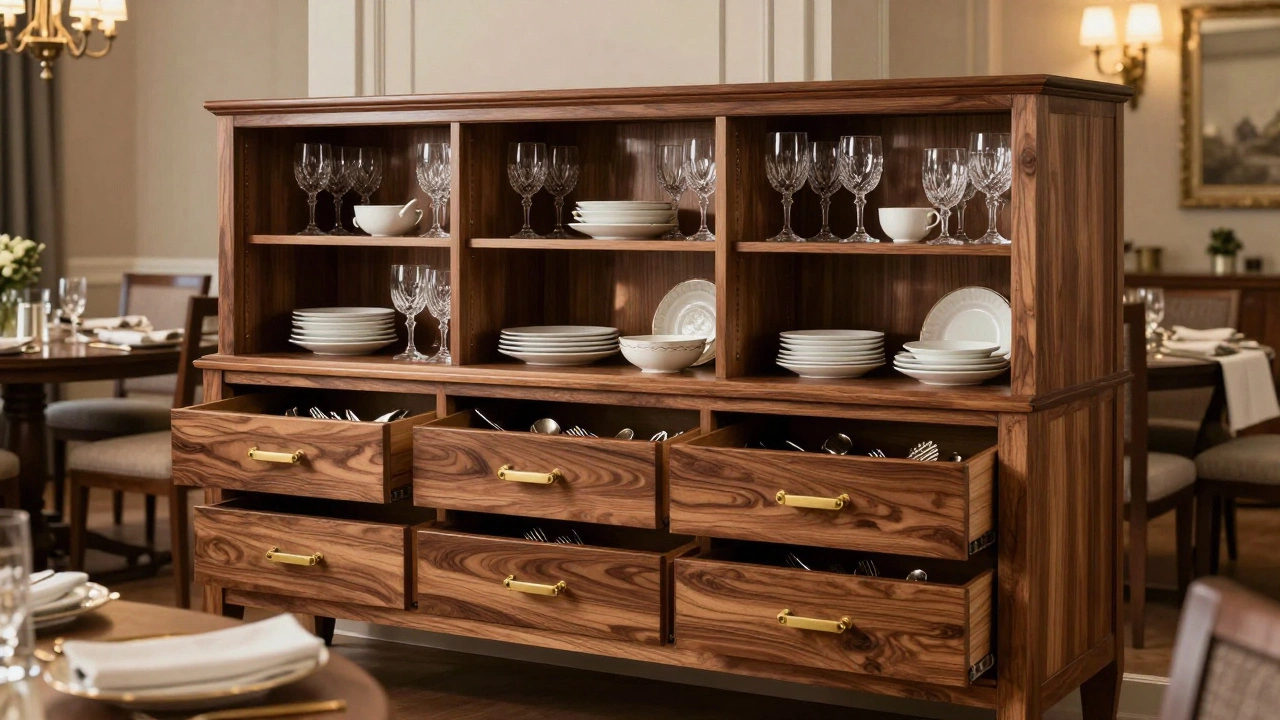
If your piece of furniture lives exclusively in the dining room and is primarily used for serving food or storing dinnerware, the most accurate modern term is likely a buffet is a type of sideboard specifically designed with shelves and drawers for storing dining essentials, often featuring a flat top surface for serving food. In many parts of the world, including much of Europe and North America, "buffet" and "sideboard" are used interchangeably. However, there is a subtle distinction.
A traditional buffet tends to be wider than it is deep, emphasizing horizontal lines. It usually features open shelving or glass-fronted cabinets to display china, while lower drawers hold cutlery. Think of it as a functional workhorse. When you buy a buffet today, you are buying a piece meant to facilitate the act of dining. It’s practical, sturdy, and often made from solid woods like oak or walnut.
- Primary Use: Storing plates, glasses, and serving dishes.
- Key Feature: A broad, flat top surface ideal for placing hot platters during meals.
- Best For: Formal dining rooms or households that host frequent dinners.
If you are looking for this specific functionality, searching for "dining room buffet" will yield better results than "modern sideboard." Retailers like IKEA or Wayfair categorize these clearly under buffets because the intent is clear: it’s about food service.
The Credenza: The Mid-Century Modern Icon
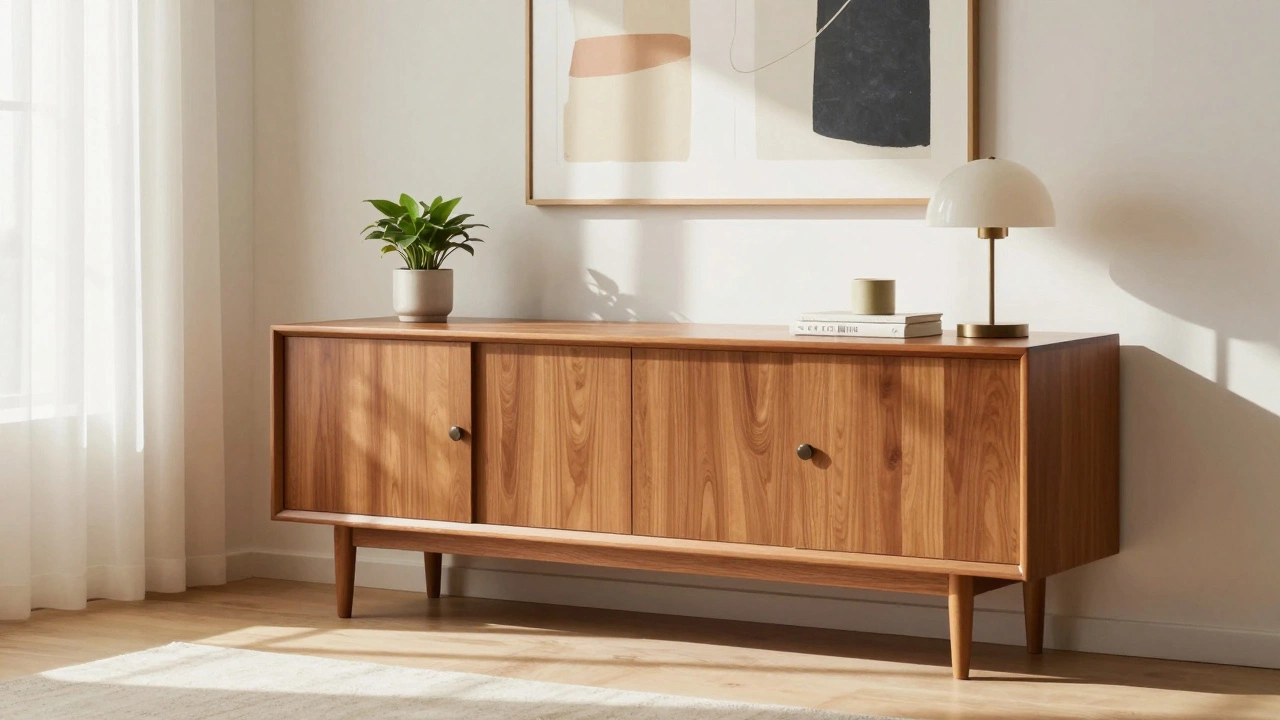
Now, let’s talk about aesthetics. If your piece has clean lines, tapered legs, and perhaps some sliding doors instead of hinged ones, you are likely looking at a credenza is a low cabinet originating from Italian administrative offices, characterized by clean lines, sliding doors, and a sleek profile, popular in mid-century modern design. This word comes from the Italian "credere," meaning to believe, referring to the desks used by notaries in medieval Italy. Today, however, it has nothing to do with law and everything to do with mid-century modern (MCM) design.
The credenza exploded in popularity in the 1950s and 60s. Unlike the heavy, ornate sideboards of the Victorian era, the credenza is light, airy, and minimalist. It often lacks the extensive drawer systems of a buffet, opting instead for larger compartments behind sliding panels. Why does this matter? Because in 2026, the MCM aesthetic is still dominant. If you buy a sleek, teak or walnut cabinet with brass handles, the seller will almost certainly call it a credenza.
Here is the catch: people use credenzas in places other than the dining room. They are incredibly popular in living rooms as media consoles or in home offices as desk replacements. So, if you search for "credenza," you might find pieces intended for TV storage rather than plate storage. Always check the dimensions and internal layout.
The Media Console: The Living Room Takeover
This brings us to the biggest shift in naming conventions: location. As dining rituals became more casual and home entertainment centers grew, the sideboard migrated out of the dining room and into the living room. In this new home, it got a new job: hiding cables and holding televisions.
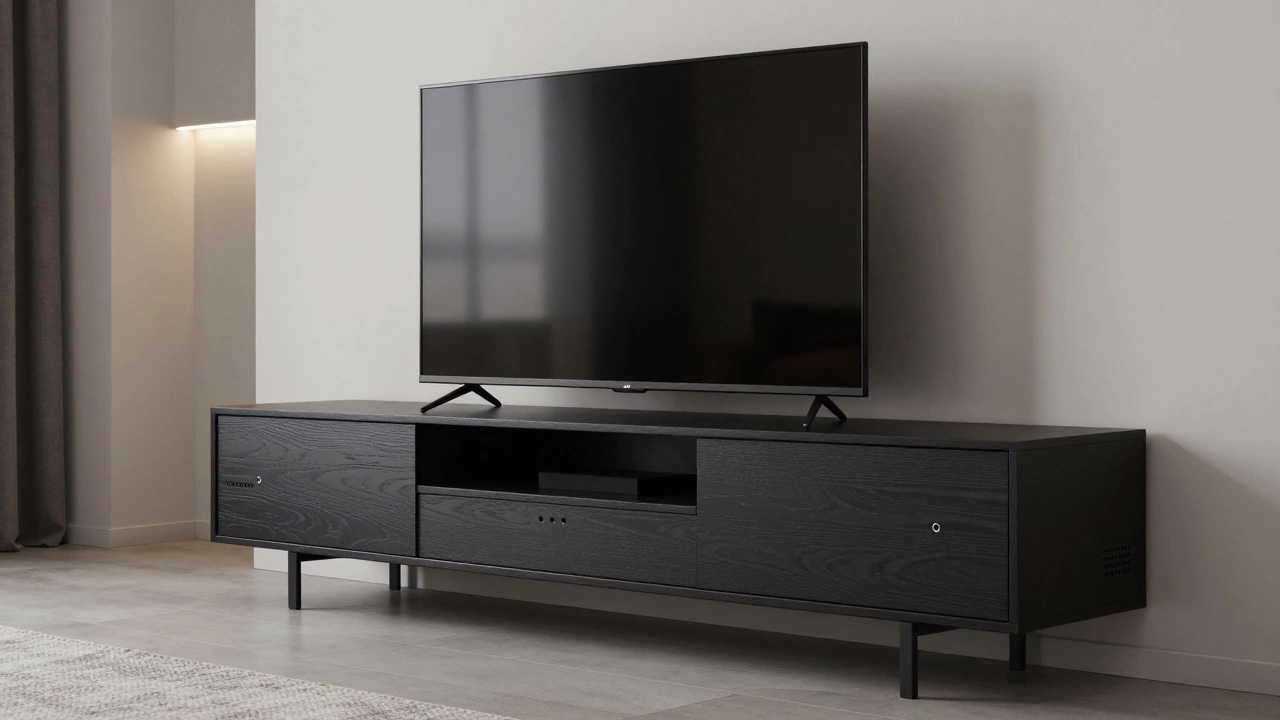
The modern name for a sideboard in the living room is a media console is a low cabinet designed to house electronic devices such as televisions, soundbars, and gaming consoles, typically featuring ventilation holes and cable management systems. While a traditional sideboard was built for weight distribution of ceramic plates, a media console is engineered for electronics. You’ll see cutouts for wires, ventilation slots for heat dissipation, and sometimes adjustable shelves to fit different-sized devices.
If you are furnishing an open-plan apartment where the kitchen flows into the living area, you might be tempted to put a buffet in the living room. But if you plan to put a TV on it, stick to the media console terminology. Search algorithms respond better to "media console" when you need cable management features. Using a vintage sideboard as a TV stand can work aesthetically, but don’t expect it to have the functional wire grommets of a modern media console.
The Storage Console: Minimalism and Entryways
There is another contender: the console table is a narrow, high-backed table placed against a wall, often used in entryways or hallways for decorative purposes, though modern versions include storage drawers. Traditionally, a console table had no storage-just a top and legs. But modern design has blurred the lines. Many contemporary "consoles" now feature slim drawers or small cabinets.
These are typically narrower (often less than 15 inches deep) than sideboards or buffets. They are perfect for entryways, mudrooms, or tight spaces where a full-sized buffet would block traffic flow. If you are decorating a hallway or a small foyer, you won’t find a "sideboard" that fits. You will find a "storage console." It serves the same visual purpose-anchoring the wall-but offers limited utility compared to its bulkier cousins.
| Term | Primary Location | Key Function | Typical Depth | Style Association |
|---|---|---|---|---|
| Buffet | Dining Room | Serving & Plate Storage | 18-24 inches | Traditional, Farmhouse |
| Credenza | Dining / Office / Living | Document / Decor Storage | 15-20 inches | Mid-Century Modern |
| Media Console | Living Room | TV & Electronics | 15-18 inches | Contemporary, Industrial |
| Storage Console | Entryway / Hallway | Keys, Mail, Decor | 10-14 inches | Minimalist, Scandinavian |
Why Did the Name Change?
The shift in terminology reflects a broader change in how we live. In the early 20th century, formal dining was a daily ritual for many middle-class families. You needed a dedicated piece of furniture to store fine china and serve multi-course meals. Hence, the sideboard/buffet was essential.
By the late 20th century, dining habits relaxed. People ate more casually, often in the kitchen or living room. Meanwhile, technology invaded the home. The television became the focal point of the living space, requiring a new type of furniture to support it. The sideboard didn’t disappear; it evolved. Its DNA remains-the low, horizontal profile, the combination of open and closed storage-but its identity shifted to match its new role.
In Australia, particularly in cities like Melbourne, the trend toward open-plan living has accelerated this. With fewer distinct rooms, furniture needs to be versatile. A "credenza" might hold books in the morning and wine glasses in the evening. A "media console" might double as a temporary dining surface for a quick meal. The names help us categorize these hybrid functions.
How to Choose the Right Term for Your Needs
So, which name should you use when shopping? It depends on your priority.
If you care about function, start with the room. Is it for eating? Search for "buffet." Is it for watching TV? Search for "media console." Is it for an office? Search for "credenza" or "desk alternative."
If you care about aesthetics, use the style terms. Want a sleek, retro look? "Credenza" is your keyword. Want a warm, rustic feel? "Farmhouse buffet" or "reclaimed wood sideboard" will get you there. Want something ultra-modern with hidden storage? "Minimalist storage console" is the way to go.
Don’t be afraid to mix terms. Try searching "mid-century modern buffet" or "industrial media console." Combining style keywords with functional terms yields the best results on major retail sites.
Common Mistakes to Avoid
One common mistake is assuming all these terms mean the same thing dimensionally. A buffet is often deeper (up to 24 inches) to accommodate large platters. A media console is shallower (around 15-18 inches) because TVs don’t need depth, only width. If you buy a shallow media console expecting to store large dinner plates vertically, they might not fit.
Another pitfall is ignoring height. Traditional sideboards are waist-high (around 30-34 inches). Some modern consoles are lower (24-28 inches) to create a sense of openness in small apartments. Measure your space before committing to a term.
Finally, consider the material. Buffets are often heavier, solid wood constructions. Media consoles might use particle board or metal frames to keep costs down and weight manageable for moving. If durability is key, lean towards "buffet" or "solid wood credenza" in your searches.
Is a sideboard the same as a buffet?
In most contexts, yes. Both refer to low cabinets used in dining rooms for storage and serving. However, "buffet" often implies a focus on food service with a flat top, while "sideboard" is a broader term that can include more decorative elements. In modern retail, they are frequently used interchangeably.
What is the difference between a credenza and a sideboard?
The main differences are style and origin. A credenza is associated with mid-century modern design, featuring clean lines, sliding doors, and a sleeker profile. A sideboard is a more general term that can apply to various styles, including traditional, ornate, or rustic designs. Credenzas are also commonly used in offices and living rooms, whereas sideboards are traditionally dining room pieces.
Can I use a media console as a sideboard?
Yes, you can. Many people use media consoles in dining rooms, especially in open-plan homes. Just ensure the console is deep enough to hold your dinnerware and that the materials are durable enough for frequent use. Check for cable management features if you don’t need them, as they might clutter the look.
What should I call a sideboard in my home office?
If it’s used for storing files, documents, or office supplies, "credenza" is the most appropriate term. If it replaces a desk, you might also see it called a "desk console" or "office storage unit." These terms help retailers categorize the product correctly for office-specific features like drawer organizers.
Are sideboards making a comeback?
While the traditional formal sideboard is less common, the concept is very much alive. Modern interpretations like buffets, credenzas, and storage consoles are popular due to the demand for multifunctional furniture. Vintage sideboards are also sought after by collectors and designers for their craftsmanship and character.