
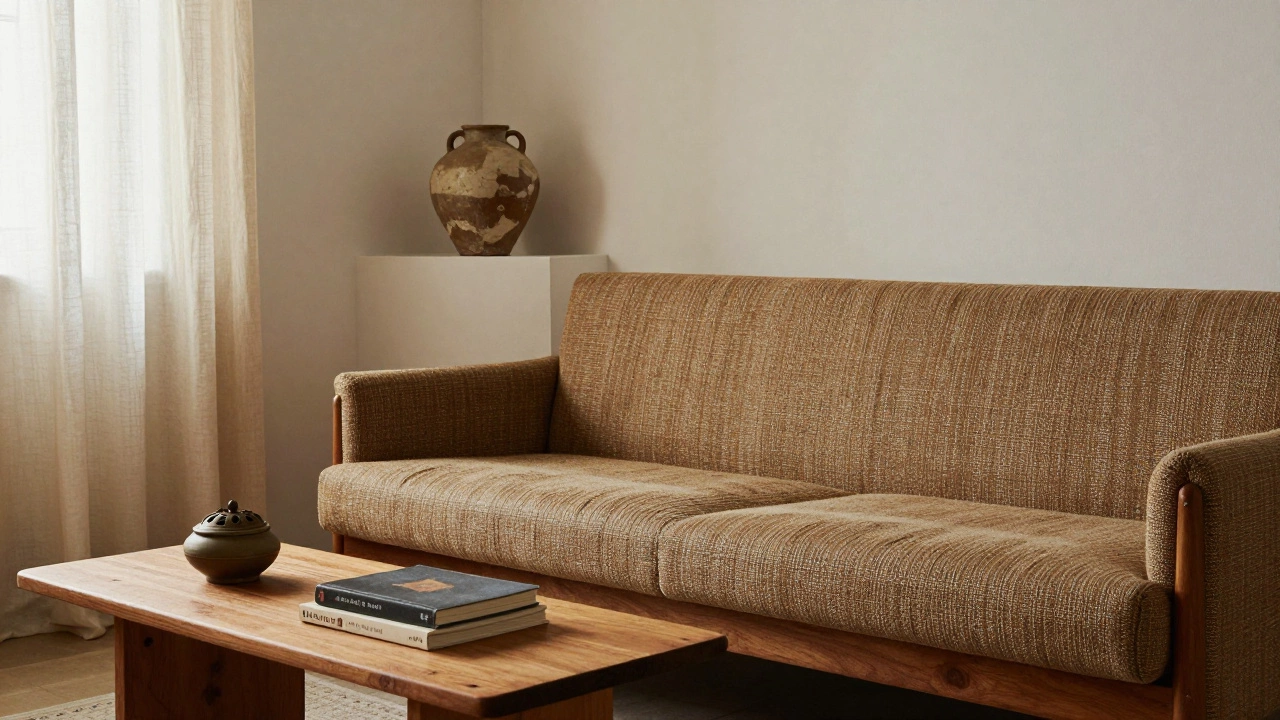
There’s no such thing as a new name for home interiors-but there is a new way of thinking about them. If you’ve been hearing phrases like "lived-in luxury," "soft minimalism," or "warm neutrality" in design magazines or on Instagram reels, you’re not imagining it. The old labels-"modern," "contemporary," "Scandinavian"-are fading. They’re not wrong, but they’re too narrow. Today’s spaces don’t fit neatly into boxes. They’re blending cultures, materials, and moods in ways we’ve never seen before.
Why the Old Terms Don’t Work Anymore
Ten years ago, "modern interiors" meant clean lines, monochrome palettes, and steel-framed furniture. "Contemporary" was just a fancy word for "what’s trending right now." But today’s homes? They’re messy in the best way. A concrete floor might sit under a handwoven Moroccan rug. A mid-century armchair sits beside a ceramic lamp made by a local artist in Bali. There’s no single style here. There’s no single name.Designers in Melbourne, Berlin, and Mexico City are all saying the same thing: we’re moving past labels. The shift isn’t about aesthetics-it’s about intent. People don’t want a "look." They want a feel. A space that breathes. That holds memories. That changes with the seasons, the mood, the life happening inside it.
What’s Replacing "Modern Interiors"?
The closest thing we have to a new term right now is "lived-in luxury." It’s not a style. It’s a philosophy. Think of it like this: luxury isn’t about marble countertops or gold fixtures anymore. It’s about texture that softens over time-linen that fades just right, oak that darkens with sun, a leather sofa that cradles your weight like an old friend.This isn’t about perfection. It’s about authenticity. A slightly chipped ceramic bowl on the coffee table. A stack of books with dog-eared pages. A throw blanket that’s been washed too many times but still feels warm. These aren’t flaws. They’re evidence of life.
Other phrases you’ll hear more often:
- Soft minimalism - Less about "less is more," more about "enough is enough." It keeps space open but fills it with soul.
- Warm neutrality - Gone are the cold grays and stark whites. Think beige with a hint of terracotta, cream with a whisper of olive, taupe that looks like sunlit dust.
- Global craft - Not "ethnic decor," but intentional, respectful use of handmade pieces from around the world. A Japanese paper lantern. A Guatemalan woven cushion. A Tunisian pottery vase.
What This Looks Like in Real Homes
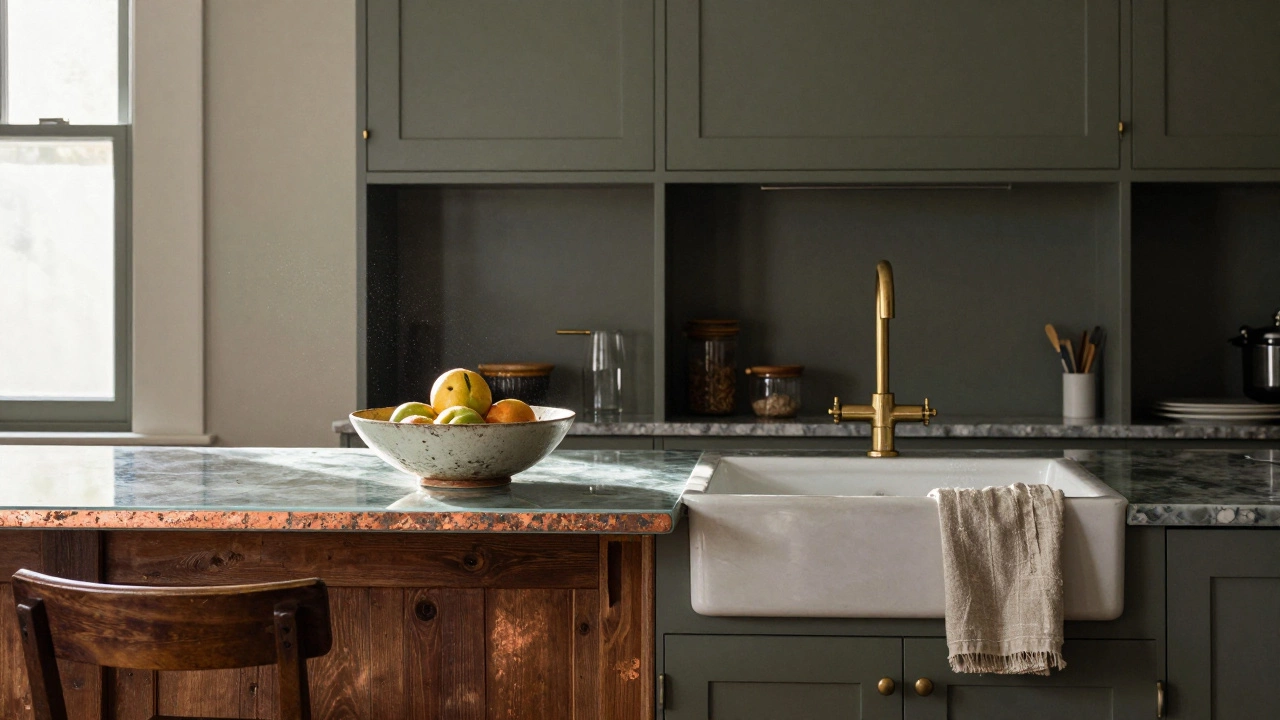
In a home I saw last month in Carlton, the living room had no TV. Instead, there was a low wooden table with a ceramic incense burner, a stack of poetry books, and a single floor lamp with a handmade shade. The walls were painted in a custom blend-almost white, but with a touch of burnt sienna. The sofa? A vintage 1970s piece reupholstered in a fabric woven in Oaxaca. No one called it "modern." No one called it "Scandinavian." They just said, "It feels like home."Another example: a kitchen in Fitzroy. The cabinets are painted a deep sage. The countertops are recycled glass with flecks of copper. The sink is a deep farmhouse style, but the faucet? A minimalist brass one from Denmark. There’s no matching set. Nothing is "designed to go together." And yet, it all works. Because it’s not about harmony. It’s about rhythm.
This is the new rule: contrast creates comfort. A rough wall next to a smooth pillow. A heavy wooden table under a lightweight pendant. A bold pattern on a neutral sofa. These aren’t mistakes. They’re deliberate pauses in the visual music of a space.
How to Build a Space Without a Name
If you’re trying to update your home and you’re tired of scrolling through Pinterest boards labeled "Modern Farmhouse" or "Industrial Chic," here’s how to start:- Start with how you want to feel. Not how you want it to look. Do you want to feel calm? Energized? Grounded? Inspired?
- Choose one texture you love. Maybe it’s linen. Maybe it’s raw wood. Maybe it’s hand-thrown pottery. Let that be your anchor.
- Bring in one piece with history. A thrifted chair. A family heirloom. A rug from a trip. Something that already has a story.
- Let light change the space. Notice how the afternoon sun hits the wall. Position your seating where the light lingers. Don’t fight it. Work with it.
- Leave room for change. Don’t fill every corner. Leave space for a new plant, a new book, a new blanket that catches your eye next season.
What This Means for the Future
The design industry is finally catching up. Brands are dropping rigid categories. Retailers are grouping items by "feeling" instead of "style." Online platforms are using AI to suggest combinations based on mood, not aesthetics.And consumers? We’re done with pretending our homes should look like magazine spreads. We want spaces that hold us, not show us off.
So if someone asks you what style your home is? You can say: "It’s not a style. It’s my life."
What’s Next?
Don’t look for the next big trend. Look for the next quiet moment. The way the light hits the corner of your bookshelf. The sound of your favorite mug against the counter. The way your dog curls up in the same spot every evening. That’s the real interior design. Not the name. Not the label. Just the space you’ve made for yourself.Is there a new term for modern home interiors?
There isn’t one official term yet, but "lived-in luxury" and "soft minimalism" are the closest descriptors gaining traction. These aren’t styles-they’re moods. They focus on warmth, texture, and personal history over rigid design rules. The old labels like "modern" or "contemporary" are too narrow for today’s blended, human-centered spaces.
Why is "modern" no longer enough to describe home interiors?
"Modern" used to mean clean lines, minimal clutter, and industrial materials. But today’s interiors mix vintage, handmade, global, and personal items. A space can have a concrete floor, a Moroccan rug, a mid-century chair, and a handmade ceramic lamp-and still feel cohesive. "Modern" can’t capture that complexity. People now want spaces that reflect their lives, not a design trend.
What’s the difference between "contemporary" and "lived-in luxury"?
"Contemporary" just means "what’s popular right now," which changes every year. "Lived-in luxury" is about enduring comfort. It’s not about the latest material or color-it’s about how things feel over time. A sofa that gets softer with use, a wooden table that darkens with sun, a blanket that’s been washed a hundred times. It’s luxury that grows with you, not something that looks perfect on day one.
Can I mix different cultural elements in my home without it looking like a museum?
Yes-but it’s about intention, not decoration. Don’t collect items because they"look exotic." Choose pieces you genuinely connect with: a textile from a trip, a bowl from a local artisan, a lamp passed down through your family. Pair them with neutral backgrounds and consistent lighting. The key is balance: let each piece breathe. One standout item in a calm space says more than five crowded together.
What colors define today’s home interiors?
The dominant palette is "warm neutrality." Think beige with a touch of terracotta, cream with olive undertones, and soft greys that lean toward taupe. These colors feel calm but not cold. They work with natural light and let textures-wood, wool, ceramic-stand out. White walls are rare now. Even "white" paint has a hint of warmth.
Don’t chase trends. Build a home that holds your quiet mornings, your loud dinners, your tired nights. That’s the only name that matters.