
Find Your Perfect Flooring Alternative
Your Requirements
Select your preferences and click "Find Best Match" to see recommendations.
Hardwood floors have long been the gold standard in home design. They look warm, feel solid underfoot, and can boost your property value significantly. But let’s be honest: they are expensive, demanding, and not exactly pet-proof. If you love the look of wood but hate the maintenance or the price tag, you are not alone. The good news is that the flooring industry has evolved massively in recent years. Today, there are materials that mimic the beauty of real wood while offering superior durability, water resistance, and affordability.
Finding the "next best thing" isn't just about picking a cheaper option. It is about matching your lifestyle, your budget, and your home's specific conditions. Whether you live in a humid climate like Melbourne, have a muddy golden retriever, or simply want a DIY-friendly project, there is a perfect alternative waiting for you. Here is a breakdown of the top contenders replacing hardwood in modern homes.
Luxury Vinyl Plank (LVP): The Ultimate All-Rounder
If you ask interior designers what they recommend most often now, the answer is usually Luxury Vinyl Plank, also known as LVP. This material has taken the market by storm because it solves almost every complaint people have with traditional hardwood.
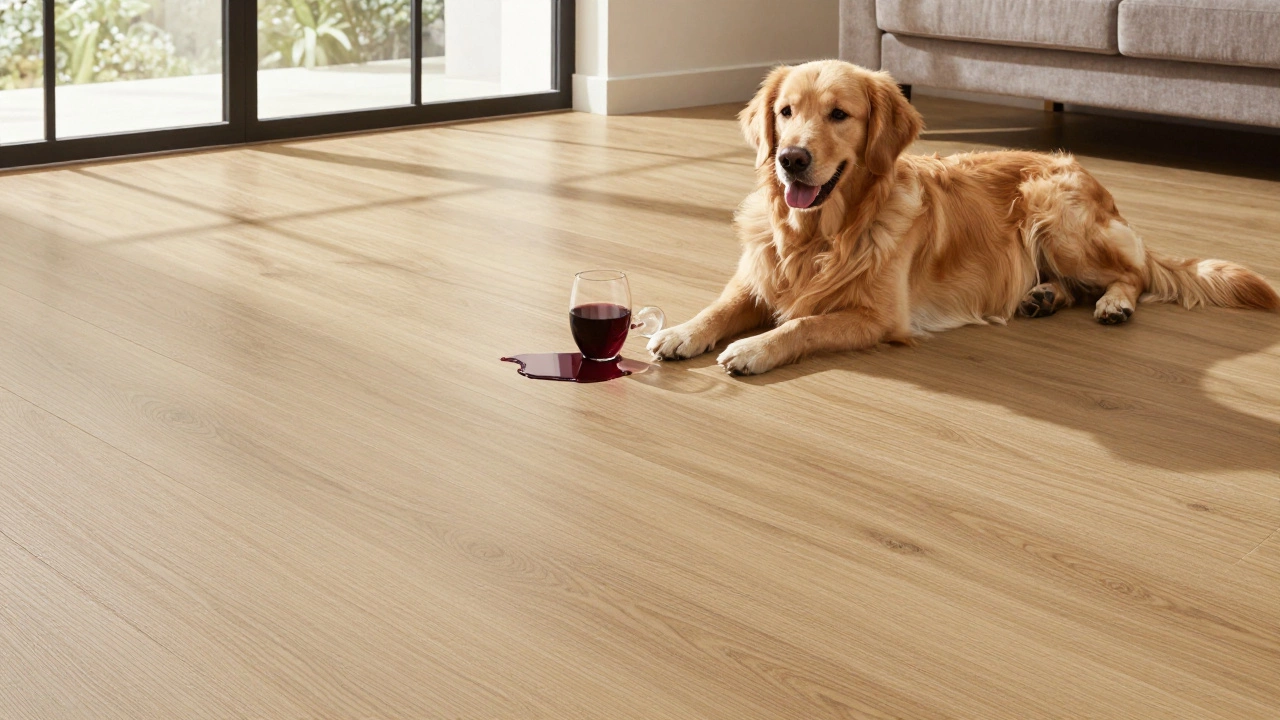
LVP is made from multiple layers. The bottom layer provides stability, the core layer offers waterproofing and impact resistance, and the top layer features a high-definition photographic print of wood grain covered by a clear wear layer. Because it is essentially plastic-based, it is 100% waterproof. You can spill wine, drop a glass of water, or even flood the bathroom, and the floor will not warp or buckle.
The installation methods vary widely. Some LVP planks use a click-lock system that floats over the subfloor, making it ideal for DIYers. Others use a peel-and-stick adhesive backing, which is great for small renovations or renters who need permission to avoid permanent changes. For those wanting a more premium feel, glue-down LVP offers a solid, quiet surface that doesn't shift.
In terms of longevity, high-quality LVP can last 20 to 30 years. It is incredibly resistant to scratches from pets and furniture legs. While it may not add the same resale value as genuine hardwood, its practicality makes it a favorite for families and homeowners with active lifestyles.
Engineered Wood: Real Wood Without the Risk
If you are stubbornly attached to the idea of having *real* wood under your feet, Engineered Wood Flooring is the closest compromise available. Unlike solid hardwood, which is milled from a single piece of timber, engineered wood consists of a thin veneer of real hardwood on top of a core made from plywood or high-density fiberboard.
This layered construction makes it much more stable than solid wood. It resists expansion and contraction caused by humidity changes, which is crucial if you live in areas with fluctuating weather. You can install engineered wood in basements or over concrete slabs where solid hardwood would fail. It can be nailed, glued, or floated, giving you flexibility in installation.
The catch? You cannot refinish it as many times as solid wood. Depending on the thickness of the top veneer, you might only be able to sand and refinish it once or twice. However, for most homeowners, this is rarely an issue since the initial finish is durable enough to last decades. If you want the authentic grain, warmth, and prestige of hardwood without the structural risks, engineered wood is your best bet.
Laminate Flooring: The Budget-Friendly Mimic
Laminate Flooring was once considered a cheap imitation, but technology has improved dramatically. Modern laminate uses high-resolution printing and textured embossing to create surfaces that look and feel remarkably like real wood.
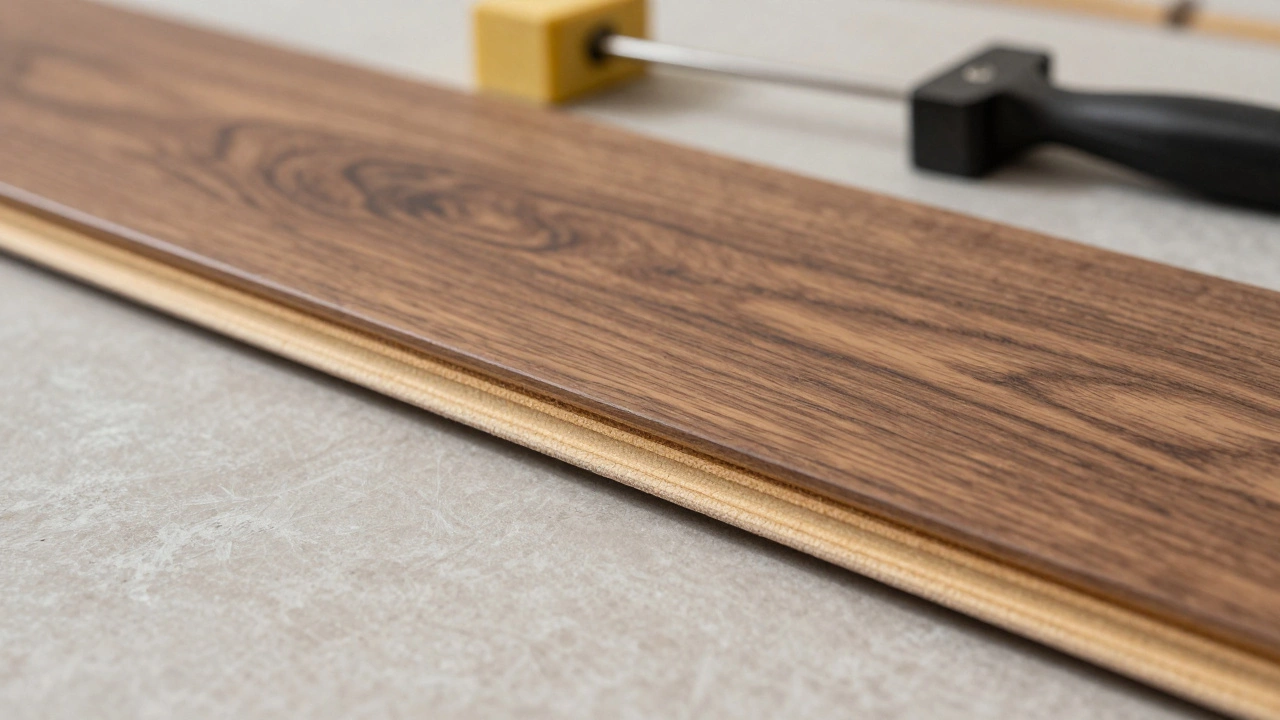
Laminate is composed of a fiberboard core topped with a decorative image layer and a protective aluminum oxide wear layer. This makes it extremely hard-wearing and scratch-resistant. It is generally less expensive than both LVP and engineered wood, making it a popular choice for large open-plan living areas or rental properties.
However, laminate has a major weakness: water. While newer products offer better moisture resistance, prolonged exposure to water can cause the core to swell and disintegrate. It is not recommended for bathrooms, laundry rooms, or kitchens unless you are meticulous about cleaning up spills immediately. Installation is typically a floating click-lock system, which is straightforward for beginners.
Ceramic and Porcelain Tile: Durability Meets Style
When durability is non-negotiable, Porcelain Tile is the heavyweight champion. It is virtually indestructible, completely waterproof, and fireproof. Over the past decade, advancements in digital printing have allowed manufacturers to produce tiles that look indistinguishable from wide-plank hardwood.
Porcelain is denser and less porous than ceramic tile, making it suitable for both indoor and outdoor use. It does not scratch, dent, or fade. For homeowners with heavy foot traffic, large dogs, or those living in hot climates, porcelain offers a cool, comfortable surface that requires minimal upkeep-just sweep and mop.
The downside is comfort and cost. Tile is hard and cold underfoot, so you might need area rugs or underfloor heating to make it cozy. Installation is labor-intensive and usually requires a professional tiler to ensure proper leveling and grouting. While the material itself can be affordable, the total installed cost often rivals that of mid-range hardwood.
Bamboo Flooring: The Eco-Conscious Choice
Bamboo Flooring is technically a grass, not a wood, but it is processed into planks that resemble hardwood. Bamboo is highly renewable, growing to maturity in just three to five years compared to decades for oak or maple. This makes it a popular choice for environmentally conscious homeowners.
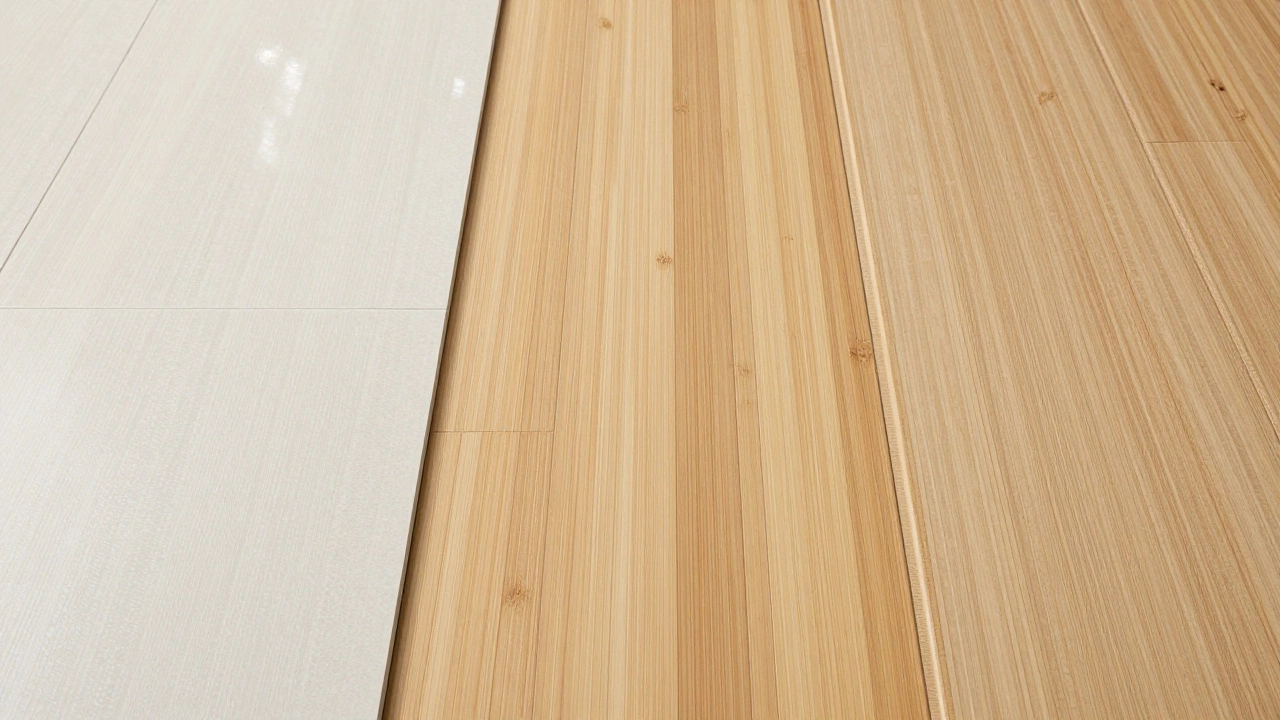
There are two main types: strand-woven bamboo and horizontal/vertical bamboo. Strand-woven bamboo is incredibly hard, often harder than oak, making it very durable. Horizontal and vertical bamboo has a more distinct grain pattern and is softer but still resilient.
Bamboo looks beautiful and adds a unique, natural texture to any room. However, quality varies greatly between brands. Cheaper bamboo can be prone to scratching and may contain adhesives with higher VOCs (volatile organic compounds). Look for certifications like FSC (Forest Stewardship Council) and low-VOC finishes to ensure you are getting a healthy, sustainable product.
Comparison of Hardwood Alternatives
| Feature | Luxury Vinyl Plank (LVP) | Engineered Wood | Laminate | Porcelain Tile | Bamboo |
|---|---|---|---|---|---|
| Water Resistance | Excellent (100%) | Moderate | Poor to Moderate | Excellent (100%) | Moderate |
| Durability | High | High | Very High (Surface) | Extreme | High (Strand-Woven) |
| Installation Difficulty | Easy (DIY Friendly) | Moderate to Hard | Easy (DIY Friendly) | Hard (Pro Recommended) | Moderate |
| Aesthetic Authenticity | Very Good | Excellent (Real Wood) | Good | Very Good | Unique/Natural |
| Cost (Material Only) | $-$$$ | $$-$$$ | $ | $$-$$$ | $$ |
| Refinishing Possible? | No | Yes (Limited) | No | No | Yes (Limited) |
How to Choose the Right Alternative for Your Home
Selecting the right flooring comes down to prioritizing your needs. Ask yourself these questions:
- Where will it go? If it is a bathroom, kitchen, or basement, stick with LVP or Porcelain Tile. Avoid laminate and solid hardwood in wet areas.
- Do you have pets? LVP and Laminate are highly scratch-resistant. Engineered wood can handle light pet traffic but may show claw marks over time.
- What is your budget? Laminate is the cheapest upfront. LVP offers the best balance of cost and performance. Engineered wood and high-end tile are premium investments.
- Do you plan to sell soon? Engineered wood and high-quality LVP appeal to buyers looking for low-maintenance yet stylish homes. Solid hardwood still holds the highest resale value, but engineered is a close second.
- Are you installing it yourself? Click-lock LVP and Laminate are the easiest for DIY. Tile and nailed-down engineered wood usually require professionals.
Don't forget to consider the subfloor. Uneven concrete can ruin a floating floor installation. Proper preparation, including leveling and using a good underlayment, is critical regardless of the material you choose.
Common Mistakes to Avoid
Many homeowners rush into flooring projects without considering acclimatization. Even though LVP and laminate are stable, they should sit in the room where they will be installed for 48 hours before laying them down. This allows the materials to adjust to the temperature and humidity of the space.
Another common error is skipping the underlayment. Underlayment provides sound dampening, moisture protection, and cushioning. Skipping it can lead to squeaky floors, visible imperfections in the subfloor, and reduced lifespan of the flooring.
Finally, don't judge a sample by its color alone. Lighting changes how wood tones appear. Bring samples home and look at them in different lights throughout the day. A warm honey oak might look yellowish in the morning and dark brown in the evening.
Is Luxury Vinyl Plank (LVP) better than hardwood?
It depends on your priorities. LVP is better if you need waterproofing, easy maintenance, and lower cost. Hardwood is better if you want authentic material, higher resale value, and the ability to refinish the floor multiple times. For most modern households with pets and kids, LVP is often the more practical choice.
Can I install laminate flooring over existing hardwood?
Yes, you can install floating laminate flooring over existing hardwood as long as the current floor is flat, secure, and clean. You will need to add an underlayment for moisture barrier and sound reduction. Check your door heights, as adding new flooring may require trimming doors to prevent them from scraping the floor.
Does engineered wood scratch easily?
Engineered wood scratches similarly to solid hardwood because the top layer is real wood. However, many come with pre-finished aluminum oxide coatings that enhance scratch resistance. Using felt pads under furniture and keeping pet nails trimmed can significantly reduce surface damage.
Which flooring is best for a basement?
Luxury Vinyl Plank (LVP) is the best choice for basements due to its 100% waterproof nature. Basements are prone to moisture and humidity fluctuations, which can warp wood and laminate. LVP can be installed directly over concrete slabs without fear of mold or warping.
Is bamboo flooring durable enough for high-traffic areas?
Strand-woven bamboo is extremely durable and harder than many hardwoods, making it excellent for high-traffic areas. Traditional horizontal or vertical bamboo is softer and may show wear faster. Always check the Janka hardness rating when comparing bamboo to other options.
How much does it cost to replace hardwood with LVP?
The cost varies by region and quality, but generally, LVP costs between $2 to $7 per square foot for materials. Professional installation adds another $1 to $3 per square foot. Compared to hardwood, which can range from $5 to $15+ per square foot installed, LVP is significantly more affordable.