
Wallpaper Style Advisor
Find Your Perfect Wallpaper Style
Answer these questions to get personalized wallpaper recommendations for your space.
Your Recommended Wallpapers
Recommended Style:
Why This Works:
Best For:
Wallpaper isn’t coming back-it never left. In 2025, it’s more alive than ever, but not the kind your grandma stuck on her dining room walls. Today’s wallpaper is bold, tactile, and smart. It’s not just a background anymore; it’s the centerpiece. If you’re thinking about redoing a room this year, skipping wallpaper means missing out on the biggest shift in interior design since matte black faucets took over.
Texture Is the New Pattern
Flat, glossy, or even subtle embossed wallpapers are fading fast. In 2025, the focus is on texture. Think hand-laid grasscloth, woven jute, cork-like finishes, and even recycled paper with visible fiber layers. These aren’t just visual-they’re physical. Run your hand over them and you feel the difference. That’s the point.
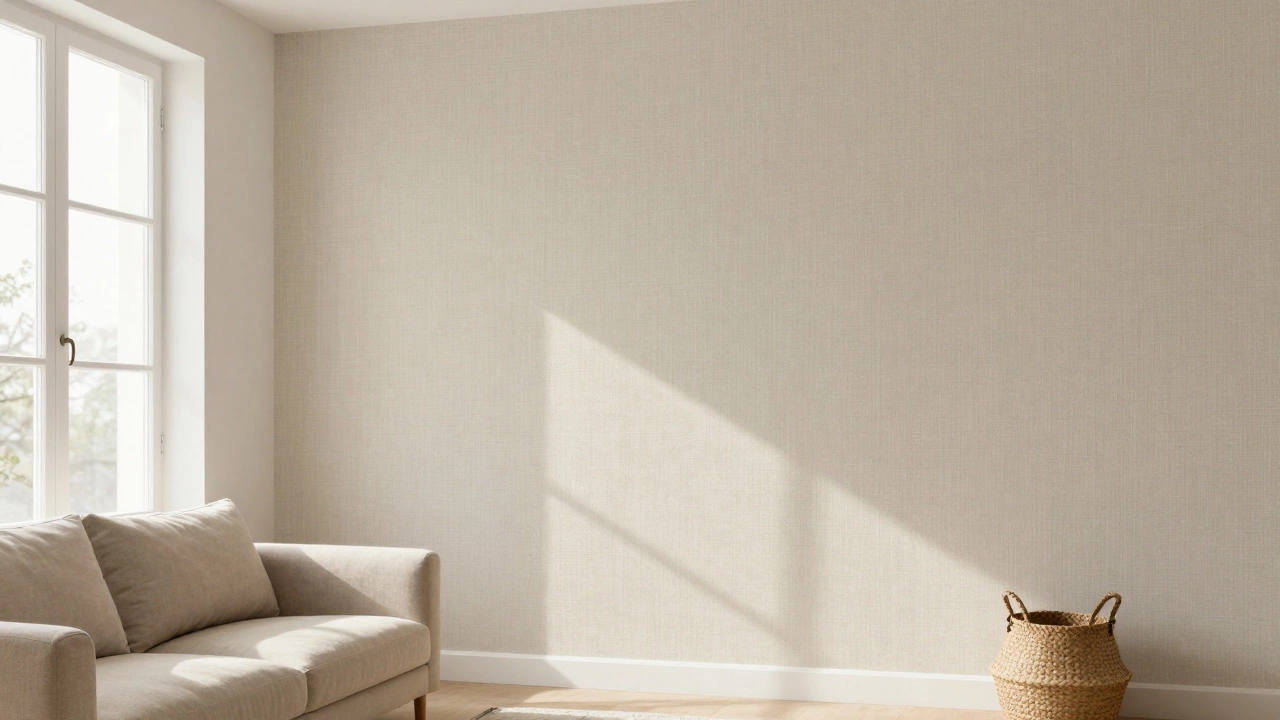
A Melbourne designer told me last month that clients are choosing textured wallpaper for living rooms because it softens the space without adding bulky furniture. One client picked a linen-textured paper in oatmeal tone for their open-plan kitchen and living area. The result? A calm, grounded feel that doesn’t scream "designer." It just feels right.
Manufacturers like Cole & Son and Farrow & Ball have doubled down on natural materials. Even big-box stores now carry textured options in neutral palettes. The rule of thumb? If it looks like it could be a sculpture, it’s on trend.
Dark Walls Are the New Neutral
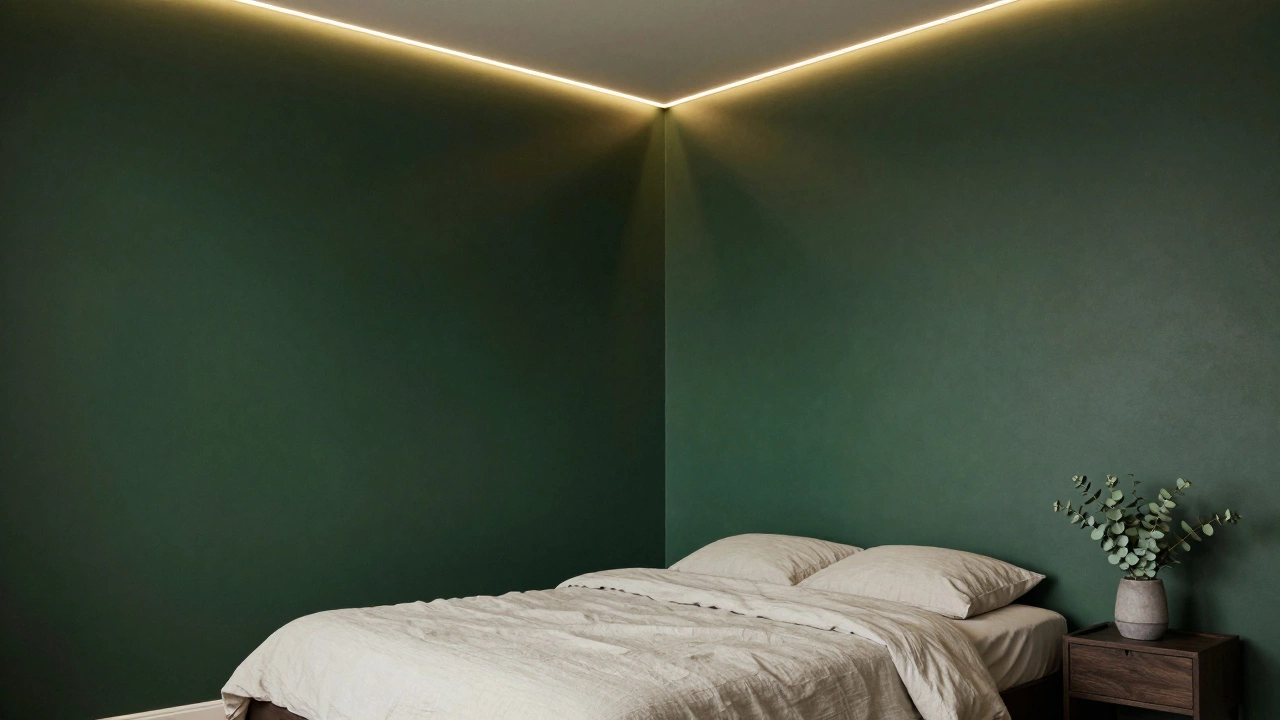
White walls? Still fine. But they’re no longer the default. In 2025, deep, moody colors are the new neutral. Think charcoal, forest green, midnight blue, and even burnt umber-all applied as wallpaper, not paint.
Why wallpaper? Because it holds color better. Paint fades, especially near windows. Wallpaper with a matte finish keeps its depth. A study by the Australian Interior Design Institute last year found that rooms with dark wallpaper had 34% higher satisfaction ratings in long-term occupancy surveys. People didn’t just like the look-they felt more relaxed.
One key detail: pair dark wallpaper with warm lighting. LED strips behind headboards or recessed cove lighting make the color glow instead of swallowing the room. Avoid cold white bulbs. Go for 2700K to 3000K. It’s the difference between a library and a cave.
Biophilic Patterns Are Everywhere
Botanical prints aren’t new, but in 2025, they’re more realistic than ever. Forget cartoonish ferns and generic florals. The trend is hyper-detailed, almost photographic renderings of native plants. In Australia, that means waratahs, gum leaves, and banksias. In Europe, it’s olive branches and lavender. In New York, it’s ivy and magnolias.
These aren’t just pretty-they’re psychological. Research from the University of Melbourne’s Environmental Psychology Lab shows that people exposed to biophilic wallpaper for just two weeks reported lower cortisol levels and improved focus. It’s not magic. It’s evolution. We’re wired to respond to nature.
Look for wallpapers with subtle gradients, not flat colors. A leaf might fade from deep green to silver-gray, mimicking how light hits real foliage. Brands like Zoffany and de Gournay are leading this, but even affordable lines like Graham & Brown now offer realistic botanicals.
Geometric Shapes Are Getting Abstract
Geometric wallpaper isn’t going away-it’s evolving. In 2025, sharp lines and repeating triangles are out. What’s in? Abstract, hand-drawn shapes that feel like they were sketched by an artist mid-thought. Think uneven hexagons, smudged circles, and organic grids that look like they’re melting.
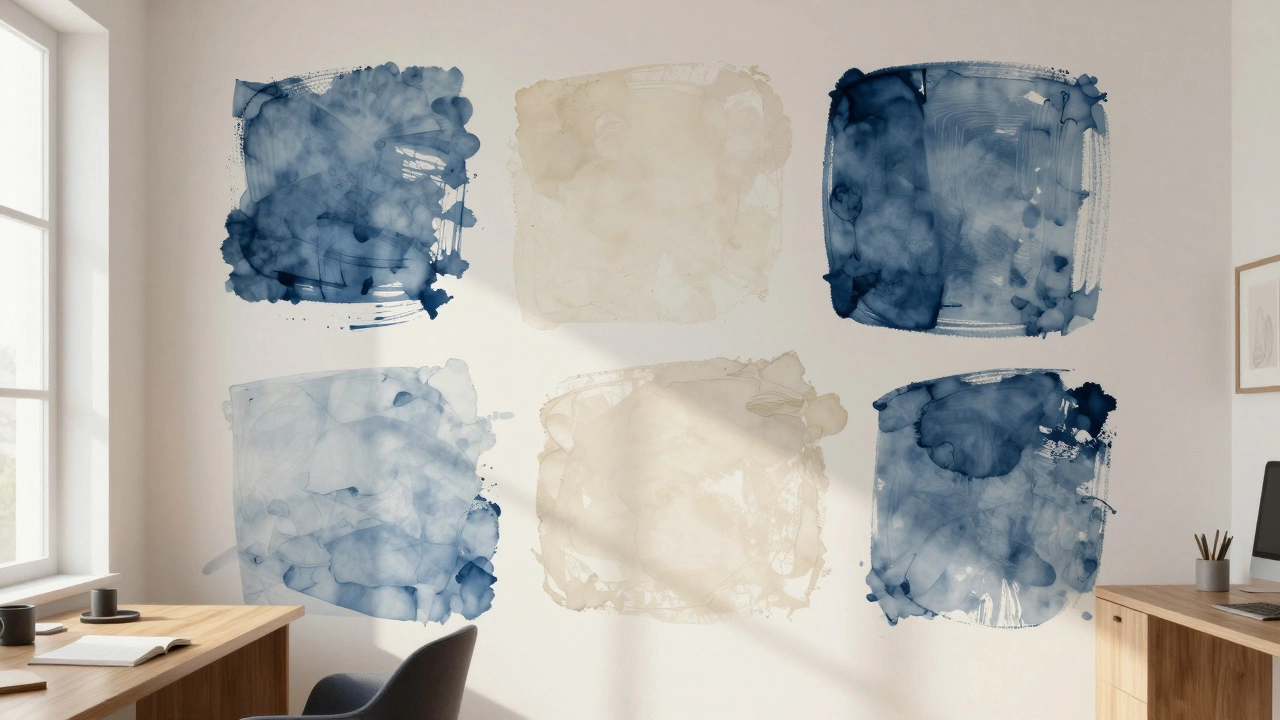
This style works best in small doses: one accent wall in a bedroom, behind a console table, or inside a powder room. It’s not meant to overwhelm. It’s meant to intrigue. One client in Carlton chose a wallpaper with irregular, brushstroke-like lines in indigo and cream. The result? A wall that looks like a piece of modern art. No frame needed.
Pro tip: Avoid symmetry. If it looks like it came from a computer template, it’s not 2025. Look for slight imperfections. That’s where the soul is.
Metals and Foils Are Back-But Subtle
Remember the 90s? Silver metallic wallpaper that looked like a disco ball? That’s dead. But in 2025, metallics are making a quiet comeback. Think brushed gold, matte copper, and pewter finishes-applied in thin, irregular lines or as a wash over textured paper.
It’s not about sparkle. It’s about depth. A wall with a copper-toned metallic overlay catches light differently throughout the day. Morning sun turns it warm. Evening light makes it glow like embers. It’s the same wall, but it changes with the time.
These wallpapers are often paired with natural textures. A grasscloth base with a faint metallic sheen? That’s the combo everyone’s talking about. Avoid full-coverage metallics. They feel dated. The magic is in the hint.
What to Avoid in 2025
Not all wallpaper is good wallpaper. Here’s what’s out:
- Repeating cartoon patterns (think: tiny polka dots or childish animals)
- High-gloss vinyl that reflects every shadow and smudge
- Wallpapers with visible seams or mismatched repeats
- Overly busy scenes-like full jungle murals in a small bathroom
- Colors that clash with your flooring or furniture without a unifying tone
One common mistake? Choosing wallpaper based on a single Instagram photo. That turquoise wall with the giant palm tree? Looks amazing online. In your 8x10-foot bathroom with yellow tiles and a chrome faucet? It’s a nightmare. Always test a sample in your actual space. Live with it for 48 hours under different lights.
Where to Use Wallpaper in 2025
Wallpaper isn’t just for living rooms anymore. Here’s where it’s working best this year:
- Bedrooms: Textured neutrals for calm. Deep colors for drama.
- Bathrooms: Moisture-resistant grasscloth or vinyl with botanical prints. Avoid paper that isn’t rated for humidity.
- Entryways: Bold geometric or metallic accents to make a first impression.
- Home Offices: Biophilic patterns to reduce stress and boost focus.
- Stairwells: Vertical stripes or abstract lines to create movement.
One designer I spoke to in Sydney uses wallpaper on ceilings now. Just a subtle texture or a faint gradient. It makes rooms feel taller, cozier, and more intentional. It’s not for everyone-but it’s growing.
How to Choose Your Wallpaper
Follow this simple flow:
- Start with light. How much natural light does the room get? Dark walls need bright rooms. Light walls can handle dimmer spaces.
- Match your mood. Calm? Go neutral or biophilic. Energized? Try abstract geometry or metallic.
- Test samples. Buy two. Put one on the wall. Live with it for two days. Watch it change with the sun.
- Consider maintenance. High-traffic areas? Choose washable vinyl. Bedrooms? Natural fiber is fine.
- Don’t go all-in. Start with one wall. See how it feels before covering the whole room.
Wallpaper in 2025 isn’t about following trends. It’s about expressing a feeling. It’s about creating a space that doesn’t just look good-but feels good, too.
Is wallpaper still in style in 2025?
Yes, and it’s more popular than ever. Wallpaper has moved past being a decorative afterthought. In 2025, it’s a core design element used to add texture, depth, and emotion to spaces. People are choosing it over paint for its durability, visual impact, and ability to transform a room without major renovations.
What’s the most popular wallpaper color in 2025?
The most popular colors are deep, earthy neutrals: charcoal, forest green, warm taupe, and midnight blue. These aren’t trendy shades-they’re timeless tones that work with almost any furniture and lighting. They create a sense of calm and sophistication, which is exactly what homeowners are seeking after years of bright, minimalist spaces.
Can I use wallpaper in a bathroom?
Yes, but only if it’s specifically designed for high-moisture areas. Look for vinyl-coated, non-woven, or peel-and-stick wallpapers labeled as "bathroom-safe" or "moisture-resistant." Avoid traditional paper wallpapers-they’ll peel or mildew. Textured options like grasscloth with a protective sealant are also popular in bathrooms for their natural look and durability.
How much does wallpaper cost in 2025?
Prices vary widely. Basic vinyl wallpaper starts around $30 per roll (covers about 25 sq. ft.). High-end, hand-printed, or natural fiber options can cost $150-$300 per roll. Installation adds $20-$50 per hour, depending on complexity. A single accent wall usually costs between $200 and $800 total, including materials and labor.
Do I need a professional to hang wallpaper?
For simple, pre-pasted vinyl, you can do it yourself with a steady hand and a level. But for textured, pattern-matched, or delicate papers like grasscloth or hand-painted designs, hiring a pro is worth it. A bad installation can ruin the look-and cost more to fix. Professionals know how to handle seams, align repeats, and prep uneven walls.
Next Steps
If you’re thinking about wallpaper, start small. Buy a sample roll-most brands offer them for under $10. Tape it to your wall. Live with it for a few days. Watch how the light hits it at 7 a.m. and 7 p.m. See how it looks with your existing furniture. If it still feels right after that, you’ve found your match.
Wallpaper in 2025 isn’t about being loud. It’s about being intentional. It’s not just covering a wall-it’s shaping how you feel in a room. And that’s worth getting right.