
Classy Kitchen Score Calculator
How Classy Is Your Kitchen?
This tool evaluates your kitchen based on key principles from professional design guidelines. Rate each category on a scale of 1-5 (1 = needs improvement, 5 = excellent).
Ever walk into a kitchen and just feel it’s classy-without knowing why? It’s not about the price tag. It’s not about gold faucets or marble countertops that cost a fortune. Real class in a kitchen comes from quiet confidence: clean lines, thoughtful details, and materials that age well. You don’t need a renovation budget to get there. You just need to understand what actually makes a space feel expensive-not flashy.
Less is more, but not empty
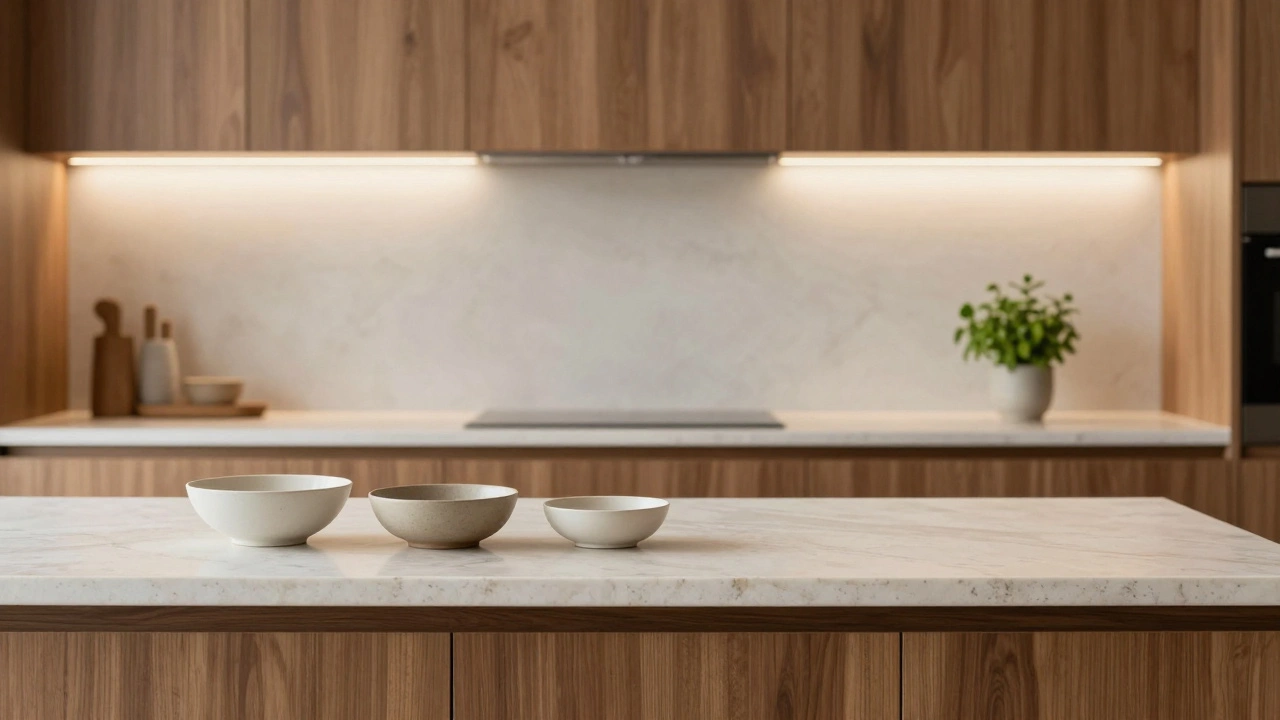
A classy kitchen doesn’t scream for attention. It breathes. That means fewer appliances on the counter, fewer decorative knick-knacks, and no clutter hiding in plain sight. Think of it like a well-tailored suit: the fit matters more than the brand. Open shelving? Great-if it’s organized. But if it’s full of mismatched mugs and spice jars stacked three deep, it looks like storage failed. Keep it minimal. Three or four beautiful bowls, one ceramic pitcher, a single plant. That’s enough.Hidden appliances make a huge difference. Built-in refrigerators, panel-ready dishwashers, and induction cooktops that disappear into the cabinetry create a seamless look. No one notices the fridge-but they notice how smooth the wall looks. That’s the magic.
Materials that age with grace
Classy kitchens don’t rely on trends. They rely on materials that improve with time. Natural stone like honed limestone or travertine doesn’t have the high-gloss shine of polished marble, but it softens beautifully. It doesn’t show water spots. It doesn’t scratch easily. It just gets more character.Wood cabinetry? Go for walnut or oak with a matte oil finish, not high-gloss lacquer. Gloss reflects everything-light, dust, fingerprints. Matte hides imperfections and feels warm under natural light. Even better: choose wood that shows grain variation. Perfectly uniform panels look factory-made. Slight differences in color and texture? That’s craftsmanship.
For countertops, quartz is reliable, but if you want real depth, go for concrete or soapstone. Concrete can be stained with natural pigments, giving you a one-of-a-kind surface. Soapstone darkens over time into a rich, velvety gray. Both are low-maintenance and feel substantial under your hands.
Lighting that doesn’t glare
Bad lighting kills a classy kitchen faster than clutter. Overhead recessed lights? They’re functional, but they turn your kitchen into a warehouse. Layer your lighting.Start with ambient: dimmable LEDs hidden under cabinets or in coves. Then add task lighting: pendant lights over the island, but choose ones with soft, diffused glass-not exposed bulbs. And don’t forget under-cabinet strips. They’re not decorative; they’re essential. They eliminate shadows on your cutting board and make prep work safer.
Warm white bulbs (2700K to 3000K) are the only option. Cool white feels clinical. Warm white feels like sunlight filtering through a window on a winter morning. It makes wood glow, stone look richer, and even stainless steel feel softer.
Hardware that whispers, not shouts
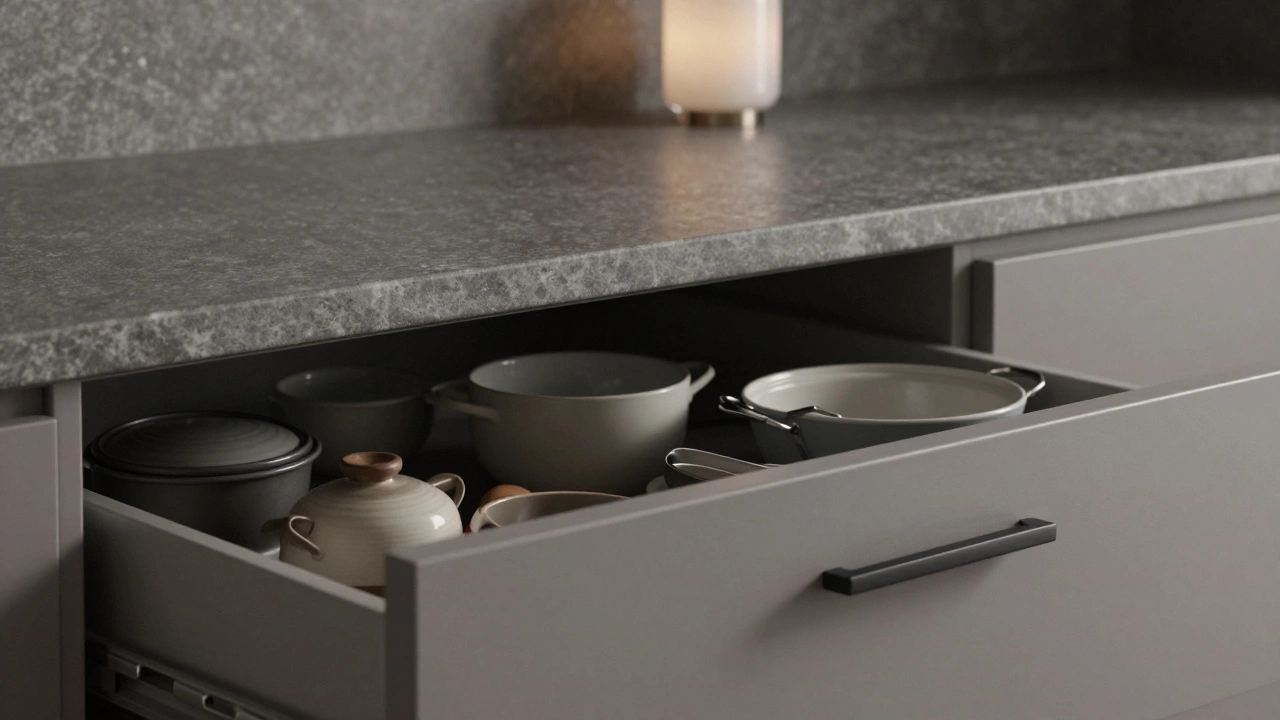
Handles and pulls are the jewelry of your kitchen. But like real jewelry, less is more. Avoid shiny brass or chrome. Instead, choose matte black, brushed bronze, or oil-rubbed bronze. These finishes don’t reflect light-they absorb it. That makes them feel grounded, quiet, and expensive.Length matters too. Long, slender pulls on drawers look more refined than small, round knobs. For cabinets, a single bar pull centered on the door gives a clean, modern line. For drawers, go for continuous horizontal pulls that run the whole width. It’s a detail you won’t notice until it’s gone.
Backsplash that blends, not competes
A classic backsplash doesn’t draw the eye. It supports. Subway tile? Fine-if it’s laid in a herringbone pattern with narrow grout lines and a matte finish. But avoid bright white. Use a soft cream, warm gray, or even a pale green. The goal is texture, not contrast.Another smart move: extend your countertop material up the wall. A full slab of stone or quartz backsplash looks like one continuous surface. No grout lines. No cleaning hassle. Just elegance.
Tile mosaics, patterned ceramics, or colorful zellige? Save those for a bathroom or a playful accent wall. In a classy kitchen, the backsplash should feel like an afterthought-because it is.
Color that feels like home
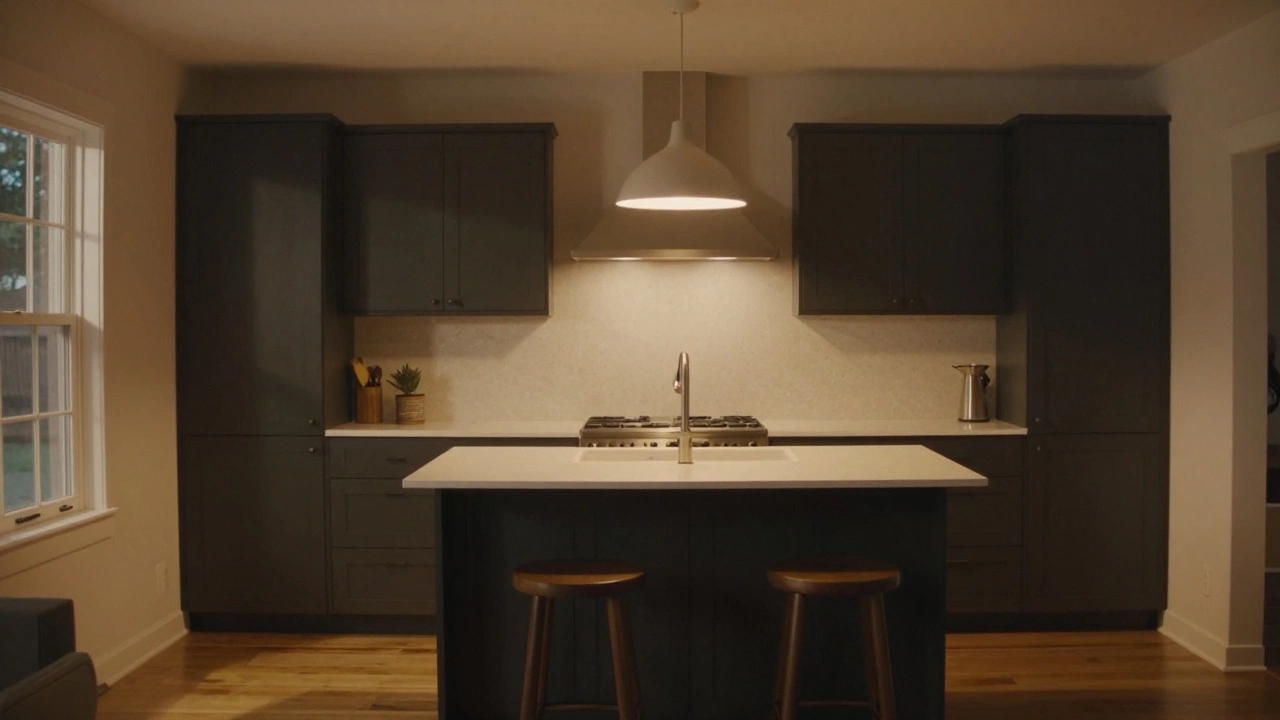
White kitchens are timeless, but they’re not always classy. Pure white can feel sterile. Off-whites-like Benjamin Moore’s “White Dove” or Sherwin-Williams’ “Alabaster”-have a hint of warmth. They read as neutral but never cold.Dark cabinets? They’re having a moment for a reason. Deep charcoal, forest green, or navy create drama without being loud. Pair them with light countertops and warm lighting, and the space feels rich, not heavy. The key is balance. If your cabinets are dark, keep walls and floors lighter. If your floors are dark, let the cabinets breathe with soft tones.
Never paint the ceiling white if the walls are white. Use a shade two tones lighter. It creates subtle depth. Same with trim: match it to the walls, not contrast it. A seamless transition makes the room feel bigger and more intentional.
Flow and function that feel effortless
A kitchen can look perfect but still feel like a maze. Classy kitchens work without thinking. The sink, stove, and fridge form a triangle. Not perfect, but close. You shouldn’t have to walk ten steps to get from chopping to cooking to cleaning.Drawers are better than cabinets for pots and pans. Pull-out shelves for spices. Deep drawers for baking sheets. A built-in trash and recycling bin hidden behind a cabinet door. These aren’t luxuries-they’re necessities for a space that feels calm, not chaotic.
Island seating? Only if there’s at least 15 inches of overhang for knees. And make sure the bar stool height matches the counter. Too high? Your legs dangle. Too low? You’re slouching. Details like this are what separate a kitchen that looks good from one that feels good.
Final touch: the silence
The quietest kitchens are the most classy. No buzzing appliances. No squeaky hinges. No flickering lights. That means investing in quiet dishwashers (under 40 dB), soft-close drawers, and LED bulbs that turn on smoothly. Sound matters. A kitchen that operates like a luxury car-smooth, silent, responsive-feels more expensive than one covered in gold trim.Class isn’t about what you see. It’s about what you don’t notice. The way the door closes without a slam. The way your hand glides over the countertop without catching. The way the light falls just right at 5 p.m. when you’re making tea. That’s the real luxury.
Do you need marble to make a kitchen look classy?
No. Marble is beautiful, but it’s high-maintenance and easily stained. Many classy kitchens use honed limestone, soapstone, concrete, or even high-quality quartz. These materials offer similar depth and texture without the fuss. The key is choosing something that ages well and fits your lifestyle.
Can a small kitchen look classy?
Absolutely. Classiness isn’t about square footage-it’s about intention. In small kitchens, use light colors, reflective surfaces like glass backsplashes, and hidden storage to create the illusion of space. Choose slim-profile hardware and avoid visual clutter. A single well-placed pendant light can make a tiny kitchen feel curated, not cramped.
What’s the most overrated kitchen trend right now?
Open shelving with mismatched ceramics. It looks Pinterest-perfect in photos, but in real life, it collects dust, shows clutter, and requires constant re-styling. Classy kitchens hide what they use daily. If you want open shelves, keep them sparse and consistent-three matching bowls, one plant, one ceramic jug. That’s it.
Is stainless steel outdated in classy kitchens?
Not outdated, but overused. Stainless steel appliances are practical, but they reflect everything-fingers, smudges, lighting. For a quieter look, consider panel-ready appliances that match your cabinetry. If you keep stainless, choose matte finishes or pair them with warm wood tones to soften the look.
How much should I spend on kitchen hardware?
Don’t spend more than 5% of your total budget on pulls and knobs-but don’t skimp. Good hardware lasts decades. Look for solid brass or bronze with a matte finish. Avoid plated finishes-they chip. A $50 set of pulls on 20 drawers is a better investment than $200 on a single fancy faucet.
If you’re planning a kitchen update, start by clearing everything off the counters. What’s left? That’s your starting point. Class isn’t added-it’s revealed.