
Kitchen Layout Efficiency Analyzer
Select your primary cooking style and enter your approximate room dimensions (in feet) to find your ideal layout.
Recommended Layouts
Imagine standing in your kitchen at 6:00 AM. You reach for the kettle, but it’s buried behind a stack of plates. You turn to grab coffee beans, only to realize they’re stored next to the sink, not the counter where you actually prepare them. You take three steps back, bump into the fridge, and spill water on your shoes. This isn’t just bad luck; it’s bad design.
The question "which kitchen layout is the most efficient" doesn’t have a single answer because efficiency depends entirely on your space and habits. However, there is one universal rule that separates functional kitchens from frustrating ones: minimizing unnecessary movement. If you are constantly taking more than two steps between your main work zones, your layout is failing you.
The Golden Rule: The Work Triangle
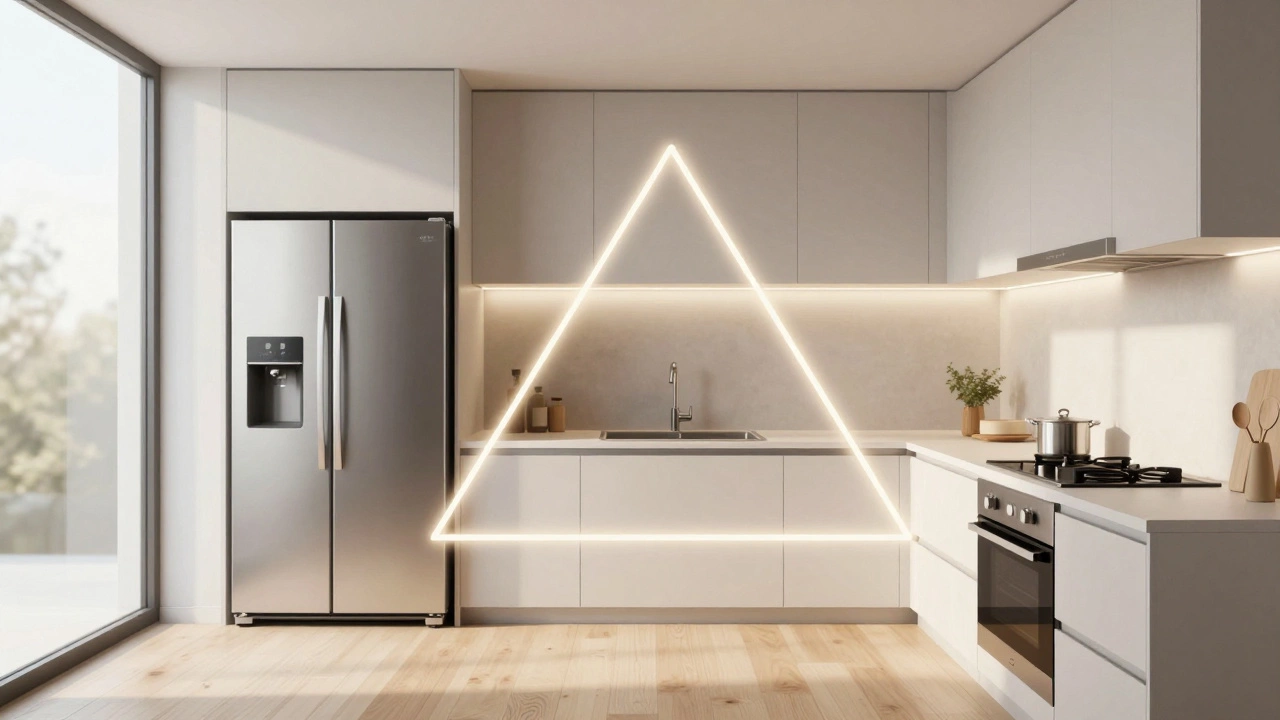
To understand any kitchen layout, you first need to understand the Work Triangle, which is a design concept that connects the three primary work areas of a kitchen: the sink, the stove, and the refrigerator. This concept was developed in the 1940s by researchers at the University of Illinois School of Architecture. It remains the gold standard for efficiency today.
The goal of the Work Triangle is to ensure that these three points form a triangle with sides between 4 and 9 feet long. The total perimeter should be no more than 26 feet. Why? Because this distance keeps you close enough to multitask without crowding yourself or others. If your triangle is too small, you’ll feel cramped. If it’s too large, you’ll spend half your cooking time walking.
In modern open-plan homes, this triangle often evolves into a "work zone" approach, where prep areas are clustered near the sink and cooking areas near the stove. But the principle remains the same: keep related tasks close together.
The Galley Kitchen: The Powerhouse of Efficiency
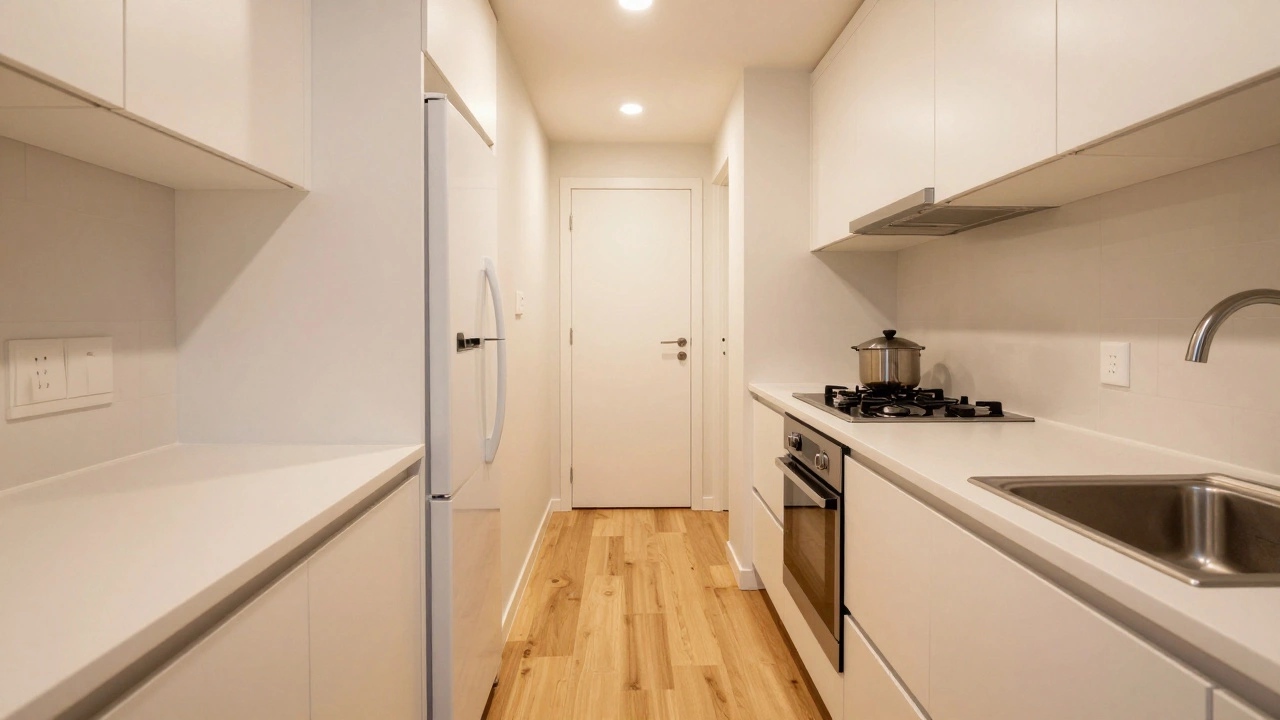
If you have a narrow space, the Galley Kitchen is a parallel layout with cabinets and appliances on opposite walls, separated by a walkway. Often associated with ship galleys, this layout is arguably the most efficient for solo cooks or couples who cook together without needing to pass each other frequently.
Why does it work so well? Because everything is within arm’s reach. You can move from the fridge to the sink to the stove in a straight line without turning around. There is no wasted space in corners, and you don’t need extra cabinetry to store items far away. For apartments in Melbourne or any dense urban area where square footage is premium, the Galley layout maximizes every inch.
- Best for: Narrow spaces, small apartments, and single cooks.
- Key constraint: The aisle must be at least 42 inches wide if one person cooks, or 48-60 inches if two people need to pass each other.
- Pitfall: Avoid placing the refrigerator door directly opposite the stove door, as this creates a bottleneck and safety hazard.
The L-Shaped Kitchen: The Flexible Standard
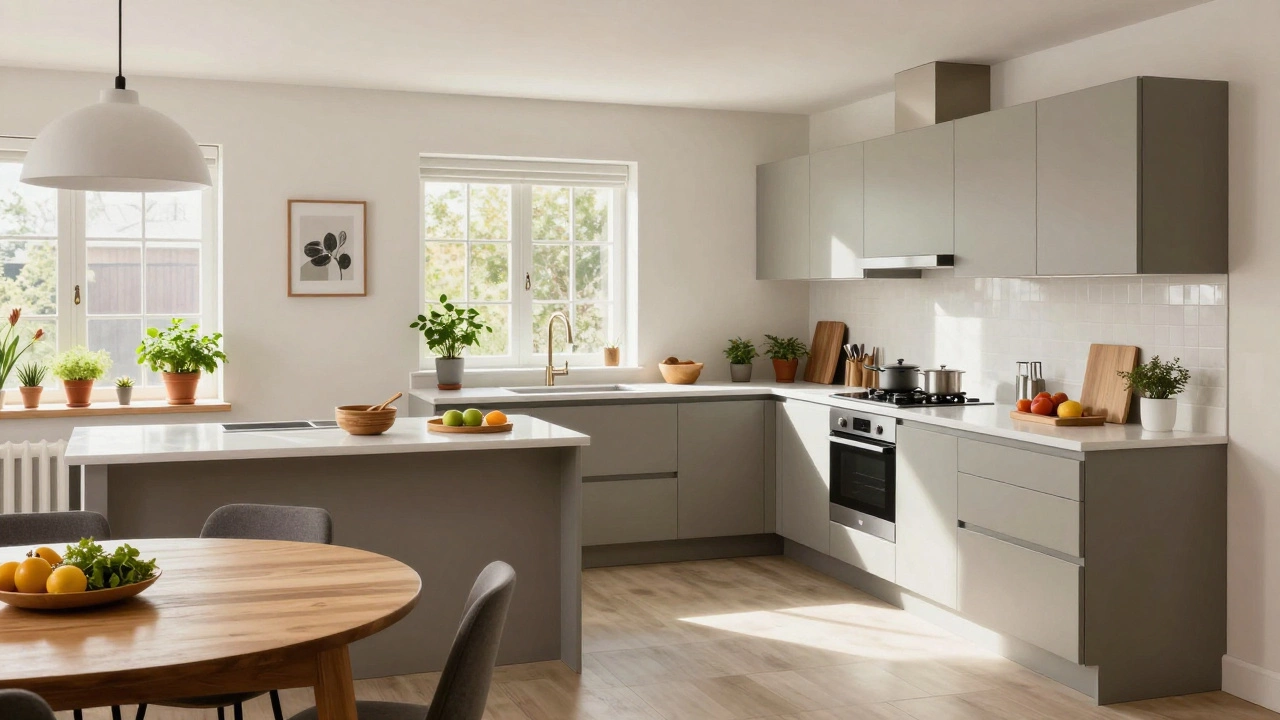
The L-Shaped Kitchen is a layout with counters along two adjacent walls, forming an 'L' shape. This is the most common layout in Australian homes for good reason. It offers flexibility, allows for easy flow into dining or living areas, and naturally defines the cooking zone without closing it off.
Efficiency here comes from the corner. Modern pull-out corner cabinets (like LeMans baskets) have turned previously wasted corner space into highly accessible storage. The open end of the 'L' allows you to place a table or island, creating a social hub while keeping the work triangle intact. If you want to entertain while you cook, this is your best bet.
- Best for: Open-plan living, families, and entertaining.
- Key advantage: Excellent traffic flow; guests can sit at a table without blocking the cook.
- Pitfall: Ensure the corner cabinet is usable. Cheap corner units become trash bins for broken dishes. Invest in proper hardware.
The U-Shaped Kitchen: Maximum Storage, Controlled Flow
The U-Shaped Kitchen is a layout with counters on three walls, providing ample workspace and storage. This layout is ideal for larger rooms where you want dedicated zones for different tasks. One leg holds the sink and dishwasher, another the stove and oven, and the third the refrigerator and pantry.
This separation reduces congestion. Two people can cook simultaneously without bumping into each other-one works at the sink, the other at the stove. The efficiency comes from specialization. You aren’t just storing things; you’re organizing them by function. However, the center of the 'U' can feel enclosed if the room is too small.
- Best for: Large families, serious home cooks, and rooms wider than 10 feet.
- Key advantage: Highest storage capacity and distinct work zones.
- Pitfall: Don’t make the legs too deep. Standard depth is 24 inches. Anything deeper requires you to lean in, which strains your back.
The Island Kitchen: Social Cooking with a Caveat
An Island Kitchen is a freestanding counter in the middle of the room, usually attached to a U-shaped or L-shaped base. Islands are popular because they add counter space and seating. But do they improve efficiency? Only if used correctly.
A poorly designed island breaks the work triangle. If the sink is on the island but the stove is far away on the wall, you’re carrying hot pans across a high-traffic zone. The most efficient islands place the sink and dishwasher there, keeping the heavy lifting (fridge and stove) on the perimeter. This creates a "prep-to-cook" flow that feels natural.
- Best for: Large open-plan homes and entertainers.
- Key requirement: You need at least 36-48 inches of clearance around the island for comfortable movement.
- Pitfall: Avoid putting the stove on the island unless you have a powerful downdraft vent. Rising heat and smoke will bother anyone sitting nearby.
Comparing Kitchen Layouts: Quick Reference
| Layout Type | Efficiency Rating | Storage Capacity | Social Interaction | Space Requirement |
|---|---|---|---|---|
| Galley | High (for 1-2 people) | Medium | Low | Narrow (8-12 ft wide) |
| L-Shaped | High (Flexible) | Medium-High | High | Medium (10x10 ft min) |
| U-Shaped | Very High (Multi-cook) | Very High | Medium | Large (10x12 ft min) |
| Island | Variable | High | Very High | Very Large (12x14 ft min) |
Hidden Factors That Kill Efficiency
Even the perfect layout fails if you ignore human ergonomics. Here are three subtle details that make or break daily use:
1. Counter Height Variance
Standard counter height is 36 inches. But if you are over 6 feet tall, this forces you to hunch. If you are under 5 feet, you strain your shoulders. Customizing the sink and stove heights-lowering the sink to 34 inches for easier dish washing, raising the stove to 38 inches for safer stirring-can drastically reduce fatigue.
2. Appliance Placement Logic
Don’t place the microwave next to the stove if you use it for reheating leftovers that go onto plates. Place it near the seating area or a secondary counter. Don’t put the trash bin inside a deep drawer; put it under the sink or in a toe-kick space for easy access while prepping food.
3. Lighting Layers
Overhead lights cast shadows from your body onto the counter. Install under-cabinet lighting to illuminate your cutting board. Without it, you’re working blind, which slows you down and increases the risk of cuts.
Finding Your Best Fit
There is no "most efficient" layout in a vacuum. The most efficient layout is the one that matches your physical space and your cooking style. If you live alone in a small apartment, a Galley kitchen will save you time and money. If you host weekly dinner parties, an L-shaped or Island layout will serve you better. Measure your room, map your habits, and let the Work Triangle guide your decisions.
What is the most efficient kitchen layout for a small apartment?
The Galley kitchen is typically the most efficient for small apartments. Its parallel design minimizes walking distance and maximizes storage in a narrow footprint. Ensure the aisle is at least 42 inches wide for comfort.
How big should my kitchen island be?
A standard kitchen island should be at least 42 inches wide to allow for cabinets and drawers. If you plan to seat people, add 24 inches for seating depth. Always maintain 36-48 inches of clearance around all sides for safe movement.
Can I have a U-shaped kitchen in a small room?
Not recommended. U-shaped kitchens require a minimum room width of 10 feet to avoid feeling cramped. In smaller spaces, an L-shaped layout with a small cart or peninsula offers similar functionality without closing off the room.
Where should the refrigerator be placed in the work triangle?
The refrigerator should be placed at one point of the work triangle, ideally near the entrance to the kitchen for easy grocery unloading. It should not block the path between the sink and stove.
Is an L-shaped kitchen better than a U-shaped kitchen?
It depends on your priorities. L-shaped kitchens are better for open-plan living and social interaction. U-shaped kitchens offer more storage and counter space, making them better for intensive cooking and larger families.