
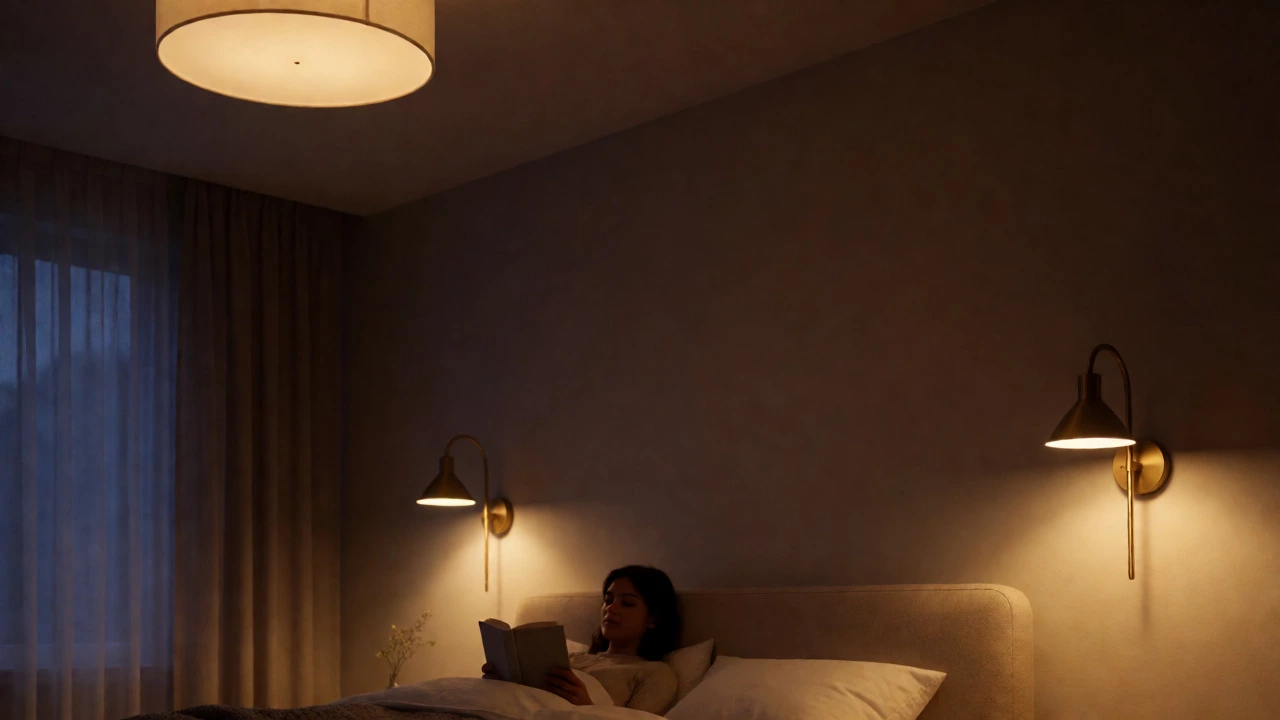
Bedroom Lighting Planner
Enter your room dimensions and usage preferences to get a customized lighting plan based on interior design best practices.
Room Specifications
Your Recommended Plan
Lighting Layers Checklist
Pro Tip:
You know that feeling when you walk into a hotel room at night? It’s cozy, inviting, and you immediately feel your shoulders drop. Then you go home, flip on the big overhead light in your bedroom, and suddenly it feels like an operating theatre or a dentist's office. The difference isn't magic; it's bedroom lighting design.
Most people make the mistake of relying on a single source of light. But your bedroom has three distinct jobs: sleeping, relaxing, and getting ready. One bulb can’t do all three well. If you’re trying to fix your sleep schedule or just want your room to look less like a hospital ward, you need to think about layers, color temperature, and control.
The Three Layers of Bedroom Light
To get this right, you have to stop thinking about "the light" and start thinking about three specific types. Interior designers call this layered lighting, and it’s the secret sauce behind every good-looking bedroom.
- Ambient Lighting: This is the base layer. It’s what lets you find your way around without tripping over clothes. In most homes, this is the ceiling fixture. For bedrooms, keep it soft. You don’t want a spotlight here.
- Task Lighting: This is focused light for specific activities. Reading in bed, applying makeup, or finding your keys on the dresser. Without task lighting, you’ll strain your eyes or end up using harsh overhead lights for simple tasks.
- Accent Lighting: This adds depth and mood. It highlights a piece of art, brightens a dark corner, or creates a glow behind a headboard. It’s not strictly necessary for function, but it’s crucial for atmosphere.
If you only change one thing, add task lighting. Most bedrooms are under-lit where it matters (by the bed) and over-lit where it doesn’t (the center of the room).
Color Temperature: Why Your Brain Hates Blue Light
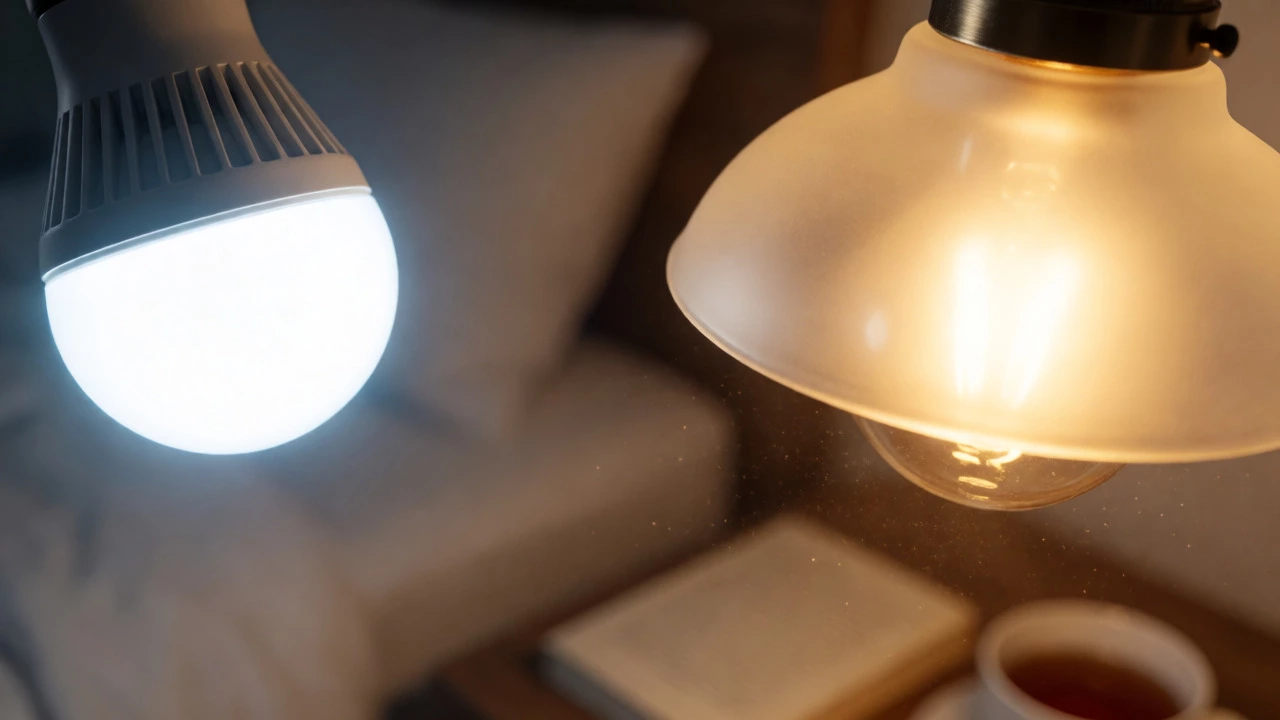
Have you ever tried to fall asleep after staring at a bright white screen? That’s because blue light suppresses melatonin, the hormone that tells your body it’s time to sleep. Traditional cool-white LEDs often emit too much blue spectrum, tricking your brain into thinking it’s still daytime.
For bedrooms, you want warm white bulbs. Specifically, look for a Color Rendering Index (CRI) above 80 and a color temperature between 2700K and 3000K.
| Temperature (Kelvin) | Appearance | Best Use in Bedroom |
|---|---|---|
| 2000K - 2700K | Candlelight / Very Warm | Nightlights, accent strips, pre-sleep wind-down. |
| 2700K - 3000K | Warm White / Soft White | General ambient light, bedside reading, dressing areas. |
| 3500K - 4000K | Neutral / Cool White | Vanities or closets if you need accurate color matching for clothes/makeup. |
| 5000K+ | Daylight / Blue-White | Avoid. Too harsh for relaxation; disrupts circadian rhythm. |
In Melbourne, where winters can be grey and short, you might be tempted to use brighter, cooler lights to combat Seasonal Affective Disorder. That’s fine for your living room or office, but save the daylight bulbs for those spaces. Keep the bedroom sanctuary warm.
The Power of Dimmers and Smart Controls
Here is a hard truth: static lighting is bad lighting. Your needs at 7 AM are different from your needs at 11 PM. A fixed brightness level forces you to compromise. You either wake up blinded by a full-bright ceiling light, or you try to read in a dim, gloomy room.
Dimmer switches are the single best upgrade you can make for bedroom lighting. They allow you to adjust intensity instantly. Pair them with compatible LED bulbs (not all LEDs dim smoothly-some buzz or flicker), and you have total control.
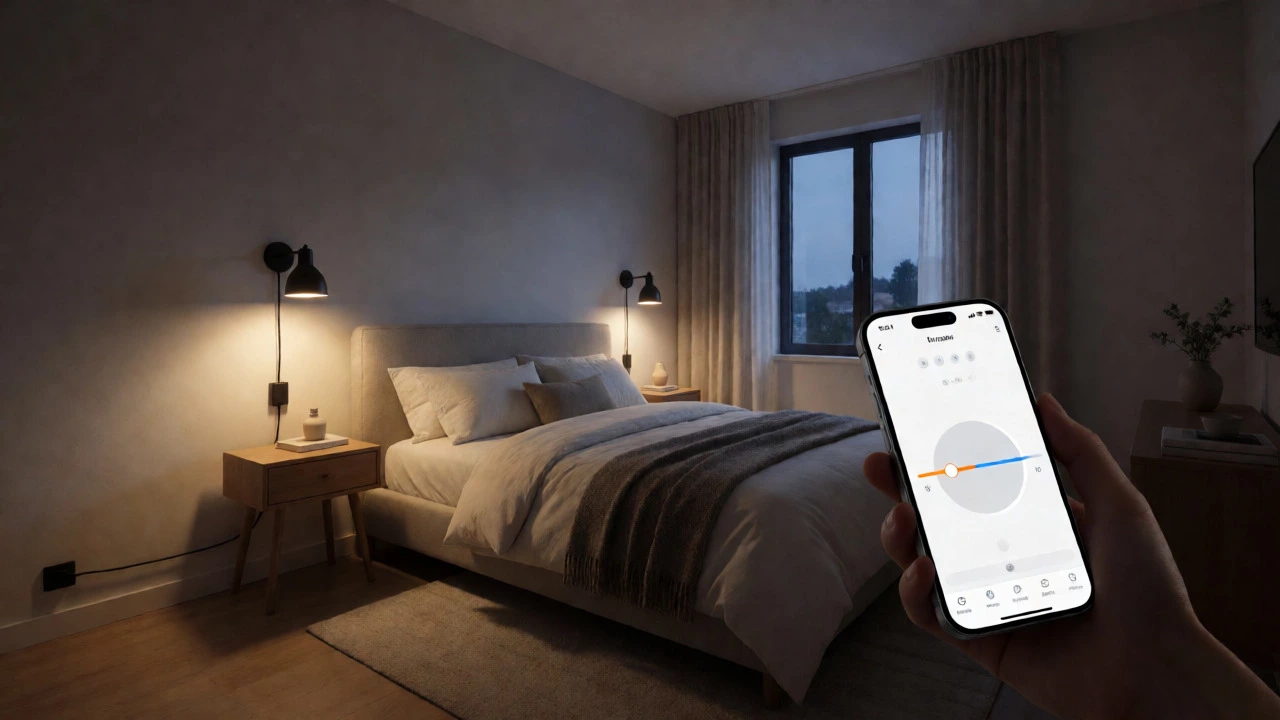
If you aren’t ready to rewire your walls, smart bulbs are a great alternative. Brands like Philips Hue or LIFX let you set schedules via an app. You can program your lights to fade out gradually over 30 minutes as you drift off, mimicking a sunset. This gradual reduction in lux levels helps signal to your body that the day is ending.
Placement Matters: Bedside vs. Overhead
Let’s talk about layout. Where you put the light is just as important as what kind it is.
Bedside Solutions: Wall sconces mounted at shoulder height are superior to table lamps for two reasons. First, they free up your nightstand space for books, water, and phones. Second, they direct light downward, reducing glare in your eyes while you read. If you rent and can’t drill holes, clip-on reading lights that attach to the headboard frame are surprisingly effective and cheap.
Overhead Alternatives: If you hate the central ceiling dome, consider a pendant light instead. Hanging a single pendant or a cluster of small pendants slightly off-center can create visual interest and soften the room’s geometry. Just ensure the bottom of the fixture is high enough so you don’t hit your head when standing up from the bed.
Corner Glow: Dark corners make a room feel smaller. Place a floor lamp in a rarely used corner. Choose one with a fabric shade to diffuse the light evenly. This eliminates shadows and makes the space feel larger and more welcoming.
Practical Tips for Small and Rental Spaces
Not everyone owns their home or has a massive master suite. Here’s how to handle constraints.
- Renters: Look for plug-in wall sconces. These mimic the look of hardwired fixtures but simply plug into an outlet. Hide the cord along the baseboard or behind furniture. It looks professional and costs little.
- Small Rooms: Avoid bulky chandeliers. Stick to flush-mount or semi-flush-mount fixtures that hug the ceiling. Use mirrors opposite windows or lamps to bounce light around, doubling the perceived brightness without adding wattage.
- Budget Fixes: Swap your existing bulbs before buying new fixtures. Changing a 60W equivalent cool-white bulb to a 2700K warm-white LED costs pennies and changes the entire vibe of the room overnight.
Also, check your switch placement. Is there a switch by the door and another by the bed? If not, install a remote-controlled inline switch on your lamp cords. It saves you from climbing back into a warm bed to turn off the light.
Common Mistakes to Avoid
Even with good intentions, people mess up bedroom lighting. Here are the traps I see most often.
Mixing Color Temperatures: Don’t put a 2700K bulb in your bedside lamp and a 4000K bulb in your closet light unless you really know what you’re doing. Mismatched whites look messy and cheap. Stick to one family of warmth throughout the main sleeping area.
Ignoring Glare: Exposed bulbs are trendy, but in a bedroom, they can be blinding. If you can see the filament directly when lying in bed, you need a shade. Frosted glass or fabric shades soften the point-source light.
Too Much Light for Relaxation: We tend to over-light rooms during the day and forget to dial it down at night. Invest in blackout curtains to block streetlights, and ensure your interior lighting can go very low. Some smart bulbs offer a "moonlight" mode at 1% brightness, which is perfect for midnight bathroom trips.
Final Thoughts on Creating Your Sanctuary
Your bedroom is the first place you see in the morning and the last place you see at night. It sets the tone for your day and recovery. By moving away from the single-overhead-light default and embracing layered, warm, and dimmable options, you transform a functional space into a restorative one.
Start small. Change your bulbs to warm white. Add a plug-in sconce. Install a dimmer. You’ll notice the difference in your sleep quality within a week. It’s not just about seeing better; it’s about feeling better.
What color temperature is best for sleeping?
The best color temperature for promoting sleep is between 2000K and 2700K. This range emits minimal blue light, which helps preserve melatonin production. Avoid anything above 3000K in the hour before bed.
Do LED lights affect sleep?
Yes, but it depends on the type. Standard cool-white LEDs emit significant blue light, which can disrupt circadian rhythms. However, modern warm-white LEDs (2700K or lower) are safe for evening use and energy-efficient.
Is it better to have ceiling lights or lamps in a bedroom?
Lamps are generally better for relaxation because they provide softer, localized light. Ceiling lights are useful for cleaning or finding things, but relying solely on them creates a sterile environment. A mix of both, controlled separately, is ideal.
How many lumens do I need for a bedroom?
A general rule is 10-20 lumens per square foot for ambient lighting. For a standard 12x12 foot bedroom, aim for 1,500 to 2,500 lumens total across all sources. Task lighting should add another 400-800 lumens locally.
Can I use smart bulbs with dimmer switches?
It depends. Many smart bulbs work best with standard on/off switches, controlling brightness via the app. Using them with traditional analog dimmers can cause flickering or damage. Check the manufacturer's compatibility guide; some newer models support specific smart dimmer switches.