

Sofa Cushion Selection Guide
Answer a few questions about your lifestyle to find the perfect cushion match for your home.
The Comfort Trade-Off: Sink vs. Support
When you sit on a fiber-filled sofa, you're dealing with air and polyester. It feels great for the first ten minutes-very welcoming and soft. But because there is no structural core, you eventually hit the frame of the sofa. This is why fiber cushions need to be 'fluffed' regularly. If you don't shake them out and beat them back into shape, the fibers clump together, creating permanent dips where you always sit.Foam is a different beast. It provides consistent support across the entire surface. You won't find yourself sinking into the wooden rails of the couch. The catch? Some cheap foam can feel too firm, almost like you're sitting on a mattress that hasn't been broken in. High-density foam, however, offers a balance where it supports your weight but still contours to your body. The real winner here depends on how you use your living room. Do you want a nap-spot (fiber) or a place to sit upright and chat (foam)?
Durability and the Long Game
Let's talk about longevity. Fiber is essentially a luxury of convenience; it's cheap to produce and feels great initially, but it fails the endurance test. Within a year of daily use, fiber cushions often lose their loft. You'll notice the middle of the cushion sagging while the edges stay plump. To fix this, you have to manually rearrange the filling, which is a chore most people ignore until the sofa looks ruined.Foam is built for the marathon. A high-quality Polyurethane foam block with a high density rating (measured in kg/m³) will maintain its original shape for years. While the very top layer might soften over time, the core structure remains intact. If you have kids or pets who treat the sofa like a trampoline, foam is the only logical choice. It resists the 'permanent dent' syndrome that plagues fiber fills.
| Feature | Fiber Fill | Foam Core |
|---|---|---|
| Initial Feel | Plush and Cloud-like | Supportive and Firm |
| Maintenance | High (Requires Fluffing) | Low (Stays in place) |
| Lifespan | Short to Medium | Long |
| Shape Retention | Poor | Excellent |
| Common Use | Casual, Cozy Lounging | Formal or High-Traffic Areas |
The Secret Weapon: The Hybrid Approach
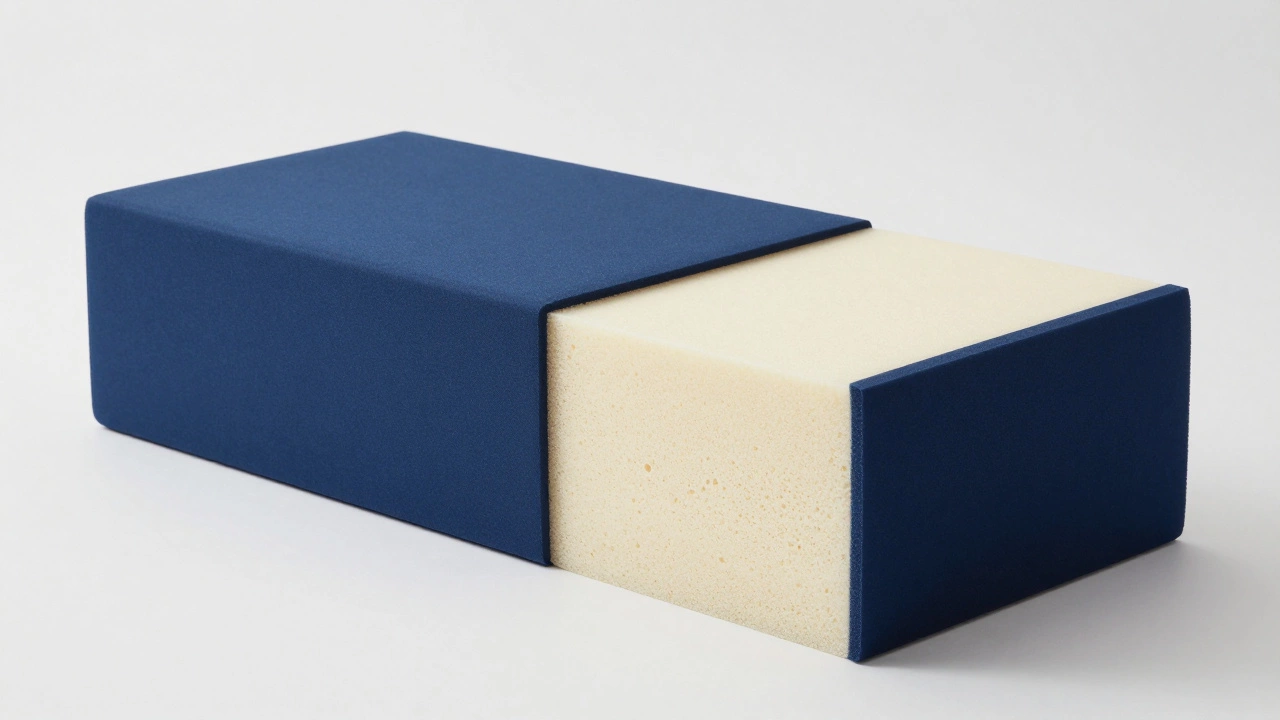
If you can't decide between the two, you don't actually have to. Many high-end furniture brands use a "wrapped foam" or "foam-core" design. This is where a dense foam block is wrapped in a thick layer of polyester fiber.This hybrid setup gives you the best of both worlds. When you first sit down, you feel the soft, welcoming embrace of the fiber. But as you sink in, the foam core kicks in to prevent you from bottoming out. It provides the aesthetic of a plush sofa with the structural integrity of a firm one. If you're shopping for a fiber sofa cushions alternative that doesn't sacrifice comfort, look for labels that mention "dacron wrap" or "foam-encased fiber."
Environmental Impact and Health
It's worth noting that neither of these is a "green" miracle. Fiber is usually a plastic-based polyester, meaning it's not biodegradable. Foam is a chemical product. In the past, some foams released VOCs (volatile organic compounds) that caused that "new car smell," which can be irritating for people with sensitive respiratory systems.If health and environment are your main drivers, you might look beyond these two. Latex foam is a more sustainable, natural alternative derived from rubber trees, though it's significantly more expensive. Similarly, Down feathers offer the ultimate luxury feel, but they require even more maintenance than fiber and can trigger allergies. Most standard retail sofas stick to polyurethane and polyester because they are cost-effective and predictable.

How to Spot Quality During a Store Visit
Don't just sit on the sofa for five seconds and decide. To really test the filling, you need to apply a bit more pressure. Use your hand to press firmly into the center of the cushion. A quality foam cushion will bounce back instantly. If it lingers for a second or feels like there's a hollow gap, the density is too low.For fiber cushions, grab the cushion and give it a squeeze. If it feels like a bag of cotton balls with gaps in between, it will sag quickly. It should feel dense and evenly distributed. Also, check if the covers are removable. Fiber cushions are much easier to manage if you can unzip the cover and manually fluff the filling from the inside. If the cushions are sewn-in (fixed), be very wary of fiber fill, as you'll have no way to fix the inevitable sagging.
Can I replace fiber filling with foam in my existing sofa?
Yes, you can. If your cushions have zippers, you can remove the fiber and purchase custom-cut foam inserts. However, keep in mind that foam is denser and may make the cushion feel tighter in the fabric cover, which could change the overall look of the sofa.
How often should I fluff fiber cushions?
To keep them from permanently clumping, you should fluff them once a week. This involves shaking the cushion vigorously and punching the center to redistribute the fibers. If you wait until they look flat, the fibers may have already bonded into clumps that are harder to separate.
Does high-density foam mean the sofa is harder?
Not necessarily. Density refers to the weight of the material per cubic foot, not the hardness. High-density foam is actually more durable and can be engineered to be soft yet supportive, whereas low-density foam often feels "mushy" and collapses quickly.
Which material is better for people with back pain?
Foam is generally better for back pain because it provides consistent spinal support and prevents the hips from sinking too deeply, which can cause lower back strain. Fiber is often too soft for those needing orthopedic support.
Are foam cushions more expensive than fiber?
Generally, yes. High-quality, high-density polyurethane foam costs more to manufacture than synthetic polyester fibers. However, the cost per year of use is often lower for foam because it doesn't need to be replaced or repaired as often as fiber.
What to Do Next
If you're currently staring at two different sofas in a showroom, ask the salesperson specifically about the "density" of the foam or the "grade" of the fiber. If they can't tell you the density (e.g., 1.8lb or 2.5lb foam), it's likely a low-end product. If you already own a sagging fiber sofa, don't throw it away just yet-try adding a 2-inch foam base layer inside the cushion cover to give it the structure it's missing. For those moving into a new home, remember that the living room is the heart of the house; investing in a hybrid or high-density foam option now will save you from the headache of replacing your entire couch in three years.