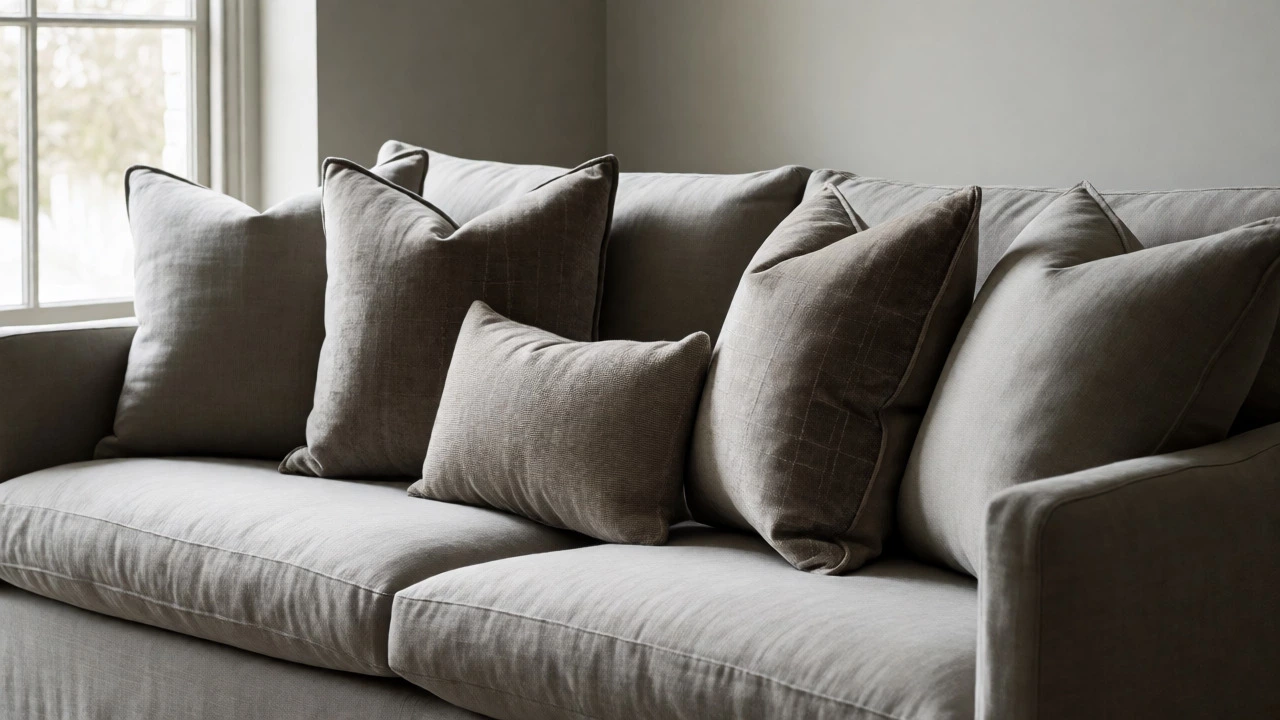
Sofa Cushion Styling Calculator
Find the perfect balance of comfort and style. This tool uses professional styling rules (odd numbers, layering, and proportion) to recommend a cushion setup.
Recommended Setup
--
You just bought a gorgeous new sofa, or maybe you’re trying to refresh an old one. You head to the store, grab a handful of throw pillows, and toss them on. Then you step back and squint. Something’s off. It looks either like a showroom display that nobody actually sits on, or worse, like a messy pile of laundry waiting to be folded.
The question isn’t really about how many pillows fit physically. It’s about balance, proportion, and intention. There is no single magic number that works for every couch in Melbourne (or anywhere else). A three-seater loveseat needs a different approach than a sprawling L-shaped sectional. But there are rules of thumb that professional stylists use to get it right every time. Once you understand the logic behind the layers, you’ll stop guessing and start styling with confidence.
The Golden Rule: Odd Numbers Win
If you remember nothing else from this guide, remember this: odd numbers look better. This isn’t just superstition; it’s visual psychology. When humans look at a symmetrical, even-numbered arrangement, our eyes tend to settle on the center line. It feels static, formal, and sometimes a bit stiff. Odd numbers create asymmetry, which forces your eye to move around the composition. It creates energy and interest.
Start with three cushions per seat section. For a standard two-seater sofa, that means six total. For a three-seater, aim for five or seven, depending on the size. Why not four? Because four often looks like two pairs, which can feel dated unless you are going for a very specific, traditional British country house look. Three allows for a focal point-a larger central cushion-flanked by smaller ones. This hierarchy draws attention to the middle of the sofa, making it look inviting rather than cluttered.
| Sofa Type | Recommended Count | Arrangement Strategy |
|---|---|---|
| Loveseat (2 seats) | 4-6 | Two large squares + one small lumbar per side, or 3 per side if space permits. |
| Standard Sofa (3 seats) | 5-7 | Large outer anchors, medium inner supports, small accent in the center. |
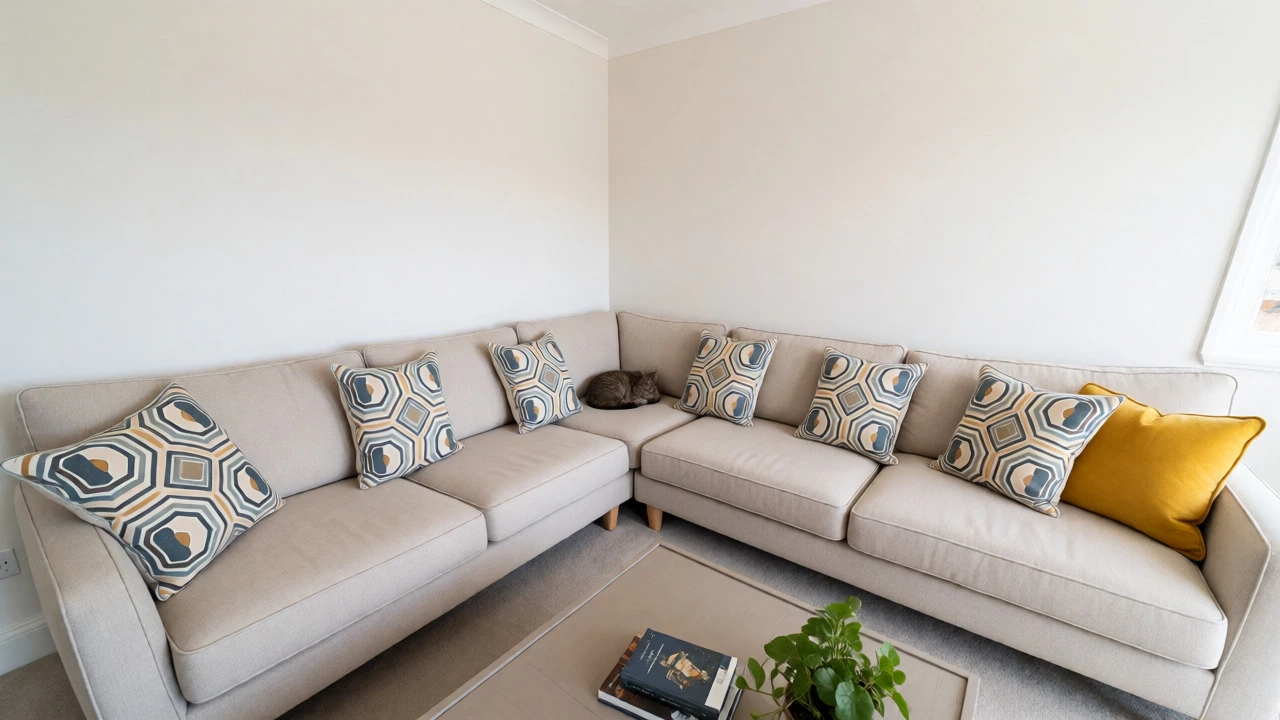
| Sectional (L-shape/U-shape) | 7-10+ | Treat each arm as its own vignette. Keep the corner light to avoid bulk. |
| Armchair | 1-2 | One large square or one lumbar. Less is more here. |
Mastering the Layering Technique
Just throwing pillows in a row doesn’t cut it anymore. To make your sofa look professionally styled, you need depth. Think of your cushions like clothing layers. You have your base layer, your mid-layer, and your accessories.
First, anchor the ends. Place your largest cushions against the arms of the sofa. These should be substantial-think 50x50cm or even 60x60cm squares. They frame the seating area and provide actual back support when you lean out. If you skip these, the sofa looks unfinished, like a picture without a frame.
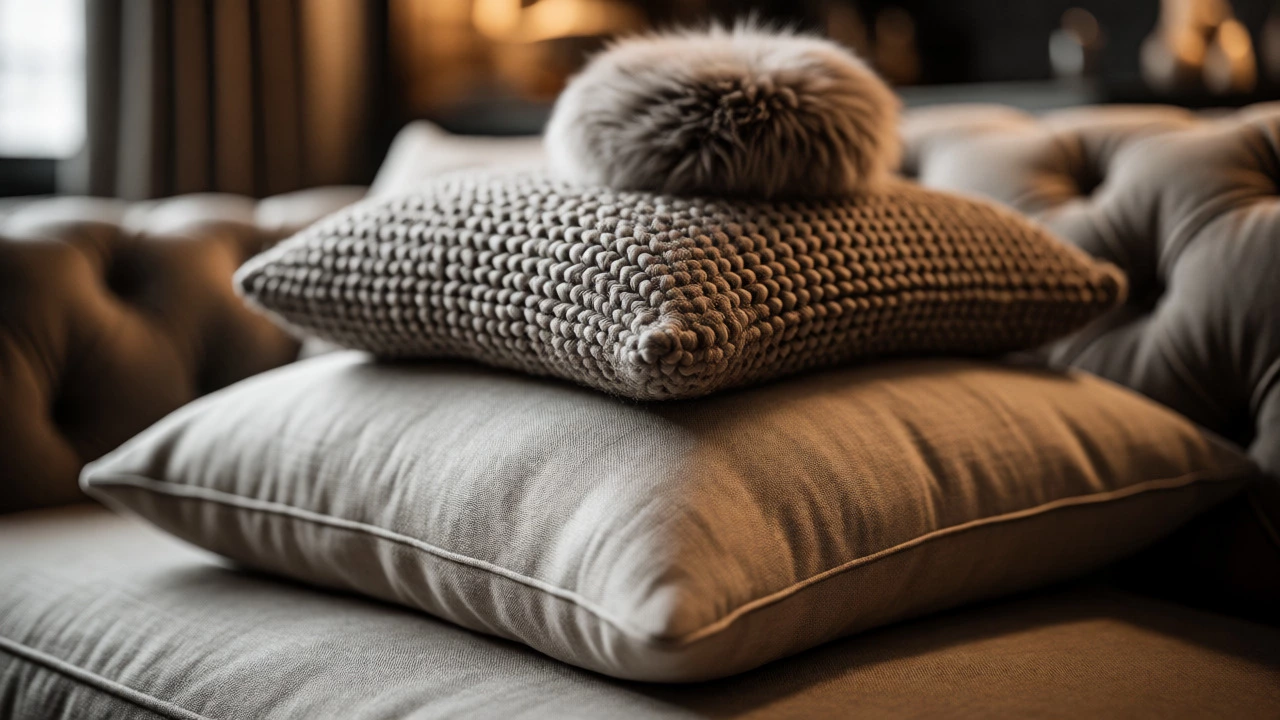
Next, add the middle layer. These are slightly smaller cushions, perhaps 45x45cm, placed in front of the large anchors. Here is where you play with texture. If your sofa is smooth linen, go for velvet or chunky knit. If your sofa is busy patterned fabric, stick to solid colors with interesting weaves. This contrast prevents the visual noise that happens when everything screams for attention.
Finally, drop the accent piece. This is usually a small rectangular lumbar pillow or a tiny round cushion placed dead center or slightly off-center. This is the "jewelry" of the sofa. It breaks up the horizontal line of the other cushions and adds a pop of color or a unique shape. If you find yourself staring at your sofa wondering what’s missing, it’s probably this third layer.
Size Matters: Don’t Buy Uniform Pillows
One of the biggest mistakes people make is buying all their cushions in the same size. It makes the sofa look flat and two-dimensional. Real life has variation, so your decor should too.
Aim for at least two different sizes per arrangement. On a standard three-seater, I typically recommend a mix of 50x50cm and 40x40cm squares, plus one 30x50cm lumbar. The difference in height between the back cushions and the front cushions creates shadows and dimension. Without that variation, the sofa looks like a hotel lobby-functional but forgettable.
Also, consider the scale of your furniture. If you have a low-profile, modern sofa with thin arms, huge oversized cushions will swallow it whole. Stick to smaller, flatter profiles. Conversely, if you have a deep, plush Chesterfield with high rolled arms, tiny pillows will look lost. Match the volume of the cushion to the volume of the frame.
Color and Pattern: The 60-30-10 Rule
You might have the perfect number of cushions, but if they clash, it won’t matter. Interior designers often use the 60-30-10 rule for rooms, and it works surprisingly well for sofas too.
- 60% Dominant: This is usually your sofa itself, but in terms of cushions, it’s your neutral anchors. Choose solids that complement the upholstery. If your sofa is grey, charcoal or cream cushions work best.
- 30% Secondary: This is where patterns come in. Geometric prints, florals, or stripes. Keep the color palette tied to the dominant color so it doesn’t look chaotic.
- 10% Accent: The bold choice. Maybe a bright mustard yellow or a deep emerald green. Use this sparingly. One or two cushions max.
Be careful with matching sets. Buying a pre-packaged set of four identical cushions is convenient, but it rarely looks custom. Mix and match. Take one cushion from the bedroom, one from the craft store, and one from the sale bin. Eclectic mixes feel collected over time, whereas matched sets feel bought yesterday.
Common Pitfalls to Avoid
Even with good intentions, it’s easy to slip into bad habits. Here are the most common errors I see in living rooms across Australia.
The "Too Many" Trap. If you have to remove cushions to sit down comfortably, you have too many. Comfort always trumps aesthetics. If your guests can’t relax because they’re fighting a pillow fight just to sit, the design failed. Aim for functionality first, then style.
The "Flat Pillow" Problem. Nothing ruins a stylish sofa faster than sad, deflated inserts. Cheap polyester fills flatten within weeks. Invest in high-quality feather-down or hybrid foam-feather inserts. They plump up beautifully and stay shaped longer. Fluff them daily. Seriously, give them a good whack every morning. It takes ten seconds and transforms the look.
Ignoring the Arms. Some people push all cushions to the center, leaving the arms bare. This disconnects the seating area from the structure of the sofa. Always keep something against the arms to bridge the gap between the hard wood/metal frame and the soft seating surface.
Adapting to Your Lifestyle
How you live dictates how you style. If you have kids or pets, you might want fewer, washable covers. Leather sofas, for instance, often look cleaner with minimal cushions because the material itself is a statement. Over-cushioning a leather sofa can hide its quality.
If you use your sofa primarily for napping, prioritize lumbar support and softer textures. If it’s for entertaining, you can afford to be more decorative and less practical. In Melbourne, where winters can be chilly, adding heavier fabrics like wool or faux fur in cooler months and lighter linens in summer keeps the space feeling current and comfortable year-round.
Frequently Asked Questions
Is it okay to have an even number of cushions?
Yes, but it requires careful execution. Even numbers work best for very formal, symmetrical setups or if you are using distinct pairs of different styles (e.g., two large squares and two small rectangles). However, odd numbers generally create a more dynamic and visually appealing composition for casual living spaces.
What size cushions should I buy for a standard 3-seater sofa?
For a standard 3-seater, a mix of 50x50cm and 40x40cm squares is ideal. Add one 30x50cm lumbar pillow for variety. Avoid buying anything smaller than 40x40cm as the primary cushion, as it will look disproportionate and get lost against the backrest.
How do I keep my cushions looking full?
The secret is the insert, not the cover. Buy inserts that are 5cm larger than your cover (e.g., a 55cm insert for a 50cm cover). This tension keeps the corners sharp and the pillow plump. Also, choose feather-down or high-density foam hybrids, and fluff them vigorously every day.
Should cushions match the rug or the curtains?
They don't need to match exactly, but they should share a color family. Pull one accent color from your rug or artwork and echo it in one or two cushions. This ties the room together without making it look overly coordinated or rigid.
Can I mix different shapes of cushions?
Absolutely. Mixing squares, rectangles, rounds, and bolsters adds visual interest. Just ensure there is a unifying element, such as a shared color palette or similar fabric weight, so the arrangement doesn't look chaotic.