
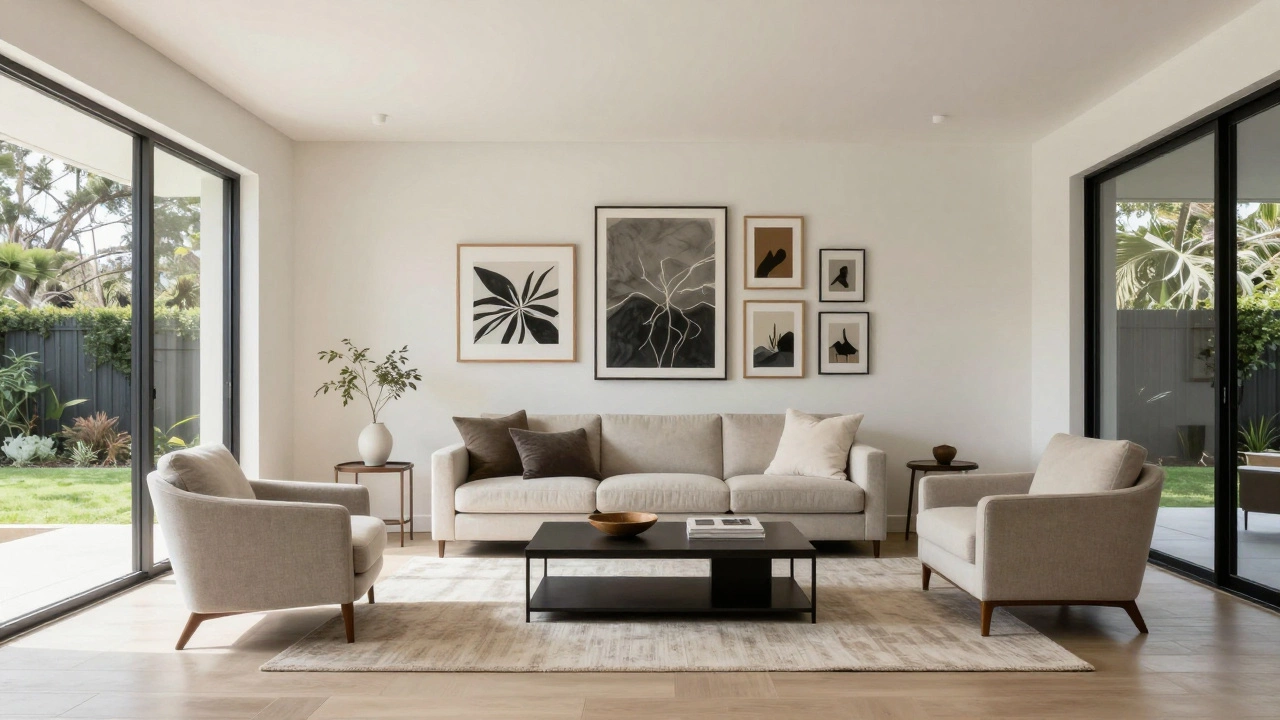
Living Room Sofa Layout Calculator
Determine the ideal sofa configuration for your space based on room dimensions and traffic flow requirements.
Recommended Configuration
Walk into most living rooms and you’ll see one big sofa. It’s the standard, the default, the safe bet. But what if your room feels cramped with that single piece? Or maybe it looks empty and lonely? The question isn’t just about how many sofas fit physically; it’s about how many create a space that actually works for your life. Getting this number wrong can turn your hangout spot into an obstacle course or a sterile showroom.
I’ve spent years rearranging spaces in Melbourne apartments and suburban homes, watching people struggle with furniture that doesn't talk to each other. The magic number usually isn't one, and it rarely needs to be three. For most homes, the sweet spot lies somewhere in between, depending entirely on your floor plan and how you use the room.
Key Takeaways
- The One-Sofa Rule: Works best for large open-plan areas or formal living rooms where conversation is secondary to viewing TV or art.
- The Two-Sofa Setup: Ideal for square rooms, creating an intimate conversation pit without needing extra chairs.
- Mix-and-Match Strategy: Combining one sofa with two armchairs often offers the most flexibility for traffic flow and social dynamics.
- Wall Art Integration: Your seating arrangement dictates where your art goes; face-to-face sofas leave walls free for galleries, while L-shapes anchor art above the main seat.
- Space Calculation: Keep at least 30-36 inches of walking path around all furniture to avoid the "cluttered" feel.
The Anatomy of Your Living Space
Before you buy another cushion, look at your floor. Not just the size, but the shape. A long, narrow room screams for a linear setup, while a boxy square room begs for symmetry. If you have an open-plan layout common in modern Australian homes, your living room likely bleeds into the kitchen or dining area. In these cases, the sofa acts as a room divider. One large sectional might block too much light or sightlines, whereas two smaller loveseats can define the zone without cutting it off completely.
Consider the entry points. If your door opens directly into the middle of the seating area, you need clearance. A single massive sofa pushed against a wall might look tidy, but it creates a dead zone behind it. Two smaller pieces allow air-and people-to move through the space naturally. Measure your room first. If your width is under 10 feet, stick to one compact sofa and a chair. Between 10 and 14 feet? You have room to play with pairs or larger sections. Over 14 feet? You can afford to separate seating groups.
Scenario 1: The Power of One
One sofa is the classic choice. It’s simple, cost-effective, and leaves plenty of room for other elements like a coffee table, side tables, and yes, wall art. This setup works beautifully if you want a focal point elsewhere. Maybe you have a stunning fireplace, a large window with a view of the Yarra River, or a gallery wall that demands attention.
With one sofa, you typically balance it with two armchairs or a loveseat opposite or adjacent to it. This creates a triangle of conversation. It’s flexible because you can easily pull one chair out if you need more floor space for yoga, kids’ playtime, or moving things around. The downside? If you have four or five people over, someone ends up on the floor. Also, a single sofa can make a large room feel unbalanced, like a ship drifting in an ocean of carpet.
Scenario 2: The Symmetry of Two
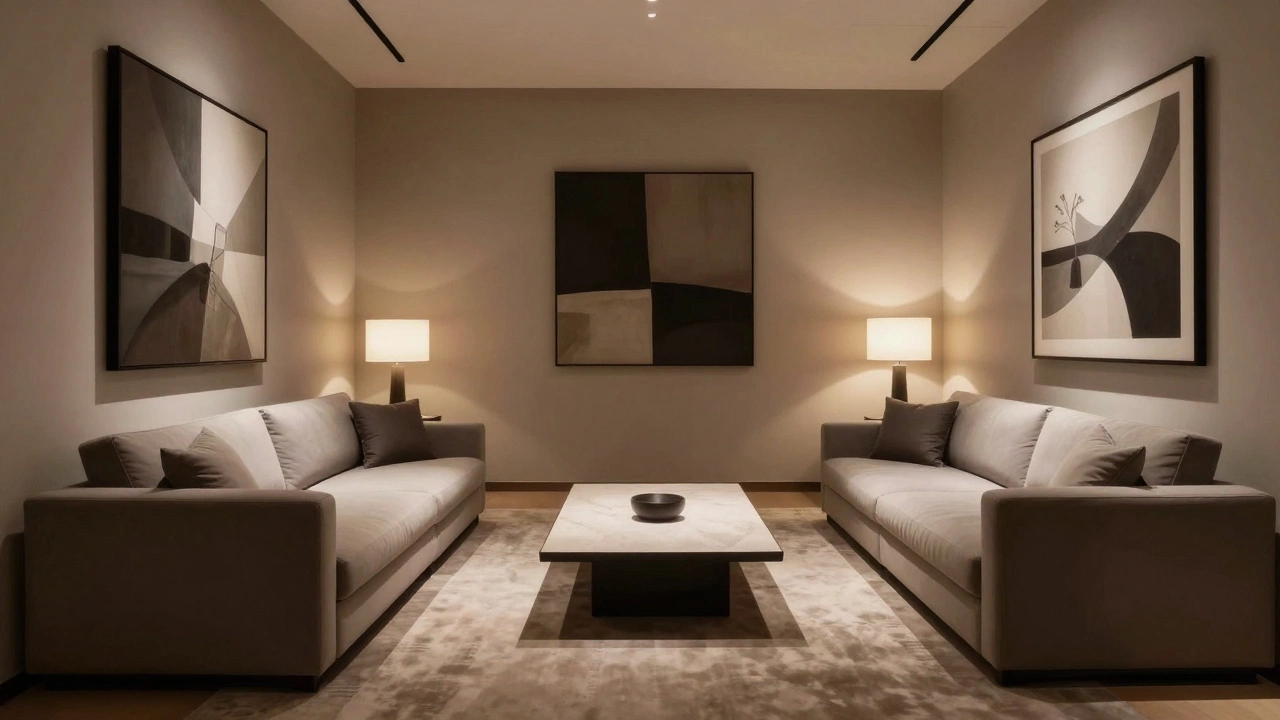
Two sofas facing each other is a bold move that screams sophistication. Think Parisian apartment or high-end hotel lobby. This layout is incredibly effective for square rooms. It creates a defined "room within a room." The space between them becomes a natural hub for a coffee table and intense conversation. Everyone is included; no one is stuck on the periphery.
This setup frees up the walls. Since your back isn’t necessarily against a wall (or if it is, it’s symmetrical), you can hang art on the side walls without worrying about blocking views from the seating. It’s also great for pets; they can curl up on one sofa while you relax on the other. However, this requires precision. The sofas must match in height and style, or the asymmetry will look accidental rather than intentional. You also lose some floor space for walking, so ensure your pathways remain clear.
| Configuration | Best Room Shape | Social Capacity | Art Placement Potential |
|---|---|---|---|
| One Sofa + Chairs | Narrow or Open-Plan | Flexible (3-5 people) | High (Focal wall free) |
| Two Facing Sofas | Square or Wide | Intimate (4 people) | Medium (Side walls only) |
| L-Shaped Sectional | Large Rectangular | Maximum (6+ people) | Low (Backs blocked) |
Scenario 3: The L-Shape Compromise
An L-shaped sectional is essentially one giant sofa that wraps around. It’s popular because it maximizes seating without buying multiple pieces. It anchors a corner well and provides a cozy nook. But here’s the catch: it eats up visual space. In a smaller room, an L-shape can dominate everything, leaving little room for decor or movement.
If you choose this route, you’re sacrificing wall space. The back of the sectional often blocks a significant portion of your walls, limiting where you can hang artwork. You’re left with the short side or the wall opposite the TV. If you love displaying collections, this might not be the best choice. However, for movie nights or family gatherings where everyone wants to be close, it’s unbeatable. Just ensure the chaise part doesn’t block any doors or windows.
Integrating Wall Art with Seating
Your seating arrangement dictates your art strategy. When you have one sofa against a wall, that wall becomes prime real estate. You can hang a large statement piece centered above the sofa, or create a gallery grid. The rule of thumb? The art should be about two-thirds the width of the sofa. Too small, and it gets lost. Too big, and it overwhelms the room.
When you use two facing sofas, the walls are liberated. You don’t need to anchor art to a sofa anymore. You can treat the entire perimeter as a canvas. This is perfect for collectors. You can hang pieces at eye level relative to standing viewers, creating a museum-like experience. Conversely, if you have an L-shaped sectional, you might find yourself hanging art on the ceiling or using floor-standing easels because the traditional wall space is compromised by furniture backs.
Lighting plays a role here too. If your art is the star, position your sofas so that ambient light hits the pieces without causing glare. Avoid placing sofas directly opposite bright windows if your art is on that wall, unless you have blackout curtains.
Traffic Flow and Comfort Metrics
No matter how many sofas you choose, comfort dies without flow. The International Furniture Association recommends a minimum of 30 inches (76 cm) for walking paths, but 36 inches (91 cm) is ideal for comfortable passage. Measure this around every sofa. If you have to squeeze past someone to get to the kitchen, you have too much furniture or it’s placed poorly.
Also, consider the coffee table gap. There should be 14-18 inches between the sofa edge and the coffee table. This allows legs to tuck in and reach drinks easily. If you have two sofas facing each other, the total width of the coffee table plus gaps should not exceed the distance between the sofas minus the depth of the seats. Math matters here. A cramped center makes the whole room feel tight, regardless of how spacious the perimeter is.
Small Space Hacks
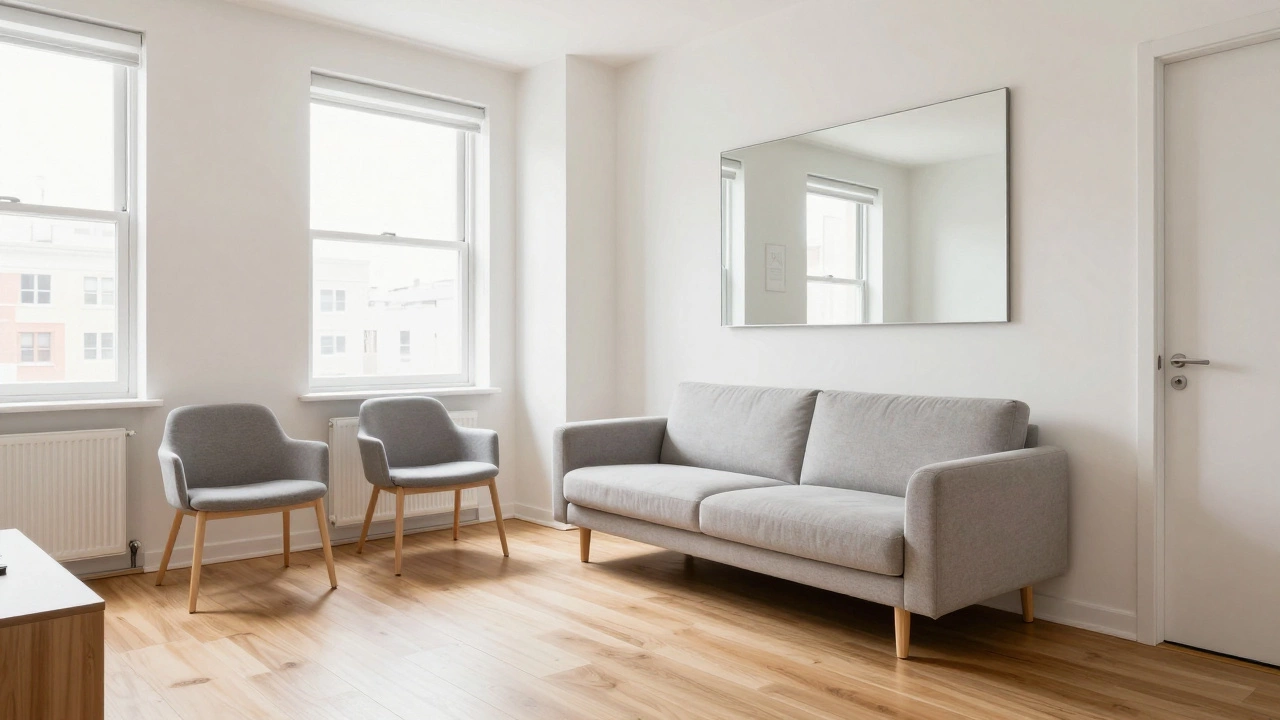
Living in a Melbourne unit? Space is premium. Don’t force two sofas into a 12x12 foot room. Instead, opt for one slim-profile sofa and two lightweight armchairs. Look for pieces with exposed legs; they let light pass underneath, making the floor visible and the room feel larger. Dark, bulky sofas absorb light and shrink the visual space.
Use mirrors strategically. Place a large mirror on the wall opposite a window, flanked by your seating. It reflects light and doubles the visual depth. Hang art above the mirror to integrate it into the decor scheme. If you must have two seating areas, consider a bench instead of a second sofa. Benches are shallower, easier to move, and can double as storage.
Common Mistakes to Avoid
- Pushing Everything Against Walls: Floating your sofa a few inches off the wall adds depth and prevents the room from feeling like a dormitory.
- Ignoring Scale: A tiny sofa in a huge room looks pathetic. A huge sofa in a tiny room looks suffocating. Match the furniture scale to the room volume.
- Forgetting Function: Do you entertain? Go for modular sections. Do you read alone? Prioritize a deep, plush chair over a second sofa.
- Overlooking Lighting: Ensure your seating doesn’t block overhead lights. Use floor lamps beside sofas to create pools of light for reading and ambiance.
Final Thoughts on Finding Balance
There is no universal law dictating exactly one or two sofas. It’s about rhythm. Does the eye travel smoothly through the room? Can you sit comfortably without bumping knees? Does the art breathe? Start with the largest piece-the sofa-and build outward. If the room feels heavy, remove bulk. If it feels empty, add layers, not necessarily more seats. Sometimes a rug, a plant, or a well-placed painting solves the problem better than a second couch.
Can I put two sofas in a small living room?
It depends on the definition of "small." If your room is under 100 square feet, two sofas will likely clutter the space. Opt for one compact sofa and two armchairs instead. If you have a square room between 100-150 square feet, two loveseats can work if they are low-profile and have exposed legs to maintain visual openness.
How do I arrange furniture if I have two sofas?
The most common arrangement is facing each other with a coffee table in the middle, ideal for square rooms. Alternatively, place them perpendicular to each other in an L-shape configuration, though this mimics a sectional. Ensure there is at least 36 inches of walking space around the outer edges of the sofas.
Does having two sofas make a room look bigger or smaller?
If done correctly, two sofas can make a room feel more structured and balanced, which can enhance the perception of order and space. However, if the sofas are bulky or block light, they will shrink the room. Using matching, streamlined sofas with light colors helps maintain an airy feel.
Where should I hang art if I have two facing sofas?
With two facing sofas, the walls behind the sofas may be less accessible or visually interrupted. Focus on the side walls or the wall opposite the main focal point (like a TV). You can create a gallery wall on the longest uninterrupted wall to draw the eye across the room, balancing the visual weight of the seating.
Is it better to have one large sectional or two separate sofas?
A sectional offers maximum seating and cohesion but is hard to move and can block walls for art. Two separate sofas offer flexibility; you can rearrange them for parties or cleaning, and they often allow for better airflow and light distribution. Choose sectionals for casual, high-capacity needs and separate sofas for formal, adaptable spaces.