

Sofa Cushion Thickness & Density Recommender
Your Recommendation
Adjust the settings to see the ideal cushion specifications for your needs.
Quick Guide: The Right Thickness for Your Needs
- 2 to 3 inches: Best for tight-back sofas or accent chairs where a firm, slim look is preferred.
- 4 to 5 inches: The standard for most modern living room couches; balances support and softness.
- 6 inches or more: Ideal for deep-seated lounges or "sink-in" comfort styles.
The Magic Number: What is the Standard?
If you're looking for a general rule of thumb, 4 to 5 inches is the industry standard for a reason. Most adults find this depth provides enough "give" to keep the underside of their thighs from hitting the hard frame, while still offering enough push-back to prevent a slouching posture. If you go thinner than 3 inches, you're essentially relying on the quality of the sofa springs to do all the work. If the springs are old or weak, a 3-inch cushion will feel like nothing at all.
Think about your daily habits. Do you use your sofa for formal hosting or as a nap station? A formal guest room sofa can get away with a slimmer 3-inch profile because guests only sit for short periods. But if you're binge-watching a series for six hours, a 5-to-6-inch cushion with a softer core is a lifesaver for your lower back.
Foam Density vs. Thickness
Here is the biggest mistake people make: thinking that more thickness equals more comfort. A 6-inch cushion made of low-density foam will actually feel softer and flatten out faster than a 3-inch cushion made of high-density foam. To get this right, you need to understand Foam Density, which is the weight of the foam per cubic foot, determining how long the material maintains its shape.
If you choose a thick cushion with low density, you'll experience the "bottom-out" effect. This is when you sink straight through the soft foam and hit the hard deck of the sofa. To avoid this, look for high-resiliency (HR) foam. For example, a 4-inch cushion with a density of 2.5 lbs per cubic foot will often feel more supportive and last longer than a 6-inch cushion with a 1.8 lb density.
| Thickness | Low Density (Soft) | High Density (Firm) |
|---|---|---|
| 3" - 4" | Feels like sitting on the frame | Firm, supportive, "modern" feel |
| 4" - 6" | Very plush, prone to sagging | The "goldilocks" zone for most |
| 6"+ | Extreme sink, hard to get out | Luxury lounge feel, very durable |
Matching Thickness to Your Sofa Frame
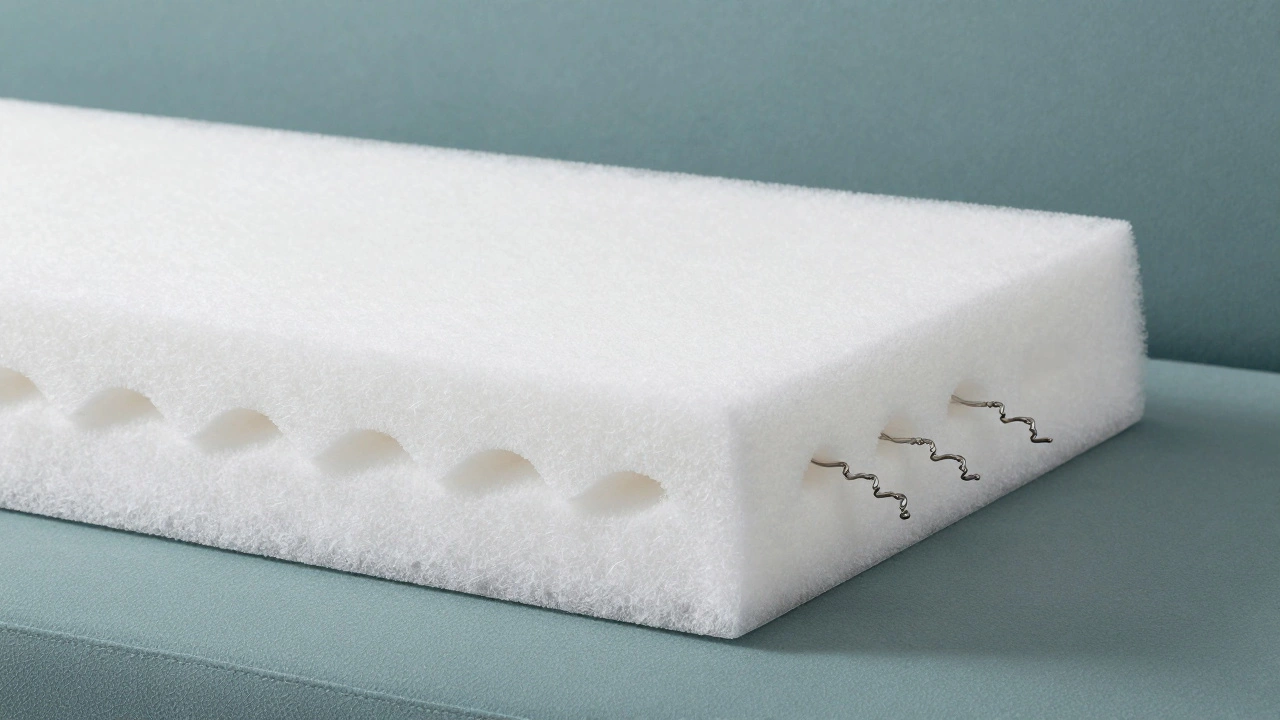
You can't pick a cushion thickness without looking at your Sofa Frame. The frame is the structural skeleton of the couch, usually made of kiln-dried hardwood or engineered wood. If your frame has a "deck" (a solid base), you can use thinner cushions. If your frame uses Sinuous Springs-those zig-zag wires that provide bounce-you need enough thickness to bridge the gap between the springs.
Imagine the springs as a series of hills and valleys. If your cushion is too thin, you'll feel those individual wires pressing into your legs. A thicker cushion masks the mechanical nature of the springs, creating a seamless surface. If you're upgrading an old sofa with new foam, measure the distance from the top of the spring to the top of the frame. You want your foam to be slightly taller than that gap to ensure a snug fit that doesn't slide around.
The Role of Cushion Wrappers
Ever wonder why some cushions look rounded and plump while others look like square blocks? That's thanks to the wrap. Most high-end sofas use Dacron, which is a polyester fiberfill wrapped around the foam core to soften the edges and add loft.
Adding a Dacron wrap effectively adds about half an inch of "visual" thickness without adding the stiffness of more foam. If you have a 4-inch foam core and wrap it in fiberfill, the finished cushion will look closer to 4.5 or 5 inches. This is a great trick if you want the look of a chunky, luxurious sofa but the support of a firmer, thinner core. Just remember that wraps eventually flatten and need to be fluffed or replaced every few years.
Consider Your Body Type
A 120-pound person and a 250-pound person experience the same cushion very differently. Heavier individuals compress foam more deeply. If you're on the heavier side, a 4-inch cushion that feels "perfect" for someone else might feel like a thin mat to you. In this case, increasing the thickness to 6 inches or switching to a higher-density foam is essential to prevent the foam from permanently compressing (which is when you see those permanent butt-prints in the couch).
Conversely, if you are very petite, a super-thick, deep cushion might be a nightmare. You'll find yourself leaning forward just to keep your feet on the floor, which puts a strain on your lower back. For smaller frames, a 3-to-4-inch cushion paired with a shallower seat depth is much more ergonomic.

How to Tell if Your Current Cushions Are Too Thin
If you're not sure if it's time for a replacement, do the "hand test." Press your hand firmly into the center of the seat. If you can feel the metal springs or the wooden frame beneath the foam, your cushions are either too thin or have lost their density. Another sign is "cupping," where the center of the cushion is significantly lower than the edges.
If you're dealing with a sag, you don't always need to buy a whole new sofa. You can buy sofa seat cushion thickness enhancers-essentially high-density foam inserts that slide under your existing cushions. This is a cheap way to add an extra inch of lift and support without the cost of full reupholstery.
Common Pitfalls to Avoid
Avoid the temptation to buy the cheapest "memory foam" toppers for your sofa. Memory foam is great for beds because it contours to your body over time, but on a sofa, it can be a trap. Because it reacts to heat, it gets softer the longer you sit on it. A 4-inch memory foam cushion might feel great for ten minutes, but after an hour, it will feel like 2 inches because the foam has collapsed under your body heat.
Also, be careful with "over-stuffing." If you put a 6-inch cushion into a frame designed for 4 inches, the cushion will bulge upward and out. This doesn't just look weird; it actually pushes your body off-balance, making you feel like you're sliding off the couch. Always check the interior dimensions of your sofa frame before ordering custom foam.
Can I add more foam to my existing cushions?
Yes, you can. The easiest way is to buy a high-density foam layer and slide it underneath the current cushion. If your cushions have zippers, you can open them up and add a layer of foam or polyester fiberfill (Dacron) inside. Just make sure the new foam is slightly smaller than the interior of the cover to avoid stretching the fabric seams.
Does thicker foam always mean a softer sofa?
Not necessarily. Softness is determined by foam density, not thickness. A thin layer of soft foam will feel softer than a thick layer of extra-firm foam. However, a thicker cushion generally allows for more "sink" before you hit the frame, which people often associate with softness.
What is the best foam for sofa cushions?
High-Resiliency (HR) foam is widely considered the best for sofas because it bounces back quickly and resists sagging. For ultimate luxury, many designers use a "layered" approach: a firm HR foam core for support, topped with a softer memory foam layer for comfort, and wrapped in Dacron for a plush look.
How often should I replace my sofa foam?
Depending on the quality of the foam and how often you use the sofa, you'll likely notice a dip in support every 5 to 8 years. If you see permanent creases or feel the frame, it's time to either replace the foam or add support inserts.
Will thicker cushions make my sofa look smaller?
Actually, the opposite is true. Thicker cushions often make a sofa look more substantial and luxurious. However, they do take up more vertical space, which can make the overall profile of the sofa look higher and potentially a bit more "bulky" in a small room.
What's Next for Your Living Room?
Once you've sorted out your cushion thickness, you might notice that your pillows aren't matching the new vibe. If you've gone for a chunky, 6-inch cushion look, pair them with oversized throw pillows to keep the proportions balanced. If you've opted for a sleek, 3-inch modern profile, smaller, structured lumbar pillows work best.
If your cushions are fine but the whole sofa feels slanted, check your legs. Sometimes a simple leveling kit or adding furniture coasters can fix a wobble that makes even the most expensive cushions feel uncomfortable. From there, you can look into fabric choices-like performance velvets or linens-that complement the physical feel of your new, perfectly-thick cushions.