
Homey Ambiance Checker
Discover what your living room needs to feel like a true home. Answer 8 quick questions to get personalized recommendations.
Your Homey Ambiance Score
There’s a difference between a living room that looks like a magazine spread and one that feels like a hug. If your space feels cold, empty, or just… off, you’re not alone. Most people focus on style over comfort, but a truly homey living room isn’t about matching cushions or expensive rugs. It’s about warmth, texture, and the quiet feeling that says, you belong here.
Start with the floor
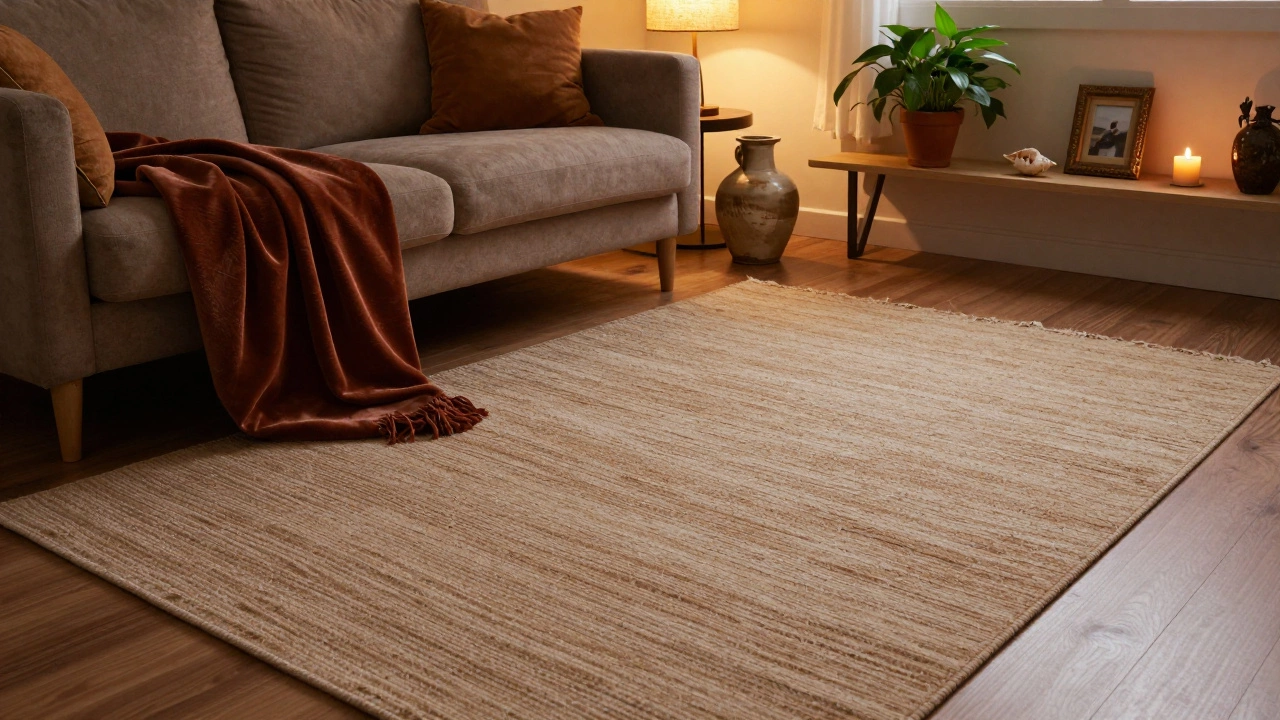
The floor sets the tone. Hardwood or laminate can feel too sharp if it’s bare. Add a large, soft rug-think wool or a thick shag-that covers most of the floor, leaving just a few inches of bare wood around the edges. This isn’t just about looks; it’s about sound and touch. Walk barefoot on it after a long day. Notice how your feet sink in slightly? That’s the first step to homeyness.Look for rugs with subtle patterns or natural dyes. Avoid perfect geometric shapes or ultra-modern designs. A slightly faded, slightly uneven rug made by hand tells a story. It says, this space has lived in. In Melbourne, where winters get chilly, a rug isn’t optional-it’s essential. Try one in warm beige, rust, or deep olive. These colors absorb light and feel grounded.
Layer the lighting
One ceiling light is not enough. Never has been. A homey room needs light from different places, at different levels. Start with a floor lamp near your favorite chair-something with a fabric shade that casts a soft glow. Add a table lamp on your side table, even if it’s just a small one with a warm white bulb (2700K or lower). Avoid cool white. It makes everything feel clinical.Try string lights. Not the kind you use for Christmas. Think delicate fairy lights tucked behind a shelf, or along the top edge of a bookcase. They don’t need to be bright. Just enough to create a gentle halo. Candles help too-real ones, not the fake LED kind. Place them in ceramic holders or glass jars. Let them flicker when you’re reading or watching TV. The movement of real flame does something to your brain that no artificial light can replicate.
Fill the shelves with life, not just stuff
Bookshelves are not display cases. They’re memory keepers. Instead of lining them up with matching books in perfect order, mix things up. Stack some books sideways. Leave space between them. Tuck in a small plant-a snake plant or a pothos-something low-maintenance. Add a framed photo of your dog, or your kids at the beach last summer. A ceramic bowl you picked up at a market in Fitzroy. A seashell from a trip you took years ago.This isn’t clutter. It’s curation. It’s proof that someone lives here. The goal isn’t perfection-it’s presence. If every item on the shelf has a story, the whole space starts to feel like it has one too.
Bring in texture, not just color
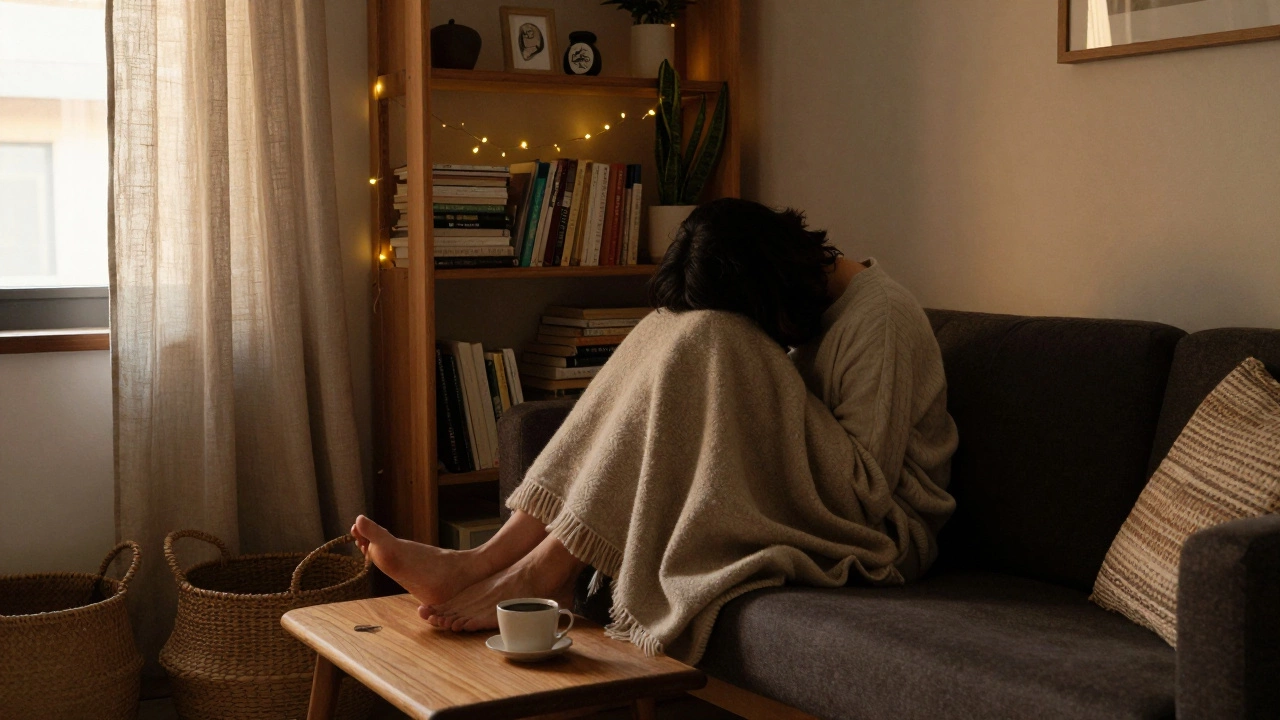
Color matters, but texture matters more. Think about how things feel under your fingers. A wool throw draped over the arm of your sofa. A linen curtain that billows slightly in the breeze. A velvet cushion with a slight nap that catches the light. A woven basket holding blankets or magazines.Don’t just buy matching sets. Mix materials. Combine cotton, wool, rattan, wood, and metal. The contrast creates depth. A wooden coffee table with a metal base. A leather armchair next to a fabric loveseat. A ceramic vase beside a glass one. These combinations make the room feel lived-in, not staged.
Texture also absorbs sound. A room full of hard surfaces-glass, metal, glossy wood-echoes. A homey room muffles noise. It feels quiet even when it’s full of people.
Make space for the body
Too many living rooms are designed for looking, not for sitting. Chairs are too far apart. Sofas are too firm. There’s no place to put your feet. A homey space invites you to sink in.Check your seating. Are your feet flat on the floor when you sit? If not, add a footstool. Is your sofa too deep? Try a throw pillow behind your lower back. Do you have enough armrest space? A side table within reach of each seat? These aren’t luxury upgrades-they’re necessities.
Also, leave breathing room. Don’t cram furniture against the walls. Pull your sofa out a foot or two. Give yourself space to walk around. A room that feels tight feels stressed. One that lets you move freely feels calm.
Let in the outside
Windows are more than openings. They’re connections. If your living room has windows, treat them like part of the room. Don’t cover them with heavy blackout curtains. Use light, airy linen or cotton panels. Let the morning sun in. Let the rain blur the glass on a grey afternoon.Place a plant near the window. Not just any plant-a tall one, like a fiddle-leaf fig or a monstera. It doesn’t have to be perfect. A slightly dusty leaf or a yellowing edge? That’s fine. It’s alive. And that’s the point. Nature doesn’t need to be flawless to bring peace.
Open the windows when you can. Even in winter. Let the air move. It changes the scent of the room. It reminds you that the world is still turning outside.
Smell matters more than you think
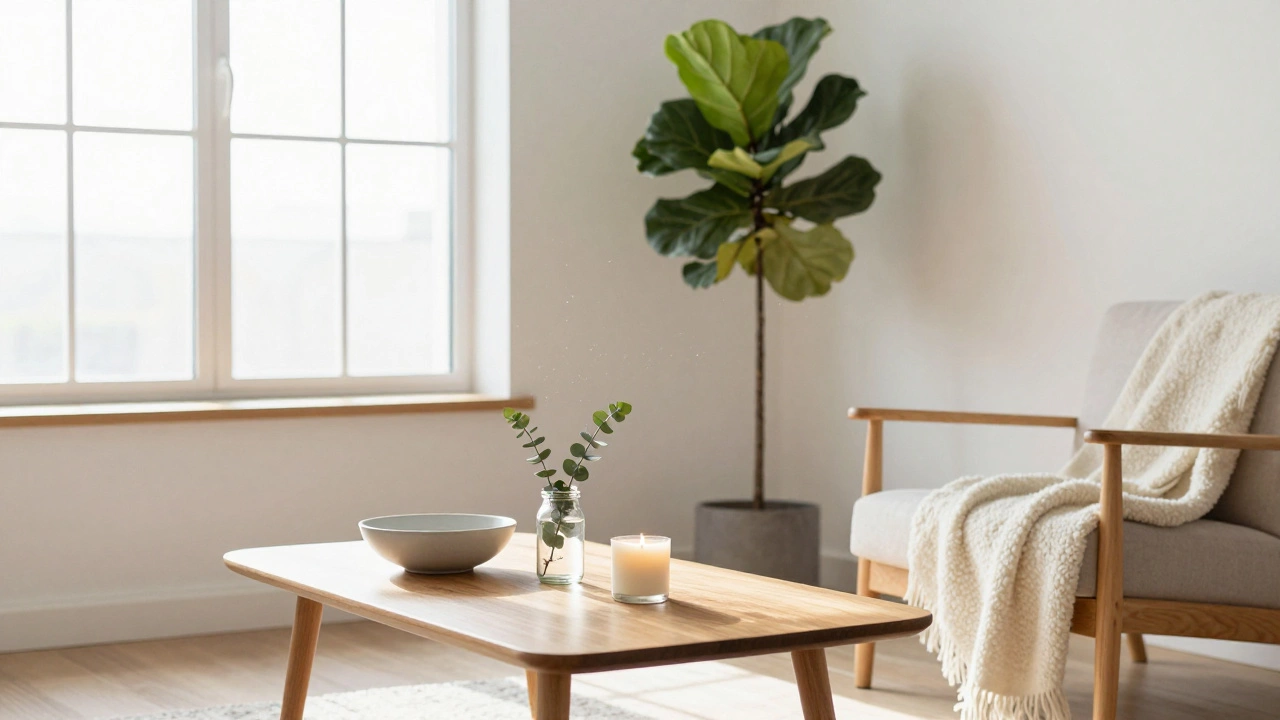
You don’t need scented candles or diffusers. Sometimes, the best scent is nothing at all. But if you want to add one, go subtle. Baking bread. Freshly cut eucalyptus from the garden. A single drop of lavender oil on a cotton ball tucked into a drawer. These are the smells that stick in memory.Avoid overpowering fragrances. Synthetic air fresheners? Skip them. They don’t make a room feel homey-they make it feel like a hotel lobby.
Let the room breathe
A homey living room doesn’t need to be full. It needs to be quiet. Leave empty spaces. A corner with nothing but a single lamp. A shelf with just three items. A spot on the floor where no furniture sits.These gaps aren’t mistakes. They’re pauses. They give your eyes-and your mind-a place to rest. Think of it like silence in music. It’s not empty. It’s essential.
Try this: every few months, remove one thing. A vase. A decorative tray. A knick-knack you forgot you had. See how the room feels without it. Often, less makes it feel more.
It’s not about buying more
The biggest mistake people make? Thinking they need to spend more to feel more. You don’t need a new sofa. You don’t need designer lamps. You need to notice what’s already there.Move your chair closer to the window. Swap a cushion from the bedroom. Hang a photo you’ve had rolled up in a drawer. Light a candle you bought on impulse last year. These small acts rebuild connection-not decoration.
Homeyness isn’t a style. It’s a feeling. And it grows slowly, in the quiet moments. When you curl up with a blanket. When you nap on the sofa after lunch. When you laugh with someone and forget to turn on the lights.
That’s the real magic. Not the rug. Not the lamp. But the way you settle into the space-and let it settle into you.
What’s the fastest way to make a living room feel cozier?
Add a large, soft rug and switch to warm white bulbs (2700K) in your main lamps. These two changes immediately soften the space and make it feel more inviting. They’re cheap, easy, and work in any style.
Do I need to buy new furniture to make my living room homey?
No. You can make a big difference by rearranging what you already have. Move your sofa away from the wall. Add a throw blanket from the bedroom. Use cushions from other rooms. Sometimes, just cleaning the windows and opening them for a few hours changes the whole mood.
Can a minimalist room still feel homey?
Absolutely. Minimalism doesn’t mean cold. A homey minimalist room uses texture over clutter-like a wool throw, a wooden side table, and a single plant. It’s about quality, not quantity. Leave space. Let light in. Keep only what you love or use.
Why do some living rooms feel cold even if they look nice?
Because they’re designed for photos, not people. Cold rooms have hard surfaces, bright lights, and no soft textures. They lack personal items, layered lighting, and places to rest your body. A room that’s too perfect feels like a showroom-not a home.
What colors make a living room feel warmer?
Warm neutrals work best: beige, terracotta, olive, deep rust, and soft brown. Avoid cool grays and stark whites unless they’re balanced with wood tones or textiles. These colors reflect light gently and feel comforting, especially in places like Melbourne where winters are damp and dark.