
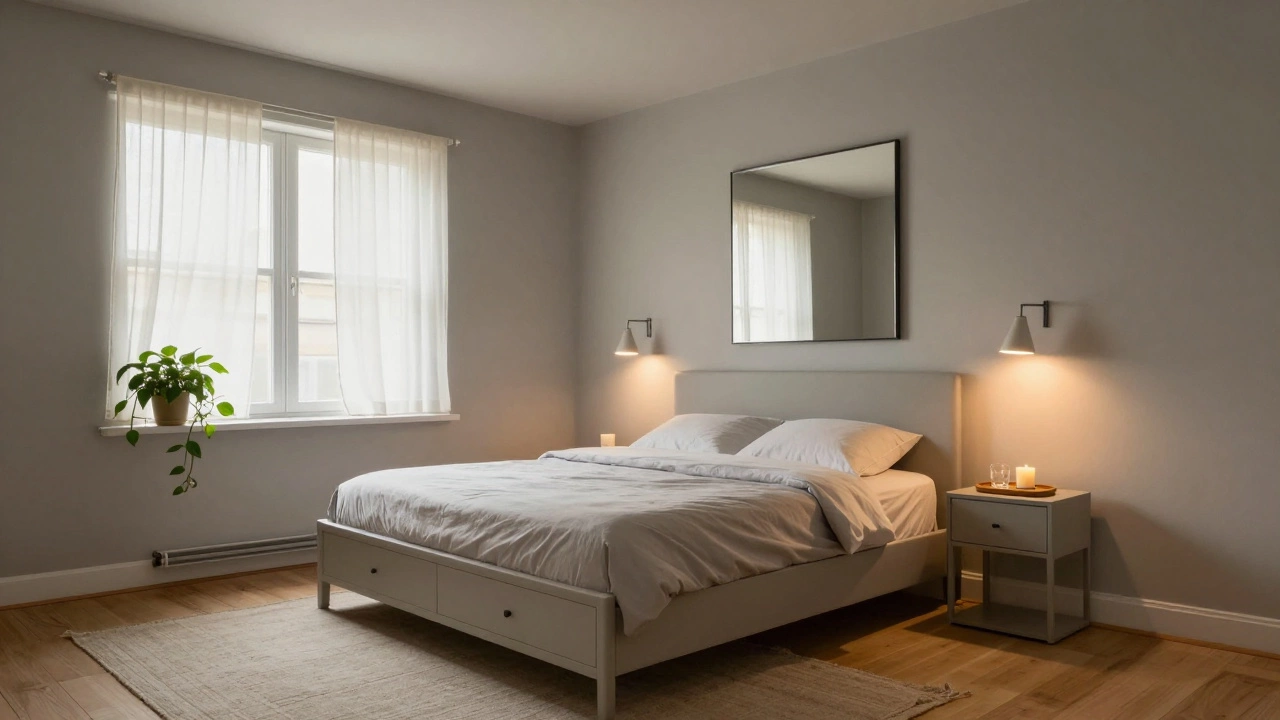
Small Bedroom Size Calculator
Determine what bed size fits best in your small bedroom while leaving enough walking space. For optimal comfort, you should maintain at least 24 inches (60 cm) of clearance on both sides of the bed.
Recommended Bed Sizes
Most people think a small bedroom means giving up style, comfort, or personality. That’s not true. I’ve seen tiny rooms in Melbourne apartments turn into cozy retreats with just a few smart moves-no renovation needed. You don’t need a big budget or a designer to make your small bedroom look amazing. You just need to work with what you’ve got, not against it.
Start with color-the right shade changes everything
Color isn’t just about taste. It’s physics. Light colors reflect light. Dark colors swallow it. If your room gets less than three hours of natural light, going too dark will make it feel like a cave. Stick to soft whites, warm grays, pale blues, or creamy beiges. These don’t just make walls look clean-they make the space feel taller and wider.
One trick I use: paint the ceiling the same color as the walls. It removes the visual boundary between wall and ceiling, making the room feel like it stretches up instead of closing in. Even a light gray ceiling works better than stark white if your walls are warm-toned.
And skip bold accent walls. They draw attention to the room’s size, not its charm. Instead, use color in layers-linens, rugs, or a single piece of art. That’s where personality lives.
Choose furniture that does double duty
Every piece of furniture in a small room needs a job. Not two. Not three. One. And it better be efficient.
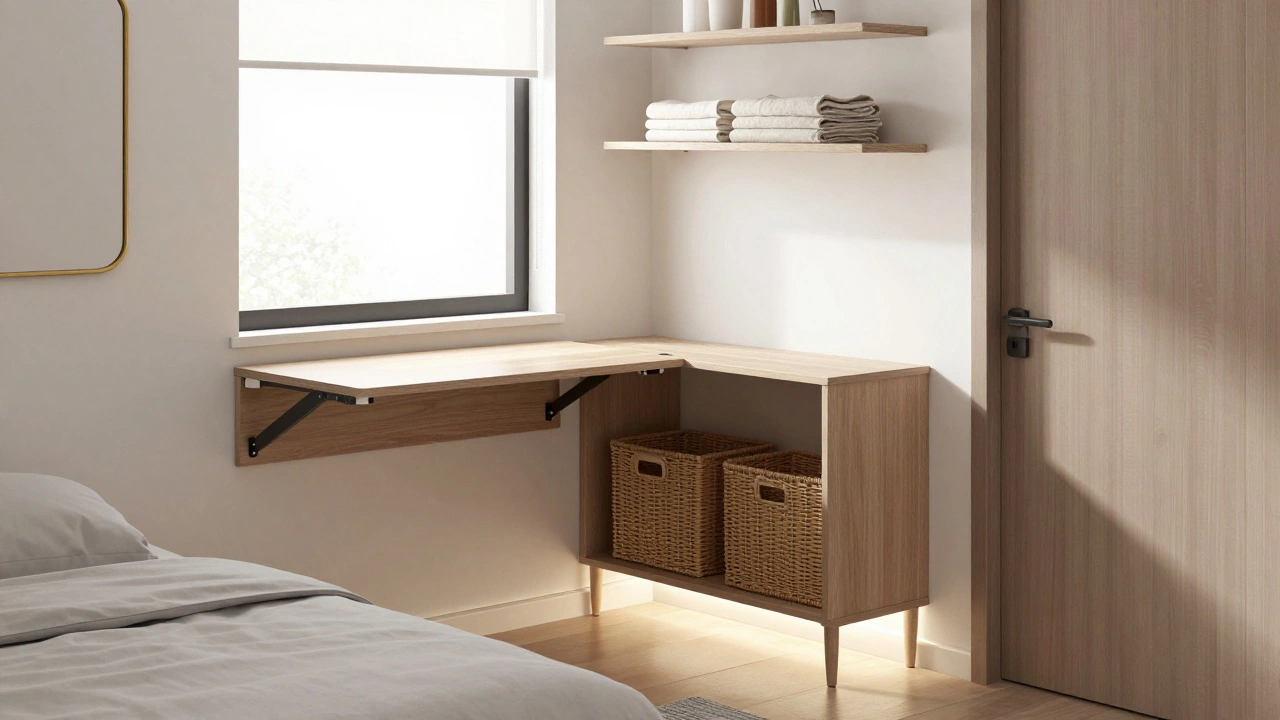
A bed with built-in drawers? That’s your storage. A nightstand with a shelf underneath? That’s where you keep books, chargers, or a lamp without taking up floor space. A desk that folds into the wall? Perfect for a home office that disappears when you don’t need it.
Look for pieces with legs. Even a few inches off the floor lets light flow underneath, making the room feel less heavy. Solid wood or metal frames are better than bulky upholstered ones-they don’t visually crowd the space.
And ditch the full-size dresser. Use a narrow console table with baskets or bins behind it. You get the same storage, but it looks like a side table. That’s the secret: storage that blends in.
Lighting is your secret weapon
One overhead light is not enough. It casts shadows, flattens the room, and makes corners feel like dead zones. You need layers.
Start with ambient light-a soft ceiling fixture or flush mount. Then add task lighting: a small wall sconce next to your bed for reading, or a slim floor lamp near your chair. Finally, use accent lighting to highlight something beautiful-a piece of art, a plant, even the texture of your curtains.
LED strips under the bed or behind a headboard? They’re cheap, easy to install, and make the room feel like it’s glowing from within. No harsh bulbs. Just warmth.
Choose bulbs with a color temperature around 2700K-warm white, not cool blue. It’s more relaxing and makes skin tones look better, which matters when you’re waking up or getting ready.
Use mirrors to trick the eye
A mirror doesn’t just show your reflection. It reflects light. And light = space.
Place a large mirror opposite a window. It doubles the natural light coming in. Even a small, tall mirror on a side wall can make the room feel deeper. Avoid tiny, scattered mirrors-they look cluttered, not clever.
Frame it simply. A thin black or brass frame works better than ornate wood. You want the mirror to disappear into the wall, not scream, “I’m a mirror!”
Pro tip: Hang it at eye level. Not too high, not too low. You want to catch the light, not the ceiling.
Declutter like your sanity depends on it
Clutter doesn’t just take up space. It takes up mental space. A small bedroom feels smaller when it’s full of stuff you don’t use.
Start with a rule: if you haven’t used it in six months, let it go. That includes clothes, books, knick-knacks, and that one blanket you keep “just in case.”
Use vertical space. Install floating shelves above the door or beside the window. Put baskets on them for socks, scarves, or extra towels. Use over-the-door organizers for shoes, accessories, or cleaning supplies.
Keep surfaces clear. That means no piles on the nightstand, no clothes on the chair, no random boxes under the bed. If it doesn’t belong there, put it away. A clean surface looks intentional, not messy.
Textiles add warmth without bulk
Softness makes a room feel inviting. But too much fabric can make it feel cramped.
Use a simple, lightweight duvet cover in a solid color. Layer with a single throw blanket folded neatly at the foot of the bed. Add two pillows-one firm, one soft-and call it done. More than that? It looks like a storage unit.
Choose natural fibers-cotton, linen, wool. They breathe better, look more expensive, and age gracefully. Avoid polyester blends. They look shiny and cheap under artificial light.
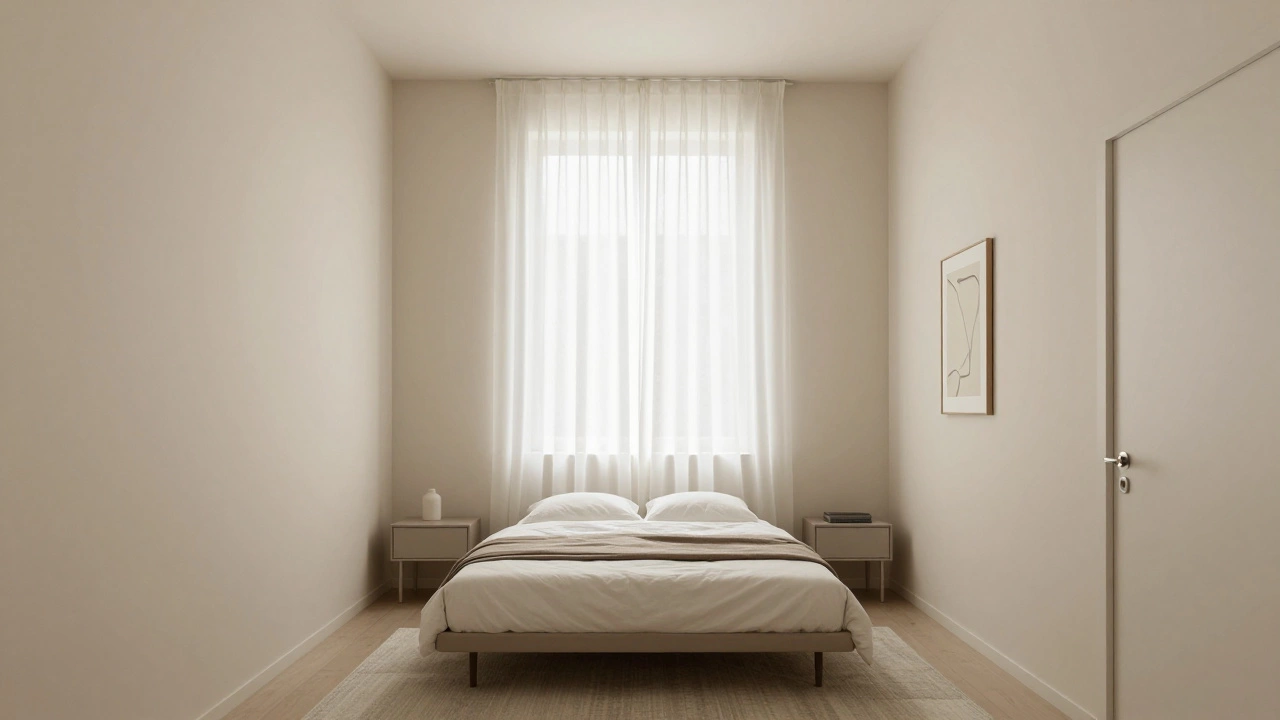
For curtains, go floor-to-ceiling. Even if your window is small, hanging the rod close to the ceiling and letting the fabric pool slightly on the floor makes the wall feel taller. Sheer curtains let light through. Blackout lining? Only if you need it for sleep. Otherwise, keep it light.
Small details make the biggest difference
Here’s what most people miss: the little things that tie the room together.
A single plant. Not a cactus. Something with soft leaves-like a snake plant or a pothos. It adds life without taking up much room.
A small tray on your nightstand for your phone, a candle, and your glasses. It creates order. It says, “This space is cared for.”
Even the direction your bed faces matters. If you can, position it so you see the door when you wake up. It gives you a sense of control. If that’s not possible, hang a small mirror so you can see the doorway from your bed.
And don’t forget the floor. A small rug under the bed-even just 2x3 feet-grounds the space. It stops the room from feeling like a cold, empty box.
What not to do
Don’t use a huge headboard. It eats up visual space. Stick to low-profile or floating designs.
Don’t buy matching furniture sets. They look like a showroom, not a home. Mix styles. A vintage nightstand with a modern bed? That’s personality.
Don’t hang art too high. The center of your piece should be at eye level-about 57 inches from the floor. That’s the standard for a reason.
Don’t ignore the door. Paint it the same color as the wall. It disappears. That’s the goal.
Real results, real rooms
I worked with a client last year who had a 9x10-foot bedroom in a 1950s flat. The bed was in the middle, the closet was a mess, and the only light came from a single bulb. Six weeks later? Soft gray walls, a bed with drawers, a wall-mounted lamp, a mirror above the dresser, a single plant on the windowsill, and a linen rug. No new furniture bought. Just rearranged, cleaned, and rethought.
She said it felt like she was sleeping in a boutique hotel. Not because it was expensive. Because it was calm.
You don’t need more space. You need better choices.
Can I use dark colors in a small bedroom?
Yes-but only if you have good lighting. Dark colors work best in rooms with large windows or multiple light sources. Use them on one accent wall, not all four. Pair them with light furniture and reflective surfaces like mirrors or metallic finishes to balance the weight.
What’s the best bed size for a small room?
A twin or full bed usually fits best. A queen can work if the room is at least 10x12 feet and you don’t need much walking space. Avoid king beds-they’ll make the room feel like a hallway. Always measure before buying. Leave at least 24 inches of space on either side of the bed for movement.
How do I organize clothes in a small bedroom?
Use vertical storage. Install a slim wardrobe or a hanging closet system on the wall. Fold clothes using the KonMari method to save space. Store off-season items under the bed in flat bins. Keep only what you wear regularly in easy reach. If you have a closet, use matching hangers and add shelf dividers to prevent piles.
Should I use a headboard in a small room?
Only if it’s low and slim. A tall, bulky headboard can make the ceiling feel lower and the room feel smaller. Opt for a floating headboard or one that’s just a few inches thick. Or skip it entirely-painting the wall behind the bed a different color can create the same effect without taking up physical space.
Is it okay to have a TV in a small bedroom?
Yes, but keep it simple. Mount it on the wall so it doesn’t take up floor space. Avoid bulky entertainment units. If you don’t watch TV often, consider a portable screen you can store away. The goal is to keep the room feeling like a rest space, not a media room.