

There is nothing quite as uncomfortable as sinking into a sofa that has lost its shape. You press down on the seat, and instead of a gentle bounce, you hit the hard wood frame beneath. It’s a universal sign that your couch cushions are done. Buying new ones sounds easy until you realize that "standard" sizes are more of a suggestion than a rule in the furniture world. Order them too big, and they won’t fit under the arms or look bulky. Order them too small, and you’ll have awkward gaps around the edges. Getting the measurement right is the difference between a refreshed living room and a wasted weekend.
You don’t need to be a tailor or an interior designer to get this right. You just need a tape measure, a flat surface, and a bit of patience. The process involves measuring not just the width and length, but also the height and the internal dimensions of the sofa frame itself. Let’s walk through exactly how to do it so your next set of cushions fits perfectly.
Gather Your Tools Before You Start
Before you dive into the measurements, make sure you have the right tools. Using a rigid metal ruler might seem precise, but it doesn’t bend around curves or reach into tight corners. A flexible steel tape measure is essential here. If you don’t have one, a soft fabric measuring tape works too, though it can sometimes stretch if you pull it too hard.
- A flexible tape measure: This is non-negotiable. You need something that can lay flat against the cushion and curve slightly if necessary.
- A notebook or phone: Write down every number immediately. It is incredibly easy to forget which measurement was for the left seat and which was for the right.
- A level surface: If possible, take the old cushions out and place them on the floor. Measuring them while they are stuffed inside the sofa often leads to errors because the surrounding fabric compresses them.
Measure the Width and Length Accurately
The first step is to determine the horizontal dimensions of your current cushions. Take the cushions out of the sofa and lay them flat on the floor. Smooth out any wrinkles in the fabric cover. Place the end of your tape measure at one corner of the cushion and extend it to the opposite corner for the width. Do the same for the length.
Here is where most people make a mistake: they measure the outer edge of the fabric. While this gives you the total size, it includes the seam allowance and the piping. For a perfect fit, you want to know the usable seating area. However, when ordering replacements, manufacturers usually ask for the overall external dimensions. So, measure from the very outside edge of one side to the outside edge of the other. Round up to the nearest half-inch (or centimeter) to account for minor variations in sewing.
If your sofa has multiple seat cushions, measure each one individually. Even on mass-produced sofas, the left cushion might be a millimeter wider than the right due to manufacturing tolerances or wear over time. Always go with the largest measurement to ensure coverage.
Determine the Correct Height and Thickness
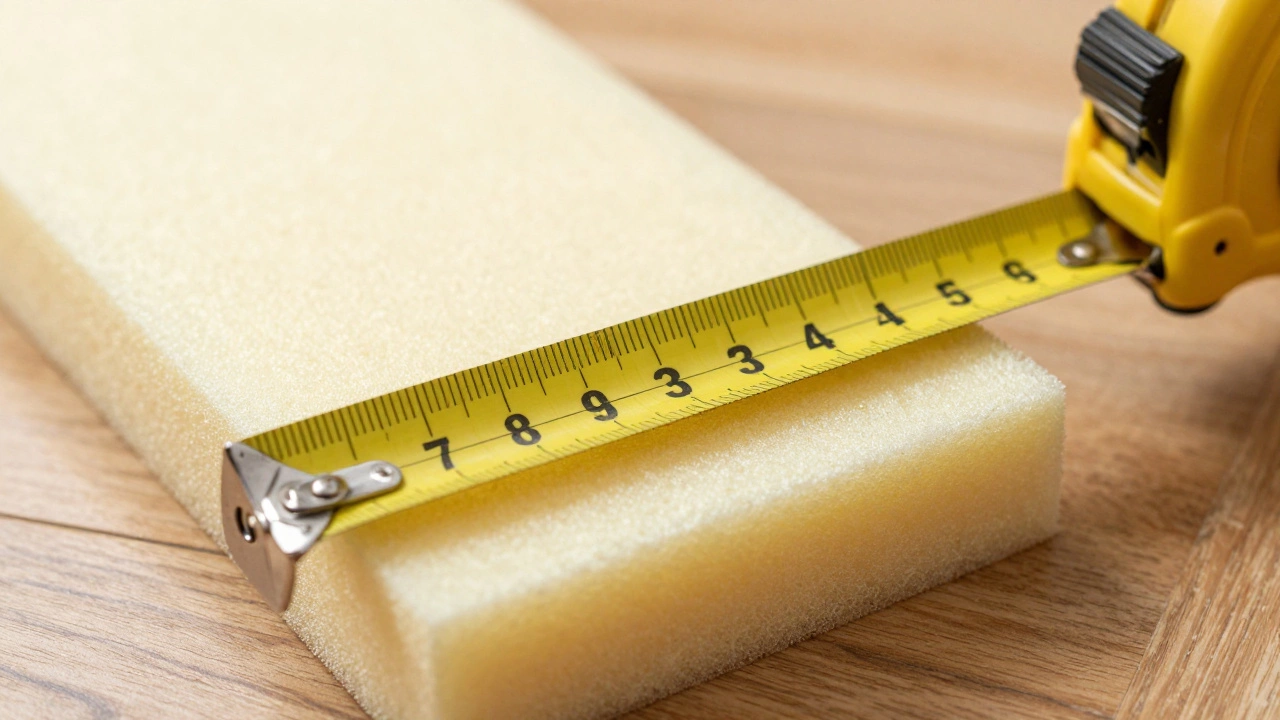
Width and length tell you if the cushion will cover the seat, but height determines comfort and aesthetics. To measure the height, stand the cushion upright on the floor. Measure from the bottom base to the top peak. Note that many modern cushions are wedge-shaped-thicker at the back and thinner at the front. In this case, measure both the highest point (back) and the lowest point (front).
Why does this matter? If you replace a wedge cushion with a flat, uniform block of foam, it might sit too high at the front, causing your knees to bump against the armrests. Conversely, if you buy a cushion that is too thin, it will look sunken and cheap. When you order your replacements, specify whether you need a flat profile or a wedge profile, and provide both height measurements if applicable.
Check the Internal Frame Dimensions
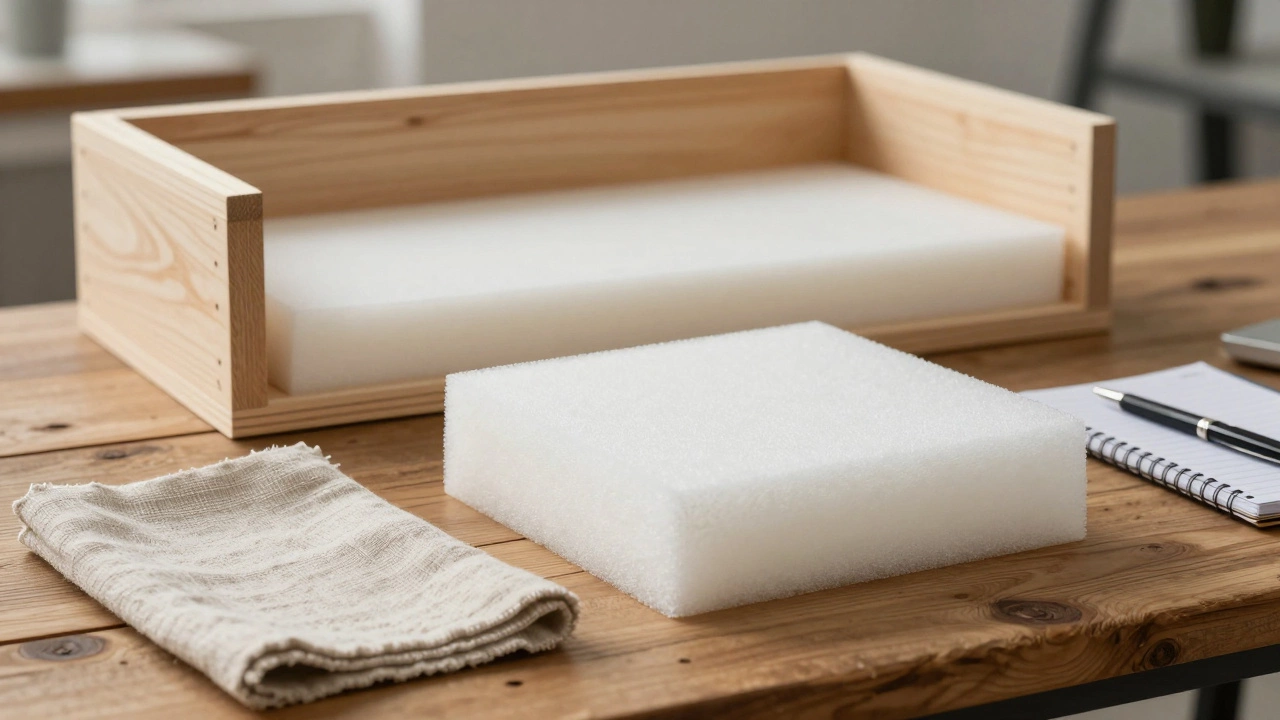
This is the most critical step that everyone skips. You must ensure the new cushions will actually fit inside the sofa’s box frame. Look inside the empty sofa seat. Measure the internal width, depth, and height of the wooden frame where the cushion sits.
Your new cushion needs to be slightly smaller than these internal dimensions. A good rule of thumb is to subtract about 1 to 2 inches (2.5 to 5 cm) from the internal frame width and depth. This gap allows the cushion to slide in and out easily for cleaning or rotation. If the cushion is the exact same size as the frame, it will be stuck tight, making it impossible to remove without damaging the fabric.
Also, check for any obstacles inside the frame. Some sofas have springs, webbing, or a dust cover that protrudes into the space. Make sure your cushion thickness accounts for these elements. If there is a thick dust cover, your cushion might need to be thinner to avoid bulging.
Consider the Shape and Style
Not all cushions are simple rectangles. Some have rounded corners, others are square, and some even have cutouts for armrests. Look closely at your existing cushions. Are the corners sharp 90-degree angles, or are they softly rounded? If they are rounded, measure the radius of the curve if possible, or simply note that they are "rounded corners" when ordering.
If your sofa has a chaise lounge section, the cushion there is likely different from the main seats. Measure the chaise cushion separately, noting its unique shape. It might be L-shaped or simply longer. Don’t assume the chaise cushion is just two regular cushions pushed together; it is usually a single piece designed for that specific extension.
| Shape Type | Key Measurement Focus | Fitting Tip |
|---|---|---|
| Rectangular | Width, Length, Height | Subtract 1-2 inches from frame size for easy removal. |
| Wedge | Back Height, Front Height, Width, Length | Ensure the slope matches the original for proper posture support. |
| Rounded Corners | Overall Width/Length + Corner Radius | Specify "rounded" to manufacturer; standard squares may look boxy. |
| Chaise/L-Shaped | Longest Side, Shortest Side, Depth | Measure the entire piece as one unit; do not split into sections. |
Choose the Right Foam Density and Fill
Once you have the dimensions, you need to decide what goes inside. The material affects the final size slightly because different materials compress differently. High-density polyurethane foam is the gold standard for durability. It retains its shape better than low-density foam, which flattens out quickly.
When selecting foam, look for the density rating, measured in pounds per cubic foot (PCF). For a primary seating area, aim for a density of at least 1.8 PCF. If you want a softer, cloud-like feel, you might choose a lower density, but be prepared to replace them sooner. Feather-down fills offer luxury but require frequent fluffing and can shift around, changing the effective dimensions over time. If you prefer down, ensure the cover has internal baffles or ties to keep the fill distributed evenly.
Remember that foam expands slightly when cut. If you are having custom foam cut, tell the supplier the finished dimensions you need, not the raw foam size. They will account for this expansion. If you are buying pre-cut cushions, stick strictly to the measurements you took earlier.
Account for Fabric Shrinkage and Stretch
If you are reusing your existing cushion covers, be aware that fabrics behave differently after washing. Cotton tends to shrink, while synthetic blends like polyester remain stable. If you plan to wash the covers before inserting new foam, wash and dry them first. Then, measure the inside of the clean, dry cover. This ensures the new foam fits snugly without being stretched too tight, which could cause seams to burst.
If you are buying new covers, check the care label. Some fabrics stretch with use. If you are using a stretchy knit fabric, you might want to make the foam core slightly larger (by 1/4 inch) to ensure it stays taut and doesn’t wrinkle inside the cover.
Ordering Custom vs. Off-the-Shelf
With your measurements in hand, you now face a choice: buy off-the-shelf replacements or order custom. Off-the-shelf options are cheaper and faster, but they come in standard increments (e.g., 22x22 inches, 24x24 inches). If your measurements are 23.5 inches wide, a 24-inch cushion might be too big, while a 22-inch one will leave gaps.
Custom cushions allow for precision. You can specify the exact width, length, height, foam density, and fabric type. This is worth the extra cost if your sofa is vintage, uniquely shaped, or if you have specific ergonomic needs. When ordering custom, provide a sketch of the cushion shape along with your measurements. Visual aids help the manufacturer understand any quirks, like angled sides or unusual curves.
Always double-check your measurements before sending them to the supplier. One wrong digit can ruin the fit. Take a photo of your sofa with the tape measure visible as a reference for the manufacturer. This visual confirmation can prevent misunderstandings about orientation (which side is the front vs. the back).
Testing the Fit Before Finalizing
If you are making the cushions yourself or working with a local upholsterer, create a mock-up first. Use cardboard or scrap foam to build a prototype of the correct size. Place it in the sofa frame. Sit on it. Does it feel right? Is it too deep? Too shallow?
This trial run saves money and frustration. You might discover that the cushion needs to be an inch shorter to clear the armrest, or that the height feels better if it’s slightly taller. Adjust your final measurements based on this physical test. Comfort is subjective, and numbers on a page don’t always translate to real-world feeling.
Finally, consider the aesthetic balance. A cushion that is too thick can make the sofa look bulky and heavy. One that is too thin looks shabby. Aim for a proportion that complements the scale of your sofa and the rest of your living room. If your sofa has high arms, a taller cushion helps maintain visual harmony. If it has low, sleek arms, a slimmer cushion keeps the lines clean.
Should I measure the cushion inside or outside the sofa?
You should always measure the cushion outside the sofa. Inside the frame, the surrounding fabric and structure compress the cushion, giving you inaccurate dimensions. Remove the cushion, lay it flat on the floor, and smooth out any wrinkles before measuring.
How much smaller should the cushion be than the frame?
The cushion should be approximately 1 to 2 inches (2.5 to 5 cm) smaller than the internal width and depth of the sofa frame. This gap allows for easy insertion and removal, preventing damage to the fabric and ensuring the cushion isn't stuck tight.
What foam density is best for couch cushions?
For daily use, a foam density of at least 1.8 pounds per cubic foot (PCF) is recommended. This provides a good balance of comfort and durability. Lower densities flatten quickly, while higher densities (2.5+ PCF) are firmer and last longer but may feel less plush initially.
Can I reuse my old cushion covers?
Yes, if they are in good condition. However, wash and dry them first to account for any shrinkage. After washing, measure the inside of the cover to ensure your new foam insert will fit snugly without stretching the seams.
Do I need to measure each cushion individually?
Yes. Even on factory-made sofas, individual cushions can vary slightly in size due to wear or manufacturing differences. Measure each one and use the largest dimensions to ensure full coverage and a uniform look.