

Sofa Foam Density Calculator
When you’re shopping for a new sofa, the foam inside the cushions matters more than you think. You’ve probably seen labels like "40 density foam" and wondered if that’s the sweet spot for comfort and long-term support. The short answer? It’s not bad-but it’s not great either. It depends on how you use your sofa and what you expect from it.
What does foam density actually mean?
Foam density isn’t about how heavy the cushion feels when you sit on it. It’s a measure of weight per cubic foot. A 40 density foam means one cubic foot of that foam weighs 40 pounds. That’s a mid-range number. For sofa cushions, foam density usually falls between 1.5 and 5.0. Lower numbers (like 1.8) are soft and cheap. Higher numbers (like 4.5+) are firm and built to last.
Think of it like this: 40 density foam is the middle child. Not too soft, not too firm. It’s the kind of foam you’ll find in mid-tier sofas from brands like IKEA, Ashley, or Crate & Barrel. It’s not luxury-grade, but it’s not junk either.
How long will 40 density foam last?
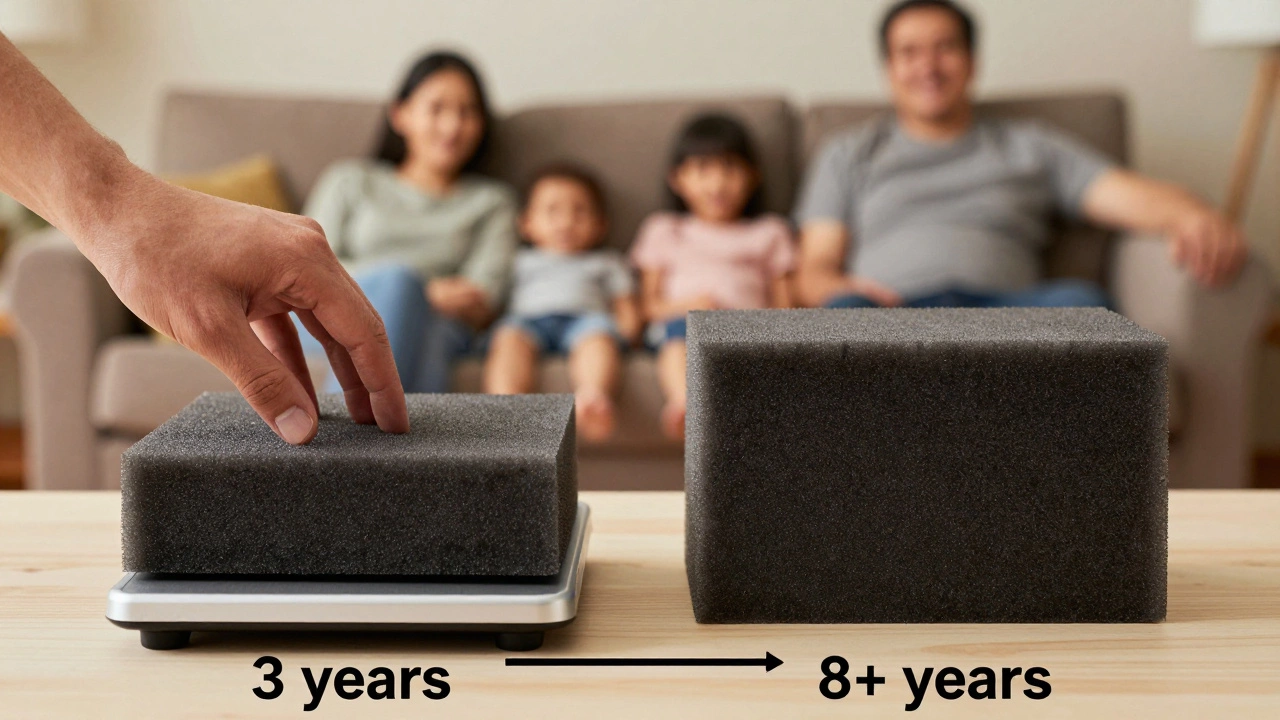
Here’s the real question: will it hold up? If you sit on your sofa every day-say, for 2-4 hours-40 density foam will start to sag in about 3 to 5 years. That’s not terrible, but it’s not great either. High-density foams (50+ density) can last 8-12 years. Lower foams (25 density or less) might collapse in under two years.
Real-world example: A family in Sydney replaced their 3-year-old sofa because the cushions had sunk so low they couldn’t get comfortable. The foam was 35 density. Their new sofa had 45 density foam. Four years later, the cushions still feel supportive. That’s the difference.
Who is 40 density foam actually good for?
Not everyone needs premium foam. Here’s who 40 density works well for:
- People who use their sofa occasionally-guests, weekend lounging
- Those on a budget who want decent comfort without overspending
- Smaller households with light to moderate use
- People who plan to replace their sofa every 4-5 years anyway
If you’re a heavy person, have back issues, or sit for hours watching TV or working from home, 40 density won’t cut it. You’ll feel the sagging faster. Your body weight compresses foam differently than a light person’s. A 200+ pound person needs at least 45 density to avoid bottoming out.
What’s better than 40 density?
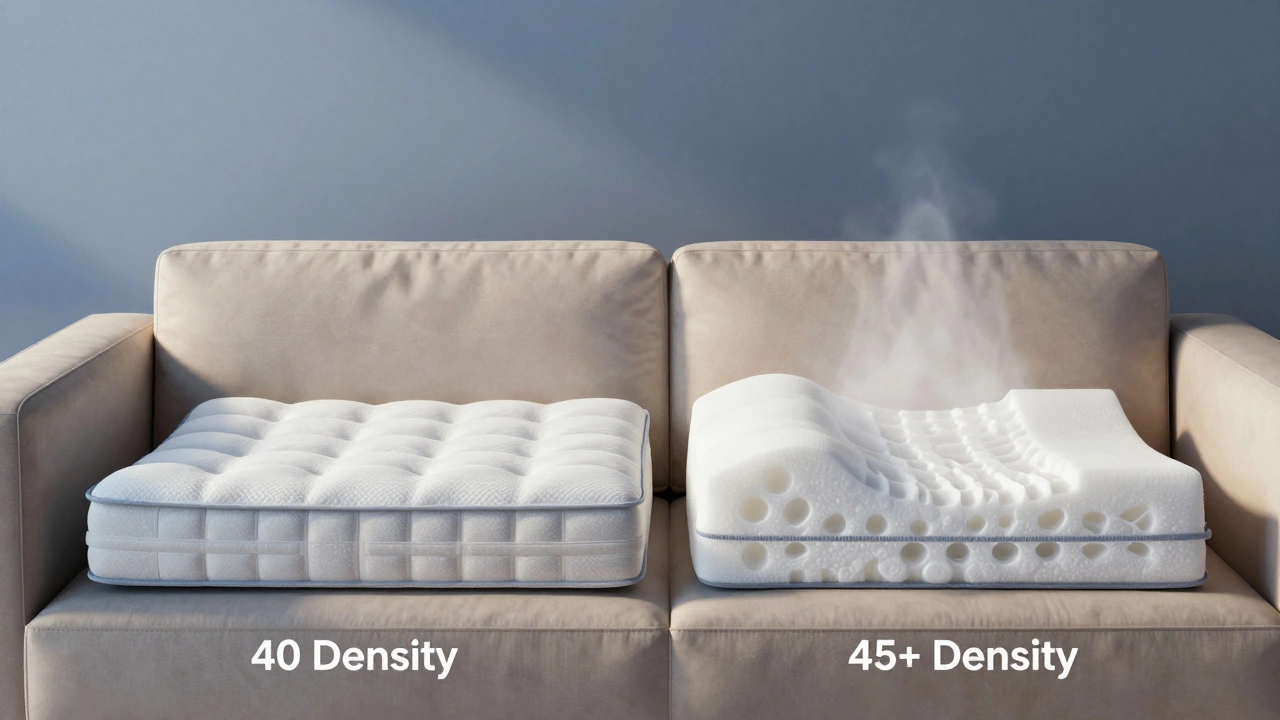
For daily use, aim for 45-55 density. That’s where you get real durability. Higher density means more foam cells per cubic foot. More cells = better support and slower breakdown. You’ll notice it in how the cushion springs back after you stand up. Lower density foam stays flattened. Higher density snaps back like a good spring.
Many high-end sofas now use layered foam: a 30-40 density base for structure, topped with a 45-55 density top layer for comfort. This combo gives you support and softness without the cost of all-high-density foam.
Why density isn’t the whole story
Density tells you about durability, but not comfort. That’s where firmness comes in. Firmness is measured by IFD (Indentation Force Deflection)-how much pressure it takes to push the foam down 25%. A 40 density foam can be soft (IFD 20) or firm (IFD 40). Two sofas with identical foam density can feel totally different.
Always sit on the sofa before you buy. Don’t trust the label alone. Test it like this: Sit down, lean back, and then stand up. If the cushion stays flattened for more than a few seconds, it’s not going to last. If it bounces back quickly, you’re in good shape.
What about memory foam or down blends?
Some sofas use memory foam or down-wrapped foam. Memory foam is great for pressure relief but tends to trap heat and can sink too much over time. Down blends feel luxurious but need constant fluffing and aren’t great for daily use. If you want low-maintenance, long-lasting comfort, stick with high-density polyurethane foam.
What should you look for instead?
Here’s what to check before buying:
- Ask for the foam density number-not just "high-density"
- Look for 45+ density if you use the sofa daily
- Check if the cushion is wrapped in fiber or down-this adds softness without sacrificing support
- Ask about the frame: hardwood frames last longer than particleboard
- Read reviews from people who’ve owned it for 2+ years
Most manufacturers don’t list foam density on their websites. You have to ask. Call the store. Email customer service. If they hesitate or can’t answer, that’s a red flag.
Bottom line: Is 40 density foam good?
It’s acceptable for occasional use. It’s not good for daily, heavy use. If you’re buying a sofa you plan to keep for more than five years, spend a little more for 45-50 density. You’ll thank yourself in year three when the cushions still feel supportive instead of like a hammock.
Don’t fall for marketing terms like "premium foam" or "orthopedic support" unless they back it up with numbers. Density is the only reliable metric you can trust.
Is 40 density foam good for a sofa?
40 density foam is okay for light or occasional use, like a guest sofa or a home office chair. But for daily family use, it’s not durable enough. You’ll likely see sagging within 3-5 years. For regular use, aim for 45-55 density foam.
What’s the difference between foam density and firmness?
Density measures how much the foam weighs per cubic foot-it tells you how long it will last. Firmness (IFD) measures how hard or soft it feels when you sit on it. A 40 density foam can be soft (low IFD) or firm (high IFD). You need both: high density for durability, and the right firmness for comfort.
Can you replace sofa foam with higher density foam?
Yes, many upholstery shops will reupholster your sofa with higher density foam. If your sofa frame is still solid, upgrading the foam is often cheaper than buying new. Look for 45-50 density foam and ask for a wrap of fiber or down for extra softness.
Does foam density affect the price?
Yes. Higher density foam costs more to produce. A sofa with 40 density foam might be $800. The same style with 50 density foam could be $1,200-$1,500. The price jump is worth it if you use the sofa daily and want it to last 8+ years.
Are there any health benefits to higher density foam?
Not directly, but better support helps. If your sofa sags too much, it forces your spine into poor alignment, which can lead to back pain over time. Higher density foam maintains its shape, helping you sit upright and reducing strain on your lower back.
What to do next
If you’re thinking about buying a new sofa, don’t just pick the one that looks nice. Ask for the foam density. If they can’t tell you, walk away. If they say "40" and you use the sofa every day, ask for 45 or higher. Your back-and your wallet-will thank you in a few years.
And if you already have a sofa with 40 density foam that’s starting to sag? Consider reupholstering. It’s often cheaper than replacing the whole thing-and you get to choose the foam quality this time.