
Sofa Cushion Styling Advisor
Select your preferences and click "Get My Recommendation" to see how to style your cushions.
Visual Arrangement Guide
Walk into any high-end showroom in Melbourne and you’ll likely see a sofa with three identical pillows. It looks tidy. It looks safe. But does it look interesting? Probably not. The question of whether to match your sofa cushions is one of the most common dilemmas for homeowners trying to elevate their living space without hiring an expensive stylist.
Here’s the truth: there is no rule that says you must have matching cushions. In fact, strict matching can make a room feel sterile or dated. The goal isn’t uniformity; it’s harmony. Whether you choose identical sets or a curated mix depends entirely on the vibe you want to create, the size of your sofa, and how much visual "noise" you’re comfortable with. Let’s break down when matching works, when it fails, and how to style cushions like a pro.
The Case for Matching Cushions
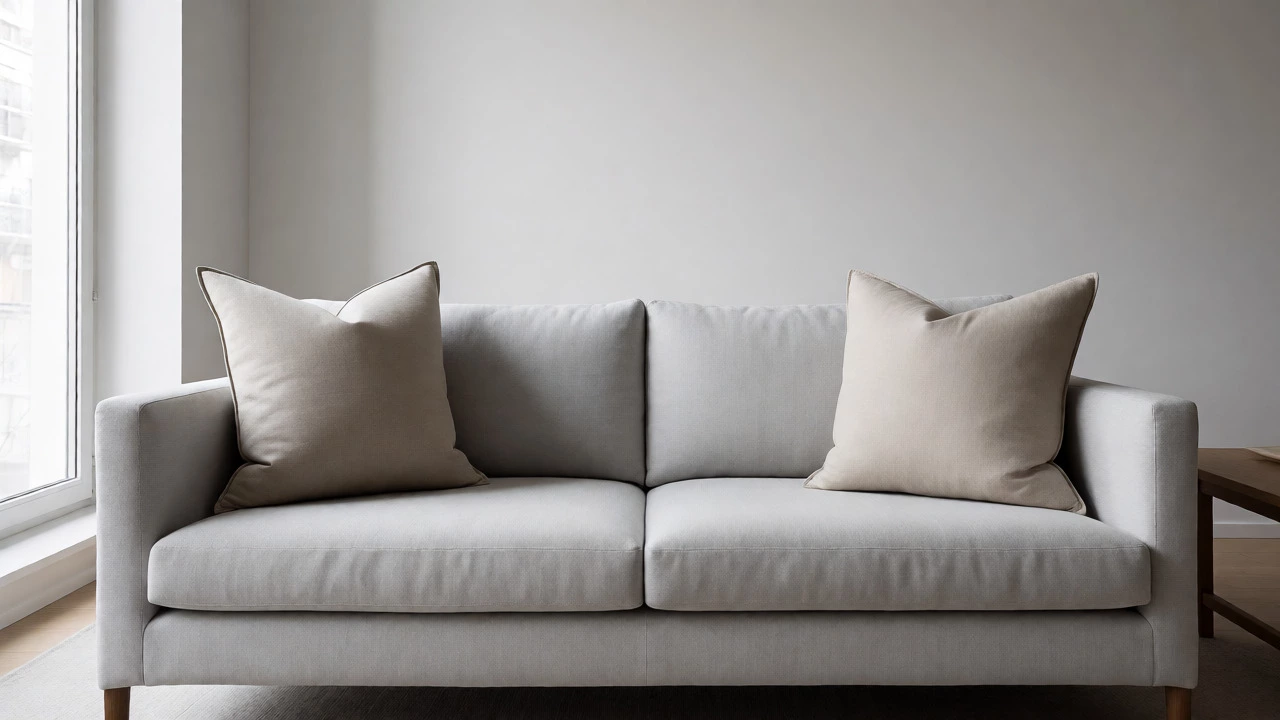
There are specific scenarios where identical cushions are the best choice. If you prefer a minimalist aesthetic, symmetry creates a sense of calm and order. Think of a Scandinavian-style living room where clean lines dominate. Here, two or four identical velvet or linen cushions provide texture without adding visual clutter.
Matching also works well if your sofa has a busy pattern. If you’ve invested in a floral or geometrically complex sofa, adding mismatched patterns to the cushions can result in a chaotic look. Solid, matching cushions act as a visual anchor, allowing the sofa’s design to shine while keeping the overall composition balanced.
- Minimalist Interiors: Creates a sleek, uncluttered look.
- Patterned Sofas: Prevents pattern clash by using solid, neutral tones.
- Small Spaces: Reduces visual noise in compact rooms.
- Formal Settings: Offers a traditional, polished appearance.
However, even when matching, you don’t need to be rigid. Using two different sizes (e.g., two large squares and two smaller lumbar pillows) in the same fabric adds depth while maintaining cohesion.
Why Mixing Is Often Better
If you want your living room to feel lived-in, cozy, and personal, mixing is usually the way to go. Interior designers rarely recommend all-identical sets because they lack character. A mixed arrangement introduces layers of texture, color, and shape, which makes the space feel dynamic and inviting.
Mixing allows you to introduce accent colors from elsewhere in the room. Maybe you have a rug with hints of teal, or artwork featuring burnt orange. By picking up those colors in your cushions, you tie the room together. This technique, often called "color echoing," creates a cohesive flow without requiring everything to match perfectly.
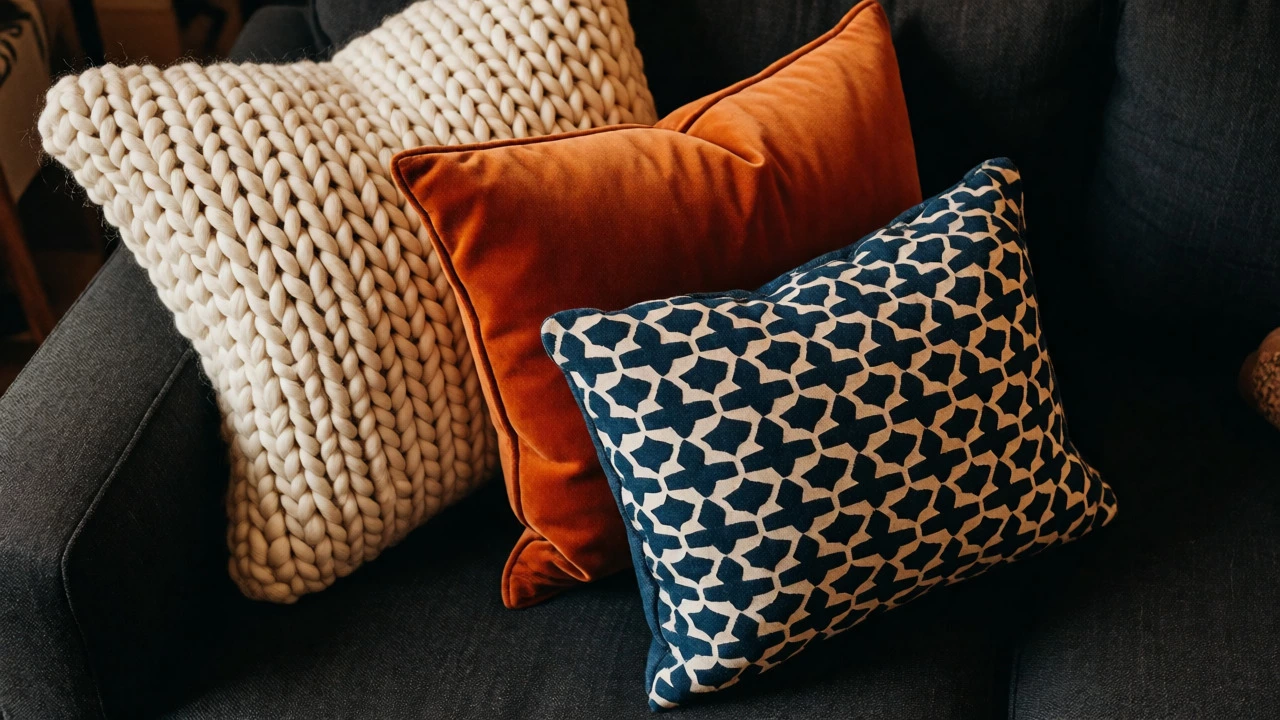
Texture is another huge factor. A plain grey sofa can look flat. Add a chunky knit pillow, a smooth silk cushion, and a rough jute throw pillow, and suddenly the sofa becomes a tactile experience. This variety draws people in and encourages them to sit down and stay a while.
The Golden Rules of Cushion Styling
You don’t need a degree in art theory to style cushions effectively. There are a few simple formulas that work almost every time. These rules help prevent the "accidental pile" look, where cushions seem thrown on rather than placed.
1. The Odd Number Rule
Designers swear by odd numbers. Three cushions look more natural and relaxed than two or four. Two can feel too formal and symmetrical, while four can look boxy. Try placing one larger cushion on each end and one smaller, differently shaped cushion in the center. Or use three varying sizes on one side for an asymmetrical, modern look.
2. Vary the Sizes
Uniformity in size is boring. Mix square cushions (usually 45x45cm or 50x50cm) with rectangular lumbar pillows (30x50cm). The contrast in height and width creates interest. Place the larger squares at the back against the armrests and layer the smaller rectangles in front.
3. The Triangle Method
This is a classic styling trick. Arrange your cushions so they form a loose triangle. Start with a large square at the corner, lean a medium-sized cushion against it, and place a small lumbar pillow in front. This creates depth and prevents the cushions from looking like they’re just sitting flat against the backrest.
4. Limit Your Palette
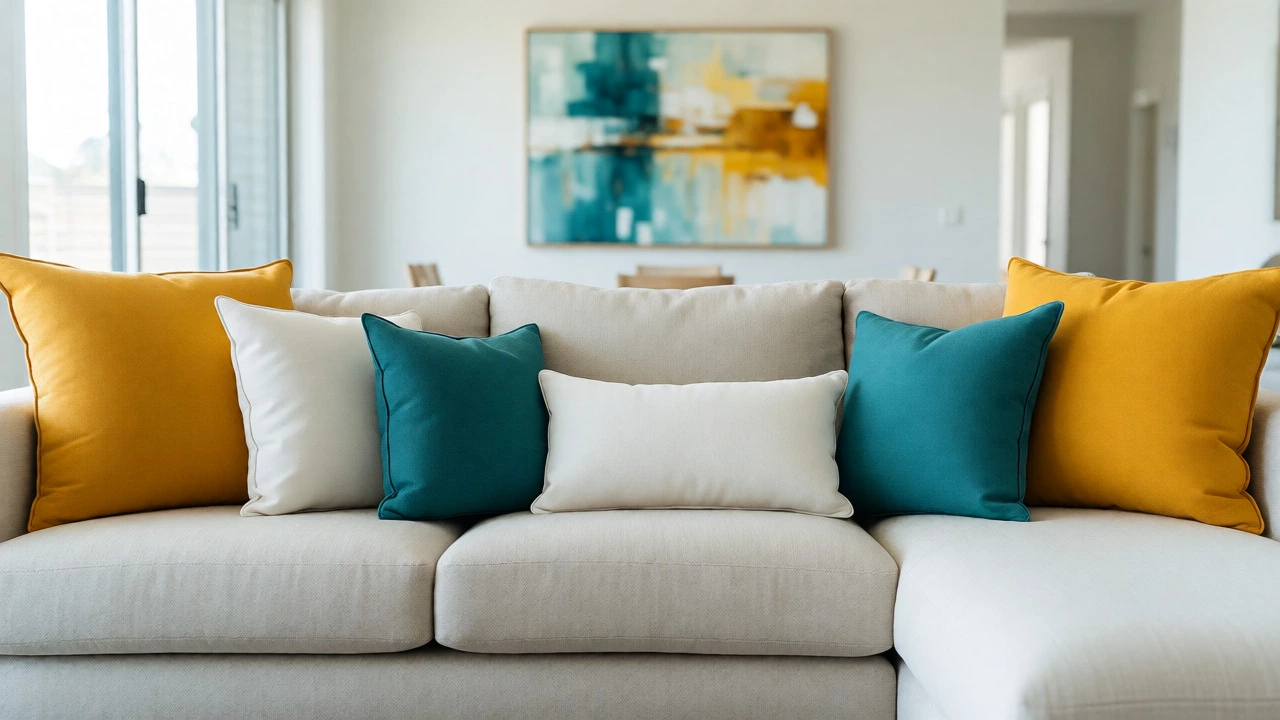
While you should mix patterns and textures, keep the color palette tight. Stick to two or three main colors. For example, if your sofa is beige, use cushions in navy, mustard, and white. Too many colors will compete with each other and overwhelm the eye.
How to Choose Cushions for Different Sofa Types
The type of sofa you own dictates the best cushion strategy. A massive L-shaped sectional offers more canvas than a petite loveseat, giving you freedom to experiment.
| Sofa Type | Recommended Approach | Pro Tip |
|---|---|---|
| Modern Minimalist | Mixed Textures, Monochromatic Colors | Stick to neutral tones but vary fabrics (linen, wool, leather). |
| Traditional Chesterfield | Matching or Coordinated Sets | Use rich fabrics like velvet to complement the tufting. |
| Boho/Eclectic | Maximalist Mixing | Combine global prints, fringes, and bold colors freely. |
| Small Apartment Loveseat | Two Large + One Small Accent | Avoid overcrowding; keep silhouettes simple. |
For a Chesterfield sofa with deep button tufting, matching cushions in a luxurious fabric like velvet enhance the classic elegance. Conversely, for a Sectional large modular sofa, you can afford to be bolder. Use different arrangements on different sections to define zones within the seating area.
Common Mistakes to Avoid
Even with good intentions, it’s easy to mess up. The biggest error is buying cushions that are too small. Standard retail cushions are often 40x40cm, which looks tiny on a standard Australian sofa. Aim for 45x45cm or 50x50cm for a plump, luxurious look. If they look flat, buy larger inserts than the covers.
Another mistake is ignoring the back of the cushion. If your sofa floats in the middle of the room, people will see the backs of your pillows. Ensure both sides are finished nicely, or choose reversible covers.
Finally, don’t forget about maintenance. Velvet collects dust and pet hair quickly. Linen wrinkles easily. Consider your lifestyle. If you have kids or pets, durable cotton blends or outdoor-grade fabrics might be smarter than delicate silk, regardless of how pretty they look in the shop.
Frequently Asked Questions
Do I need to match my cushion covers to my curtains?
No, and doing so can actually make a room look dated. Instead of exact matching, aim for coordination. Pick up one secondary color from your curtains in your cushions, or vice versa. This creates a subtle link without being obvious or heavy-handed.
How many cushions should be on a three-seater sofa?
The sweet spot is usually between four and six cushions. Two per seat is a good baseline. For a more relaxed look, use five: two large squares at the ends, two medium squares next to them, and one lumbar pillow in the center. Adjust based on the sofa's length and your personal comfort preference.
What is the best material for sofa cushions?
It depends on usage. For durability and ease of cleaning, cotton canvas or synthetic blends are excellent. For luxury and warmth, velvet or wool work well but require more care. Linen is breathable and stylish but wrinkles easily, making it better for low-traffic areas or decorative purposes.
Should cushion inserts be bigger than the cover?
Yes, absolutely. To get that plump, professional look, buy inserts that are 5-10cm larger than the cover. For example, use a 50x50cm insert in a 45x45cm cover. This fills out the corners and prevents the cushion from looking deflated over time.
Can I mix patterns on cushions?
Definitely. The key is scale and color. Pair a large-scale pattern (like big florals) with a small-scale pattern (like pinstripes or dots). Keep the color palette consistent across all patterns to ensure they harmonize rather than clash.