Dresser in Dining Room: How to Use It Smartly and Style It Well
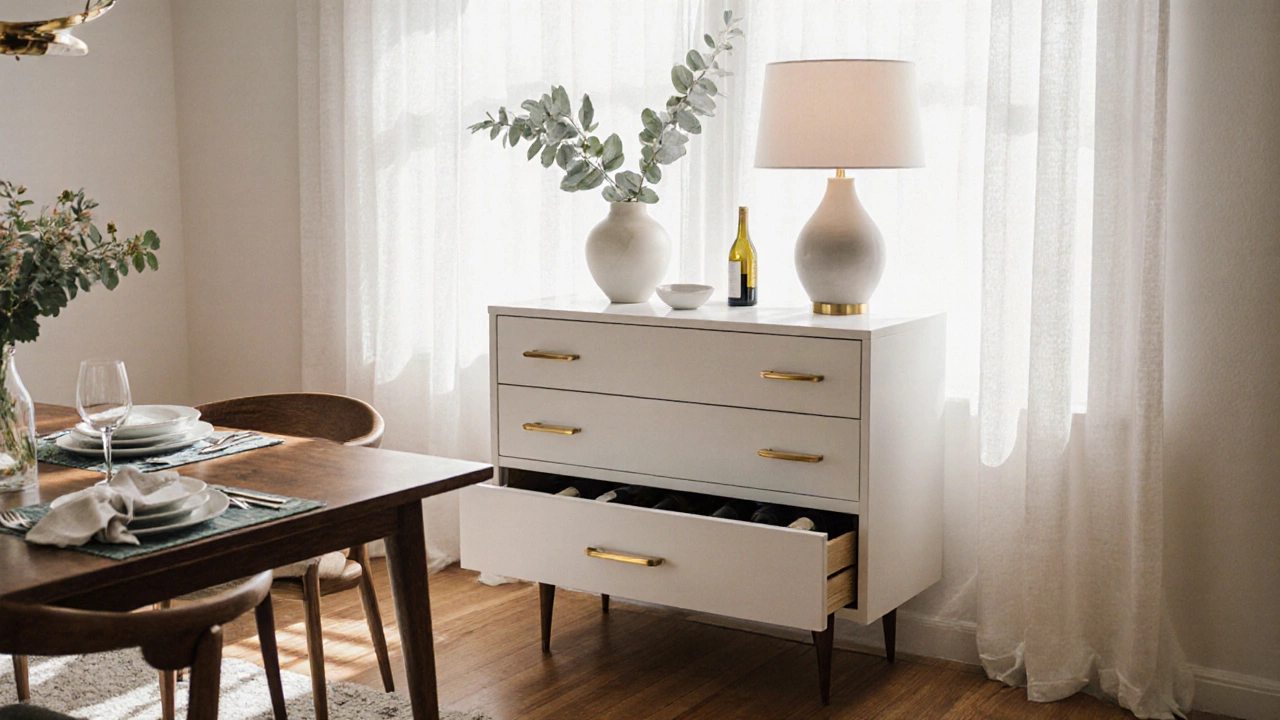
When you think of a dresser, a tall, drawer-based storage piece traditionally used in bedrooms. Also known as a chest of drawers, it’s often seen as bedroom-only furniture. But more homeowners are moving it into the dining room—and it’s one of the smartest, most underused tricks in interior design. A dresser in the dining room isn’t just a repurposed piece—it’s a functional upgrade that solves real problems: too many napkins, mismatched cutlery, or cluttered serving trays. It gives you hidden storage without looking like a storage unit.
It’s not the same as a sideboard, a low, wide cabinet designed specifically for dining rooms to hold dishes, glassware, and serving tools. A sideboard is built for easy access during meals. A dresser, though, is taller, deeper, and often has more drawers. That means it’s better for storing linens, table settings, or even wine bottles out of sight. And because it’s usually more minimalist than a traditional buffet, it fits modern, clutter-free styles better. Many people confuse a dresser with a buffet, a low, long piece with cabinets and sometimes open shelving, meant for displaying serving dishes and food. But a dresser doesn’t need to be front-facing or decorative—it works as a hidden storage anchor behind or beside your dining table. You can use it to store extra chairs when not in use, stack seasonal tableware, or even turn the top into a mini bar or display shelf for art or plants.
Placement matters. Put it against a wall opposite the table for balance, or tuck it into a corner to save space. If your dining room is small, a narrow dresser (under 24 inches deep) won’t block movement. Paint it the same color as your walls for a seamless look, or go bold with a dark finish to add depth. Add a lamp or a few framed photos on top to soften its boxy shape. The key is treating it like furniture, not just storage.
People who try this trick say it’s the quietest upgrade they’ve ever made. No renovation. No new cabinets. Just one piece moved from another room—and suddenly, everything has a place. You stop hunting for napkin holders. You stop stacking plates on the counter. You stop wondering where the good silverware went. And best of all? It looks intentional, not accidental.
Below, you’ll find real examples of how others have turned a simple dresser into a dining room hero—whether it’s a vintage find, a DIY paint job, or a sleek modern piece that blends right in. No fluff. Just ideas that work in actual homes.