
Timeless Sofa Color Selector
Select a color family below to see why it is considered timeless, its maintenance requirements, and best use cases.
Warm Neutrals
Taupe, Greige, Oatmeal
Navy Blue
Deep, Sophisticated Anchor
Charcoal Grey
Urban Minimalist Choice
Olive Green
Organic & Grounded
Cognac Leather
Iconic Durability
Rust / Terracotta
Bold Earth Tone
Click on a color swatch above to view detailed insights.
Why It's Timeless
These shades have warm undertones (yellow, red, orange) that feel inviting rather than clinical. They reflect light softly, adapting to changing natural light conditions without looking stark or sterile. Unlike cool greys which can feel distant, warm neutrals create stability and comfort.
Best For
- Small spaces where you want an airy feel
- Bright rooms with lots of natural light
- Families who want to hide minor dust but accept visible stains
Style Compatibility
Scandi, Coastal, Modern Farmhouse, Transitional
Why It's Timeless
Charcoal offers a sharper edge than flat black, which can be severe. It has texture and variation, mimicking natural materials like slate or stone. It works exceptionally well in modern interiors with industrial elements like exposed brick and concrete.
Best For
- Urban lofts and minimalist homes
- Pet owners (mud paws don't stand out)
- Rooms with ample natural light (avoid in dim rooms unless warm-toned)
Style Compatibility
Industrial, Minimalist, Urban Chic, Brutalist
Why It's Timeless
Olive green sits comfortably between a neutral and a color. It connects us to nature and has proven remarkably resilient over decades. It isn't a fad; it feels grounded and calm while being distinct enough to be interesting.
Best For
- Adding subtle color without overwhelming the room
- Eclectic or Bohemian interiors
- Spaces with wood tones and whites
Style Compatibility
Bohemian, Eclectic, Organic Modern, Japandi
Why It's Timeless
Natural leather develops a patina over time, meaning it gets better with age. Cognac is iconic and fits seamlessly into both traditional and modern interiors. It is arguably the most durable upholstery option available.
Best For
- High-traffic areas
- Durability seekers (wipe clean)
- Mid-Century Modern and Industrial styles
Style Compatibility
Mid-Century Modern, Industrial, Classic, Loft
Why It's Timeless
Earth tones are becoming timeless staples as people crave warmth and organic textures after years of sterile minimalism. Rust and terracotta bring energy and warmth. They are far more durable than pastels, which often look juvenile over time.
Best For
- Adding bold character without neon trends
- Textured fabrics like boucle or heavy canvas
- Autumnal or Mediterranean-inspired themes
Style Compatibility
Mediterranean, Southwestern, Maximalist, Warm Minimalist
You walk into a showroom, overwhelmed by swatches. There are electric blues, mustard yellows, and that trendy sage green everyone on Instagram is obsessed with right now. You buy the one that looks great in the lighting of the store. Two years later, you look at your living room and wonder what happened. The trend has moved on, and your sofa feels dated.
Here is the truth: trends move fast, but good design moves slowly. If you want a couch that survives five redecorations without looking out of place, you need to pick a color that acts as a foundation, not a statement. We aren't talking about boring beige because we are afraid of making mistakes. We are talking about strategic neutrality. Let's break down which colors actually hold their value and why, based on what works in real homes, not just staged photos.
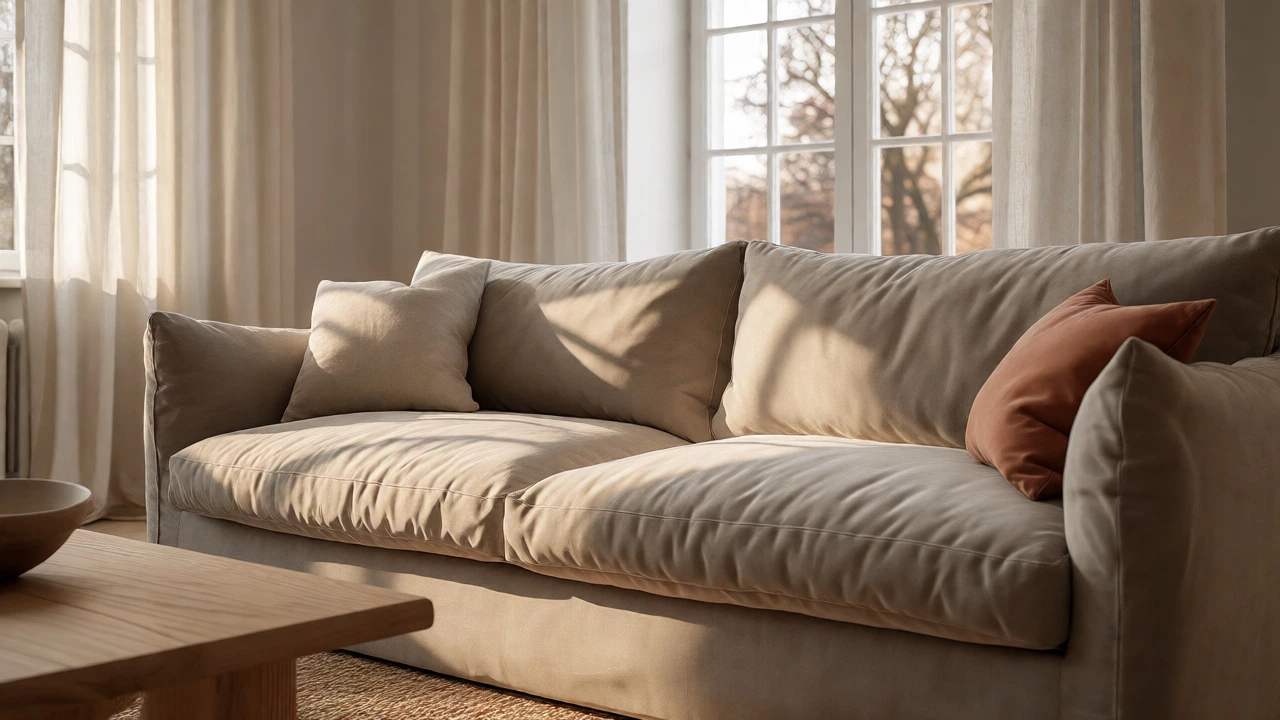
The Case for Warm Neutrals
When people hear "neutral," they often picture cold, sterile white or harsh grey. That is a mistake. The most enduring sofa colors are warm neutrals. Think taupe, greige, and warm oatmeal. These shades have an undertone of yellow, red, or orange, which makes them feel inviting rather than clinical.
Why do these work? Because they reflect light softly. In Melbourne, where natural light changes dramatically from winter gloom to summer glare, a warm neutral adapts. It doesn't fight the sunlight; it absorbs and diffuses it gently. A stark white sofa might look crisp in a magazine, but in a family home, it shows every shadow and stain. Warm neutrals hide the daily wear and tear while maintaining an airy feel.
Consider the psychological effect. Cool greys can make a space feel modern but sometimes distant. Warm neutrals create a sense of comfort and stability. They pair effortlessly with almost any other color. Want to add a pop of emerald green cushions next year? No problem. Switching to terracotta accents in autumn? Still works. The sofa stays put, and the room evolves around it.
Navy Blue: The Neutral That Isn't
If you hate the idea of a beige couch, navy blue is your best friend. Designers often call navy a "neutral" because it behaves like black or charcoal-it grounds the room without dominating it. Unlike bright blues, which can scream "child's bedroom" or "coastal theme," deep navy reads as sophisticated and serious.
A navy velvet or linen sofa adds depth to a light-walled room. It creates contrast without the heaviness of black. Black sofas can absorb too much light, making small rooms feel smaller. Navy reflects enough light to keep the space open but provides a solid visual anchor.
Plus, navy hides stains better than you'd think. Spills show up less on dark fabric than on light fabric, and if you choose a performance linen or a tight-weave cotton blend, maintenance becomes minimal. It’s a bold choice that feels safe. It pairs beautifully with brass legs, walnut wood tables, and cream-colored rugs. It’s classic, but never stuffy.
Charcoal and Graphite: For the Urban Minimalist
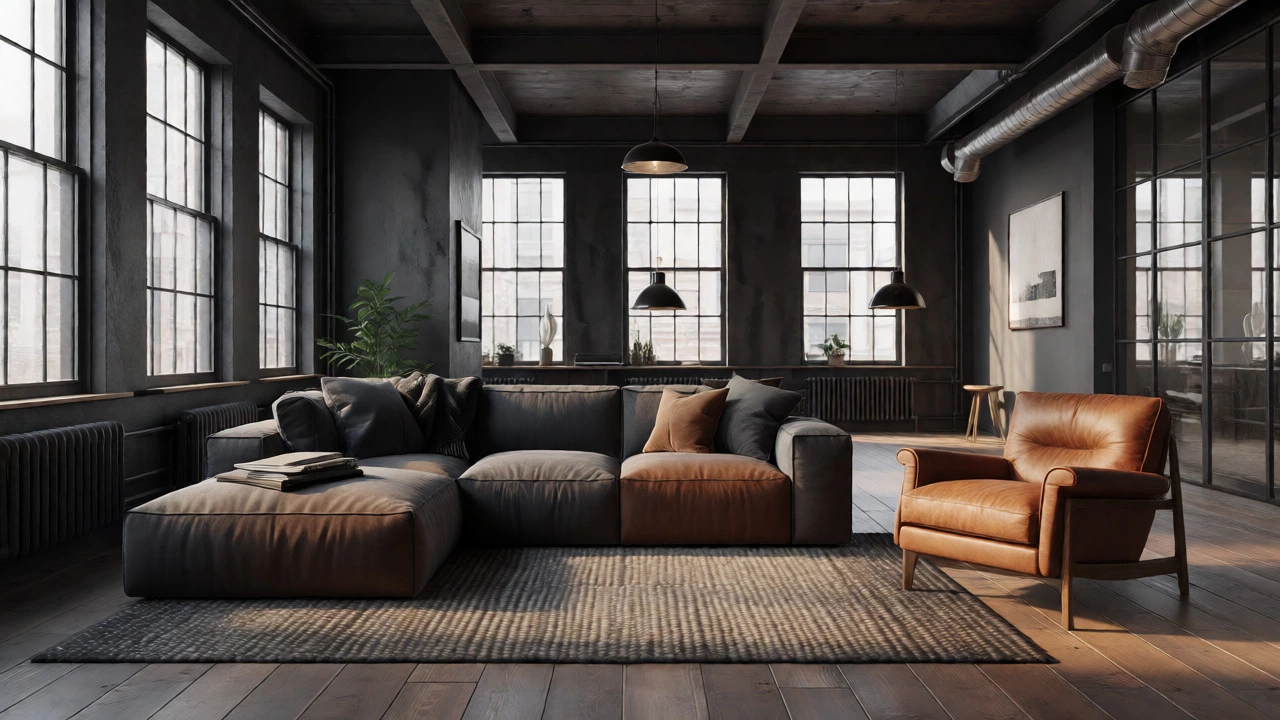
For those who prefer a sharper edge, charcoal is the answer. But be careful-there is a difference between charcoal and flat black. Flat black is severe. Charcoal has texture and variation. It looks more expensive because it mimics the complexity of natural materials like slate or stone.
Charcoal works exceptionally well in modern interiors with industrial elements. Exposed brick, concrete floors, and metal fixtures all sing when paired with a dark grey sofa. It’s practical, too. If you have pets or kids, charcoal is forgiving. Mud paws don’t stand out against a dark grey base the way they do against ivory.
One tip: avoid cool-toned charcoals if your room lacks natural light. They can make a dim room feel cave-like. Look for charcoals with a brown or purple undertone. These warmer dark greys prevent the space from feeling cold. Test the fabric in different lights before buying. What looks perfect in the showroom under halogen bulbs might look muddy in your living room lamp.

Earth Tones: The New Classic
We are seeing a shift away from pure greys toward earth tones. Olive green, rust, and clay are becoming timeless staples. Why? Because they connect us to nature. After years of sterile minimalism, people crave warmth and organic textures.
Olive green, in particular, has proven remarkably resilient. It wasn't a fad in 2015, and it isn't a fad today. It sits comfortably between a neutral and a color. It works with wood tones, whites, and even other greens. A moss-green sofa feels grounded and calm. It’s distinct enough to be interesting but muted enough to stay relevant for decades.
Rust and terracotta are bolder. They bring energy and warmth. While they might feel slightly more seasonal, they are far more durable than pastels. Pastel pink or mint green sofas often look cheap or juvenile over time. Rust feels mature. It ages well, especially in textured fabrics like boucle or heavy cotton canvas.
Material Matters More Than Color
You can pick the perfect color, but if the fabric pills or fades, the sofa won't last. Timelessness is also about material integrity. When choosing a color, consider how the fabric handles light and wear.
- Linen: Beautiful and breathable, but wrinkles easily. Best for low-traffic areas or households without young children. Light linens fade faster in direct sun.
- Cotton Canvas: Durable and affordable. Holds color well. Great for families. Choose a tight weave to resist snagging.
- Velvet: Luxurious and hides stains surprisingly well due to its pile. However, it traps heat and dust. Darker velvets (navy, forest green) look richer and hide wear better than light ones.
- Leather: The ultimate timeless option. It develops a patina over time, meaning it gets better with age. Cognac leather is iconic. Black leather is sleek but shows scratches. Brown leather fits almost any style.
In Australia, UV exposure is high. If your sofa faces north, lighter colors will fade faster unless treated with UV-resistant coatings. Darker colors retain their vibrancy longer but can absorb heat. Balance aesthetics with practicality.
How to Choose Your Shade
Don't rely on tiny swatches. Take samples home. Place them against your wall color, your floor, and your curtains. Look at them in the morning, afternoon, and evening. Colors change drastically with light temperature.
| Color Family | Best For | Maintenance Level | Style Compatibility |
|---|---|---|---|
| Warm Neutral (Taupe/Oat) | Small spaces, bright rooms | Medium (shows stains) | Scandi, Coastal, Modern |
| Navy Blue | Contrast, formal living rooms | Low (hides dirt) | Traditional, Contemporary |
| Charcoal Grey | Urban lofts, pet owners | Low | Industrial, Minimalist |
| Olive Green | Adding subtle color | Medium | Bohemian, Eclectic |
| Cognac Leather | High traffic, durability | Low (wipe clean) | Mid-Century, Industrial |
Also, consider your flooring. If you have dark hardwood floors, a dark sofa can blend in too much, creating a monochromatic block. Add a rug to separate them. If you have light floors, a dark sofa anchors the space nicely. Contrast is key to keeping the room dynamic.
Common Mistakes to Avoid
First, don't match everything. Matching your sofa to your carpet or walls exactly kills the room's depth. Aim for tonal variation. Second, ignore the "trend of the month." If a specific shade of yellow is everywhere on Pinterest, wait six months. Chances are, it will disappear. Stick to hues that have existed for centuries-earth tones, blues, and neutrals.
Finally, don't forget the scale. A large sectional in a bright color can overwhelm a room. Large pieces should generally be neutral or deep/dark to recede visually. Small accent chairs can handle brighter colors. Save the bold choices for accessories you can swap out easily.
Is grey still a timeless sofa color?
Cool greys are fading, but warm greys (greige) remain timeless. Pure cool grey can feel dated and cold. Opt for greys with brown or beige undertones to ensure longevity and warmth in your space.
What is the hardest wearing sofa color?
Mid-tone colors like taupe, charcoal, and navy are the most forgiving. They hide dust, crumbs, and minor stains better than stark whites or very light pastels. Darker colors hide dirt but may show lint or pet hair more clearly depending on the fabric type.
Does a leather sofa count as timeless?
Yes, absolutely. Natural leather, particularly in cognac, tan, or dark brown, is arguably the most timeless upholstery option. It ages gracefully, developing a unique patina, and fits seamlessly into both traditional and modern interiors.
Should I choose a light or dark sofa for a small room?
Light colors generally make small rooms feel larger and airier. However, a dark sofa can add sophistication and define a zone in an open-plan space. If you choose dark, ensure there is ample lighting and contrasting light-colored walls or rugs to prevent the room from feeling cramped.
How do I test if a sofa color is truly timeless?
Look at historical interiors. Has this color appeared in design magazines or homes for the last 20 years? If yes, it likely has staying power. Avoid neon shades or highly saturated primary colors, which tend to cycle quickly. Stick to muted, desaturated tones found in nature.