
Sofa Foam Longevity Calculator
Calculate Your Sofa's Foam Life
Your Sofa's Expected Lifespan
Ever sat down on a brand-new sofa, only to find it feels flat or too soft after a few weeks? You’re not alone. The secret behind why some cushions hold their shape and others turn into bean bags lies in the foam inside. Not all foam is created equal-especially when you’re choosing between upholstery foam and memory foam. If you’re shopping for a new sofa or just trying to understand why your old one collapsed, knowing the difference matters more than you think.
What Is Upholstery Foam?
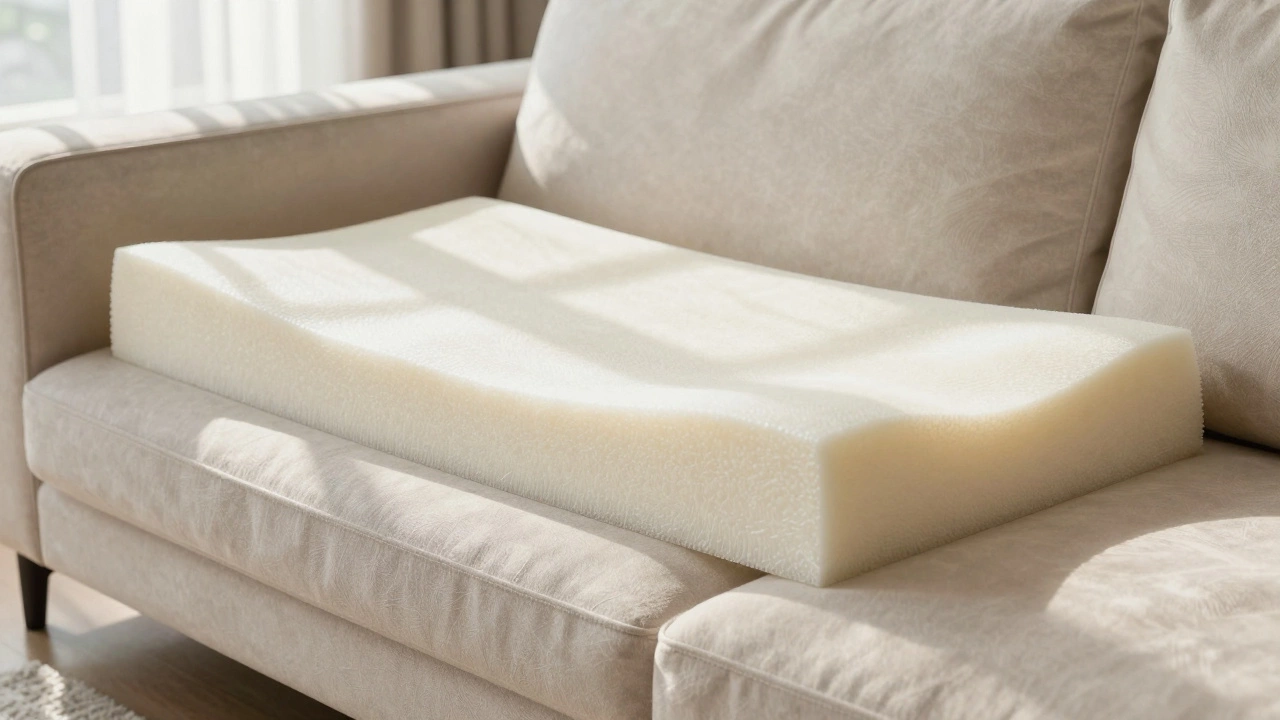
Upholstery foam is the workhorse of furniture making. It’s the foam you’ll find in most couches, chairs, and ottomans sold in stores. It’s designed to be firm, supportive, and durable enough to handle daily use without turning to mush. This foam usually comes in high-density polyurethane forms, with densities ranging from 1.8 to 2.5 pounds per cubic foot. Higher density means longer life and better support.
Think of upholstery foam like the skeleton of your sofa. It doesn’t mold to your body-it holds your body up. That’s why a sofa with good upholstery foam feels stable when you sit down. You don’t sink in too far, and you can easily get up without feeling like you’re climbing out of a hole.
Most manufacturers use HR (High Resilience) upholstery foam because it bounces back quickly after pressure is removed. This is why your cushions still look plump after five years of Sunday movie nights. It’s also cheaper to produce than memory foam, which is why it’s the default choice for budget and mid-range furniture.
What Is Memory Foam?
Memory foam, also called viscoelastic foam, was originally developed by NASA in the 1970s to absorb shock and reduce pressure on astronauts during launch. Today, it’s best known for mattresses and pillows, but it’s also used in high-end sofa cushions. Unlike upholstery foam, memory foam reacts to heat and pressure. When you sit down, it slowly softens and molds around your body’s curves.
This makes it feel incredibly cozy-especially if you like to sink into your couch. But that same quality is also its biggest flaw for seating. Memory foam doesn’t rebound quickly. After sitting for 20 minutes, you might find yourself stuck in a deep impression. Get up, and the foam takes a while to return to its original shape. That’s fine for a bed, where you lie still for hours. But for a sofa? You want to move around, shift positions, and stand up easily.
Memory foam used in sofas is often lower density (around 3 to 4 pounds per cubic foot) to keep costs down. But even high-density memory foam isn’t ideal for long-term seating support. It breaks down faster under constant pressure than upholstery foam does. You’ll notice sagging sooner, especially in high-use areas like the center of the couch.
How They Feel Compared
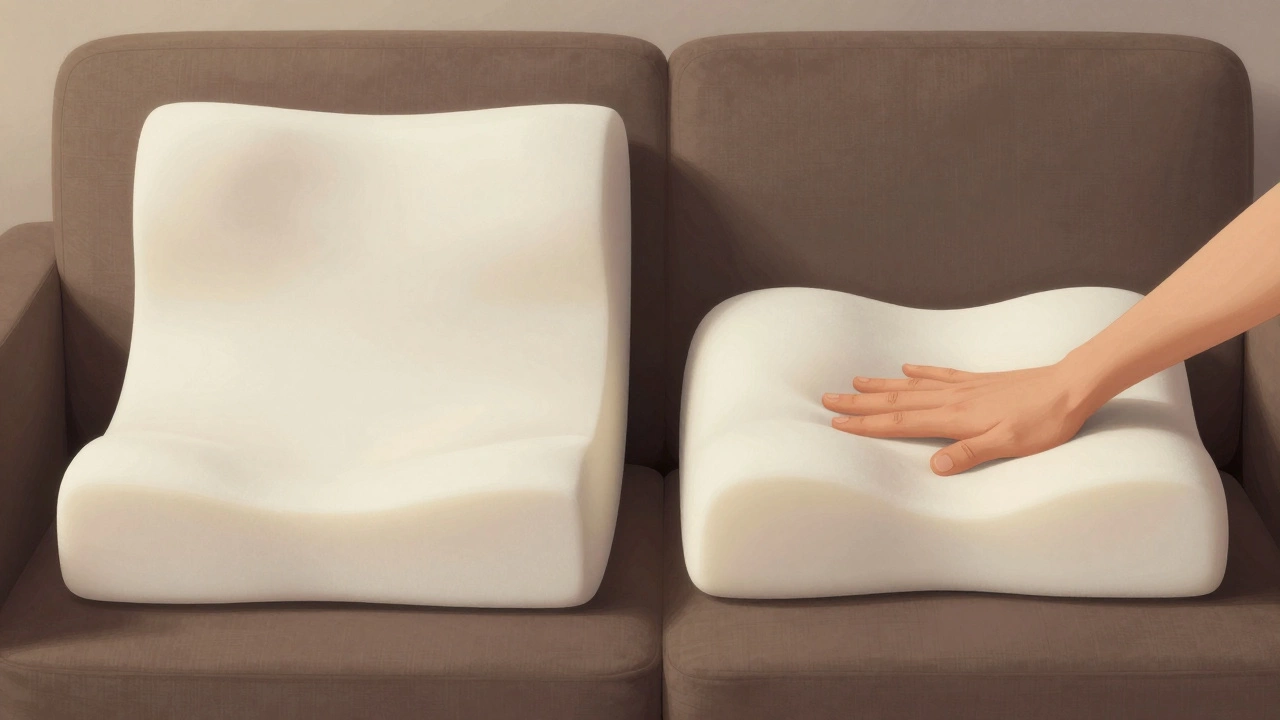
Try this: sit on a sofa with upholstery foam. You feel supported. Your back stays aligned, your legs don’t dangle awkwardly, and you can push off the armrest to stand up without effort. Now sit on one with memory foam. You sink in. Your hips disappear into the cushion. It feels luxurious at first-but after 10 minutes, your body feels trapped. You’re not sinking into comfort; you’re sinking into fatigue.
People often confuse softness with comfort. Memory foam feels soft because it conforms. Upholstery foam feels firm because it resists. But firmness isn’t the enemy of comfort-it’s the foundation of it. A sofa with good upholstery foam lets you relax without losing your posture. Memory foam lets you relax… until you can’t get up without a little push.
Which One Lasts Longer?
Let’s talk about longevity. Upholstery foam, especially HR foam with a density of 2.2 or higher, can last 8 to 12 years in normal household use. It doesn’t compress permanently. It bounces back. Even after years of kids jumping on it or pets curling up on it, the shape stays intact.
Memory foam, even the good stuff, starts to lose its bounce after 3 to 5 years in a seating application. Why? Because it’s designed for intermittent pressure, not constant weight. Your body weight presses down on the same spot every day. Over time, the foam cells collapse and don’t recover. You end up with permanent indentations-what people call “body impressions.” These aren’t defects. They’re just how memory foam behaves under prolonged load.
One study by the Furniture Industry Research Association found that sofas with memory foam cushions showed measurable compression loss within 18 months of daily use. Upholstery foam, in the same conditions, showed less than 10% loss after five years.
What About Hybrid Cushions?
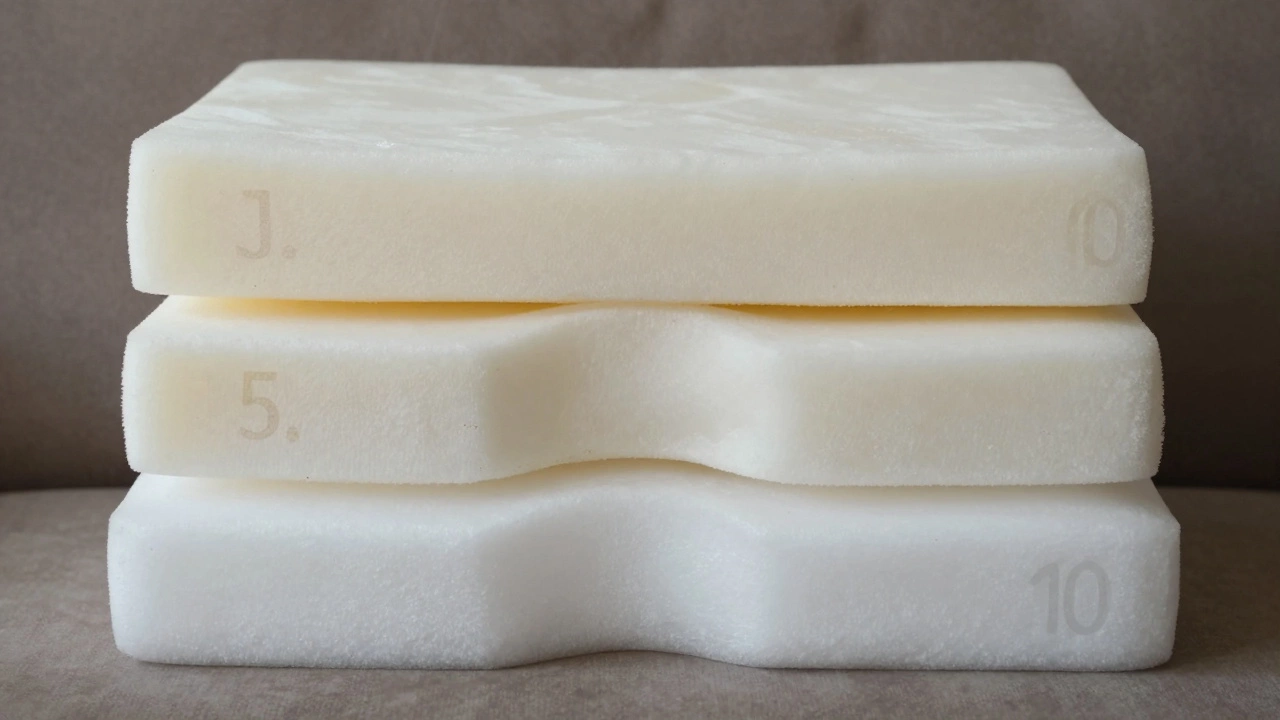
Some high-end sofas use a mix: a base layer of high-density upholstery foam with a thin top layer of memory foam. This gives you the support you need and just a hint of that plush, hugging feel. It’s a smart compromise. The memory foam is usually no more than 1 inch thick-just enough to add comfort without compromising structure.
These hybrid cushions are the sweet spot for people who want luxury without the trade-offs. You get the durability of upholstery foam and the gentle contouring of memory foam, without the sinking sensation. Brands like Herman Miller and Roche Bobois use this approach in their premium seating lines.
But beware of marketing tricks. Some companies slap a “memory foam layer” on a cheap foam core and call it premium. Ask for the foam density. If they can’t tell you, it’s probably low-grade upholstery foam with a thin memory foam veneer-useless for long-term comfort.
When Should You Choose Memory Foam?
Memory foam isn’t useless for sofas. It has its place. If you have chronic back pain or sit for long periods-say, working from home on your couch-memory foam can help relieve pressure points. It’s also great for recliners or lounge chairs where you stay in one position for hours.
But for a standard sofa used by multiple people, for socializing, for watching TV, for kids running in and out? Stick with upholstery foam. It’s more practical, more durable, and more forgiving.
And if you love the feeling of memory foam but don’t want to sacrifice support? Look for cushions with a firm core and a soft, removable cover. You can swap out the cover for a memory foam topper if you want a temporary upgrade. That way, you get the best of both worlds without committing to a bad design.
What to Look for When Buying a Sofa
Here’s what actually matters when you’re choosing a sofa:
- Density matters more than name: Ask for the foam density in pounds per cubic foot. For upholstery foam, aim for 2.2 or higher. For memory foam, 4+ is ideal-but only if it’s a thin top layer.
- Ask about the core: Is the foam the main support, or just a topping? A sofa with a memory foam top over cheap foam will sag fast.
- Check the warranty: Reputable brands offer 10-year warranties on cushions. If they don’t, they don’t trust their foam.
- Test it properly: Sit on it for at least 5 minutes. Don’t just plop down and jump up. Sit like you would on a lazy Sunday. Can you stand up easily? Does your back feel supported? Does the cushion feel like it’s holding you up-or swallowing you?
Don’t be fooled by softness. The most comfortable sofa isn’t the one that hugs you the most. It’s the one that holds you the right way.
Final Thought
Upholstery foam is the unsung hero of good furniture. It’s the reason your grandparents’ couch still sits upright after 30 years. Memory foam is a luxury feature-not a replacement. For sofas, support comes first. Comfort follows.
If you want your sofa to last, look for high-density upholstery foam. If you want it to feel amazing, add a removable cushion cover with a memory foam topper. That’s the smart, modern way to build comfort that doesn’t quit.
Is memory foam good for sofa cushions?
Memory foam isn’t ideal for standard sofa cushions because it doesn’t rebound quickly and breaks down under constant pressure. It’s great for occasional lounging or recliners, but for daily use, it leads to sagging and discomfort over time. Upholstery foam is better for long-term support.
What foam density is best for sofa cushions?
For upholstery foam, aim for at least 2.2 pounds per cubic foot. Higher density (2.5+) means better durability and support. Memory foam used in sofas should be at least 4 pounds per cubic foot, but only if it’s a thin top layer over a firm core. Anything lower will compress too fast.
Can you replace sofa foam with memory foam?
Yes, but it’s not recommended unless you’re replacing the entire cushion system. Simply swapping upholstery foam for memory foam will make your sofa feel too soft and cause it to sag within a year. A better option is to keep the original firm foam and add a removable memory foam topper on top for extra comfort.
Why does my sofa cushion feel flat after a year?
If your cushion is made of low-density foam (under 1.8 lbs/ft³), it’s likely compressed permanently. Memory foam used as the main cushion layer can also cause this due to slow recovery. High-density upholstery foam should still look plump after a year. If it doesn’t, the foam quality was poor.
Do all sofas use the same type of foam?
No. Budget sofas use low-density foam (1.5-1.8 lbs/ft³) that compresses quickly. Mid-range sofas use HR upholstery foam (2.0-2.5 lbs/ft³). High-end sofas often combine high-density foam with a thin memory foam layer for comfort. Always ask for foam specs before buying.