
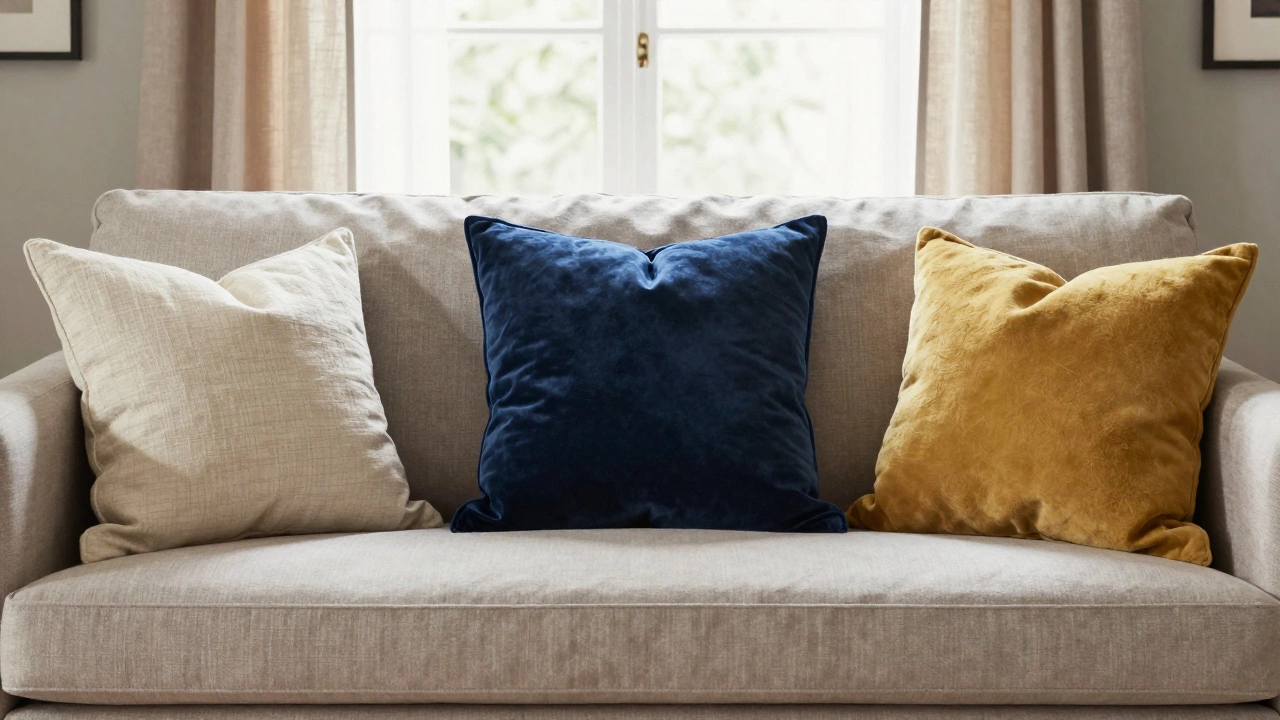
Scatter Cushion Arrangement Guide
Your Cushion Setup
Your Arrangement
Select options above to see your personalized arrangement
Scatter cushions aren’t just for comfort-they’re one of the easiest ways to transform a sofa from basic to beautiful. But if you’ve ever piled them on randomly, only to feel like something’s off, you’re not alone. There’s a reason why some homes look effortlessly styled while others look like a laundry pile exploded. The rule for scatter cushions isn’t a rigid law, but a simple framework that works every time.
Start with the basics: odd numbers
The most reliable rule for scatter cushions is to use an odd number. Three or five cushions on a standard three-seater sofa almost always looks better than two or four. Why? It creates asymmetry that feels natural. Our brains are wired to find balance in uneven arrangements. Two cushions side by side can look like a pair of bookends. Three, though? One in the center pulls everything together, with the other two framing it like bookends with personality.
Try this: place one larger cushion in the middle, flanked by two smaller ones. The center piece becomes a visual anchor. If you’re using four cushions, remove one. It’s that simple.
Layer textures, not just colors
Color matters, but texture matters more. A sofa with all velvet cushions can feel heavy. All linen? Too flat. The magic happens when you mix materials. Think: a chunky knit on one side, a smooth satin on the other, and a tightly woven cotton in the middle. Each texture catches light differently, adding depth without needing more color.
Real-world example: A charcoal gray sofa with a navy velvet cushion in the center, a cream linen one on the left, and a mustard wool boucle on the right. No matching set. No uniformity. Just three different textures that feel like they belong together because they’re grounded in the same neutral palette.
Size matters-proportion is everything
Don’t just grab whatever cushions fit. Think about scale. A standard 18x18 inch cushion works well on most sofas. But if your sofa is long and low, try 20x20. If it’s compact, stick to 16x16. Oversized cushions on a small sofa look like they’re swallowing it. Too small, and they look lost.
Also, avoid using all the same size. Combine one large square (18x18 or 20x20) with one or two smaller ones (14x14 or 12x12). The variation adds rhythm. It’s like music: a steady beat with a little syncopation keeps it interesting.
Color? Go neutral first, then add a punch
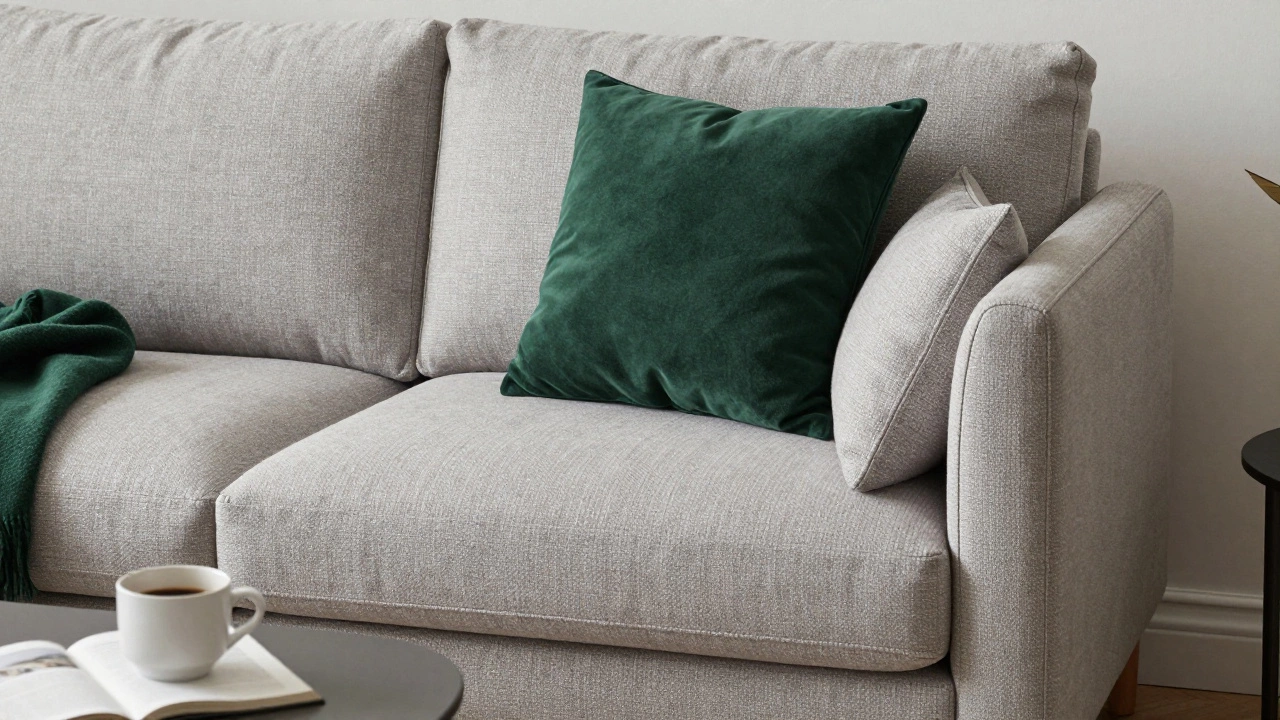
Most people think scatter cushions need to match the sofa. They don’t. In fact, matching them often makes the space feel dull. Start with cushions in the same family as your sofa-think warm grays, beiges, taupes. Then, add one bold accent. Maybe a deep emerald, a burnt orange, or a rich cobalt.
Here’s how it works: if your sofa is beige, use two neutral cushions (light gray and cream) and one in a saturated color. The accent cushion becomes a focal point. It’s not about matching-it’s about connecting. The accent color should echo something else in the room: a throw blanket, a painting, a rug. That’s the secret.
Don’t forget the backrest
Many people only think about cushions on the seat. But the backrest is just as important. Two cushions stacked vertically on the back of the sofa create height and structure. Place them behind the seat cushions, not on top of them. This gives the sofa a layered, intentional look instead of a cluttered one.
Use a taller, narrower cushion (like 12x18) for the back. It’s less likely to slump than a square one. If your sofa has arms, you can tuck a single small cushion into the corner. It adds a touch of casual charm without overwhelming.
Less is more-really
It’s tempting to fill every inch. But over-cushioning is one of the biggest mistakes in living room design. If you can’t sit down without rearranging three cushions, you’ve gone too far. A sofa should be inviting, not obstructive.
Rule of thumb: no more than five cushions total on a three-seater. For a two-seater, stick to three. Keep one side open. Leave space for a book, a cup of coffee, or just your elbow. A little breathing room makes the space feel lived-in, not staged.
Seasonal swaps keep it fresh
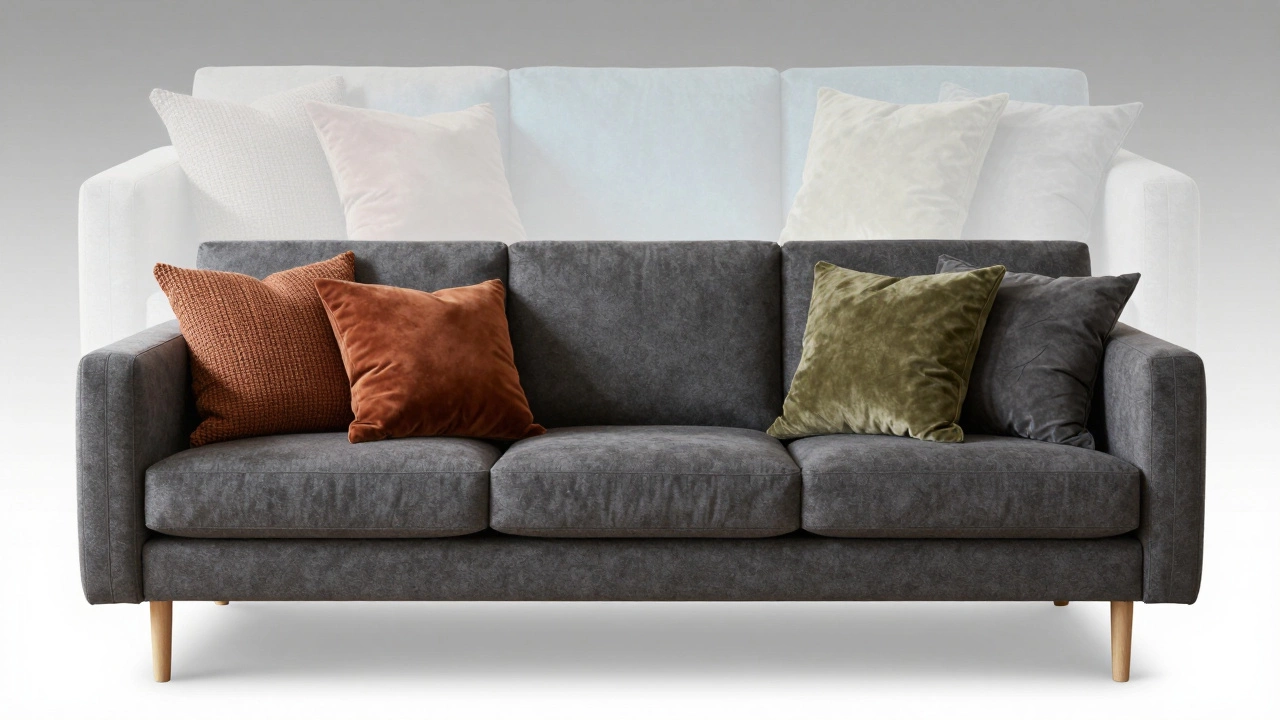
Scatter cushions are one of the easiest things to change when the seasons shift. Swap out lightweight linens for chunky knits in winter. Trade dark tones for pastels in spring. You don’t need to buy new cushions every time-just rotate what you have. Keep a few neutral bases and a few seasonal accents. It’s like changing your pillowcases: quick, cheap, and instantly refreshing.
Example: In fall, use deep rust, olive, and charcoal. In summer, go for white, pale blue, and oat. The sofa stays the same. The mood changes completely.
What about patterns?
Patterns can work-but only if you anchor them. If you’re using a bold stripe or floral, balance it with solids. Never mix two strong patterns on the same sofa. One pattern, two solids. That’s the safe zone.
Try this: one cushion with a subtle geometric print, one in solid linen, one in solid velvet. The print adds interest. The solids ground it. If you want to add a second pattern, move it to a nearby chair or ottoman. Don’t compete with yourself.
Final checklist: your quick guide
- Use three or five cushions total
- Choose odd numbers for visual balance
- Combine three textures (e.g., velvet, linen, knit)
- Use one accent color that ties to another element in the room
- Place two cushions on the backrest for height
- Leave one side open for comfort
- Swap cushions seasonally to refresh the look
- Limit patterns to one per sofa
There’s no magic formula, but there’s a rhythm. Once you follow these steps a few times, you’ll start to feel it. You’ll know when it looks right-not because you counted, but because it just feels balanced.
Can I use more than five scatter cushions on a large sectional?
Yes, sectionals can handle more-up to seven or even nine-but only if they’re arranged in groups. Don’t scatter them randomly. Group them in clusters of three: one cluster at each end, and one in the middle. Keep the same rule: odd numbers, mixed textures, and one accent color per group. The key is visual rhythm, not quantity.
Should scatter cushions match my curtains or rug?
Not exactly. Matching is outdated. Instead, aim for harmony. Your cushions should echo the colors in your curtains or rug-not copy them. If your rug has hints of sage green, use a cushion in sage. If your curtains have a warm beige tone, pick a cushion in a slightly darker or lighter beige. This creates cohesion without looking like a catalog.
Is it okay to mix different cushion shapes?
Absolutely. Round, square, and rectangular cushions can work together if you keep the scale consistent. A 16-inch round cushion beside a 16-inch square one adds visual variety without clashing. Just avoid mixing wildly different sizes-like a giant 24-inch square with a tiny 10-inch circle. Stick to a 2-inch size range for harmony.
Do I need to buy matching cushion covers?
No. In fact, buying a matching set often makes a room look cheap. Most designers avoid them. Instead, shop for individual cushions with different fabrics and textures. You’ll get more character, and you can replace one if it wears out without redoing the whole set.
How often should I fluff or rearrange scatter cushions?
Fluff them every time you clean the sofa-about once a week. Rearrange them every few weeks to prevent permanent squashing and to keep the look fresh. If you notice one cushion has lost its shape, swap it out with a spare. Cushions are meant to be moved around, not frozen in place.