
Living Room Layout Planner
Follow the Article's 7-Step Sequence
Based on the article: Start with architecture, define focal point, choose largest furniture first, then layer rug, lighting, soft furnishings, and personal touches.
Ever stood in a bare living room, paint cans open, sofas delivered, and just felt overwhelmed? You bought the rug, hung the art, stacked the pillows - but something still feels off. That’s not because you picked the wrong color. It’s because you decorated in the wrong order.
Most people start with the big stuff: sofa, TV, coffee table. Then they panic and throw in lamps, curtains, and a rug that doesn’t match. By the time they get to the art and plants, the room feels crowded, not cozy. The truth? Decorating isn’t about buying pretty things. It’s about building layers in the right sequence.
Start with the Architecture - Not the Furniture
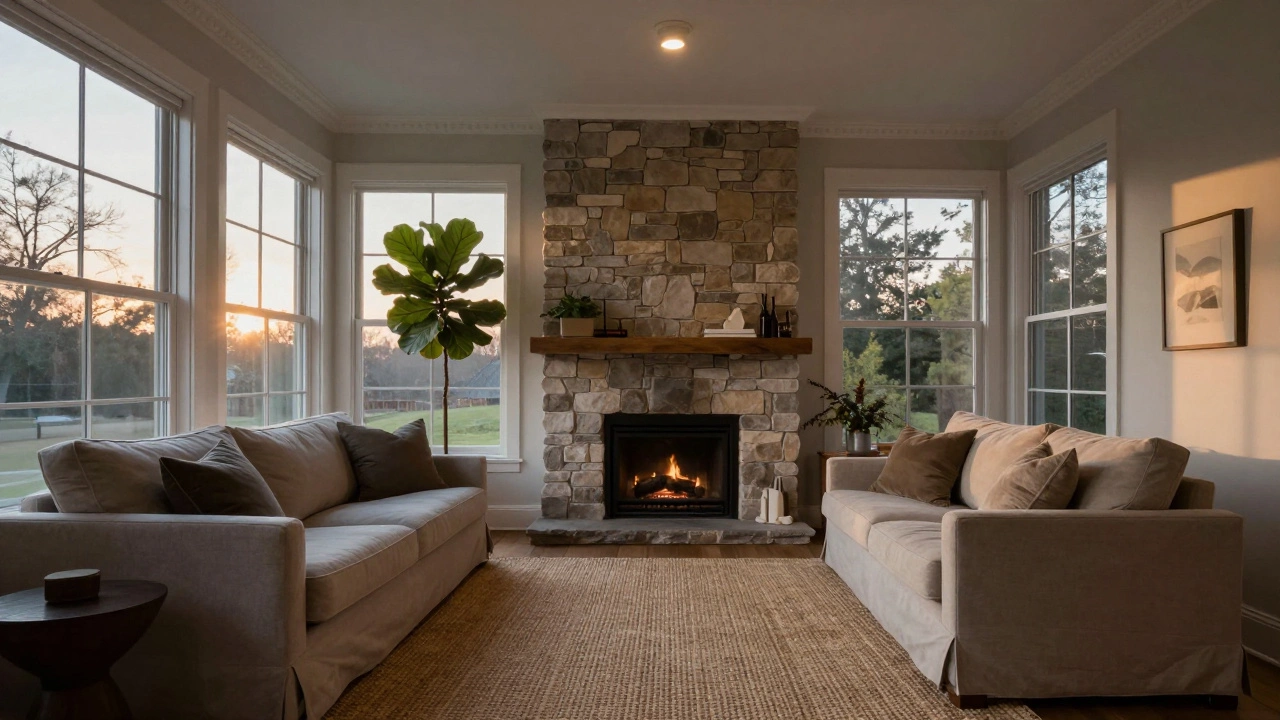
Before you touch a single piece of furniture, ask: What’s the room’s structure? This includes windows, doors, lighting, and architectural details like crown molding or fireplaces. These aren’t just background elements - they’re the skeleton of your space.
For example, if your living room has tall windows facing north, natural light is soft and cool. That changes everything. You’ll want warmer tones in your fabrics and rugs to balance it. If you have a fireplace as the focal point, your sofa should face it - not the TV. You can’t fix bad layout with a pretty throw blanket.
Take a photo of the room. Stand back. Look for what’s already working. What’s the natural flow? Where do people naturally sit? That’s where your main seating should go. Don’t force a sofa into the center just because it looks good in a magazine.
Define the Focal Point
Every great living room has one thing that pulls your eye in. It could be a fireplace, a bold wall, a large window with a view, or even a TV if it’s hidden in a cabinet. But it has to be clear. No more than one.
Here’s what happens when you skip this step: You end up with a TV on one wall, a painting above the sofa, and a bookshelf with colorful spines on the other side. Your brain doesn’t know where to rest. It gets tired. The room feels chaotic.
Decide now: What’s the star? Then build everything else around it. If it’s a window, arrange seating to face it. If it’s a TV, hide the wires, use a media console, and keep the wall behind it clean. No clutter. No competing visuals.
Choose Your Largest Furniture First - Then Scale Down
Start with the biggest pieces: sofa, sectional, armchairs. These are your anchors. Don’t pick them based on how they look in the store. Pick them based on how they fit your room’s shape and flow.
Measure twice. Walk the room with masking tape. Mark where the sofa legs will sit. Leave at least 30 inches between the sofa and the coffee table. If you have a narrow space, choose a low-profile sofa. It makes the ceiling feel higher.
Once the main seating is in place, add the secondary pieces: a side table, a console behind the sofa, maybe a reading chair. These should complement, not compete. If your sofa is deep and plush, go for slim side tables. If your sofa is sleek and modern, a chunky wooden console adds warmth.
Layer in the Flooring and Rugs
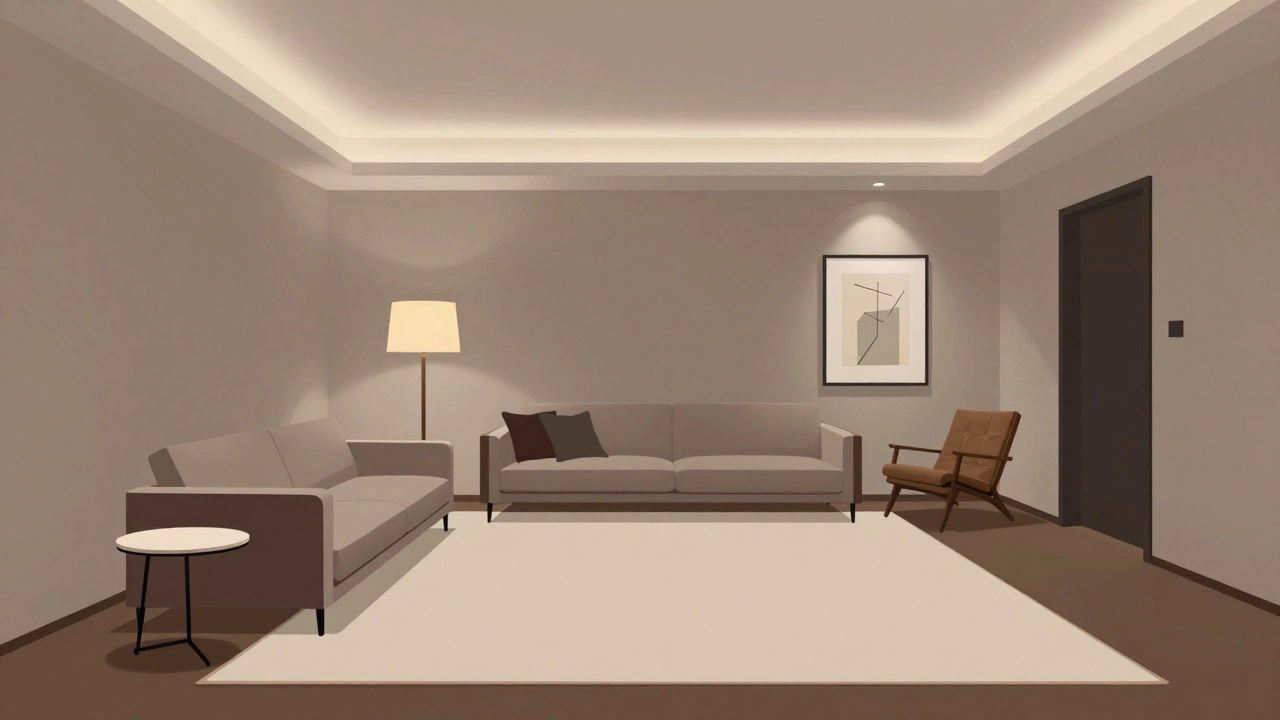
People think rugs are decorative. They’re not. They’re structural. A rug defines the seating area. It tells people, “This is where you sit.” Without one, the space feels disconnected.
Rule of thumb: Your rug should be big enough so the front legs of your sofa and all chair legs sit on it. If it’s too small, the room looks like it’s floating. Too big? It swallows the space.
For a standard 3x4 meter living room, a 2.4x3 meter rug works. If you have a large open-plan space, go bigger - even 3x4 meters. Choose a neutral base (wool, jute, or low-pile synthetic) if you’re unsure. You can always add color with cushions later.
Don’t put the rug under the coffee table and call it done. Everything should connect. The rug is the foundation. Everything else sits on top of it.
Add Lighting in Layers
One ceiling light is not lighting. It’s a spotlight. Real lighting has three layers: ambient, task, and accent.
Ambient light is the overall glow. That’s your ceiling fixture or recessed lights. Keep it soft. Use dimmers. No one wants to eat dinner under a hospital bulb.
Task lighting is for doing things. A floor lamp next to a reading chair. A table lamp on the console for evening work. This is where you get function. Pick lamps with adjustable heads.
Accent lighting highlights the things you want to see. A spotlight on a painting. LED strips under a shelf. A small sconce beside a mirror. This is what makes the room feel intentional.
Put lamps on at night. Walk around. Do you have dark corners? Is there glare on the TV? Adjust. Lighting is the difference between a room that feels alive and one that feels like a showroom.
Introduce Color and Texture Through Soft Furnishings
This is where most people go wild. And it’s okay - as long as you do it last.
Start with your sofa. Choose a neutral fabric. Linen, cotton, or performance fabric that can handle spills. Then add color through cushions, throws, and curtains. Use the 60-30-10 rule: 60% neutral, 30% secondary color, 10% accent.
Texture matters more than pattern. A chunky knit throw. A velvet cushion. A woven basket. A linen curtain. These give depth. A floral print on a floral print? That’s a mistake.
Look at your rug. What’s its tone? Let your cushions echo that. If your rug has warm greys, pick cushions in terracotta, mustard, or olive. If it’s cool, go for navy, slate, or charcoal. You’re not matching. You’re harmonizing.
Finish with Art, Plants, and Personal Objects
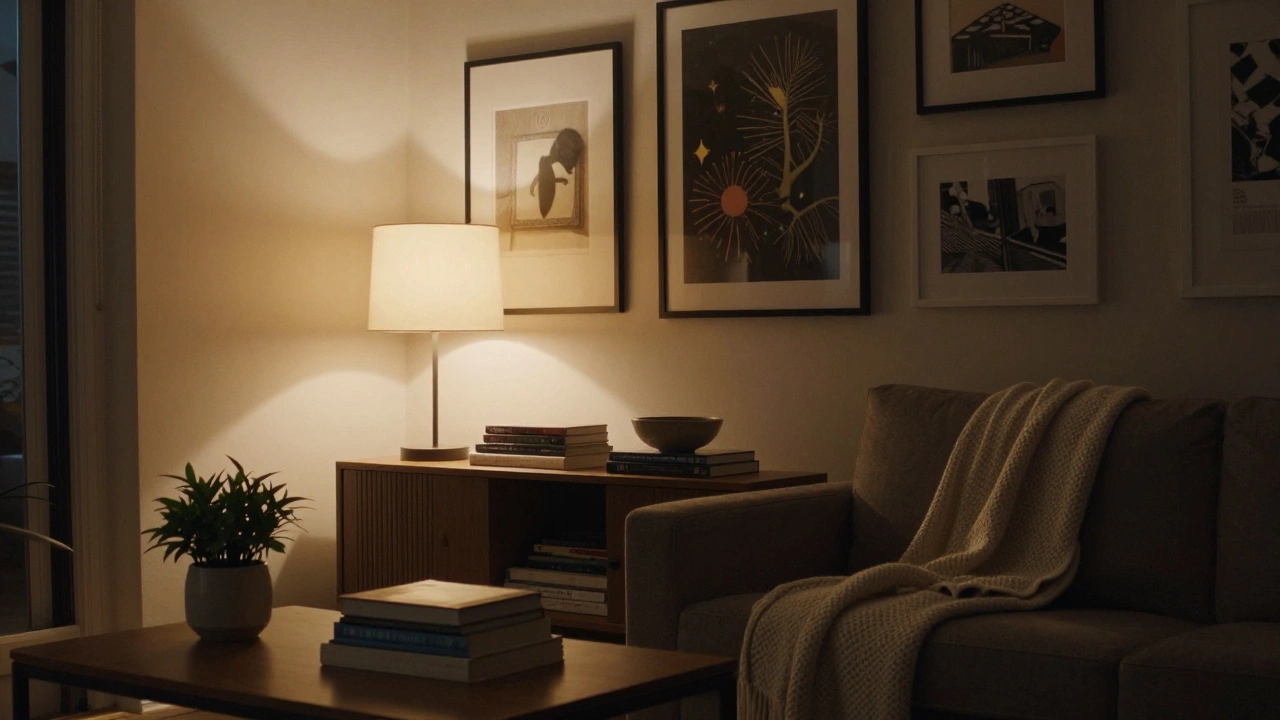
This is the soul of the room. Art, books, photos, plants - these aren’t afterthoughts. They’re the final touch that turns a space into a home.
Hang art at eye level. That’s about 145 cm from the floor. If you’re sitting on the sofa, the center of the artwork should line up with your gaze. Don’t hang it above the sofa unless it’s a long, horizontal piece that spans the width.
Plants? Pick ones that fit your light. A fiddle leaf fig needs bright, indirect sun. A snake plant? It’ll survive in a corner with no windows. One large plant is better than five small ones. They give life.
And personal items? Yes, include them. A stack of your favorite books. A vase from your trip to Bali. A ceramic bowl from your grandma. These aren’t clutter. They’re memory. But keep them grouped. A single shelf. A side table. Don’t scatter them.
Why This Order Works
This sequence - architecture, focal point, large furniture, rug, lighting, soft furnishings, personal touches - isn’t magic. It’s logic.
Think of it like building a house. You don’t paint the walls before you install the windows. You don’t put the carpet down before you move in the fridge. You build from the ground up.
When you follow this order, you avoid the common mistakes:
- Buying a rug that’s too small because you didn’t measure the space first
- Ending up with three different lamp styles because you bought them on impulse
- Feeling like the room is missing something because you didn’t define the focal point
There’s no rush. Take your time. Live in the space for a week after each step. Notice what feels off. Adjust. You’ll know when it’s right - because you’ll want to sit down and stay awhile.
What Not to Do
- Don’t buy everything at once. You’ll regret half of it.
- Don’t copy an Instagram post. Your room isn’t theirs. Your light, your shape, your life - they’re different.
- Don’t ignore the floor. A rug isn’t optional. It’s the foundation.
- Don’t put art too high. It’s not a trophy shelf.
- Don’t forget to turn on the lights at night. That’s when you’ll see what really works.
Should I decorate one room at a time or the whole house together?
Start with one room - preferably the living room. It’s the heart of the home. Once you get the rhythm of layering in one space, you’ll see the pattern. Trying to do the whole house at once leads to mismatched styles and decision fatigue. Do one room well, then move on.
How long should I spend decorating a living room?
There’s no deadline. A good living room takes weeks, sometimes months. You don’t need to finish in a weekend. Start with the big pieces. Live with them for a few days. Then add the rug. Then the lighting. Then the pillows. Let each layer settle. Rushing leads to buyer’s remorse.
What if my living room is small?
Small rooms need more clarity, not more stuff. Stick to low-profile furniture. Use mirrors to reflect light. Choose a single focal point - maybe a window or a small gallery wall. Go light on colors. A white ceiling and pale walls make the room feel bigger. A well-placed rug can define the space without crowding it.
Can I use bold colors in a living room?
Absolutely - but not on the walls first. Use bold colors in soft furnishings: a deep emerald armchair, a rust-colored rug, or navy curtains. These are easier to change. If you paint the walls, you’re stuck. Start neutral, then add color gradually. You’ll know when it feels right.
Do I need a coffee table?
Not always. If your seating is arranged in a circle, a side table or a low stool might work better. If you rarely use a coffee table, skip it. Use a large tray on the floor instead. The goal isn’t to fill space - it’s to create comfort. Function comes before form.